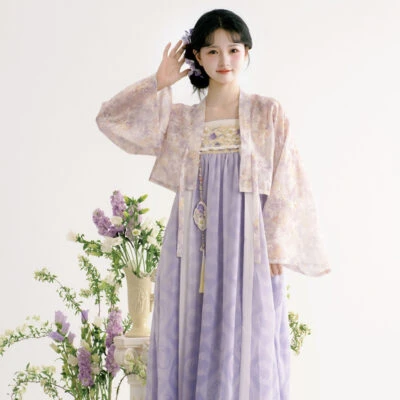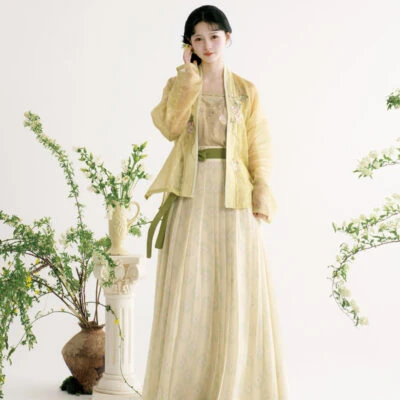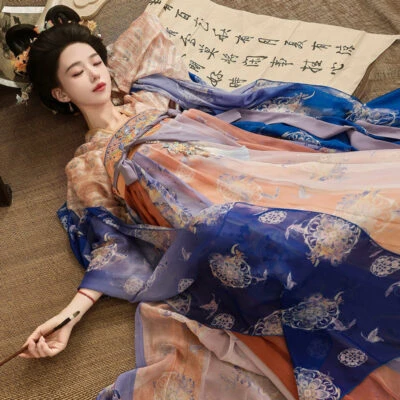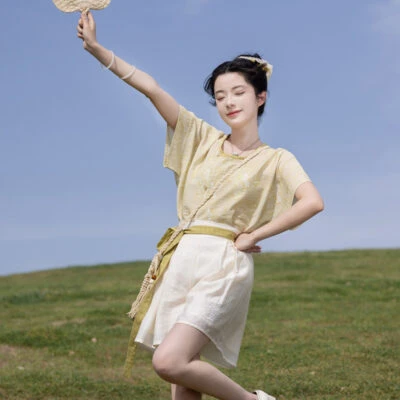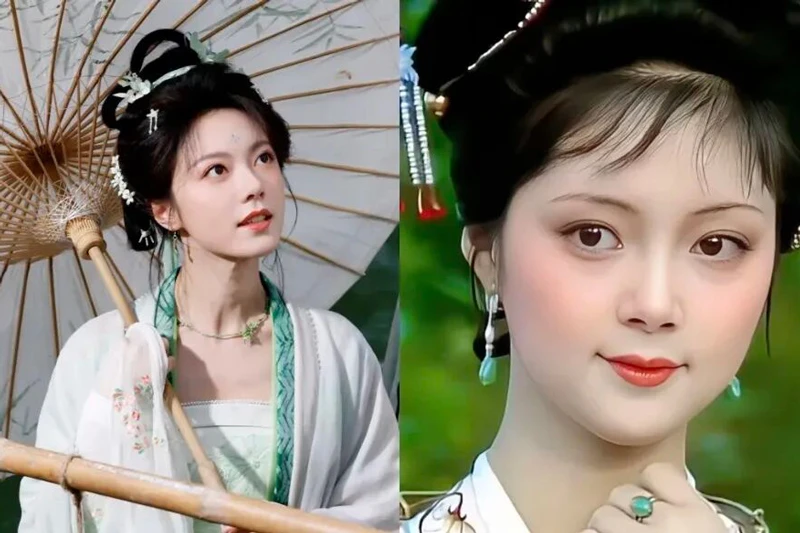
New stills from A Journey to Love (一念江南) have stirred quiet excitement online. In one image, Zhao Jinmai (赵今麦) sits in a small boat on a lotus pond. Her clothes are pale, her hair is simple, and her expression is calm. Many viewers thought at once of Xue Baochai (薛宝钗) in the 1987 television adaptation of A Dream of Red Mansions (红楼梦). The comparison is not about a copied hairstyle or a borrowed prop. It is about a shared atmosphere: open, gentle, and deeply Chinese. Why does a young actress in a new drama remind people of a classic literary heroine?
The answer lies in bone structure, fabric, and a changing standard of beauty. The first glance is not proof. It is a question about why certain faces feel timeless.
A Face Remembers
Baochai is described with a face like a silver basin and eyes like apricot seeds. Zhang Li (张莉), who played her in 1987, had a smooth oval face. Its lines were full and soft, without a sharp jaw. That shape gave her a composed, gentle presence. Zhao shares this basic geometry. Her cheeks are full, her face width is balanced, and her brows curve softly. She wears Song Dynasty and Ming Dynasty style clothing easily. The two women belong to different eras and makeup styles, but their facial architecture creates a similar afterimage. Neither face needs a strong contour to hold attention. Their calm features let the viewer rest, rather than chase every angle.
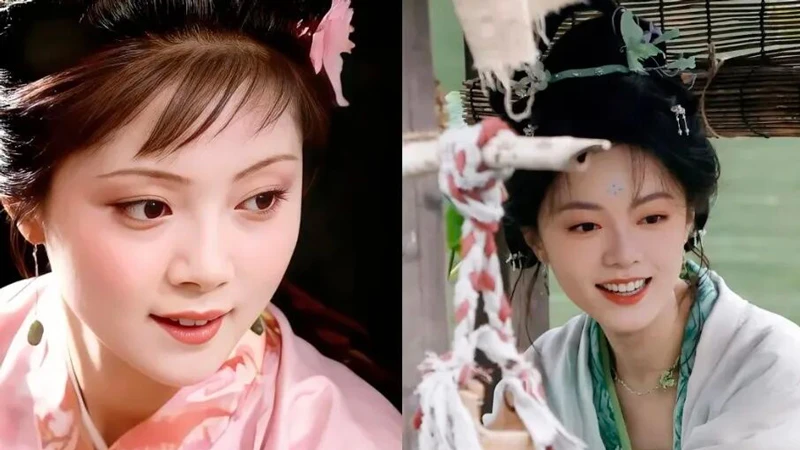
Traditional Chinese taste often preferred a face like a full moon. A rounded, soft contour suggested warmth and dignity. It did not need heavy makeup. A light costume and a calm expression were enough. In this view, the face should leave space for the eyes and the imagination. That is why an oval face can make ancient dress look like a painting. The beauty is not in sharp angles. It is in ease. Fullness was not a flaw. It was a carrier of mood, a way to make silk, jade, and lamplight feel part of the same world.
For years, screens favored thin, pointed faces. Sharp features looked photogenic, but they narrowed the range of classical beauty. Old records remind us that variety was normal. Princess Taiping (太平公主) and Empress Wu (武则天) were described as having broad foreheads and full cheeks. Such faces were read as healthy and fortunate. Today, some might wrongly call them round or plain. Beauty has never had only one answer. Their images survive because their faces do not fight their ornaments. Power, grace, and softness can sit together.
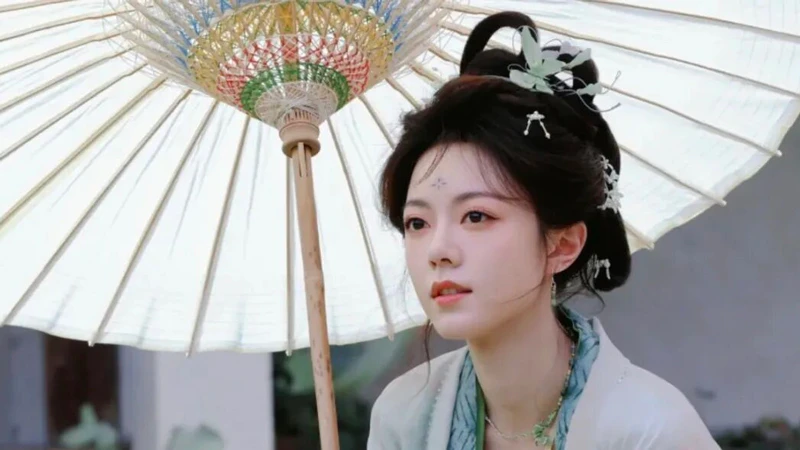
The oval face also gives a camera room to breathe. When the jaw is not cut into a hard V, the cheeks catch light differently. The eyes seem softer. The mouth seems quieter. This does not mean every actor must share one shape. It means the screen can hold more than one kind of dignity. A face with space can carry history without effort. Casting directors who understand this can make a period drama feel lived in, not just dressed up.
Silk and Shadow
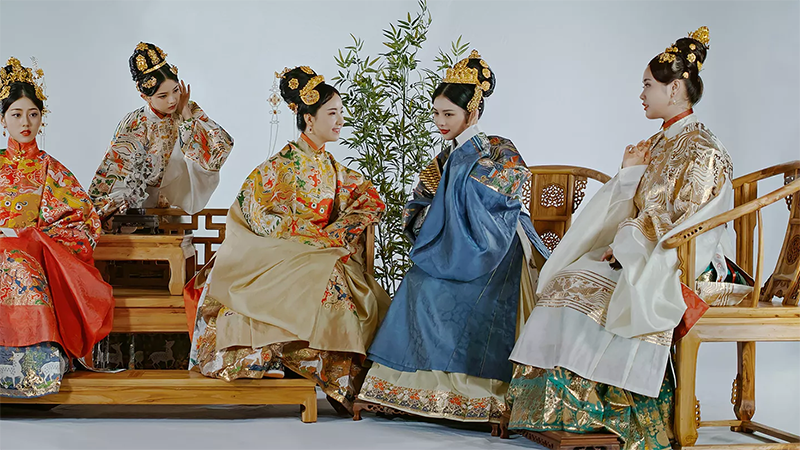
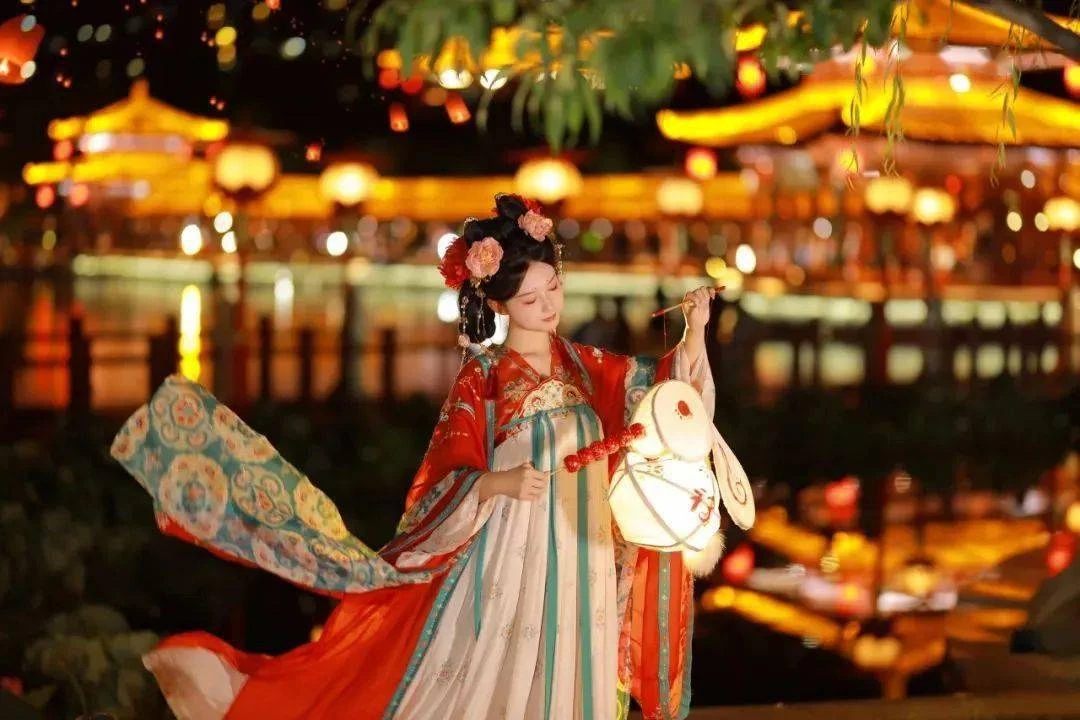
Costume design magnifies the echo. The 1987 A Dream of Red Mansions did not lock its wardrobe to one dynasty. Its designers mixed Song and Ming elements. Many characters wore narrow-sleeved beizi (褙子), a flowing outer garment. The soft cut and quiet colors gave the Grand View Garden a Jiangnan grace. The clothes did not shout. They floated. The narrow sleeve allowed movement without stiffness, while the long line made every step feel slower and more deliberate.
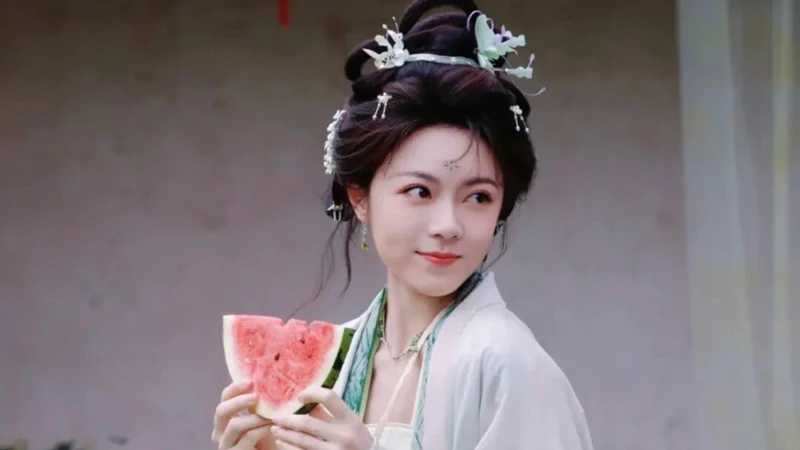
A Journey to Love follows a similar instinct. Zhao’s leaked looks use Song-style beizi and short shirts. Pale green gauze, low-saturation shades, and relaxed tailoring appear again and again. The result is not a history lesson. It is an atmosphere. When a smooth oval face meets this kind of silk, the past feels near. The fabric softens the body, and the face softens the frame. The palette avoids loud contrast, so the person remains the focus, not the embroidery.
The resemblance to Baochai works because both sides agree. The bone structure is open and calm. The clothing is light and restrained. No elaborate crown or heavy rouge is needed. A single turn by the water can carry the scene. This is why viewers feel they are seeing something rare. They are not only looking at a costume. They are looking at a rhythm of beauty that has been quiet for too long. It is an echo, not a clone, and that makes it more interesting.
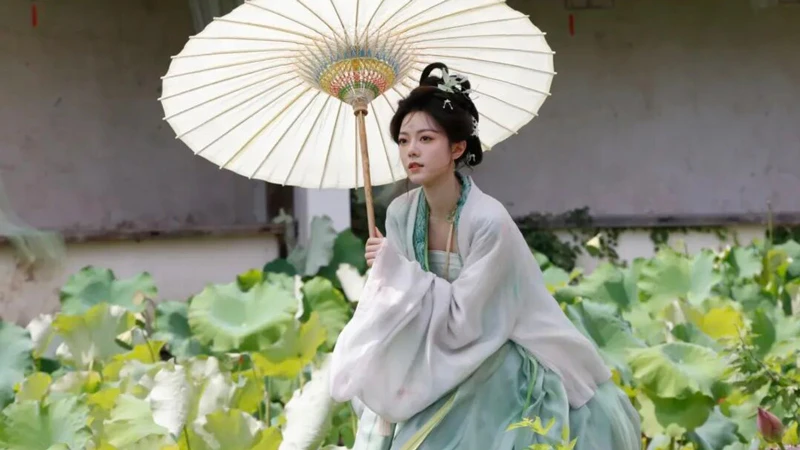
Chinese-style aesthetics are returning to public attention. More viewers now ask for faces that feel steady, natural, and dignified. The hope is not that every actor will look the same. The hope is that oval faces, square-round faces, and other classical shapes will find room on screen. Zhao’s Jiangnan stills are a small signal. They remind us that a relaxed face and a soft robe can still stop a scroll. If the industry listens, the next decade of costume drama may feel wider, warmer, and far less predictable. Do you like this older kind of beauty?