

Adidas’s latest New Year apparel line, heavily featuring an ornamental fastening known as the "frog button," has ignited a heated online debate in China. While gaining some popularity overseas, the collection faced significant domestic criticism and even calls for a boycott. At its core, the controversy highlights a persistent and frustrating issue: foreign brands repeatedly offer a superficial and narrow interpretation of Chinese sartorial heritage. This incident underscores a growing public awareness and a demand for deeper cultural understanding and respect, moving beyond simplistic stereotypes.
The Frog Button Flaw
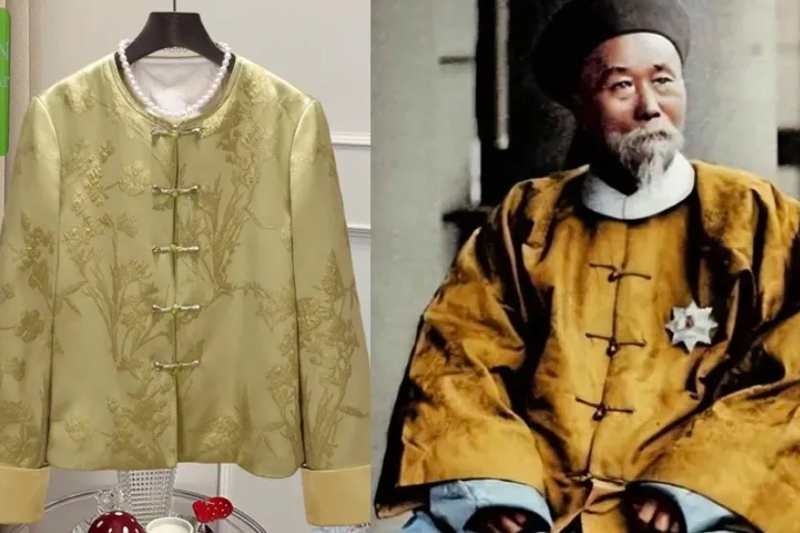
The primary issue is not the use of the frog button itself, a decorative fastening historically used in Man Zu (满族) clothing during the Qing Dynasty. The problem lies in Adidas presenting this single element as a definitive symbol of "Chineseness." For many, this reduces millennia of diverse Chinese clothing history to the aesthetics of its last imperial dynasty. This approach overlooks the foundational garments of the Han ethnic tradition, which emphasize crossed collars, right-side closure, and concealed ties. By equating a Man Zu detail with the entirety of Chinese dress, the brand displayed a shallow understanding.
This is not an isolated misstep for Adidas. The previous year, their "blue Chinese knot" sportswear also leveraged perceived Chinese motifs for market appeal. The frog button collection appears to be a strategy doubling down on what the brand mistakenly believes is a reliable cultural formula. However, Chinese consumers are increasingly discerning and unwilling to accept recycled clichés as authentic cultural representation. The backlash is a direct response to being "handled" with marketing rather than engaged with genuinely.
Furthermore, this pattern extends beyond Chinese culture. Adidas faced accusations from the Mexican government last year for allegedly appropriating the design of traditional huarache sandals for a new sneaker line, leading to a public apology. These repeated incidents suggest a systemic issue where cultural elements are treated as disposable design components rather than respected traditions with specific origins and meanings.
Beyond the Qing Silhouette
The brand's narrow focus reflects a wider trend in so-called "New Chinese Style" design. Often, this label is simplistically applied to garments featuring stand-up collars, diagonal front openings, frog buttons, and the silhouette of the Magua (马褂) jacket—all Qing-era staples. This perpetuates a limited view, ignoring a vast historical tapestry. Chinese attire spans dynasties, from the flowing robes of the Han and Tang dynasties to the elegant Beizi (褙子) over-garment of the Song and Ming periods, encompassing a rich variety of collar styles, cuts, and aesthetics.

Traditional Chinese clothing is a complex language of its own. Its forms, colors, and motifs were often imbued with philosophical concepts, social hierarchies, and ceremonial significance. Techniques like Su embroidery (苏绣) and Kesi (缂丝) silk tapestry represent pinnacles of artisanal skill. When brands reduce this depth to a few decorative "patches," the result feels hollow and inauthentic. This explains why some viewers unkindly described the Adidas items as reminiscent of "funeral attire" or "bathrobes"—the disconnect between the garment's cultural reference and its execution is jarring.
Critically, Chinese clothing culture is not monolithic. It is a vibrant mosaic including the bold patterns of Tibetan Zang Pao (藏袍), the intricate embroidery of Miao festival dress, and the practical design of Mongolian robes. To define it solely through a Qing lens is to erase this magnificent diversity. The frustration stems from seeing a rich, pluralistic heritage consistently flattened into a marketable, one-dimensional stereotype.

The Adidas controversy is more than a debate about a clothing line; it's a symptom of a broader cultural conversation. Chinese consumers are no longer passive recipients of global marketing narratives. They are actively challenging superficial representations and demanding nuance and respect. This pushback is not about rejecting foreign brands or modern interpretations, but about refusing to let commercial interests dictate or diminish a living cultural history. True cultural confidence arises from deep understanding, not from the repetitive application of clichéd symbols. For brands that wish to engage, the path forward requires moving beyond the frog button to appreciate the full, magnificent spectrum of Chinese sartorial artistry.