
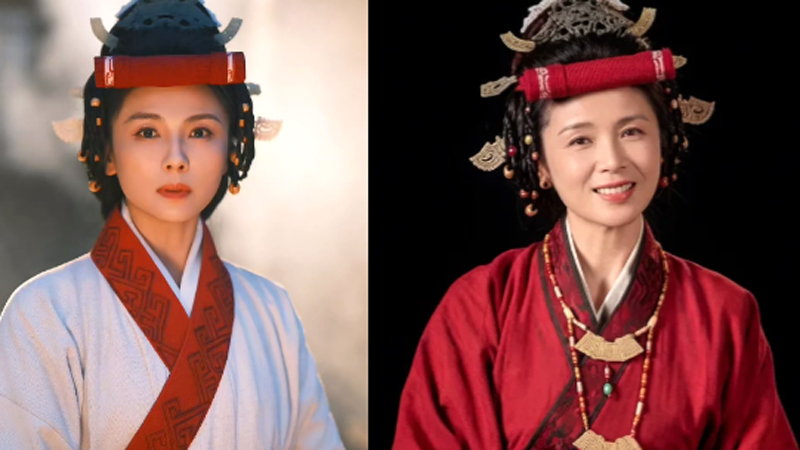
Liu Tao (刘涛) as the Shang Dynasty warrior Fu Hao (妇好) in the recent variety show Jinshi Tan Wenming (金石探文明) has sparked a wave of curiosity. It is not her martial prowess that has caught the public eye, but a distinctive red cylindrical ornament on her forehead, which many have likened to a modern curling iron. This comparison has led to a flurry of online debates. Some argue the design is far too contemporary, an anachronism that does not belong to a figure from over three thousand years ago.
However, was this bold fashion choice a creative liberty taken by the costume department, or does it have a solid foundation in historical fact? A closer look at the archeological evidence reveals that this peculiar accessory is actually one of the most authentic elements of her costume, rooted in the ritualistic and practical world of the Shang aristocracy.
Far from being a modern invention, the headpiece, known as the Kui Guan (頍冠) or Crown Roll, is a direct replica of artifacts unearthed from Fu Hao's tomb at the Yinxu (殷墟) ruins. It was a distinctive marker of high social status during that era. The average citizen would have simply used a strip of cloth to tie their hair, but the elite elevated this simple band into a structured cylinder.
This design offered greater stability, ensuring that the wearer's hair remained immaculate during rigorous activities like hunting or ritual ceremonies. It was a symbol of authority and identity, its form as rigid and deliberate as the bronze vessels that defined the era's artistic and spiritual life. This was not just a hair tie; it was a statement of power, order, and connection to the divine.
The Ancient Origins of the Roll
The Kui Guan did not appear suddenly in the Shang Dynasty. Its genesis can be traced back to the late Neolithic period, where it began as a simple band. Over centuries, the front portion evolved, widening into a cylindrical tube that could encircle an entire bun. This evolution was not merely for show. The cylindrical shape, as seen on jade figurines from Fu Hao's tomb, was highly functional. By distributing pressure evenly, it provided a secure hold that a simple strap could not. This simple yet clever design allowed the wearer to maintain a dignified, composed appearance, which was essential for a ruler or general who needed to project authority and stability. It was a testament to the meticulous attention to detail that characterized the era's material culture.
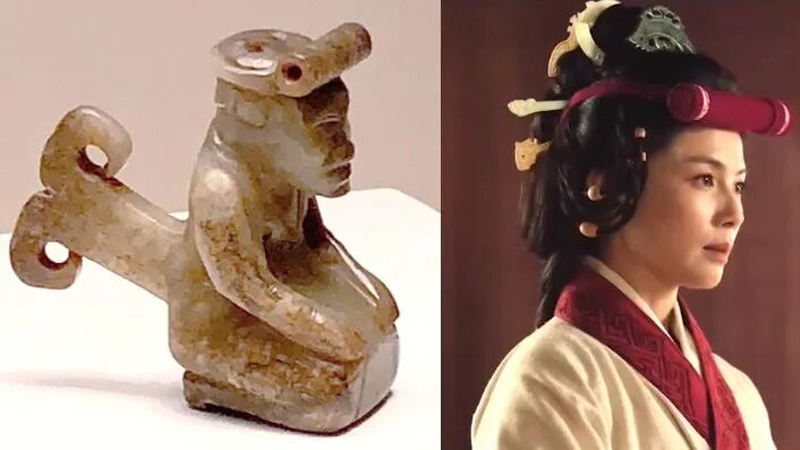
This specific style of headwear proved remarkably resilient, its influence extending far beyond the Shang Dynasty's collapse. It continued to evolve, morphing into the forehead bands worn by women during the Wei and Jin dynasties. Its lineage is also clearly visible in the elaborate mo'e (抹额) headbands that became popular during the Tang to Ming dynasties. These later iterations became increasingly decorative, adorned with intricate embroidery or precious jewels, shifting their function from purely practical to primarily ornamental. Yet, they all owe their fundamental form to the ancient Kui Guan. So, when we see Liu Tao's accessory, we are not looking at a modern creation, but at a pivotal piece of fashion history that has been quietly influencing Chinese aesthetics for millennia.
More Than a Hairband
Why did the Shang people favor such an unusual design? The answer lies in four key areas: practicality, social status, aesthetic values, and spiritual beliefs. On a practical level, the cylinder was the most effective way to secure heavy hair, a problem that remains relevant for people with long hair today. The uniform pressure prevented the hair from slipping during physical exertion or when bowing in respect. This functional aspect was non-negotiable for a society that was frequently at war and often engaged in complex rituals. The Kui Guan was the answer to a very real, everyday problem, albeit one that was reserved for the elite.
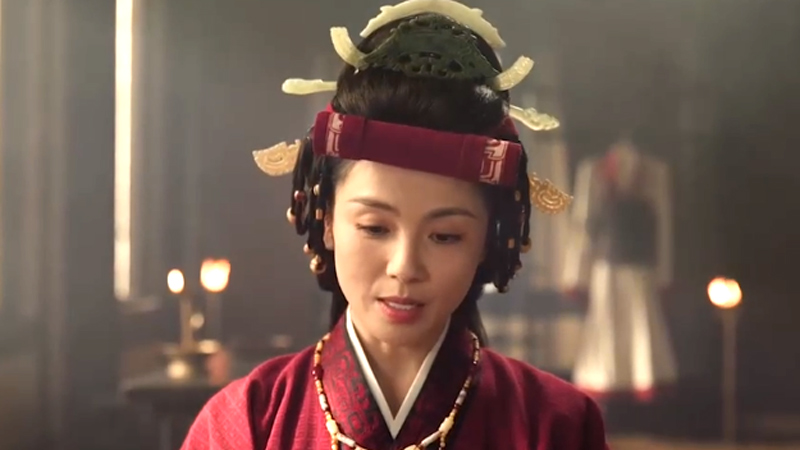
Beyond its function, it served as a powerful marker of social hierarchy. The common people wore simple bands, while the nobility added height and volume to their headdresses, embellishing them with jadeite and bone ornaments. This made the distinction between classes instantly visible, reinforcing the social order. The aesthetic logic of the Shang Dynasty favored order, symmetry, and solemnity. The neat, upright cylinder perfectly reflected this ideal, mirroring the precise forms of their bronze ritual vessels. Wearing it was not just about looking good; it was about embodying the principles of cosmic order and proper conduct. It made the wearer look authoritative, balanced, and perfectly aligned with the ceremonial demands of their time.
Reviewing the "Curling Iron"
The materials and color also played a significant role in the garment's significance. The crimson hue seen on Liu Tao's headpiece was a color associated with the nobility and formal occasions. In Shang cosmology, red was not just a color; it was a powerful force, often linked to fire, sacrifice, and the life-giving properties of the sun. The cylindrical shape itself also held symbolic meaning. To the Shang people, who were deeply concerned with the cyclical nature of life and the cosmos, the ring-like form of the Kui Guan represented completeness, continuity, and an unbroken cycle of fortune. It was a tangible link to their ancestors and their gods, a wearable amulet that implied the wearer was blessed and in harmony with the spiritual forces that governed their world.
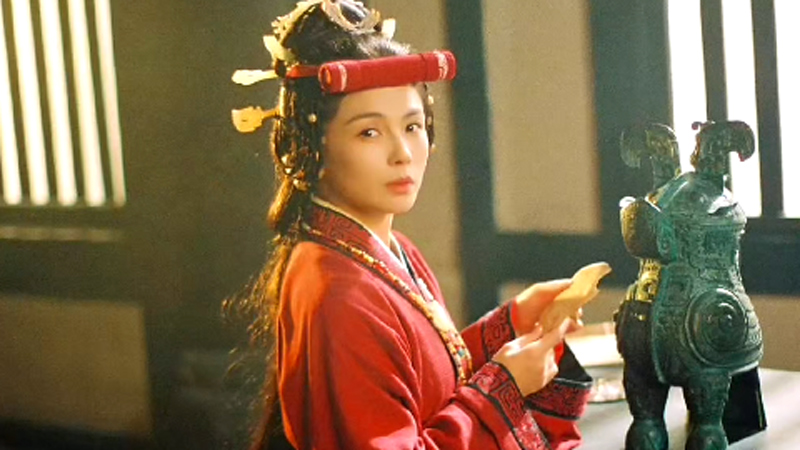
Ultimately, what seems like a strange, "modern" accessory to the untrained eye is, in fact, a testament to the thorough research and thoughtful design of the production team. They successfully created a look that is not only visually striking but also historically grounded, incorporating the essential characteristics of the Kui Guan and adding complementary jade hairpins to create a cohesive and authentic portrayal. By doing so, they have offered the public a unique window into the lives and aesthetic sensibilities of Shang Dynasty women. This type of detailed and accurate costume work deserves appreciation for its role in educating audiences and bringing ancient history to life, moving beyond simple entertainment to create a meaningful cultural dialogue.
