
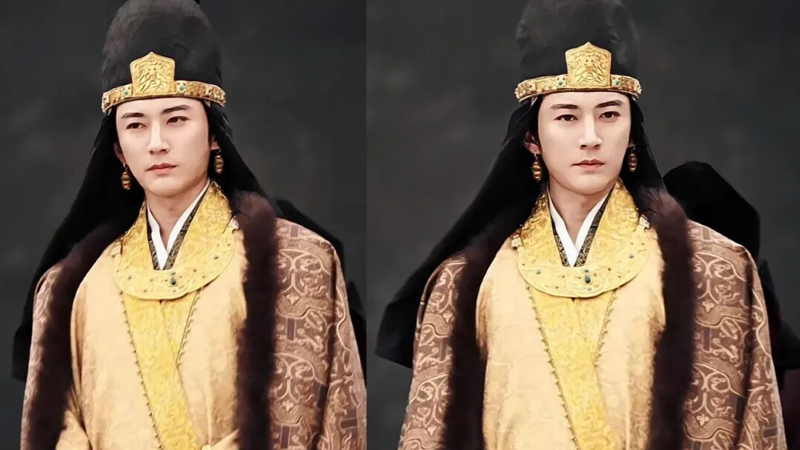
Did Ancient Chinese Men Really Wear Earrings? The Historical Truth Behind Liu Xueyi's Bold Look in Jiangshan Datong.
When the first set photos of Liu Xueyi (刘学义) from the upcoming historical drama Jiangshan Datong (江山大同) surfaced online, they sparked an unexpected debate. There he was, dressed in the majestic robes of a Northern Wei dynasty noble, a striking gold earring dangling from his earlobe.
For many viewers, the image was jarring. In the popular imagination, Chinese historical dramas are dominated by the Tang, Song, and Ming dynasties—eras where the Han Chinese elite considered earrings strictly a feminine affair. The knee-jerk reaction was to label the styling a historical error, a fashionable anachronism.
Yet, this reaction reveals a deep-seated misunderstanding of China's vast, multicultural history. The reality is far more nuanced; the wearing of earrings by men is not a modern invention or a foreign import but a tradition deeply rooted in the ancient steppe cultures that have repeatedly shaped the course of Chinese civilization. To understand Liu Xueyi's earring is to challenge a monolithic view of the past and acknowledge the rich, diverse tapestry that is Chinese heritage.
The Neolithic Origins: A Unisex Adornment
The history of male earrings in China does not begin in the distant steppes of Mongolia, but surprisingly, in the Neolithic settlements of the Central Plains. Archaeological evidence unearthed at the Xinglongwa (兴隆洼) site in Inner Mongolia points to a practice where both men and women wore ear ornaments. These were not the ornate gold hoops we see today, but simple, yet symbolically potent, earrings known as jue (玦). This was a type of jade ornament, often a simple ring with a slit cut through it. In the tombs of male chieftains, jade jue were placed beside the ears, signifying their status and spiritual power. This indicates that, in these early societies, adorning the ear was a neutral act, a marker of communal identity and ritual significance that did not discriminate based on gender.
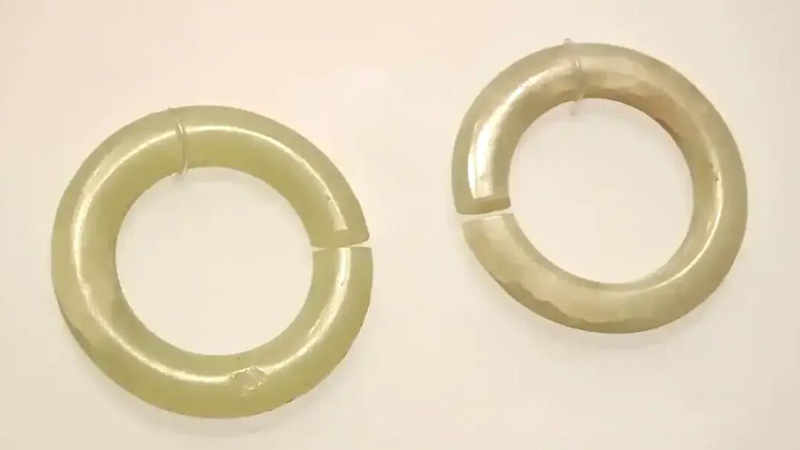
This tradition persisted through the Shang and Zhou dynasties. In the lavish aristocratic burials of the time, particularly in regions like Shanxi (陕西) and Henan (河南), the heads of male nobles were often flanked by these very same jade jue. It was a continuation of a deeply embedded ritualistic practice. However, as the Zhou dynasty's centralized ritual system began to take shape, a cultural shift occurred. The Han Chinese, who formed the majority in the Central Plains, began to codify distinct gender norms in dress. The practice of male earrings was gradually abandoned, seen as a barbaric or outmoded custom, while it remained a marker of femininity for women. This divergence established the cultural baseline that dominates our modern perception. It was only then that the custom began its long, migratory journey, finding a new home among the nomadic tribes on China's northern frontier.
Nomadic Continuity: From Huns to the Northern Wei
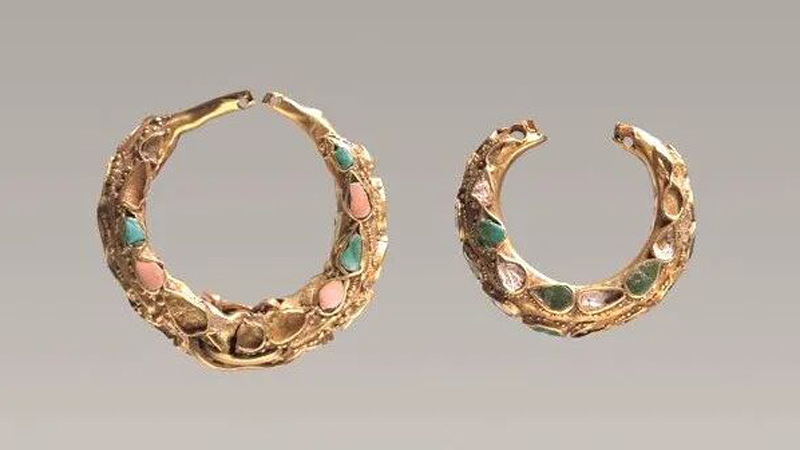
While the Han Chinese cast aside the tradition, the nomadic peoples of the steppes embraced it with even greater vigor. For tribes like the Xiongnu (匈奴) and the Xianbei (鲜卑), earrings were not a relic of the past but a vibrant, living part of their contemporary identity. In these cultures, where survival depended on horsemanship and martial prowess, the earring became a powerful emblem of masculinity. The transition from the jade of the past to gold and precious stones was a reflection of their lifestyle and resource base. These nomadic societies valued personal adornment that was both durable and visible, a clear declaration of one's place within a hierarchical tribal structure. It was an unbroken chain of cultural heritage.
This brings us directly to the context of Liu Xueyi's new drama, Jiangshan Datong. The show is set in the Northern Wei (北魏) dynasty, a regime famously established by the Xianbei people. When they conquered northern China, they did not simply assimilate; they brought their traditions with them, including the noble practice of men wearing earrings. Archaeological finds in Guyuan, Ningxia (宁夏固原), provide compelling physical evidence, unearthing two pairs of turquoise earrings from the Northern Wei period, which experts believe belonged to male aristocrats. So, far from being a historical blooper, Liu Xueyi's on-screen look is an accurate and thoughtful portrayal of his character's ethnic and cultural background. It grounds the fantasy of the drama in the concrete reality of a dynasty founded by conquerors who wore their heritage on their sleeves—and in their ears.
Symbolism and Status: More Than Just Decoration
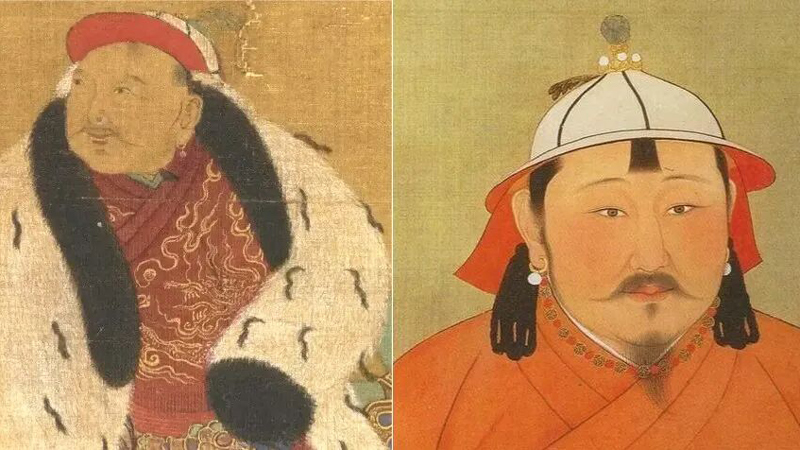
The persistence of this male adornment across empires like the Liao (辽), Jin (金), and Yuan (元) dynasties, which were all established by nomadic peoples, indicates it was more than just a passing fashion. It was a deep-rooted cultural constant. Even the imperial portraits of the Yuan dynasty's emperors, painted in the grand style of their time, clearly show them wearing earrings. These were not just jewelry; they were shorthand for identity, sovereignty, and a connection to the ancestral spirits of the grasslands. The reasons for this were threefold: first, it was a matter of simple cultural continuity; second, it was a profound status symbol, with tribal leaders and high-ranking nobles wearing intricately crafted gold earrings set with precious gems; and third, it served a spiritual purpose, with special earrings often being part of rituals for tribal prosperity and security.
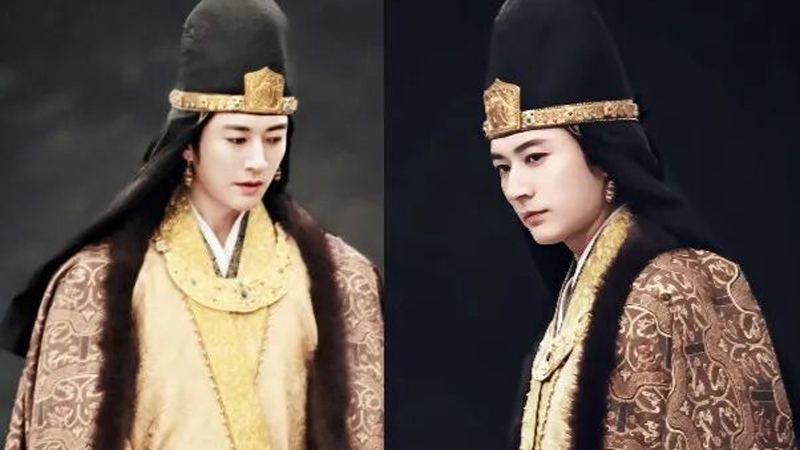
Ultimately, the public's surprise at Liu Xueyi's earrings stems from a limited diet of historical dramas set in eras like the Tang, Song, or Ming, where Han customs were dominant. But Chinese history is not a linear, uniform narrative. It is a sprawling epic of different peoples, cultures, and traditions interweaving. The act of a man wearing an earring is not a deviation from history; it is a direct line to a vibrant, masculine tradition of the northern steppes. Therefore, the production team of Jiangshan Datong deserves credit for this decision. By incorporating such details, they are not just making a stylistic choice, but enriching the visual language of the drama with historical truth, presenting a more complete and authentic picture of the past that is both visually stunning and intellectually engaging.
