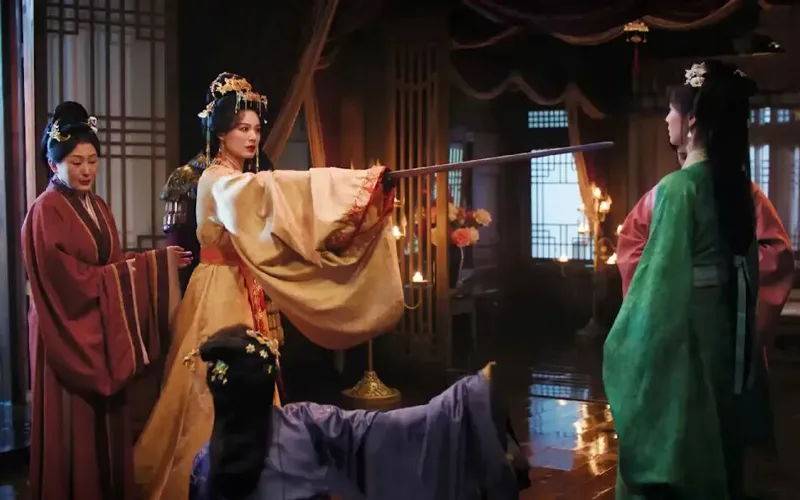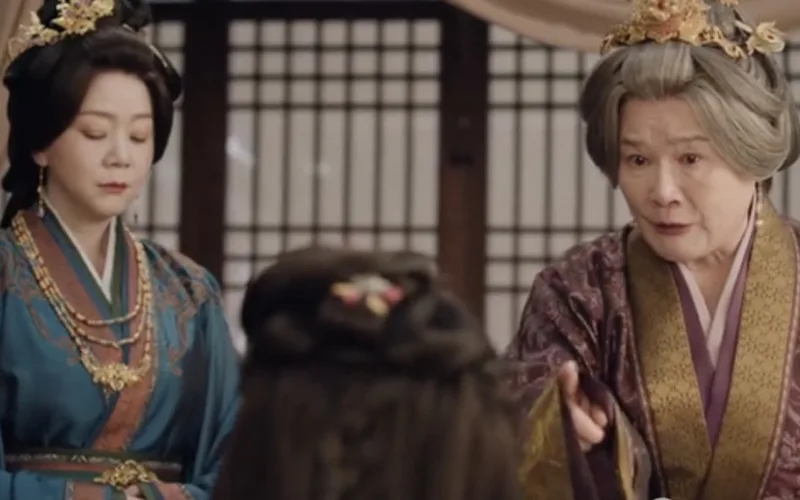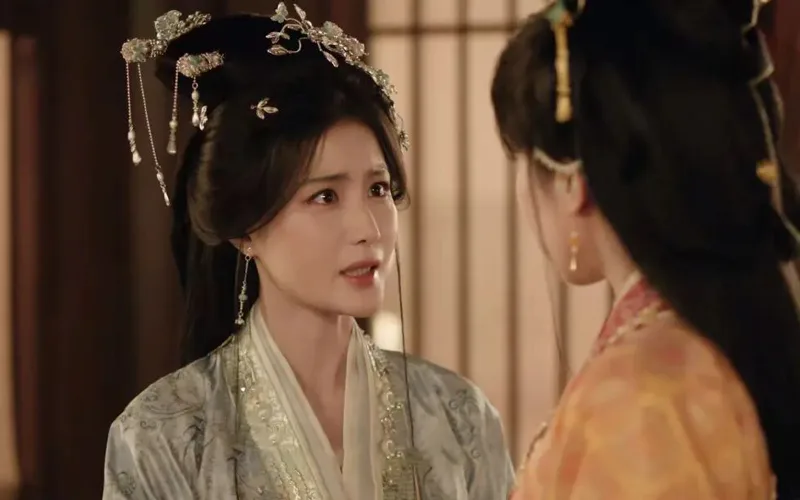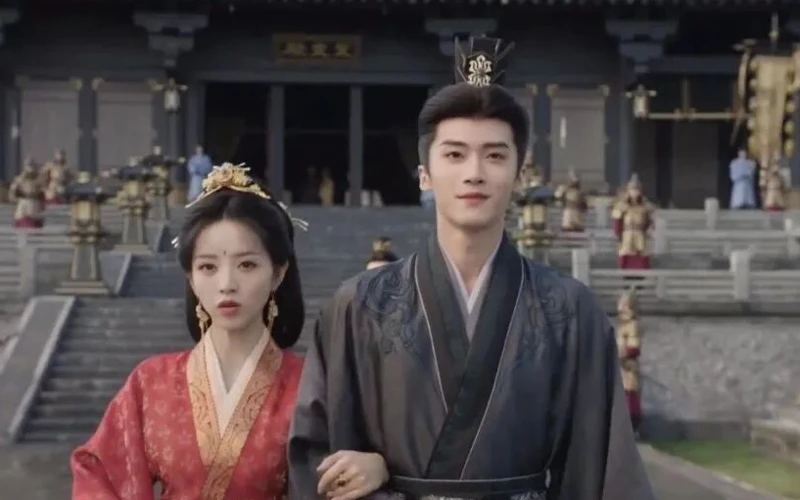
The finale of Where the Mask Ends (嫁金钗) moves fast, almost too fast. Liu Shuo (刘朔) becomes emperor, then dies within days. Wei Rao (魏娆) is left with anger and no clear next move. Xie Hualou (谢画楼) mourns him openly. Hongxian (红线) stays calm because she already carries his child. That secret changes the emotional puzzle. Why did he seem to prefer Xie Hualou, yet leave a posthumous child with Hongxian? The answer is not a simple love triangle. It sits in one sentence from Li Zhaoyi (丽昭仪), and in the way Liu Shuo understood family, leverage, and loneliness.
A Sudden Exit
His death feels like a door slammed shut. He had just reached the throne, and the story gives him little time to rule. Wei Rao cannot act because the board has changed under her feet. Xie Hualou’s grief looks real, not performed. That detail matters: their marriage was not empty. She respected Wei Rao as a sister, which suggests Liu Shuo’s household held genuine affection. Yet affection and inheritance are different things. The finale leaves a gap, and the gap is where Hongxian’s quiet confidence grows.
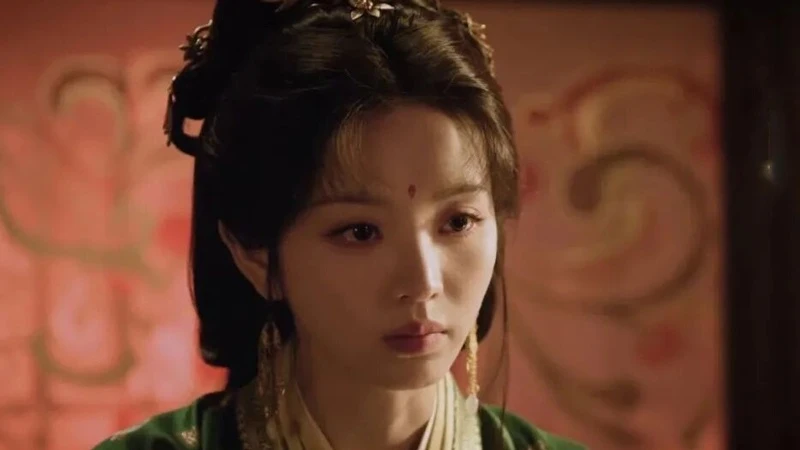
Hongxian’s calm is not coldness. It is information. She knows something the others do not, and she chooses silence. In a palace story, silence can be a weapon. Wei Rao sees hope because a child tied to Liu Shuo could reopen the game. But the ending rushes past the consequences. We never see the full negotiation, only the shock. That makes Hongxian’s pregnancy feel less like romance and more like a final move placed on the board before the player disappears.
The rushed ending also changes how we read everyone. Xie Hualou is not merely a rival; she is a widow with status and learning. Wei Rao is not merely a schemer; she is a sister who kept distance. Hongxian is not merely a substitute; she is the one who remained close enough to listen. Once the emperor dies, their positions harden. The child becomes a claim, a memory, and a threat. No one can return to the earlier arrangement.
The Sister Bond
Li Zhaoyi tells Liu Shuo that his only true kin is his sister in the Wei family. Palace people, she says, are not blood. That line explains his pull toward Wei Rao. He had not met her, yet he wanted closeness. He was not only chasing a sibling; he was chasing proof that someone belonged to him without court calculation. Wei Rao keeps her distance, perhaps to avoid palace trouble. Her caution makes his need sharper. He wants a bridge, and Hongxian becomes that bridge.
Hongxian can talk about Wei Rao in a way Xie Hualou cannot. She can share childhood stories, small habits, old jokes. Those details soften a lonely man. Xie Hualou offers the weight of the Xie house, her intelligence, and her polish. Liu Shuo grew up surrounded by polished people. He can admire them without needing them. Hongxian offers something less impressive and more intimate: a path to the sister he idealizes. That path is why he asks for her hand.
This does not make his choice kind. He still uses Hongxian to reach Wei Rao and to weaken the crown prince. He can promise Xie Hualou the main wife’s place and special favor, then leave Hongxian pregnant. The contradiction is the point. He likes Xie Hualou, but he needs Hongxian’s connection. He respects Xie Hualou’s mind, but he relaxes with Hongxian’s stories. In the end, need wins over admiration. The child is not a proof of greater love; it is a result of proximity, timing, and calculation.
Love And Calculation
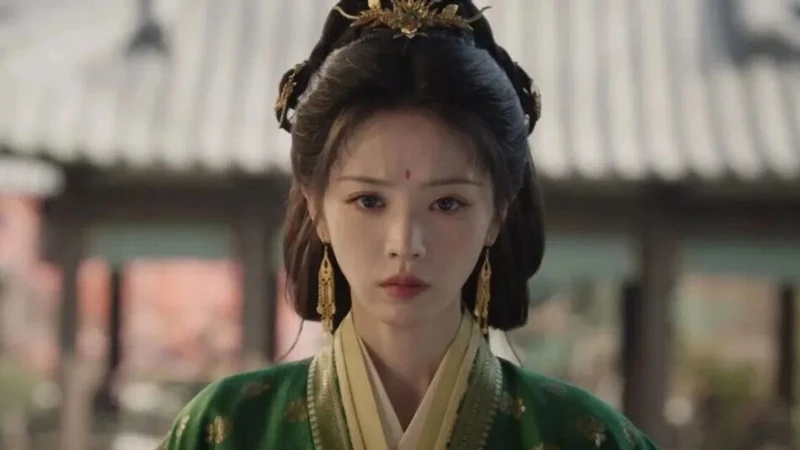
If Xie Hualou were an ordinary woman with no Wei Rao link, would Liu Shuo have loved her? The drama suggests no. His feeling grows inside a political frame. She is a Xie daughter, and that name carries support. Her talent makes her attractive, but talent alone does not move him. He has seen clever women all his life. What he cannot easily get is a sister who treats him as family. Hongxian sits near that tender spot. She is not the grand passion; she is the warm room beside it.
His promises to Xie Hualou are not fake, but they are limited. A main wife’s seat and favor can coexist with a secret pregnancy elsewhere. Palace men often separate affection from strategy. The finale shows the cost. Xie Hualou grieves a husband she may have truly loved. Hongxian carries a child she never announced. Wei Rao inherits the mess. Each woman gets a fragment of Liu Shuo, and none gets the whole person. That is the harsh truth beneath the romantic question.
The one sentence from Li Zhaoyi ties the knot. Blood, for Liu Shuo, is both comfort and tool. He longs for a real sister, so he leans toward Wei Rao. He uses Hongxian to close the gap. He admires Xie Hualou but keeps her within the Xie frame. The posthumous child is therefore not a surprise; it is the logical end of a man who mixed loneliness with leverage. Where the Mask Ends hides its answer in plain sight: he loved the ideal, but he acted on the bond he could use.