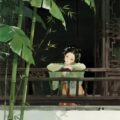
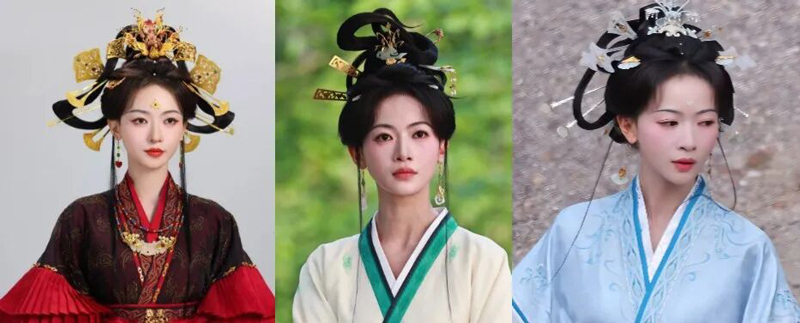
Wu Jinyan's new costume drama Feng Bu Qi (凤不栖) has sparked curiosity: why does her character always wear two dangling locks of hair by her ears? It looks modern, almost like a stylist's trick to make her face appear slimmer. But is it? Or does this peculiar hairstyle have roots deep in ancient Chinese history?
The answer takes us back over 1,500 years, to an era of war, poetry, and startlingly innovative fashion. That stray strand is not a whim; it is a Fen Shao (分髾), a forgotten trend that once defined feminine beauty across an entire dynasty. Let's untangle its story.
An Ancient Trend
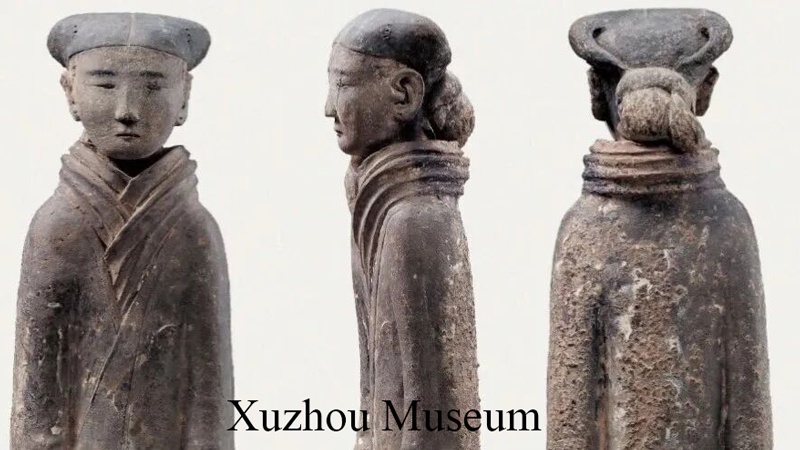
Before it became a signature of Wei-Jin and Northern-Southern Dynasties fashion, the Fen Shao already appeared on clay figurines from the Han Dynasty. At the Xuzhou Museum (徐州博物馆), a painted pottery maid from that era clearly shows a small tress of hair falling from the side of her bun. It was a subtle detail, but it hints at an early appreciation for movement and softness in female presentation.
In the Han period, women who wore towering buns or lower chignons often pulled out a thin lock from the main coiffure and let it hang naturally. Literary works of the time, like Zixu Fu (子虚赋) and Qifa (七发), used the character "Shao" to describe an airy, flowing elegance. It was not yet a dominant style, but it was a recognized ornament, a quiet whisper of what was to come.
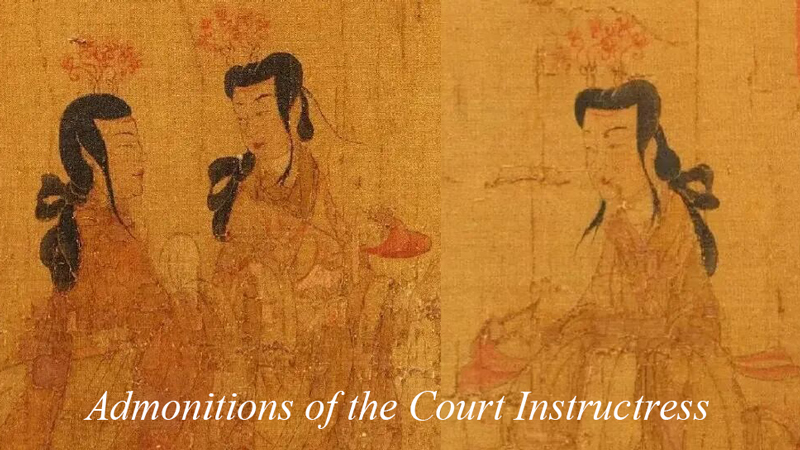
The real explosion came during the Wei-Jin and Northern-Southern Dynasties. This period, known for its intellectual unrest and artistic blossoming, embraced the Fen Shao with full enthusiasm. Noblewomen and commoners alike adopted it, making it a hallmark of the age. The position of the hanging lock was not fixed; it could fall from the back of the bun, trailing down the back, or from the temples, framing the face on both sides. The famous painting Admonitions of the Court Instructress (女史箴图) shows several court ladies wearing this very style, with locks descending gently along their cheeks—a direct visual parallel to Wu Jinyan's on-screen look.
Reasons for Popularity
Why did this particular hairstyle resonate so deeply with women of that turbulent age? The first reason lies in aesthetics. The Wei-Jin intellectuals cherished a philosophy of naturalness and untrammeled spirit, a concept called Feng Gu (风骨) or "wind and bone." They sought elegance in motion, in the sway of sleeves and the drift of long skirts. A few strands of hair, quivering with each step, perfectly embodied this ideal of ethereal grace. It made a woman appear less static and more like a figure from a flowing landscape painting.
Social dynamics played a massive role as well. The aristocratic courts of the time were the trendsetters. Noble consorts and high-born matrons were the first to refine the Fen Shao into a slender, elongated style. Their influence trickled down through the social hierarchy, from elite circles to provincial gentry, and finally to common households. It became a visible marker of sophistication, a fashion statement that transcended class boundaries through sheer aspirational appeal.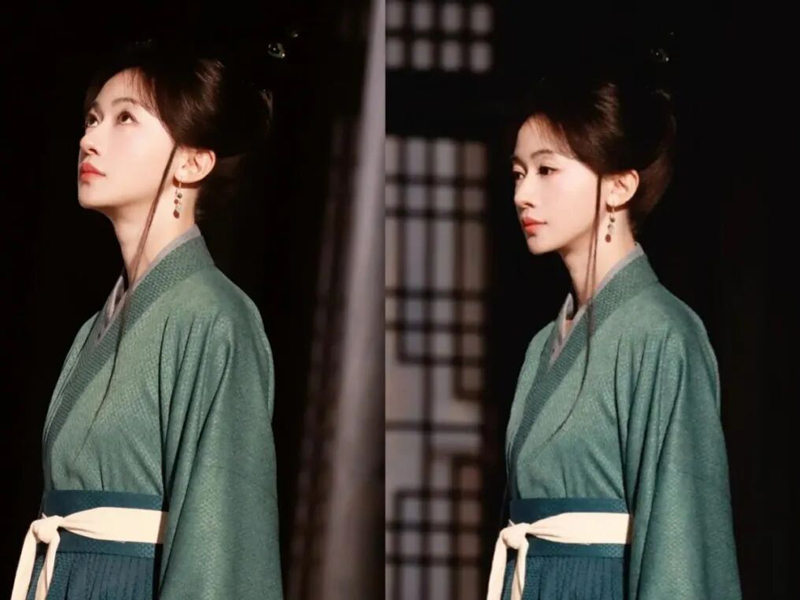
Finally, there was a practical and flattering function. The high, intricate buns of the era—such as the Ling She Ji (灵蛇髻, or "Spirit Snake Bun") and the Fei Tian Ji (飞天髻, or "Flying Apsara Bun")—piled most of the hair upward, creating a dramatic vertical line. This could sometimes make the face appear elongated or harsh. The thin, soft locks hanging by the cheeks softened these angles, creating a gentle frame that balanced the forehead and jawline. It was a simple optical illusion, yet a highly effective one, offering a subtle face-slimming effect without the need for heavy makeup or ornaments.
Enduring Legacy
Contrary to what one might think, the Fen Shao did not vanish with the end of the Northern-Southern Dynasties. Instead, it adapted to the changing tastes of successive eras. In the Tang Dynasty, while overall beauty standards favored a more plump and majestic look, echoes of the Fen Shao persisted. The late-Tang "Pao Jia Ji" (抛家髻) style, for instance, gathered temple hair to wrap around the cheeks, but it essentially was a more structured and voluminous descendant of that earlier hanging-lock concept.
Throughout later dynasties, from the Song to the Ming, women consistently left small wisps of hair at the temples. This recurring detail is not a coincidence; it is a direct evolutionary thread that traces back to the Wei-Jin period. The technique of using minimal hair to enhance facial contours became a timeless tool in the ancient stylist's kit. It proves that some beauty principles are indeed enduring.
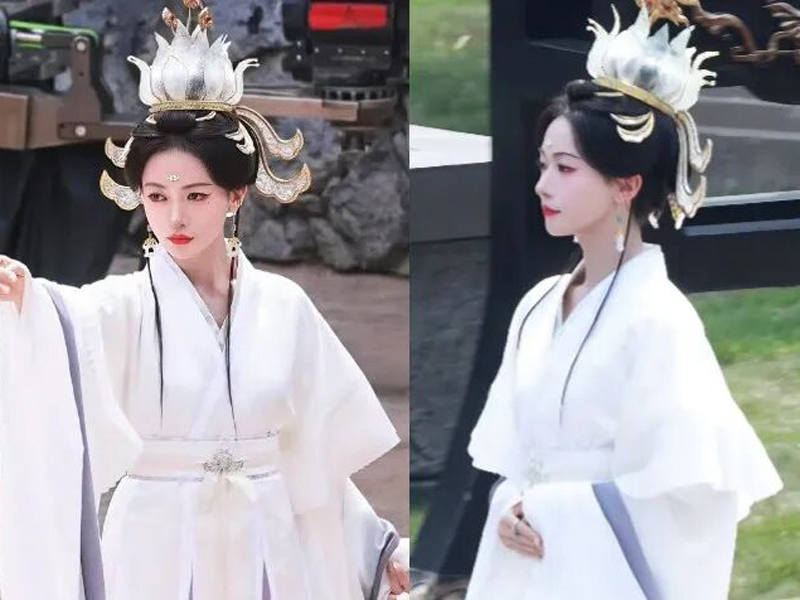
In Feng Bu Qi, the production team has cleverly reinterpreted this heritage. They have kept the core feature—the dangling side locks—but modernized it. Instead of a thick, heavily oiled strand from ancient murals, they have made it finer, lighter, and more natural. The contrast between the ornate, jewel-laden high bun and the simple, moving tresses creates a rich visual texture. It is a deliberate play of complexity and simplicity, authenticity and contemporary appeal, showing that even a thousand-year-old hairstyle can still surprise and captivate modern audiences.
