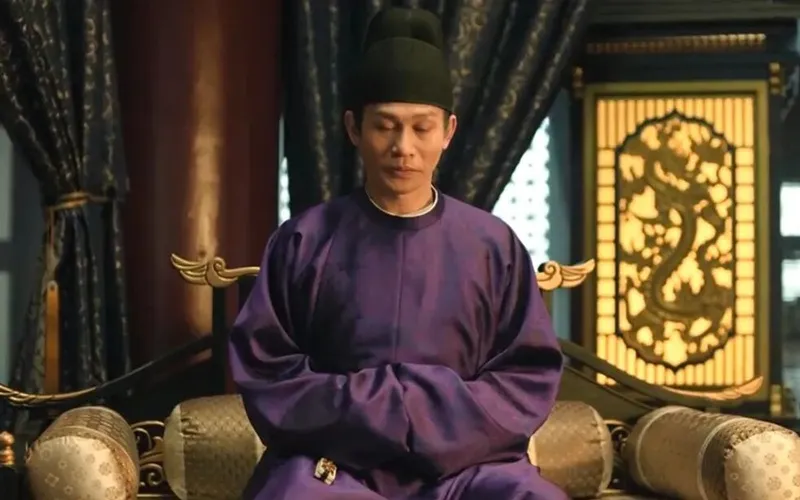
In Tigers Sniff the Rose (尚公主), Yu Ailei (余皑磊) plays Yu Cheng’an (鱼成安), an inner-court official called Yu Gong (鱼公). His first scene is quiet but loud: a purple round-collar robe, a black headwrap, and a seated posture that suggests plans inside plans. Viewers familiar with court dramas ask a fair question. Was purple not reserved for senior officials? Why would a eunuch wear it? The answer is not a single yes or no. It depends on the dynasty, the rank system, and the political moment the story borrows.
Robe Rules
Before the Sui Dynasty, purple was not fully locked to official rank. Emperor Yang (隋炀帝) then set color rules for round-collar robes. Officials of the fifth rank and above could wear purple. If a post reached that rank, the rule applied, whether the wearer served as a civil official, a military officer, or an inner-court attendant. Few eunuchs actually reached that level, so purple remained rare on them, not forbidden.
TheTang Dynasty raised the bar. Purple became a third-rank privilege. Early Tang rules also kept eunuch posts below the fourth rank. Most wore yellow or green robes. Old Tang History (旧唐书) records this order. A strict early-Tang court would therefore show few purple eunuchs. A costume department that puts purple on one in that setting needs a reason.
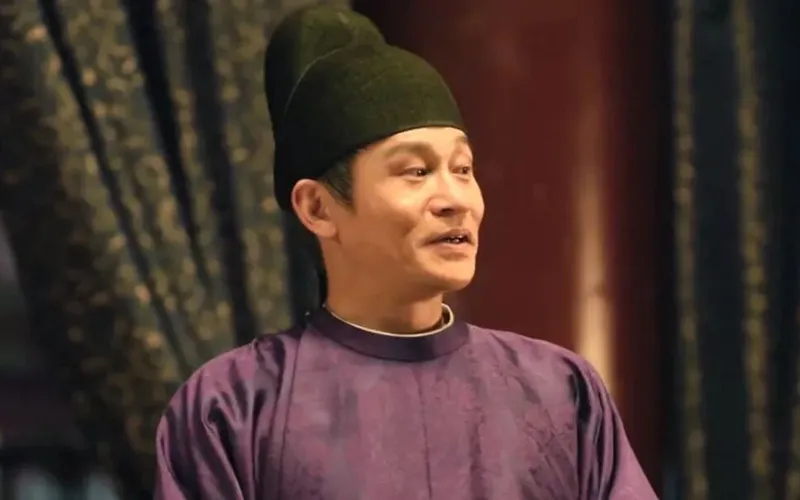
That reason appears when the political ground shifts. Costume color was never just fashion. It marked access, salary, and proximity to the throne. When eunuch offices grew, the color followed. So the question is less “Can a eunuch wear purple?” and more “When, and with what rank?”
Power Changes
In the mid and late Tang, eunuchs gained the Shence Army (神策军) and the Privy Council. They could shape policy and even succession. High eunuch posts rose with that power. Third rank and above became common, and emperors handed out purple robes as favors. Purple on a eunuch stopped looking strange. It looked like a map of court influence.
Yu Chao’en (鱼朝恩) and Qiu Shiliang (仇士良) are well-known late-Tang examples. Records in Old Tang History and Zizhi Tongjian (资治通鉴) describe inner officials in purple. Their robes did not erase their role; they announced it. The color showed that the wearer stood close to decisions, not merely close to the palace doors.
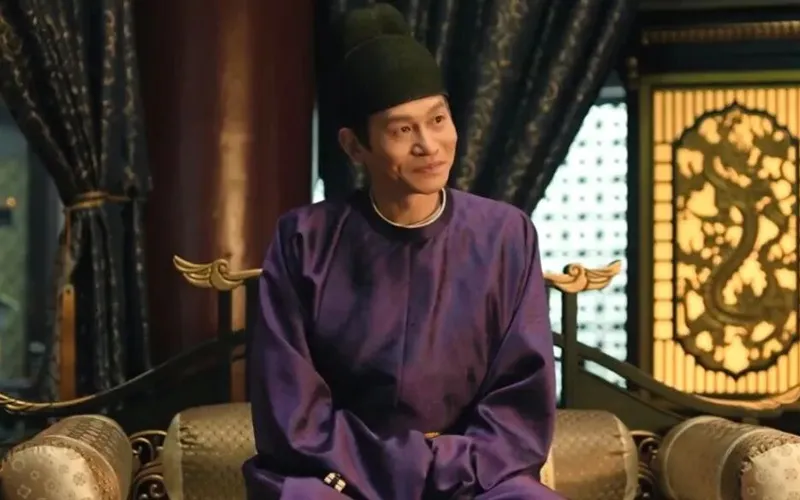
This is why Yu Gong’s costume can work. If the fictional court borrows late-Tang habits, his purple robe is not a mistake. It is a claim about his place in the room. The audience may not know the rank table, but it can read the confidence in the fabric.
Later Courts
The Song Dynasty largely kept the Tang public-robe system. Third rank and above still wore purple, and eunuchs fell under the same rule. Song rulers, however, remembered late-Tang troubles. They kept eunuch power tight. Few reached third rank. A small number received purple by imperial grant, including Li Jimei (李继美) and Wang Jien (王继恩). Purple remained possible, but it was not routine.
The Yuan Dynasty changed the scale. Officials of the first through fifth rank could wear purple public robes. Eunuchs with regular civil office could join them. Yet their status was lower than in Song times, and emperors did not make grant-purple a habit. Surviving records rarely mention purple eunuchs. The color had widened, but the wearer’s political weight had narrowed.
The Ming Dynasty banned purple. The question then disappears. This timeline explains the confusion. A viewer who remembers Ming court dramas may see purple as an obvious error. A viewer who reads late-Tang politics sees a calculated choice.
Screen Choice
In the drama, Yu Gong holds the title Duke of Zhao (赵国公) and Piaoqi Grand General (骠骑大将军). Purple suits that rank. His behavior makes the rank feel real. He forbids the city from eating fish because his surname means fish. When the crown prince eats fish, he pushes the emperor until the prince apologizes. The robe and the temper support each other.
Visually, purple carries weight. Other eunuchs wear crimson, blue, or green. His deep purple stands apart, and the heavy cloth makes him look still, closed, and hard to read. The costume does not need a speech to tell us he is different. It lets the eye do the work before the plot explains it.
So the purple robe is not simply a historical quiz. It is a screen shortcut for rank, mood, and threat. Does it convince you? Or does it still feel too bright a color for a man who hides so much?