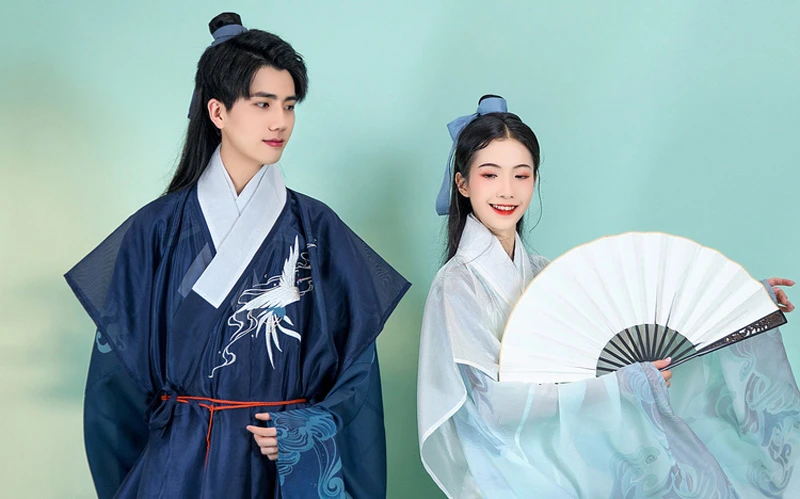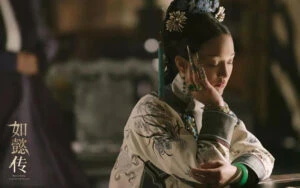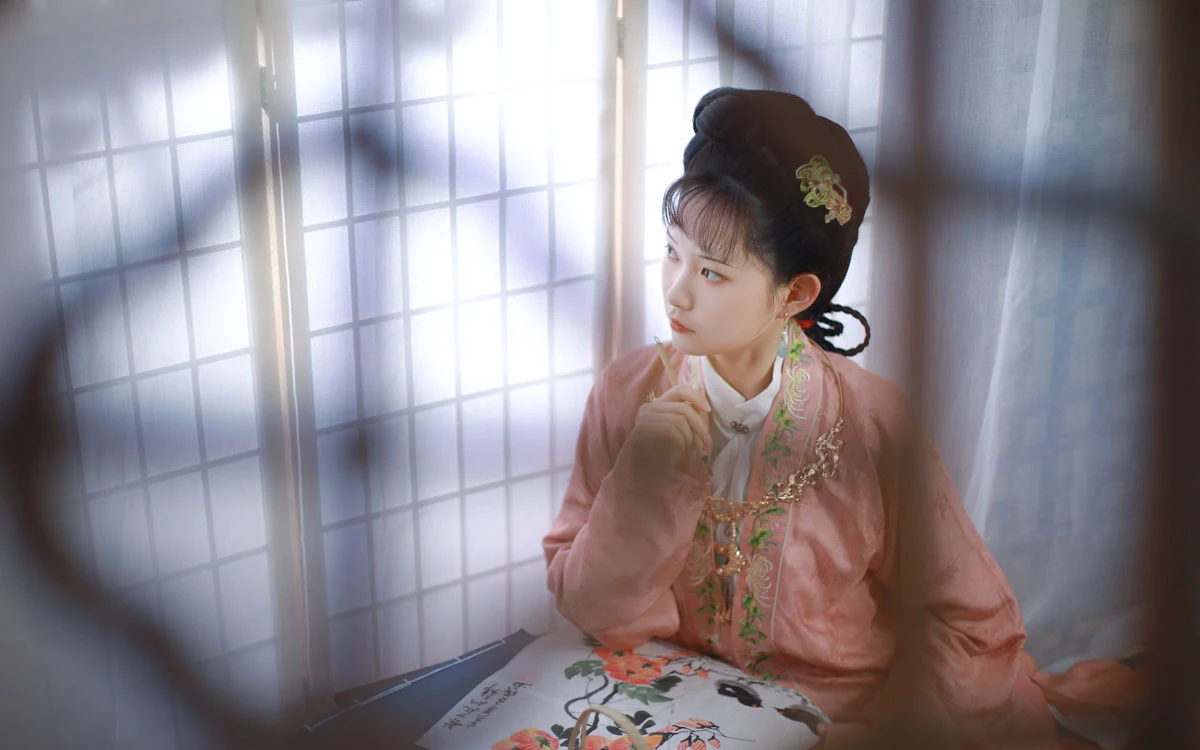
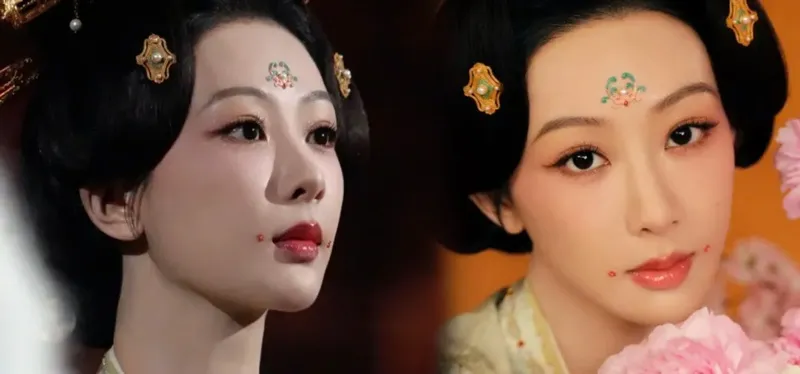
One close look at Meng Ziyi (孟子义) in Tigers Sniff the Rose (尚公主) and a small detail changes the whole face: a gemmed floral mark sits above the brow, catching light instead of lying flat. Viewers who remember Flourished Peony (国色芳华) may feel a familiar idea. Painted decoration has long dominated screens.
A raised piece feels sharper, almost like jewelry for the face. That choice is not random. Historical forehead marks were never limited to one red brushstroke. Women used pigment, foil, pearl, shell, feather, and stone. The screen version simply pushes texture forward. It asks a useful question: when a tiny ornament becomes three-dimensional, what changes for the character, the camera, and the story?
Painted Versus Raised
The old picture is easy to trust: a red flower drawn between the brows. Real practice was wider. A mark could be cinnabar, gold leaf, silver foil, pearl, mother-of-pearl, mica, kingfisher feather, or even black paper. Materials were cut, glued, and layered. Some were light as a wing; others held a low shine. A painted mark obeys skin. A raised mark owns a shadow. On camera, that shadow gives the face a new edge. It also makes the character seem deliberate, as if she dressed for a particular room, hour, or witness.
Tang records show forehead marks in common use. In one tale, a wife wears one so constantly that she keeps it even at home and while bathing. Later, during the Five Dynasties and Ten Kingdoms, some wearers covered much of the face. Bai Juyi (白居易) praised a red so bright that cherries lost color beside it. Gold and silver versions had their own names and even borrowed the shape of a cicada. These details matter because they prove variety. The flat red flower was one option, not the rule.
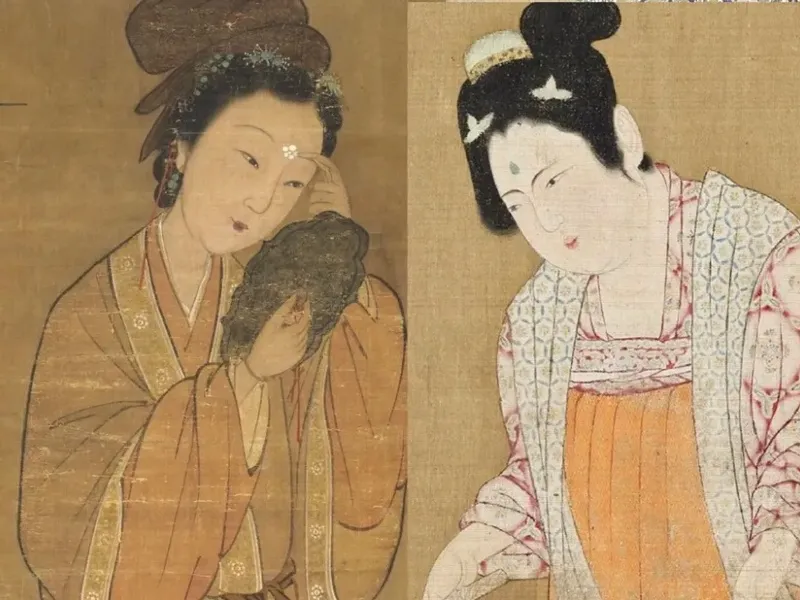
Pearl marks read softer. Shell and mica carry a pale gleam. Kingfisher feather brings a blue-green flash. Stone could add weight: jadeite, nephrite, or a small polished gem. A designer today can combine those clues without copying a tomb object. The raised jewel in Tigers Sniff the Rose works because it translates material history into a visual signal. The audience sees expense, skill, and mood before a line of dialogue arrives.
Shape choices were just as free. Flowers, leaves, drops, fans, and paired curls could be combined into round patterns. A mark might sit alone or answer a hair ornament above it. That freedom helps a costume team build a face that belongs to one person, not a generic court. In a crowded scene, a small raised piece can guide the eye. It can mark a pause, a rank, or a private joke. The detail only works when the camera respects it. When it does, the face gains a second layer of speech.
Adhesive And Jewelry
How did such pieces stay on? Natural glue, including fish bladder adhesive, did the quiet work. That practical answer kills the myth that ancient makeup was only pigment. A mark had to survive heat, movement, and long ceremonies. It also had to be removable without harming the skin. Modern costume teams face the same puzzle. They need a light base, a secure hold, and a finish that reads under strong lights. A gemmed mark can fail if it looks like plastic. It succeeds when the setting feels embedded, not pasted on as a sticker.
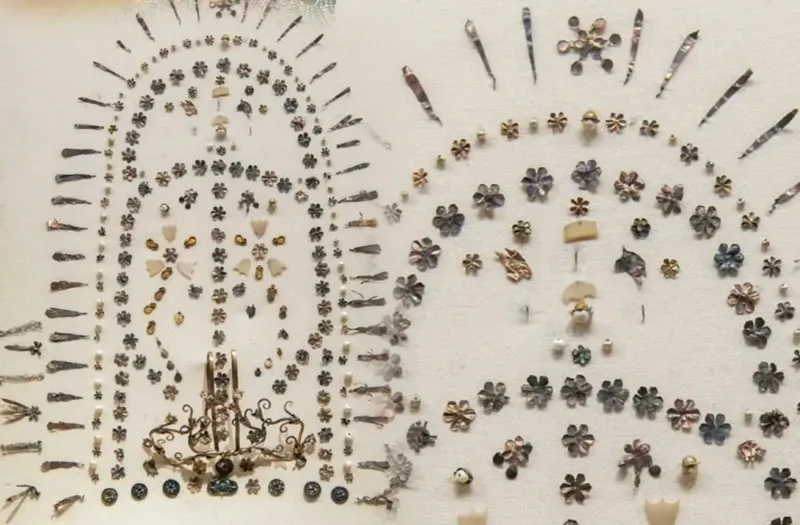
The word also describes a separate ornament. Small flower-shaped pieces in gold, silver, jade, pearl, or gem could sit in a finished bun. Hairpins fix hair; these decorate it after the shape is built. That double life explains why the screen detail feels rich. It borrows the logic of jewelry and places it on skin. A Sui burial set linked to He Ruojue (贺若厥) shows the taste for gold petals, drops, wire, jade, pearl, and stone across 109 parts. Her high-status tomb points to craft that could rival early Tang royal graves.
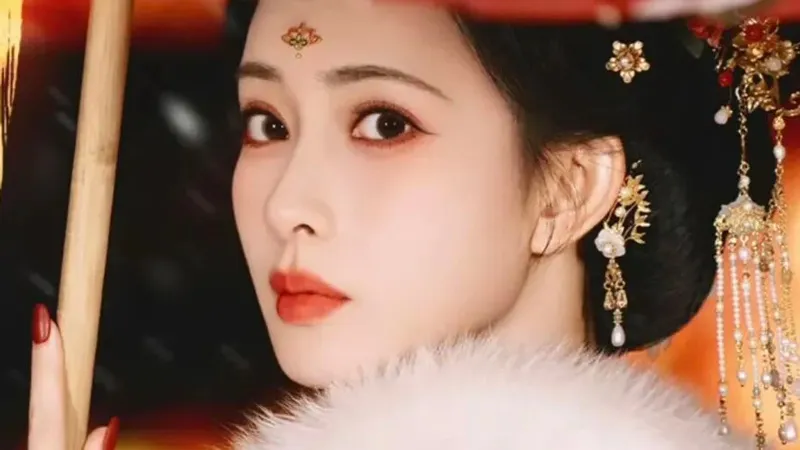
For a drama, the choice earns its place when it serves character. A plain painted mark can suggest habit or intimacy. A raised gem can suggest rank, ceremony, or performance. If every scene uses the same heavy piece, the face becomes a display board. If the mark changes with private and public moments, it becomes a small script. Tigers Sniff the Rose catches attention because the detail invites that reading. The best costume work does not shout “history.” It gives the actor one more way to act.
Viewers notice the shine first, then the history behind it. That order is healthy. A costume detail should work before a viewer knows the source. A jewel can look too modern if the setting is clumsy; it can look persuasive if the shape, scale, and glow match the scene. The raised floral mark is not a magic trick. It is a small decision with visible weight. When it sits well, the past feels less like a museum label and more like a choice made by someone rushing to meet a guest, a rival, or a mirror.