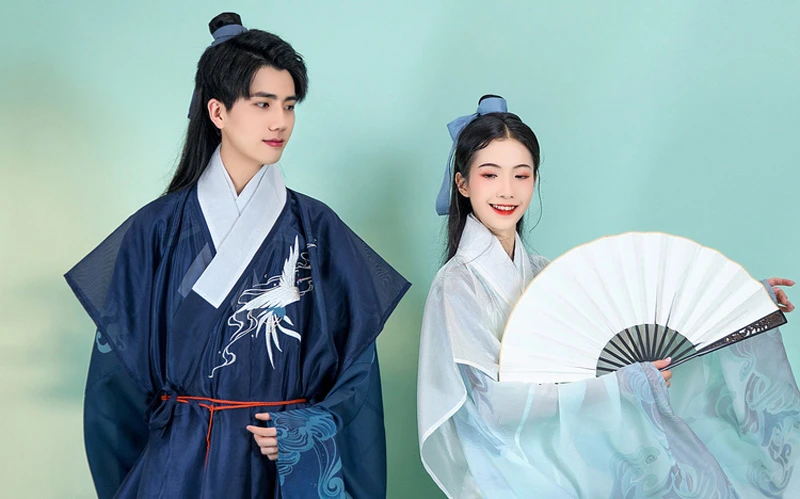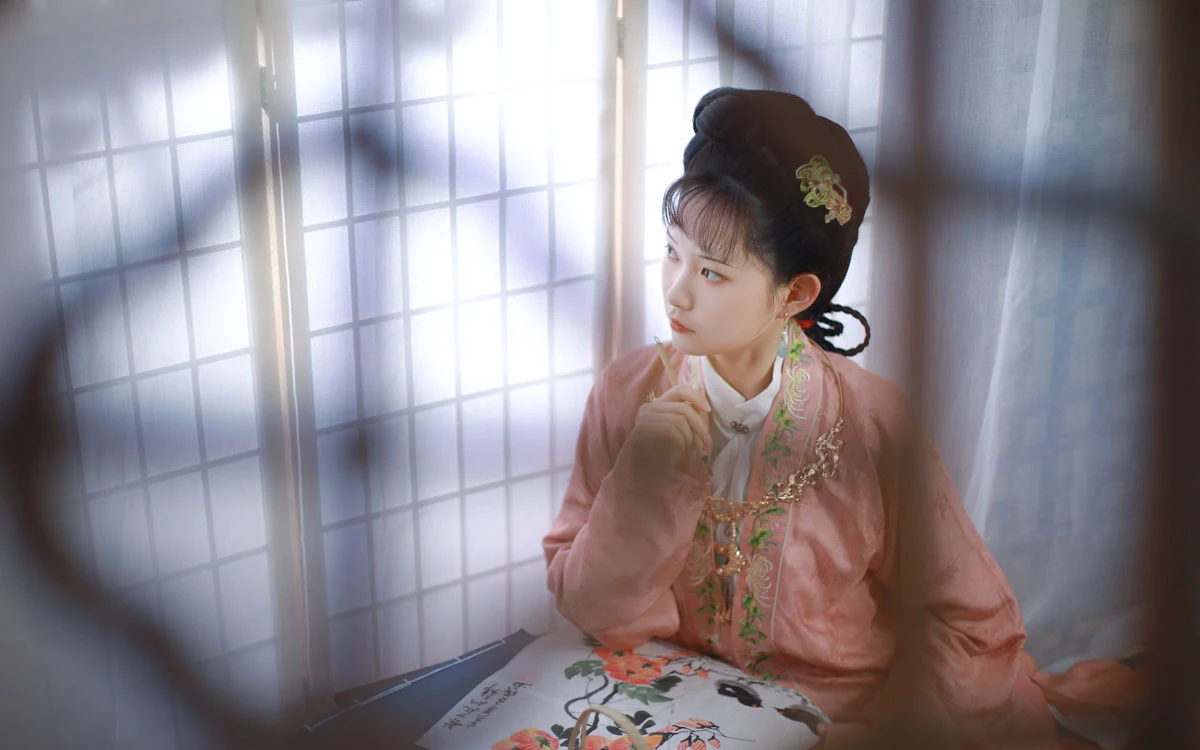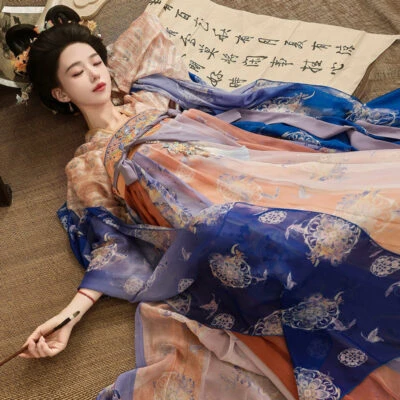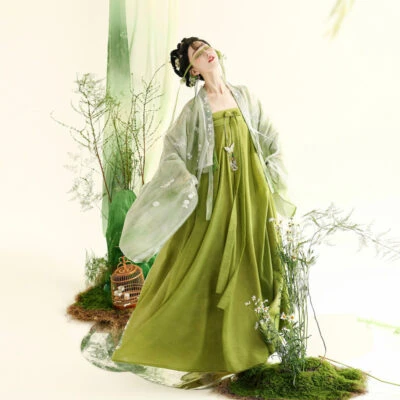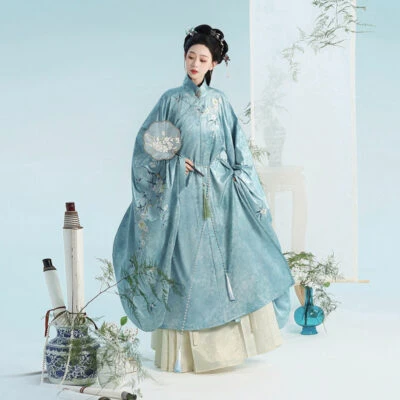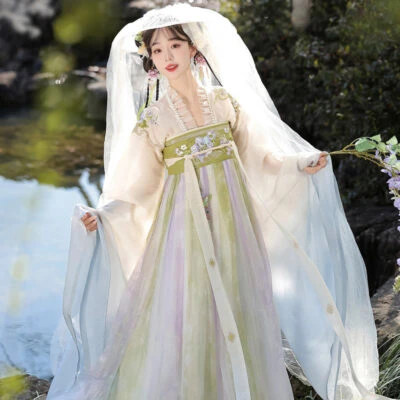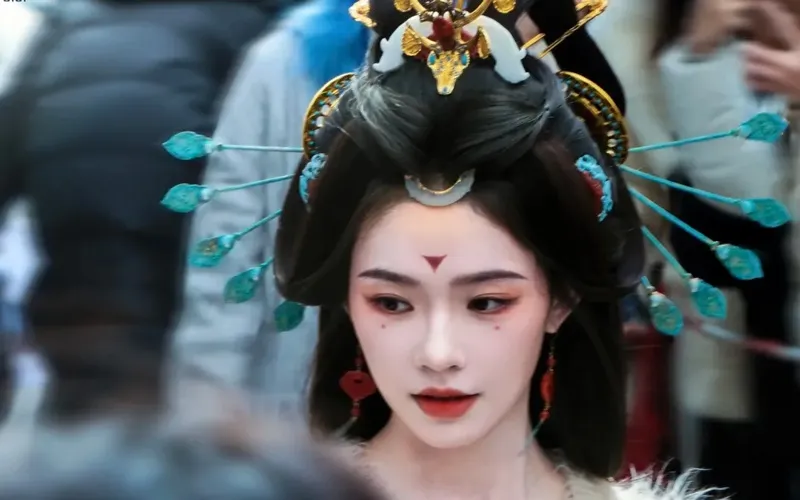
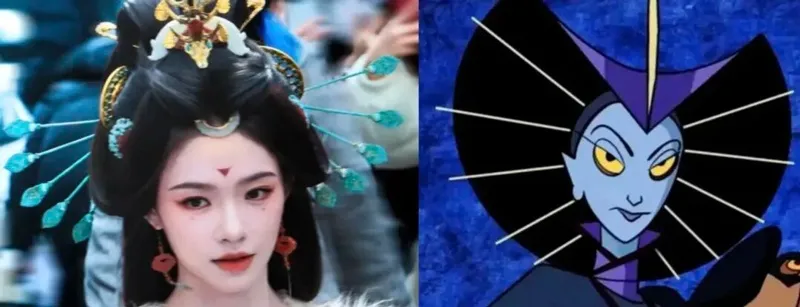
Leaked set photos for Gui Luan (归鸾) show Lin Yun (林允) wearing a dense cluster of almost identical hairpins, and fans immediately asked why. Some joked that she was copying Shiji Niangniang (石矶娘娘) from an animated hit. The comparison is funny, but the answer is more grounded: big hair needed support, and court dress needed readable signals. The look is not random decoration. It is a visual solution to two old problems—how to hold up an enormous hairstyle, and how to show status without speaking.
High Buns, Real Needs
In the Eastern Han, late Tang and Five Dynasties, elite women favored high, wide buns. Many used padding or false hair to build the shape. Once the bun became that large, one or two pins could not keep it stable. Matching pins inserted in symmetrical pairs became a practical necessity. This is where the resemblance to Shiji Niangniang comes from: rows of repeated pins create a crown-like outline. The difference is that the drama look also borrows from court ornament rules, where repeated pieces had a social job, not just a visual one.
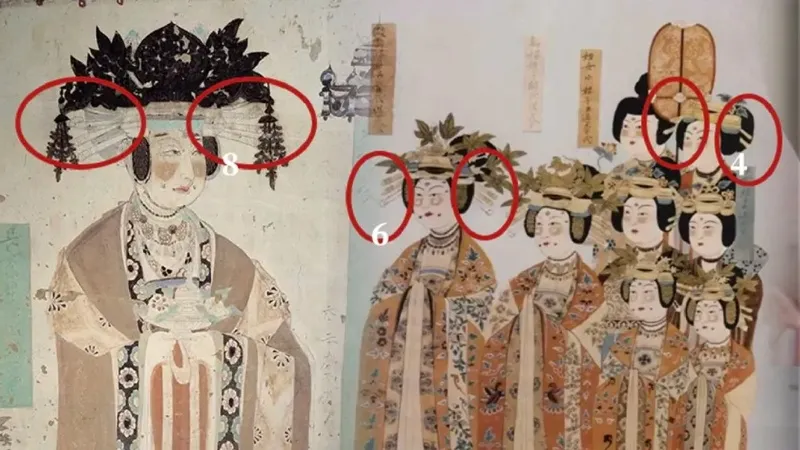
Titled women in ceremonial dress wore hairpins with floral ornaments, and the number of ornaments tracked rank. Dunhuang (敦煌) murals offer clear evidence. In Yulin Cave 19 (榆林窟19窟), a Five Dynasties portrait of Liangguo Furen (凉国夫人) shows four pairs—eight gold hairpins—along with gem-set floral plaques. Donor images from the Cao (曹) family show sets of six and four. Higher status meant more ornament, and the effect was meant to be legible at a glance.
Single-pronged pins and double-pronged hairpins were not identical tools. Double-pronged pieces gripped small sections and fine details, while single pins anchored the main shape. Decorative heads could carry more complex work. Later, people often used one loose word for both. Yet Old Book of Tang (旧唐书) regulated the number of flower trees and gem-set floral plaques, not the number of pins. Rank came from plaques; pins supported the high bun. An empress wore twelve plaques, a crown princess nine. More plaques meant more support pins, often in one style—close to a modern batch of U-shaped clips.
Rank, Poetry, Screen
Poetry complicates the picture. “Twelve rows of gold hairpins” sounds like a rank chart, but it usually describes a full, layered toilette. Xiao Yan (萧衍) wrote in Song of the River Water (河中之水歌): “Above her head, twelve rows of gold hairpins; below her feet, silk shoes with five patterns.” Shi Jianwu (施肩吾) used the same image in Collected Makeup Lyrics (收妆词): before the bronze mirror, she vainly inserts twelve rows. Here twelve is a loose number for “many,” not a legal quota.
In some poems, twelve gold hairpins also stand in for concubines or performers. That meaning sits far away from the ceremonial dress system of empresses and titled women. So a screen designer can pile on repeated pins to suggest luxury, ritual weight or even a slightly dangerous court mood. The audience reads density first; the historical rulebook comes second. That gap is exactly where drama styling becomes creative rather than documentary.
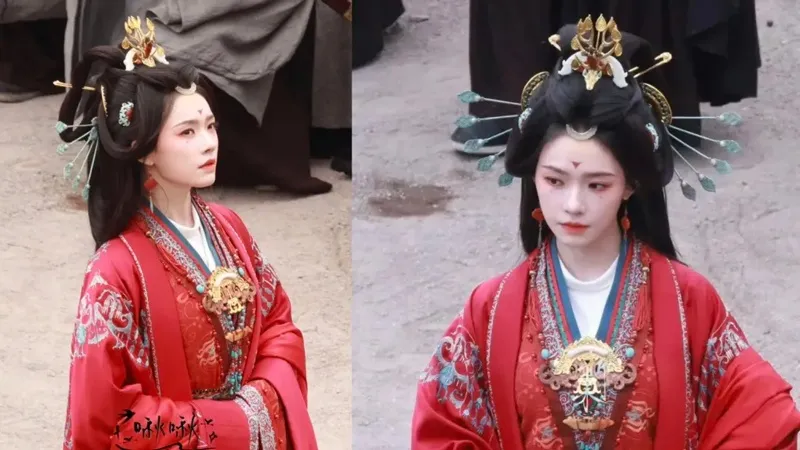
Gui Luan turns that gap into spectacle. The repeated pins enlarge Lin Yun’s silhouette, frame her face and make every turn of the head feel heavier and more formal. They may echo Shiji Niangniang visually, but the deeper logic is high-bun engineering plus court ornament display. Film and television always reshape surviving evidence. The real question is whether the result works on screen. Does this crowded, crown-like look make you curious about the story—or does it feel like too much?