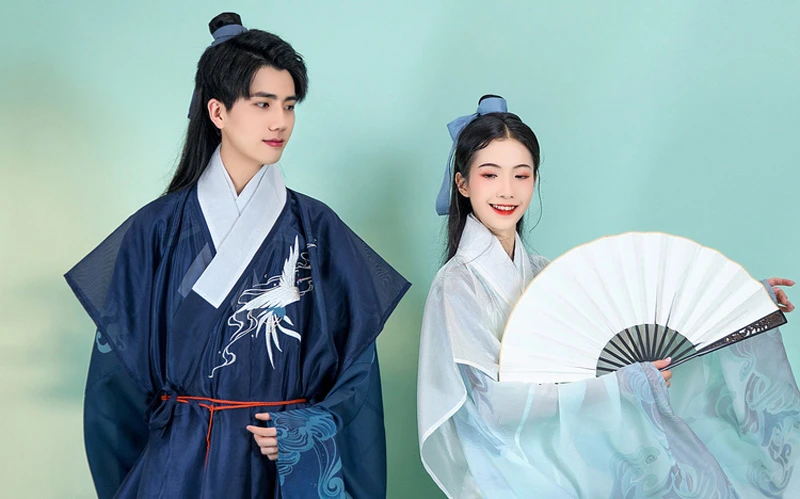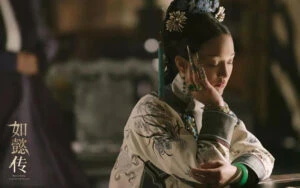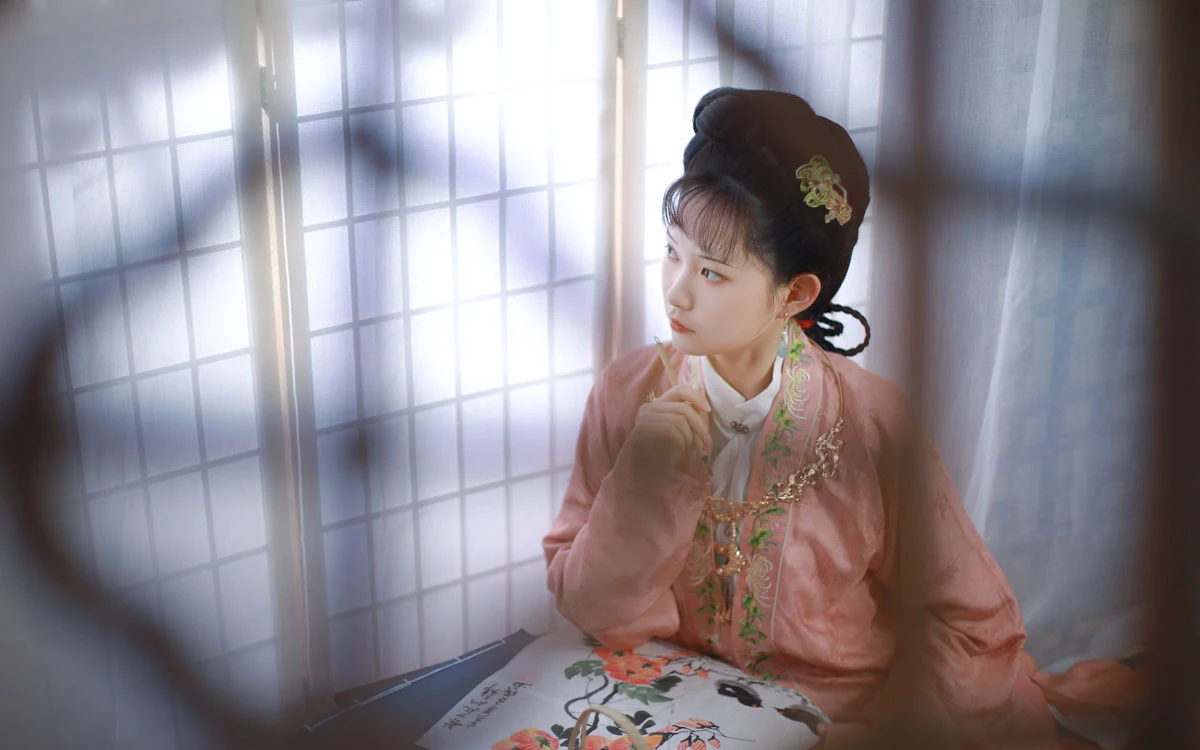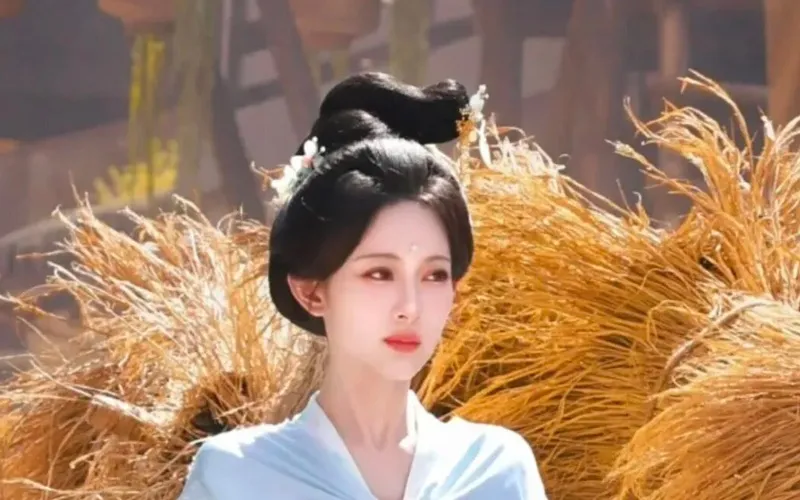
In Tigers Sniff the Rose (尚公主), Meng Ziyi (孟子义) plays a royal daughter whose hair often sits off-center. The first close-up invites doubt: did the stylist run out of time? Is the mirror crooked? Neither. That tilt is a falling-horse bun, a historical shape rebuilt for the camera. Its imbalance is intentional. A leaning mass of hair can suggest rank, mood, and motion at once. The team borrowed a Tang idea, then adjusted it for a fictional princess. The result feels almost wrong, and that friction is why it lingers. A single angle can make a princess look tired, dangerous, or bored before she says a word. Before judging the look, it helps to follow the bun through older wardrobes, where a small shift in angle could signal a whole new century.
Han Roots
The earliest relatives of this style are older than its famous name. Similar shapes appear on Western Han figurines: hair gathers low at the neck, drops toward the back, and lets one strand slip aside. The silhouette is long, soft, and a little unstable, like a knot loosening after a ride. In the Eastern Han, writers linked a side-leaning version to Liang Ji (梁冀) and his wife Sun Shou (孙寿). Book of Later Han (后汉书) describes a changed form that stressed “leaning to one side.” Paired with worried brows and tear-streaked makeup, it became a fashion statement, not a tidy court rule. Even then, the style had a double life: private feeling on public display.
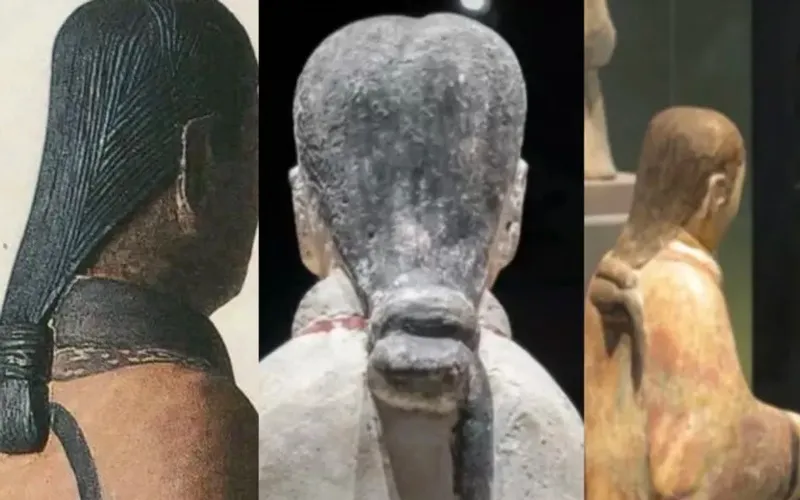
For its time, that asymmetry was bold. A symmetrical bun signals control; a slipping bun hints at private feeling. The old “falling horse” image works because the hair seems caught between gravity and grace. It does not shout. It whispers that the wearer has just moved, sighed, or turned away. Some critics treated the style as a warning sign of strange dress, which shows how much attention a woman’s head could attract. The aim was not mess for its own sake. The aim was controlled looseness that made the face and neck look vulnerable, elegant, and slightly untamed. A jadeite pin or a nephrite comb could catch light near the cheek, but the real ornament was the angle itself.
This matters for reading the princess. Her position is high, but her world is not simple. A perfectly balanced crown would make her look sealed inside protocol. A leaning bun gives her a small crack in that seal. The audience may read it as fatigue, defiance, or calculation. It also keeps her visually distinct in crowded scenes. Historical dress on screen rarely survives as a museum copy; it is edited for story. Here, the edit is small but effective. The head does not look careless. It looks like someone has decided which rules to obey and which to bend. That choice fits a royal daughter who must smile in public while measuring every rival in the room.
Tang Lean
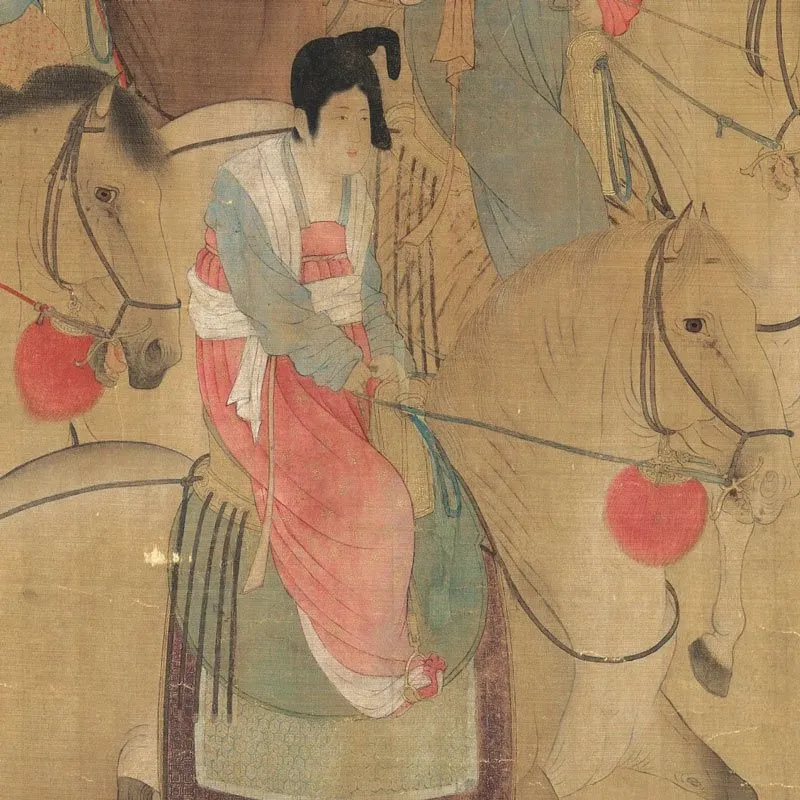
Tang dynasty beauty did not copy Han restraint. The bun grew fuller, higher in volume, and heavier on one side, often with hair pulled close around the cheeks. The painting Lady Guoguo’s Spring Outing (虢国夫人游春图) and tomb figures show this plush, drowsy balance. One side feels tight; the other relaxes. The style is sometimes confused with a lower ear-side variant, but the key remains the same: a deliberate lean. Tang poems praise the look because it suggests leisure, confidence, and a body at ease. It is not “undone.” It is arranged to seem almost undone, which takes more skill. The eye reads motion even when the wearer stands still, and that trick gives the face a lazy authority.
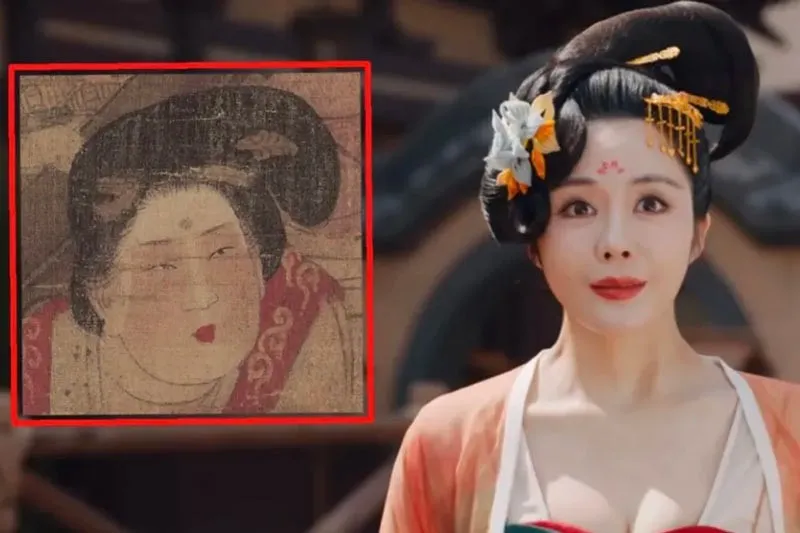
Later dynasties kept the name and changed the mood. During Song-Yuan, the fashion cooled. In the Ming dynasty, it returned with tighter lines, a higher placement, and less hair sweeping across the face. Ming paintings often give the wearer a quiet, restrained air. The same label now means something different: less opulent, more private. This is why a single historical term can mislead modern viewers. A name travels; a silhouette does not. Each era redraws the shape to fit its own idea of beauty, status, and self-control. The bun is a small record of that editing process, and a reminder that “historical accuracy” on screen often means choosing which century to listen to.
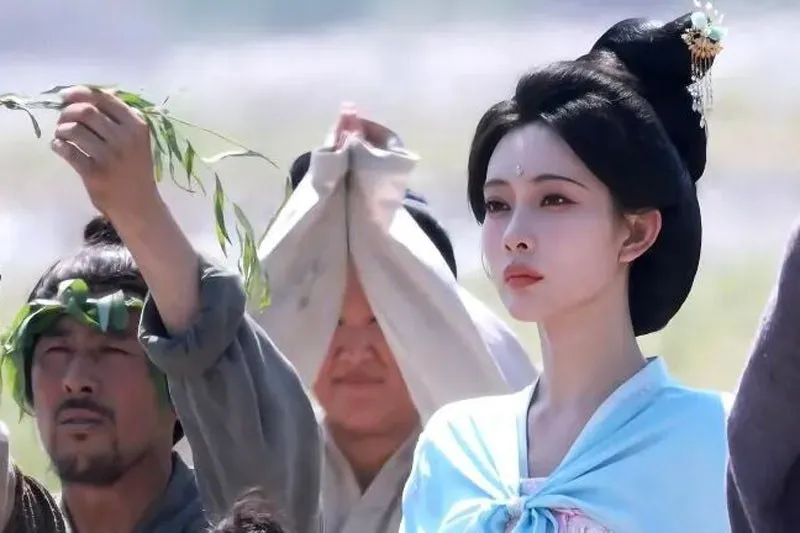
Back in Tigers Sniff the Rose, the tilt is best read as character design. The princess does not need a loud costume to seem powerful. The off-center mass does the work: it suggests luxury with a hint of pressure, like a smile that never fully arrives. Viewers used to mirror-perfect period dramas may first call it sloppy. Yet the imbalance is precise. It gives her movement before she speaks and tension before conflict starts. A tiny crooked bun carries a long argument about taste. It also asks a fair question: if costume can reveal a person, why should hair always sit straight? The next time a historical drama bends a rule, look twice. The “mistake” may be the most revealing line in the script.