Ancient Chinese had no Persil or Omo, no Haier washing machines, and certainly no scented fabric softeners. So how did they keep their white robes gleaming and their silk sashes spotless? If you picture a babbling brook, a few maidens humming folk tunes while gently rubbing linen—think again. The real history of laundry in China is less poetry, more perspiration. It was a gritty, muscle‑aching chore that demanded chemistry, botany, and a good deal of brute force. Yet the solutions they devised were surprisingly ingenious—some so effective that they survived well into the 20th century. Let’s roll up our sleeves and dive into the suds‑free world of ancient washday.
1. Ash Power – The Everyman’s Detergent
If any single “powder” deserved the title of ancient laundry MVP, it was cao mu hui (草木灰)—plain wood ash from the cooking fire. Yes, the grey dust you sweep out of the hearth. Early farmers noticed that when ash mixed with water, it turned slippery and slightly harsh to the touch. That slipperiness came from potassium carbonate, an alkaline compound that breaks down grease and grime. The Book of Rites (礼记), compiled over two thousand years ago, already advised: “When headbands and belts are soiled, wash them with ash water; when garments are dirty, cleanse them with the same.”
For daily use, families would pack ash into a bamboo basket and pour water over it, collecting the dark, murky runoff in a clay pot below. That grey liquid looked like weak tea but worked like a charm on sweaty collars and oily sleeves. By the Qin dynasty, innovators had upgraded the recipe: they mixed wood ash with shell ash from burnt oysters or clams. The chemical reaction produced potassium hydroxide—a much stronger alkali—which not only removed stubborn stains but also left delicate silks whiter and softer. No synthetic surfactants, no plastic bottles, and zero shipping miles.
2. Pods and Nuts – Nature’s Soap Factory
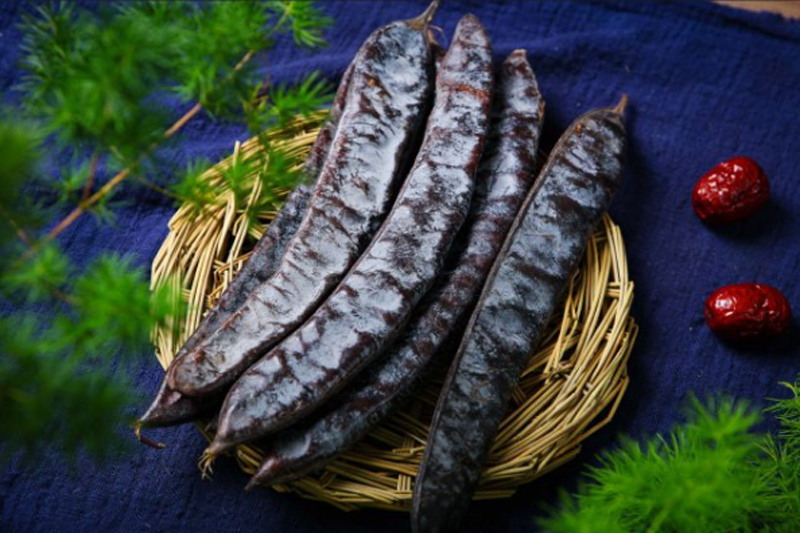
While ash was the working‑class hero, the aristocracy and aspiring merchants turned to zao jiao (皂角)—the long, brown pods of the honey locust tree. Split one open, and you will find a sticky, mucilaginous pulp that lathers in water. This natural saponin is a true surfactant: it reduces surface tension, lifts dirt, and even produces a modest foam. Harvesters would dry the pods, crush them, and steep the pieces in warm water to make a soapy bath. During the Song dynasty, urban workshops began boiling crushed pods with flour and aromatic herbs, then moulding the paste into cakes—the era’s answer to a soap bar.
These “soap balls” were sold in bustling marketplaces and became a household staple. But what if you lived in a region without locust trees? The solution was wu huan zi (无患子), or the soapberry—a small, golden fruit whose peel contains the same saponin-rich juice.
People would steam the berries, sun‑dry them, and store them in cloth bags; a few berries tossed into a basin of water released enough suds for a week’s worth of tunics and undergarments. No palm oil, no petrochemicals—just pure botanical chemistry handed down by generations of observant cooks and herbalists.
3. Noble Lather – Pig Pancreas and Perfumed Peas
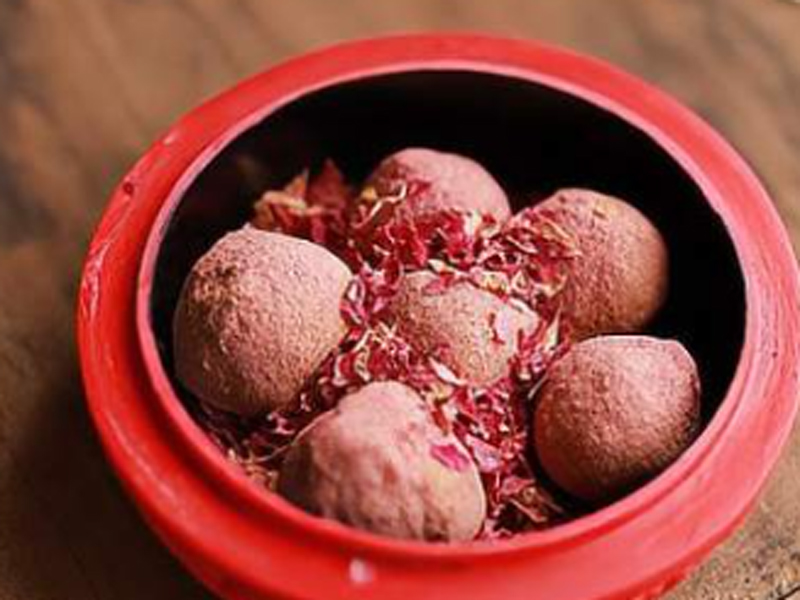
For the wealthy, laundry was not just about cleanliness—it was about status and scent. Enter zao dou (澡豆), literally “bath peas,” a luxury product that sounds more like a snack than a cleanser. Its main ingredient? Pig pancreas. Yes, the digestive organ of a pig, washed, pounded into a paste, and mixed with bean flour and ground spices such as cloves or sandalwood. The mixture was shaped into cakes and left to air‑dry. The pancreatic enzymes broke down protein‑based stains (think blood or egg), while the bean flour provided gentle abrasion, and the fragrance masked any barnyard afternotes.
Production was labour‑intensive and costly, so it remained a privilege of the imperial court and high‑ranking officials. A famous anecdote from the Eastern Jin dynasty tells of Wang Dun (王敦), a newlywed consort’s husband, who mistook a bowl of zao dou for a dessert and swallowed it whole—much to the horror of his aristocratic in‑laws. By the Tang and Song periods, production scaled up enough that zao dou became a common gift for festivals, and variants persisted in rural villages well into the 1960s under the name zhu yi zi (猪胰子)—a testament to its enduring effectiveness.
4. Kitchen Castoffs – Rice Water and Natural Soda
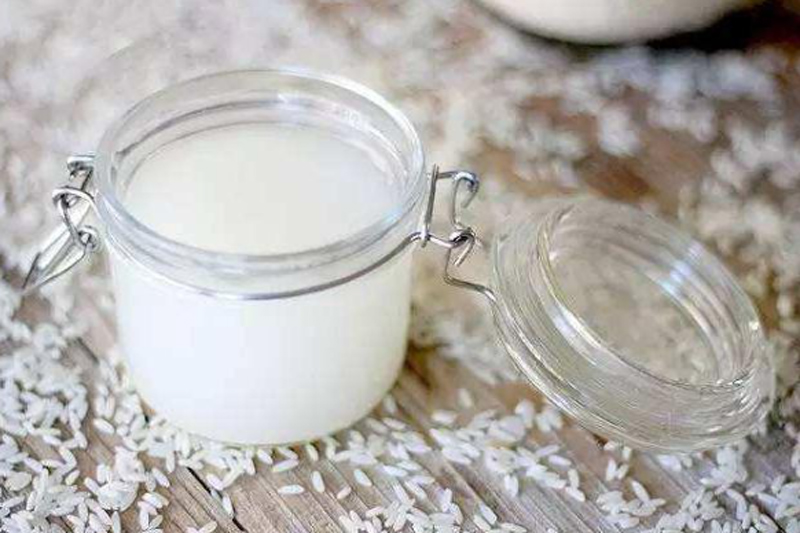
Not every household could afford imported spices or fresh pancreas. So frugal homemakers turned to what they already had in the kitchen. Rice‑washing water—the cloudy, starchy liquid left after rinsing raw rice—was boiled, cooled, and used as a soak for greasy work clothes. The starch particles absorbed oil and loosened mud, and the gentle heat helped open fabric fibres. For heavier loads, they relied on tian ran jian (天然碱), or natural soda—a white, powdery deposit collected from the shores of alkaline lakes in the northern provinces. This crude sodium carbonate had been documented as a laundry aid as early as the Han dynasty.
By the Ming era, artisans learned to synthesise a cheaper version called shi jian (石碱), or “stone alkali,” by burning certain plants and leaching the ashes repeatedly. This artificial soda was so versatile that families used it for both kneading dough and scrubbing collars—a dual‑purpose powder that sat on every kitchen shelf. The wisdom here was deeply practical: observe what fizzes, what foams, and what softens water; then adapt, reuse, and never waste. These were circular economies long before the term was coined.
5. Muscle and Wood – The Real “Washing Machine”
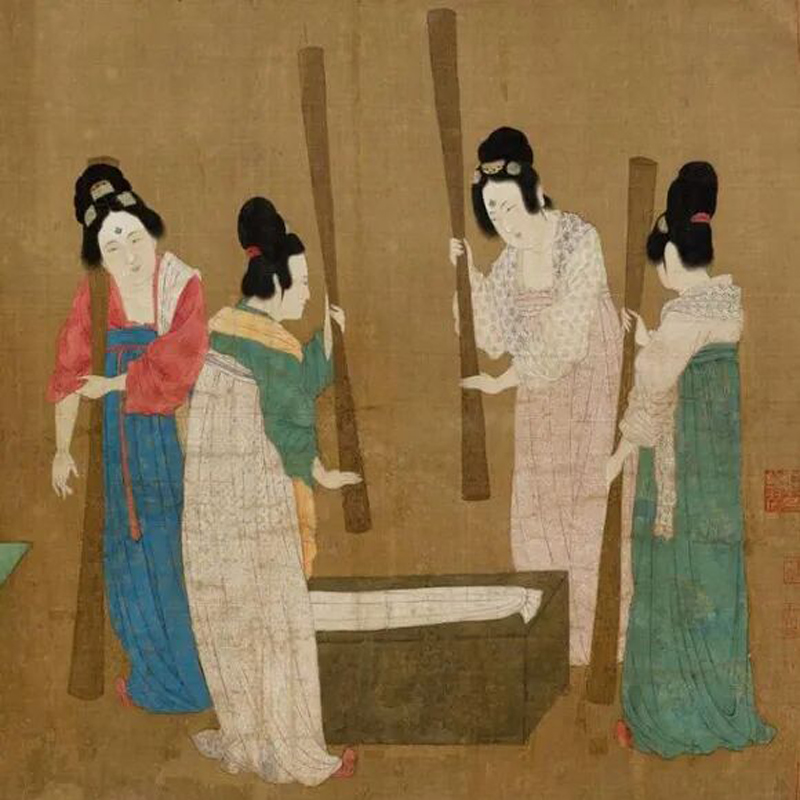
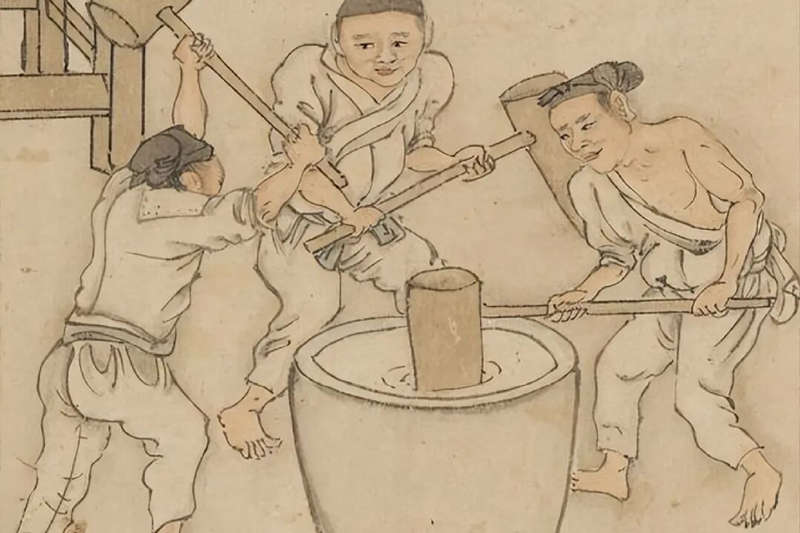
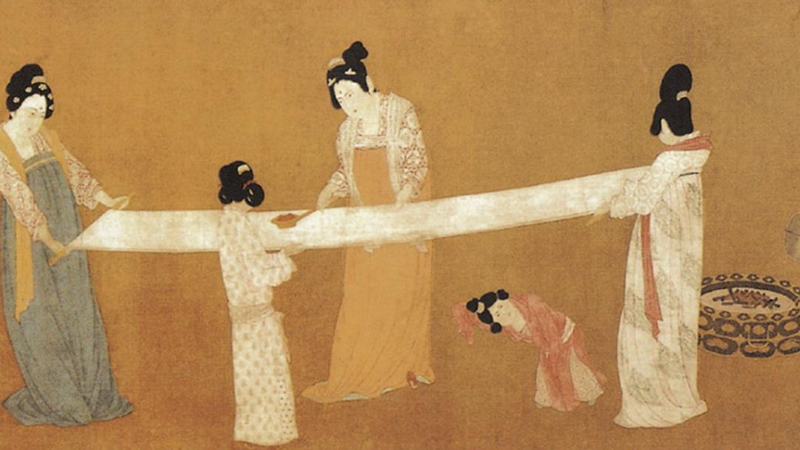
Detergents are only half the story. Without spinning drums or agitators, the ancient Chinese relied on sheer human strength and simple tools. The classic method was dao yi (捣衣)—“beating the clothes.” Women would take wet, soaped garments, lay them flat on a smooth stone anvil, and strike them repeatedly with a wooden mallet or beetle. Each blow squeezed out dirty water and forced fresh solution through the weave, dislodging embedded grit. It was rhythmic, deafening, and exhausting—but it worked.
The poet Li Bai (李白) captured this nighttime ritual in his famous line: “The moon over Chang’an—a thousand households, the sound of beating clothes.” That sound was the percussion of daily life, echoing through alleys and courtyards as autumn deepened.
For smaller items, a washboard—a wooden board with carved ridges—provided a scrubbing surface, while large earthenware basins held the soaking water. Men often took on the heavier beating, while women handled soaking and rinsing; it was a family affair that built calluses and camaraderie. In an age without electricity, every clean tunic represented a small victory of persistence over physics.
From ash lye to locust pods, from pancreas paste to rice starch, the ancients concocted a dazzling arsenal of stain‑fighters under the most limited conditions. They observed nature, experimented with fire and water, and passed down recipes that outlasted dynasties. Today, we press a button and walk away—yet those distant echoes of mallets on stone remind us that cleanliness is never free. It is a story of curiosity, sweat, and the quiet brilliance of everyday people who refused to let dirt have the last word.
