
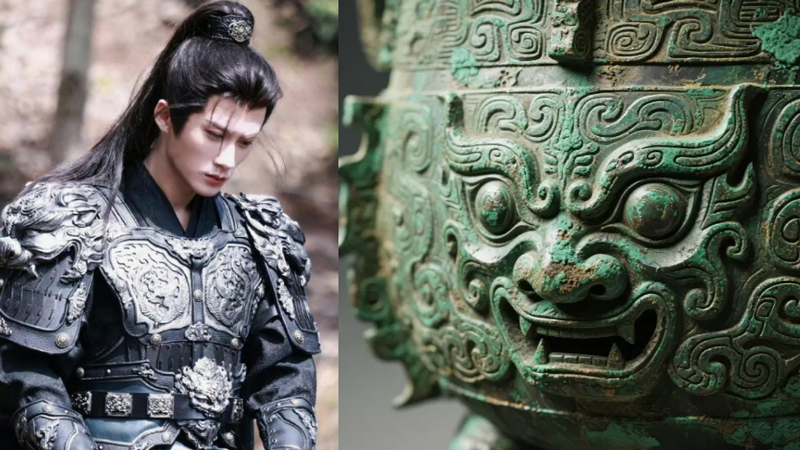
Tan Jianci (檀健次) rides a jet-black stallion through a dust-choked battlefield, his face hidden behind an intricately carved mask. The silver-and-charcoal heavy armor clinging to his frame gleams with an unsettling pattern—gaping maws, bulging eyes, and snarling beast heads that seem to swallow light. This is not your typical Wuxia costume. It feels ancient, almost ritualistic, as if lifted from a bronze ritual vessel rather than a cavalry stable.
The question gnaws: why would a Song-era general wear a monster on his chest? And why does this bizarre design feel so historically precise, yet so rarely seen in modern period dramas? The answer lies not in fantasy, but in a forgotten military psychology, metallurgical ingenuity, and a rigid social code that turned armor into a billboard of terror and rank.
The Beast That Devours Fear
Zoom in on the chest plate. That wide-eyed, jaw-dropped creature—no lower mandible, but teeth forever bared—is the Taotie (饕餮), a motif that haunted the bronze cauldrons of the Shang and Zhou dynasties. Archaeologists call it a "animal-face design," but it is far from mere decoration. In the Tang dynasty, the official military manual Tang Liudian (唐六典) documented a supreme-grade cuirass named Mingguang Kai (明光铠), or "Shining Light Armor."
Its signature feature was a pair of polished circular mirrors on the chest, often cast with that very beast. By the Song era, the Shanwen Jia (山文甲) and Buren Jia (步人甲)—armor for elite infantry and cavalry—continued this tradition, placing animal heads at collars, shoulder guards, and heart protectors. This was not a costume designer’s whim; it was a thousand-year-old military doctrine cast in cold metal.
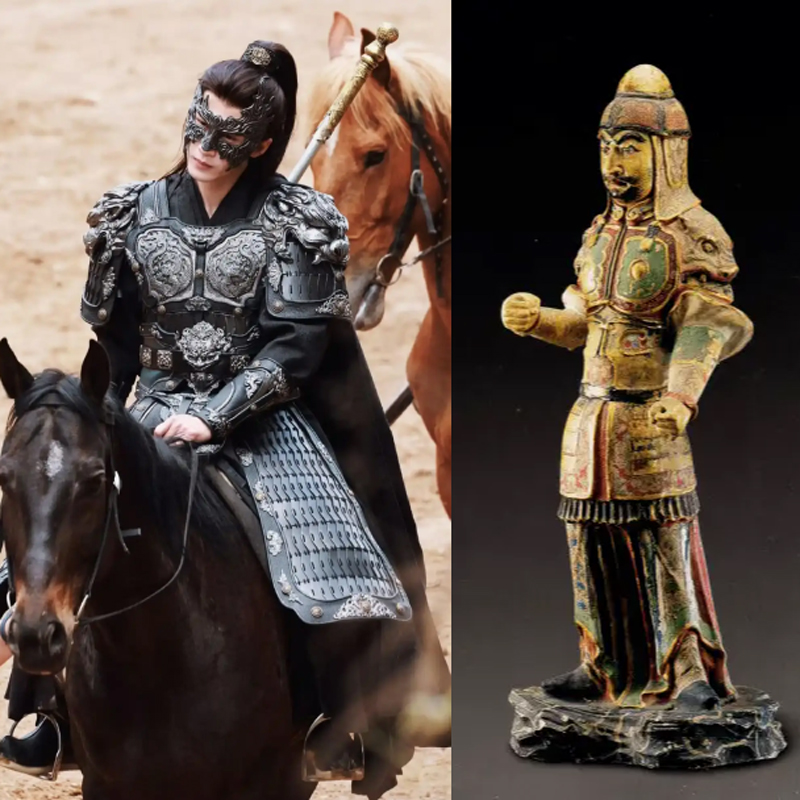
Why would a soldier willingly wear a demon? The first reason is psychological warfare. Before a single arrow flew, the visual shock of a charging general clad in a screaming monster could break an enemy’s will. Soldiers on the home side took courage from their leader’s fearsome silhouette, while the opposing ranks saw not a man, but a mythical predator. That was the ancient equivalent of a sonic boom—a terror tactic forged not in gunpowder, but in bronze and iron. The Taotie did not eat food; it ate fear. And on a chaotic field, that appetite could flip a battle before the first clash of blades.
Second, the raised beast head was not just for show—it functioned as a structural deflector. The protruding snout and flaring nostrils created a convex surface that could catch a slashing sword or a falling axe. Instead of biting directly into flat metal, the blade’s energy slid along the curved relief, dissipating into the surrounding recessed grooves. It was an early form of reactive armor, turning an artistic flourish into a life-saving geometry. A direct thrust might still pierce, but a glancing cut would skid off, leaving the wearer bruised but unbroken. This was metallurgical intelligence dressed as mythology.
Rank Etched in Silver
In the Tang and Song militaries, armor was not a commodity—it was a privilege. Strict sumptuary laws dictated who could wear what. A common infantryman got boiled leather or quilted cloth, barely enough to stop a stray arrow. A mid-level officer might earn a Liangdang Kai (两当铠)—a simpler two-piece cuirass with minimal ornamentation. But the full-bodied, beast-embossed heavy armor with layered shoulder guards and a massive chest mirror? That was reserved for the supreme commander of the imperial guard or a frontline marshal. It was a walking rank badge, more visible than any pennant. When Tan’s character appears in that suit, he is not just armed—he is announcing his station to every soldier and spy within arrowshot.
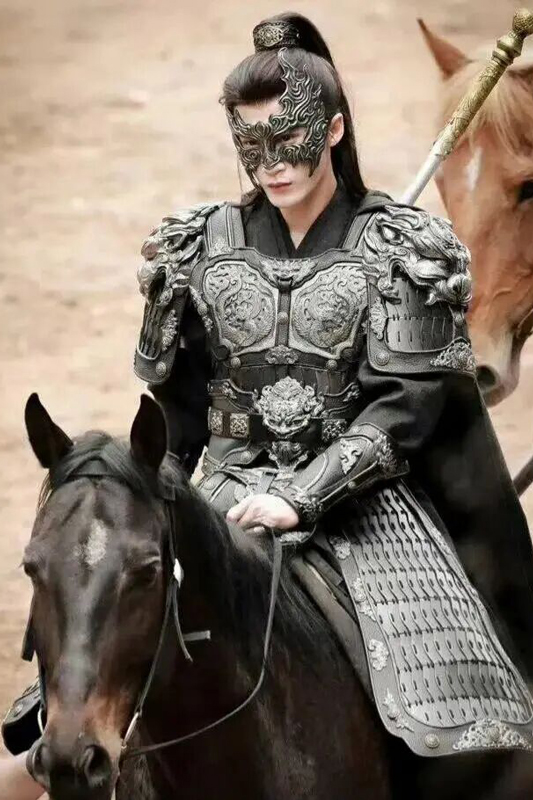
This hierarchy was practical, too. Heavy armor cost a fortune—each plate required skilled smiths, days of hammering, and rare alloys for the reflective mirrors. Only the imperial arsenal or wealthy regional governors could afford a full set. So, when a drama dresses its lead in such a piece, it is signaling historical fidelity, not just fashion. Yet most contemporary productions shy away from this. Why? Because authentic replica armor weighs over twenty kilograms, restricts movement, and demands actors trained in equestrian and combat choreography while carrying that load. Many directors opt for lighter leather or simplified metal suits to save budget and shooting time. That is why Tan’s appearance in this gear is a rarity—a throwback to an era when period dramas invested in tactile realism.
Where History Meets the Lens
The location—a grassy plain with mountain silhouettes—echoes the northern frontiers where Song cavalry clashed with nomadic rivals. The time is deliberately ambiguous, but the armor's style pulls from the 10th to 13th centuries, a period of intense military innovation. The mask Tan wears, covered in swirling patterns, is another historical echo: face-guards appeared in Tang tomb murals and were used by elite scouts to protect against wind and arrows. Together, the horse, the mask, and the beast-plate create a trinity of intimidation, protection, and status that feels almost documentary in its accuracy. But the creative team did not stop at replication; they chose a color palette—silver and charcoal—that reads as cold steel on screen, contrasting with the warm earth and sky, making the monster motifs pop like dark sigils.
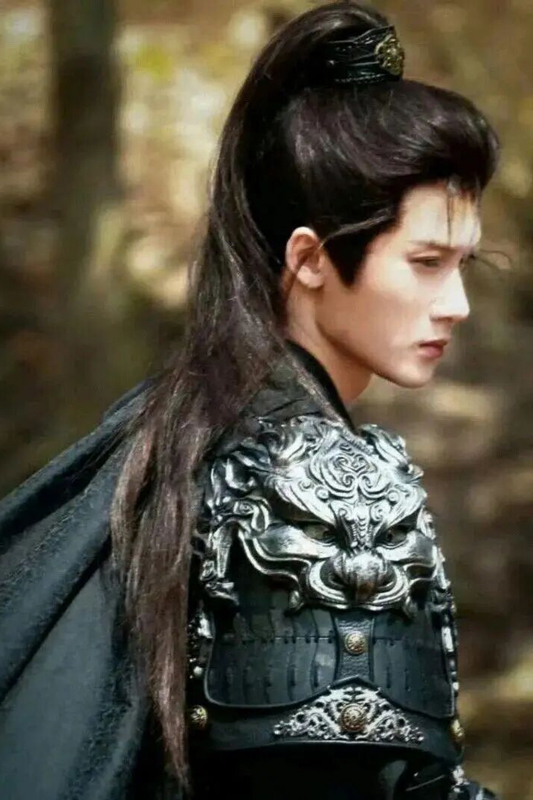
What makes this portrayal remarkable is Tan’s physical commitment. Despite the suit’s heft, his stance in the leaked stills shows no slump or strain—he sits tall, shoulders square, the weight becoming an extension of his character's gravity. He does not fight the armor; he inhabits it. That is the actor’s craft: turning a historical constraint into a dramatic asset. In an industry where CGI and lightweight plastics often replace forged metal, this tangible approach reconnects viewers with the sweat and sound of real armor—the clink, the creak, the grinding of plates when a horseman turns. It reminds us that ancient warriors were not just fighters; they were moving fortresses, and every groove on their chest told a story of rank, religion, and raw survival.
So, when you see that strange, gaping beast on Tan Jianci’s chest, do not mistake it for fantasy. It is a fossil of military psychology, a deflector of death, and a badge of supreme command—all rolled into one snarling face. The drama He Bu Tong Zhou Du (何不同舟渡) has yet to air, but its armor has already passed a crucial test: it makes us ask not "what is that," but "who was that man, and what did he fight for?" And that, perhaps, is the highest praise for any historical costume—it does not just dress a character; it digs up a forgotten world and straps it onto his shoulders.
