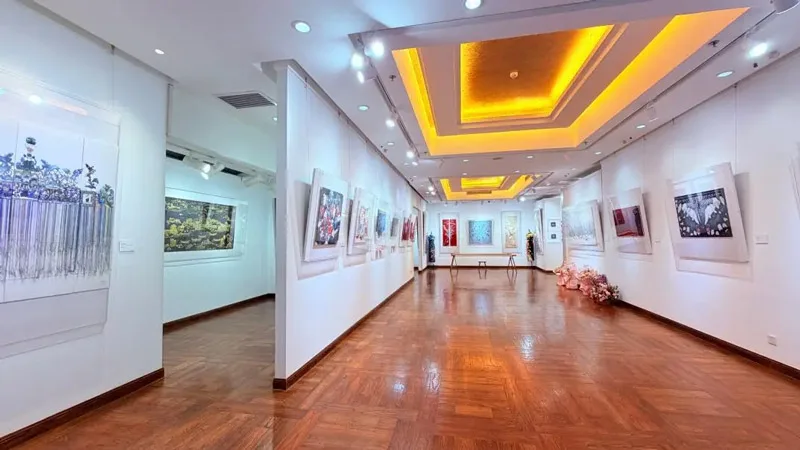
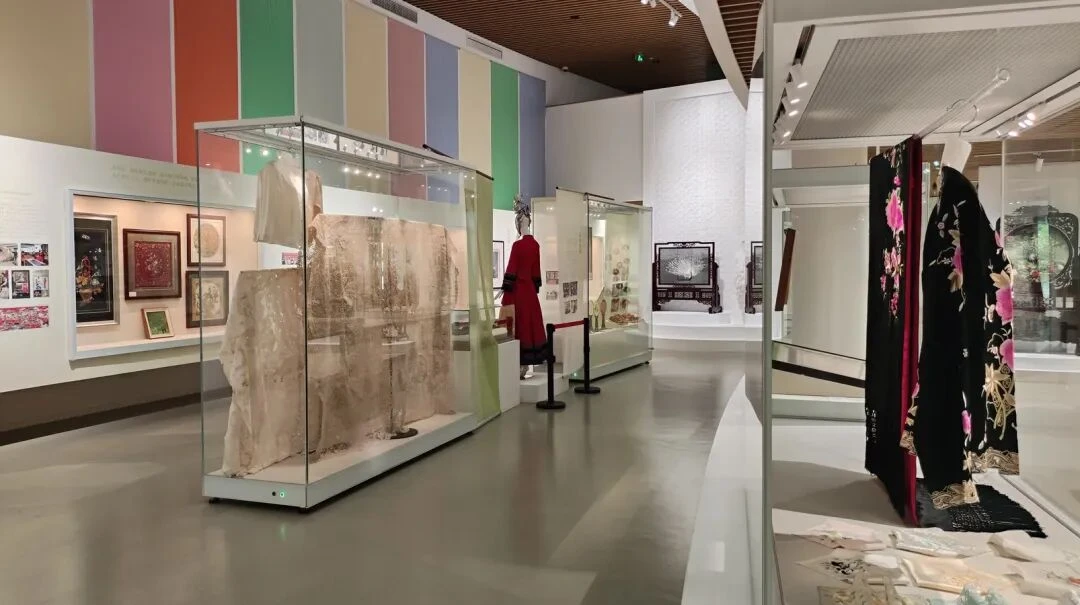
The China National Silk Museum (CNSM) opened the “Embroidery Beauty of Zhejiang” exhibition on June 18, 2026, bringing together nearly twenty provincial intangible cultural heritage (ICH) projects in embroidery and drawnwork. Running through November 16 in the Sericulture Hall on the museum’s first floor, the show is the second installment of the “Warp and Weft of Heaven and Earth” textile and costume ICH series. More than one hundred embroidered and drawnwork pieces are on display, marking the most comprehensive survey of Zhejiang needlework traditions staged by CNSM in recent years.
Zhejiang is one of the birthplaces of Chinese sericulture and silk, with the Hangzhou-Jiaxing-Huzhou plain long celebrated as a “capital of silk.” The province’s embroidery traditions evolved within a broader ecosystem of mulberry cultivation, silkworm rearing, and silk weaving, and the close dialogue between thread-making and thread-decorating gave Zhejiang embroidery its characteristic precision and material fluency.
Curators frame the exhibition as a response to the “overall protection” framework that has guided Zhejiang’s ICH policy in recent years. Rather than treating embroidery as a single craft, the show maps out the regional differentiation that has long defined provincial needlework, with each project tied to a specific city, county, or ethnic community. The curatorial choice reflects a national shift in ICH work from artifact preservation to ecosystem protection.
The Featured Embroidery Projects
The exhibition traces the lineage and survival status of representative projects drawn from across the province. Hangzhou hand embroidery, known for its fine silk-thread work and painterly composition, anchors the show alongside Hangzhou machine embroidery, a twentieth-century industry-driven form that has its own ICH designation. Xiaoshan lace making technique from Hangzhou represents the drawnwork half of the exhibition, showcasing the cut-and-pulled threadwork that flourished in the Xiaoshan area from the late Qing period onward.
From eastern Zhejiang, Ningbo gold-and-silver silk embroidery incorporates flattened gold and silver threads into silk grounds, producing decorative panels historically used in temple garments and opera costumes. Taizhou embroidery contributes a more regional folk vocabulary, while Ou embroidery from Wenzhou is known for its dense satin-stitch coverage and bold color palettes suited to local festive dress.
Wenzhou hair embroidery, made from human hair rather than silk thread, is one of the most distinctive projects in the show, requiring extraordinary patience and a single-hair splitting technique. Jinhua Wu embroidery brings a Huizhou-region sensibility to Zhejiang needlework, and Putuo embroidery art, named after the Putuo Mountain Buddhist pilgrimage site, weaves religious iconography into its design language.
Folk and Ethnic Embroidery Beyond the Mainstream
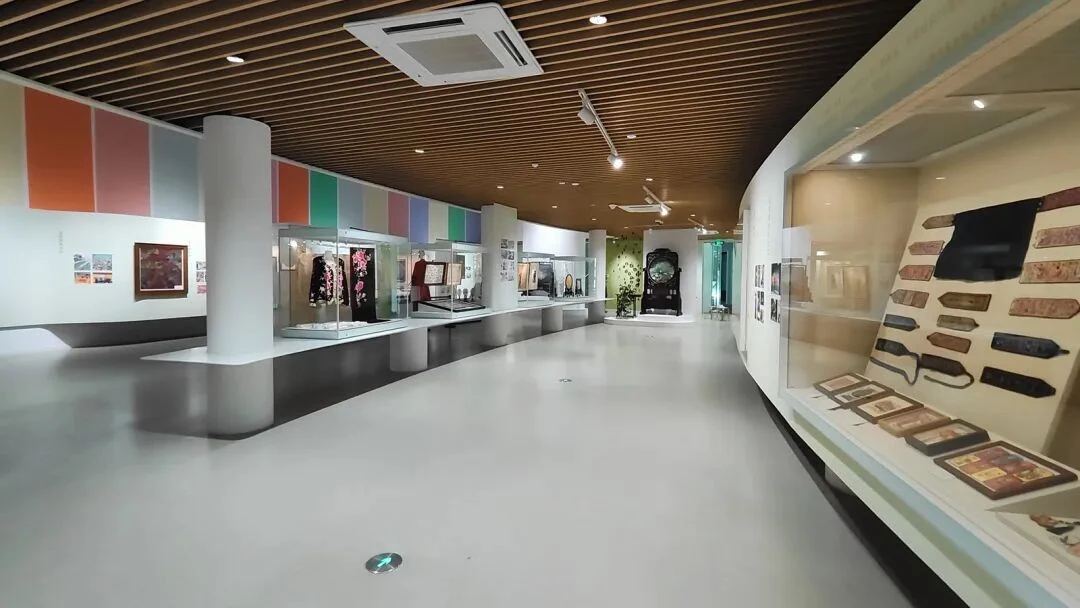
More than one hundred embroidery pieces are on display, including works drawn from the everyday life of Zhejiang’s villages. Items produced through Hechun embroidered-shoe making in Hangzhou preserve a craft tied to bridal trousseau traditions, while Badu hemp embroidery from Longyou uses a coarse bast fiber that gives the work a distinctive texture quite different from silk-based embroidery.
Pujiang cross-stitch, Wenzhou cross-stitch lace, Honghe embroidery in Jiaxing, Hongxing embroidery, Tongxiang liben bags (traditional calendar pouches), and She ethnic embroidery round out the show. These projects reflect how stitching traditions remain rooted in local custom while absorbing modern design sensibilities, demonstrating the multiple paths embroidery has taken from utilitarian craft toward artistic expression.
Several pieces in this section show how rural embroidery has been quietly reworked in recent years to align with contemporary interior design, with regional embroidery studios producing cushion covers, wall hangings, and small leather goods for the lifestyle market. The exhibition is explicit that this kind of living-practice transformation is part of the ICH framework, not a departure from it.
Curatorial Approach: Life Aesthetics
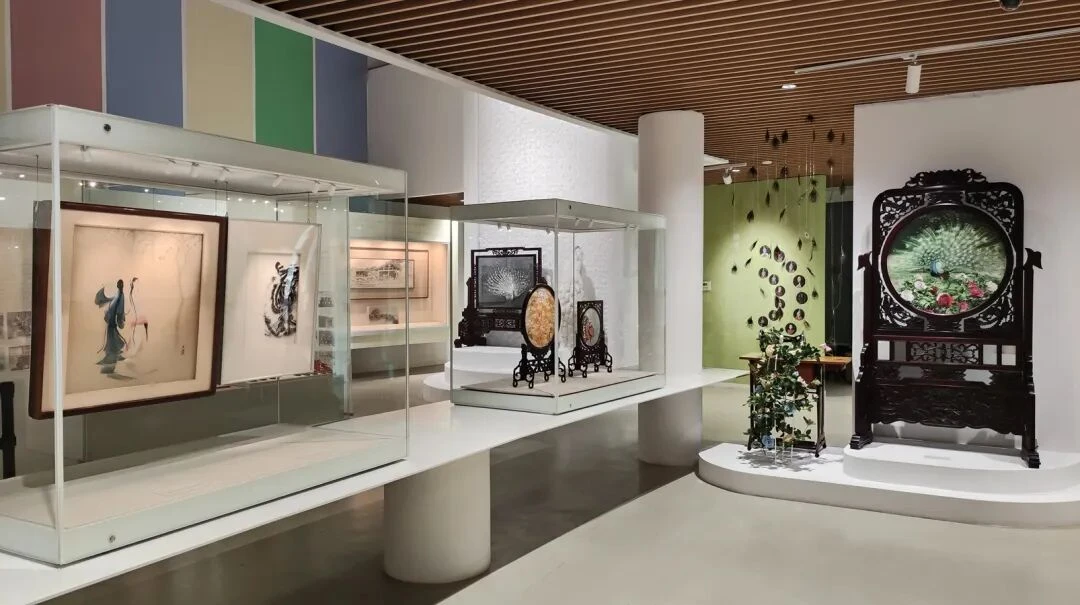
The curatorial team selected works whose themes carry distinctly Zhejiang cultural markers, allowing visitors to read landscapes, birds, figures, and folk rituals through the needlework of master artisans. Mountain and water motifs dominate the Hangzhou and Huzhou contributions, while bird-and-flower themes prevail in the Wenzhou and Jinhua pieces. Portraits and figure compositions, rarer in provincial embroidery, appear in several Putuo and Ningbo works.
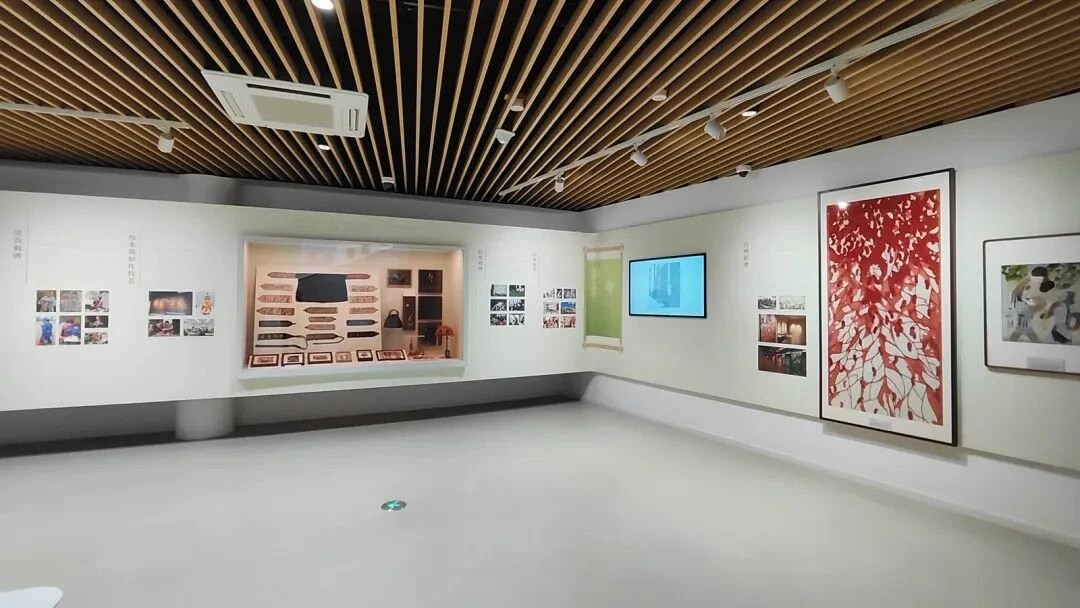
A “matching game” interactive has been installed in the gallery, inviting audiences to identify the regional origins of different embroidery styles and learn how each technique encodes its own local visual vocabulary. The interactive component signals a deliberate move away from the “do not touch” museum tradition and toward a more conversational relationship with visitors.
By foregrounding a “life aesthetics” perspective, the exhibition ties traditional stitching and drawnwork to contemporary modes of display. The integration of museum interpretation with hands-on interaction marks a continuation of CNSM’s effort to position regional ICH projects as living heritage rather than archival specimens, a position that has guided the museum’s textile programming since 2024.
Many of the pieces on display come from the studios of named ICH inheritors, and the exhibition has positioned each worker’s name and hometown alongside the piece. This credit-by-inheritor approach is a recent CNSM convention, intended to give visitors a direct line to the people who keep the craft alive rather than treating embroidery as anonymous heritage.
Several of the inheritors are expected to give scheduled demonstrations in the gallery during weekends through the run of the show. These demonstrations focus on basic stitches, color matching, and the use of specialized threads such as gold-wrapped silk and human hair. A separate corner of the Sericulture Hall will host periodic artist talks and small-group workshops open to ICH project holders and pre-booked visitors.
The transmission question is a central concern for many of the projects in the show. Younger practitioners in several embroidery lines have dwindled to single digits at the county level, and the exhibition’s educational materials are unusually direct about the survival challenges each tradition faces. Curators noted that the response from lifestyle brands and the new Chinese-style apparel sector has begun to provide a small but stable commercial floor for some of these workshops, even if the overall transmission outlook remains fragile.
Visiting Information
CNSM sits in the Yuhang district of Hangzhou, near the historic West Lake cultural belt, and has hosted a series of rotating textile ICH shows since 2024. The “Embroidery Beauty of Zhejiang” exhibition will run until November 16, 2026, with free admission for ICH project holders and group visits booked in advance. The Sericulture Hall, which has been the venue for recent ICH textile exhibitions, includes reading areas and craft demonstration corners used for periodic artist talks and workshops.
The exhibition follows CNSM’s earlier 2024 ICH textile show focused on weaving, and the museum is expected to continue the rotating series through 2027, with the third installment reportedly focused on traditional dyeing and finishing techniques. Together the series has established CNSM as the country’s primary venue for survey exhibitions of provincial textile ICH projects.