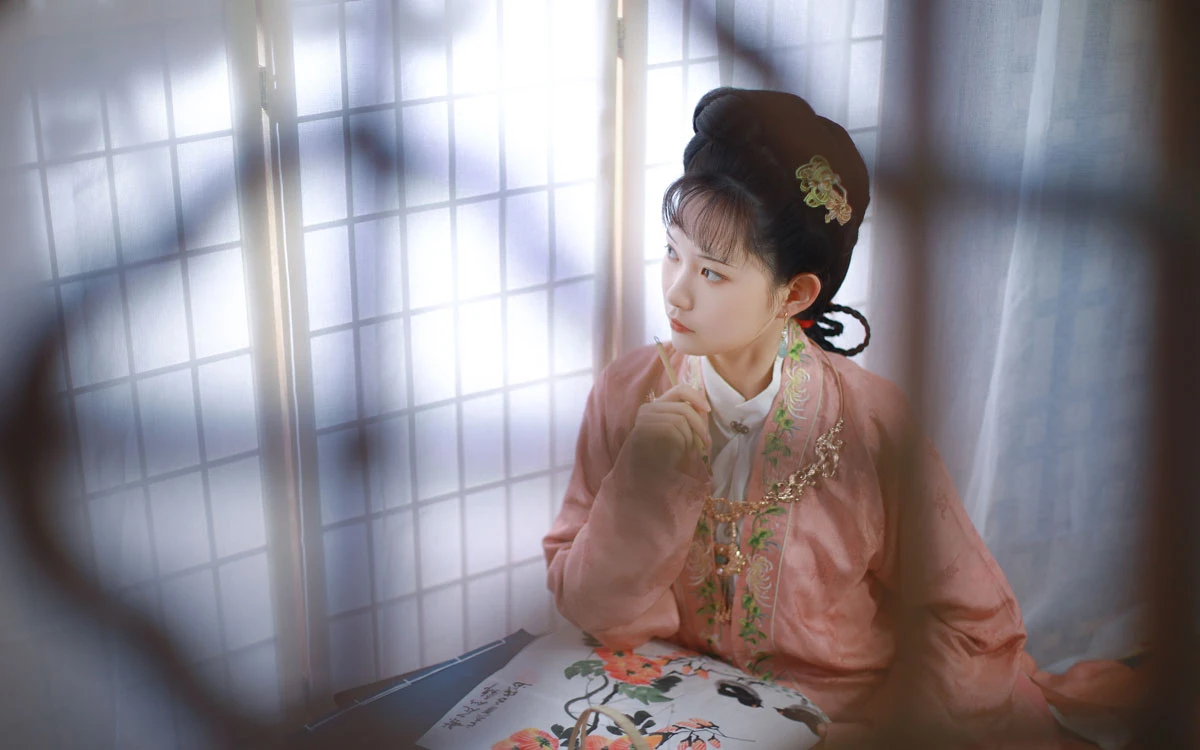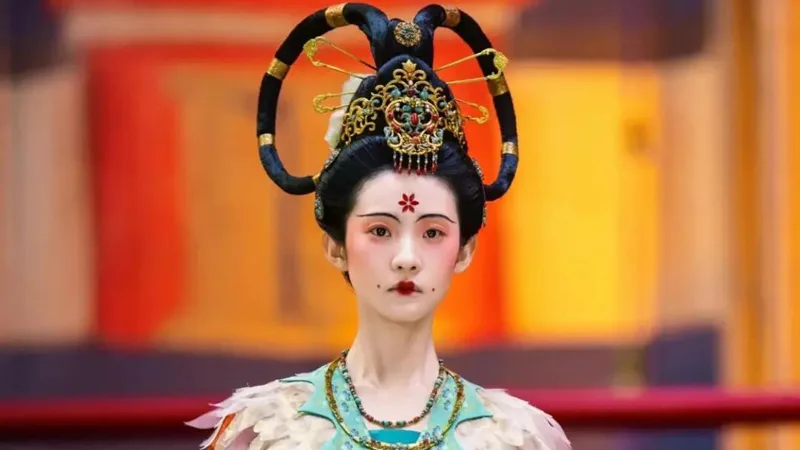
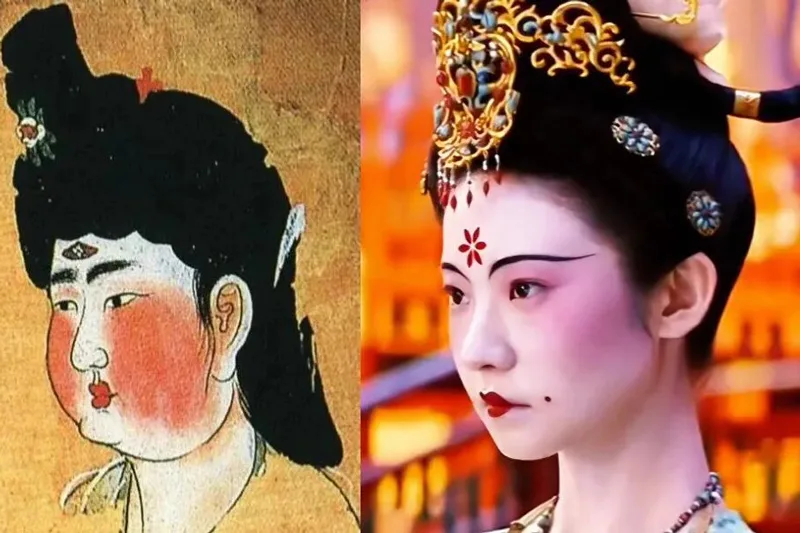
In Heroes of Dunhuang (敦煌英雄), Zhang Yifan (张艺凡) plays Zhang Shi’erniang (张十二娘). Her cheeks carry a broad red wash. The color spreads over the cheekbones and softens near the jaw. Many viewers blink and ask a simple question: is she drunk, or is the makeup just odd? The answer is neither. This is jiuyun makeup (酒晕妆), or wine-blush makeup, a bold face style from the Tang dynasty. The film uses it on purpose. Its strangeness comes from distance. Modern eyes are trained on pale bases and light blush. A high-Tang face can look theatrical, almost feverish. Yet every red inch has a history, and that history is more playful than pretty.
A Blush With History
Rouge did not begin as a smooth cream. Early color came from the Western Regions and reached the Central Plains during the Han dynasty. Its texture was rough, and it clung poorly to skin. Women could only dot a small patch on each cheek. Spreading it widely was almost impossible. That early stage belongs to red makeup before it became a full-face fashion. The look was modest because the material was stubborn. A wine blush needs control. Without a soft paste, the color would sit in patches, not glow. It would look like a bruise, not a warm haze.
A change arrived in the Northern Dynasties. As northern groups mixed with Central Plains communities, craftspeople learned to cook safflower with animal fat. The result was a paste-like rouge. Qimin Yaoshu (齐民要术) records this method. The paste held better and blended more easily. For the first time, women could paint a large red area and make it look natural. The technique for wine blush existed. The name did not. Fashion often moves before language catches up, and this was such a moment. Tools had opened a door, but the culture had not yet named the room.
Early Tang taste leaned toward peach-blossom makeup. It used less rouge, and the color stayed light pink. The effect was fresh and quiet. Still, Zhuangtai Ji (妆台记) already mentions jiuyun makeup by name. It had not yet taken over. During the High Tang, it did. Court ladies and wealthy women favored strong, full red cheeks. Paintings such as Dancing and Music Screen (舞乐屏风图) and Ladies Playing Chess (弈棋仕女图) show it. Tomb figurines and murals repeat the same signal. Zhang’s screen face follows that visual line, even if a modern viewer may first read it as a costume error.
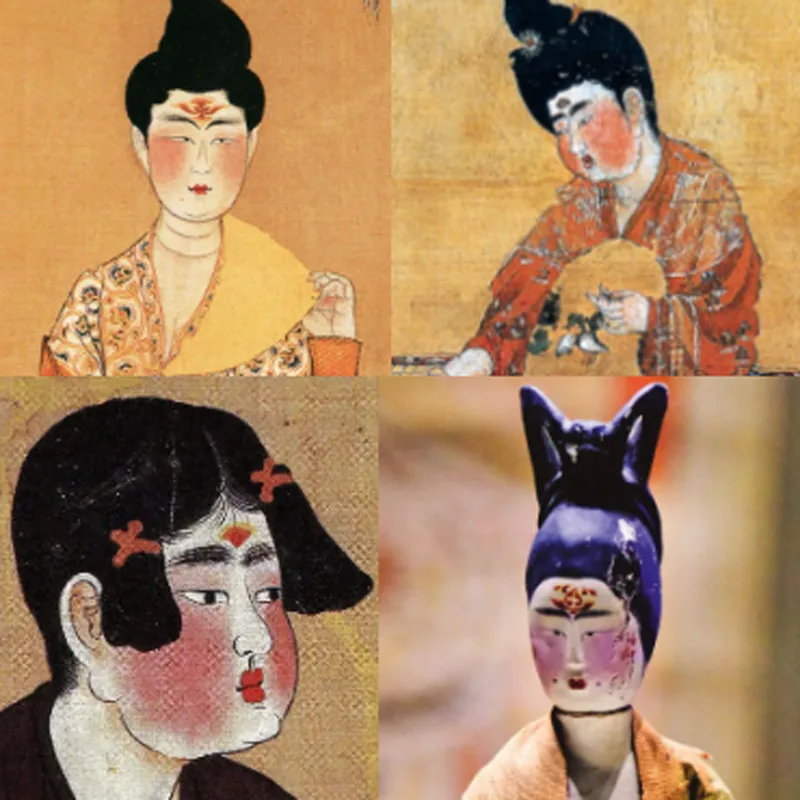
Late Tang and the Five Dynasties kept the style alive. Some women pushed it further into “drunk makeup,” with wider, darker rouge. Bai Juyi (白居易) wrote about such faces. New History of the Five Dynasties (新五代史) and Shu Taowu (蜀梼杌) also leave traces. After the Song dynasty began, taste shifted. Pale, thin powder became ideal. Wine blush faded. It did not vanish from history, but it left daily fashion. That break helps explain why a modern audience may read it as a mistake rather than a memory. The past can look foreign even when it is our own.
Why Tang Loved It
Materials mattered. Safflower grew widely in Tang times, so rouge producers had plenty of raw color. Paste-making skills had matured. The rouge could hold a true shade and spread evenly. Large red cheeks were no longer a risk. They were a display of abundance. When supply and craft align, fashion can become bold without becoming messy. A woman could build a strong look and still keep a soft edge. That balance is exactly what jiuyun makeup demands. It is not a random smear. It is a controlled blur, shaped with patience and a steady hand.
Beauty ideals also pushed the style. High Tang taste admired fuller faces and open expression. Quiet elegance was not the only goal. A round cheek with rich color looked healthy, confident, and festive. Women paired the blush with Huadian (花钿), Xiehong (斜红), Mianye (面靥), and a precise lip dot. Each piece added a layer. The red base made the forehead mark and cheek dots stand out. Zhang’s full makeup follows this set. The whole face became a composition, not a single feature. A cheek was not just a cheek; it was a stage for pattern, contrast, and mood.
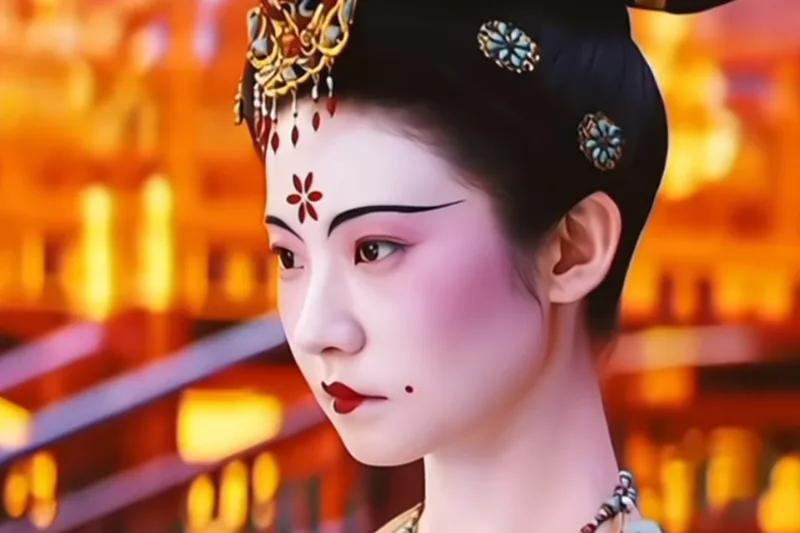
Wine culture gave the look its emotional pull. Tang society was open, and banquets were common for men and women. A flush after drinking was seen as charming, not shameful. Women copied that glow with rouge. Poets added fuel by praising a drunk beauty’s face. Art and daily habit reinforced each other. The cheek no longer showed only health. It suggested pleasure, music, wine, and a night with companions. That story made the style popular. It also made it memorable. A face could carry a party without saying a word.
So the strange feeling is not proof of bad design. It is proof that beauty changes. Many Tang dramas today use light bases and modern natural blush. They rarely commit to a full wine blush. When a film does commit, the result can shock. Zhang’s face is not asking to be pretty in a 2020s way. It is asking to belong to a Tang painting, a tomb figure, a poem. Viewers may love it or reject it. Either reaction shows the makeup is doing its job: it makes us look twice. Do you find it beautiful?