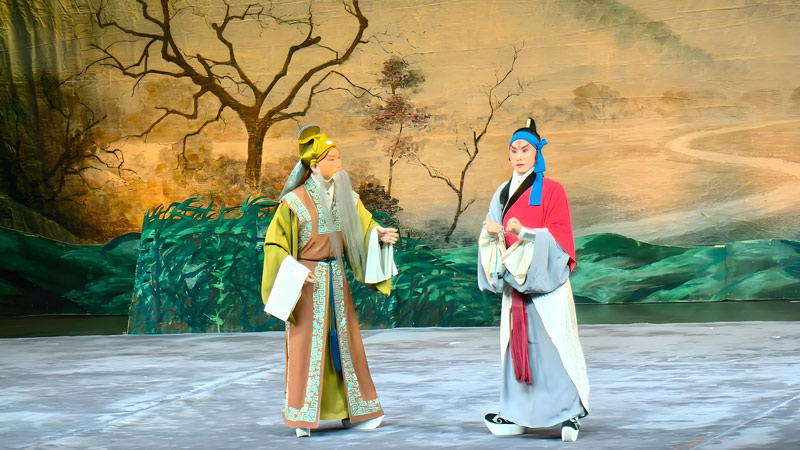
Peking Opera, the essence of traditional Chinese theater, boasts a musical system defined by strict standards and rich expressiveness. It has developed a comprehensive and distinctive framework encompassing vocal classification, pronunciation techniques, and rhythmic structure.
Two Pillars of the Vocal System
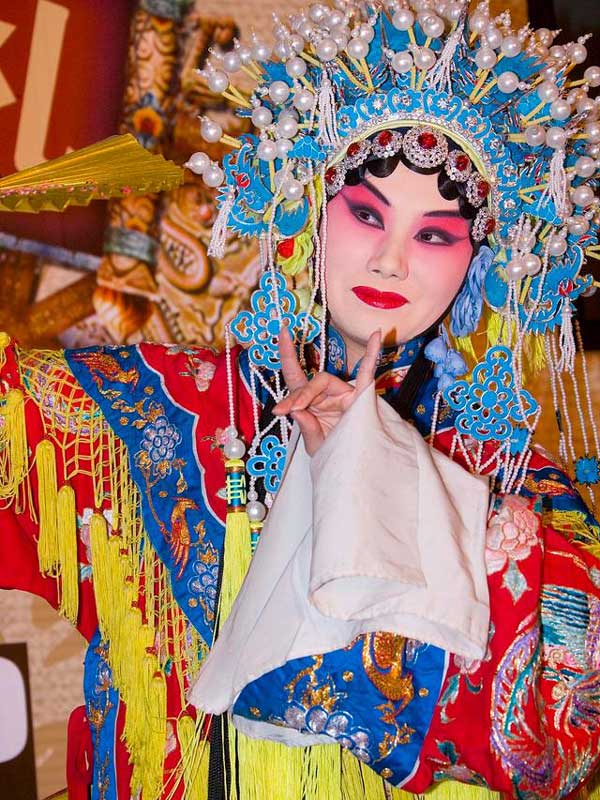
Peking Opera vocals primarily fall into two major categories: Xipi (西皮) and Erhuang (二黄). Xipi is bright and vibrant, ideal for conveying intense emotions, while Erhuang is softer and more profound, excelling at expressing inner feelings.
In the classic play Silang Visits His Mother (四郎探母), Yang Yanhui's (杨延辉) aria "Before speaking, tears stream down my face" is a typical example of the leading rhythm style for elderly male roles. Princess Tiejing's (铁镜) line "We spouses sit together in the palace courtyard" showcases the leading rhythm characteristics for young female roles. Different role types have unique leading rhythm features: the young male role in "Yang Zongbao (杨宗保) issues commands on horseback," the painted-face role in "Bao Longtu (包龙图) sits in the Kaifeng prefecture," and the elderly female role in "The royal carriage enters the imperial city" from Beating the Dragon Robe—all adopt the Xipi leading rhythm but with distinct expressive approaches. Based on the drama's needs, musicians enhance musical expression by varying introductory passages.
Notably, there is the off-stage leading rhythm, where actors sing before appearing on stage. An example is Emperor Xian of Han's aria, "Father and son shed sad tears in the palace," from Xiaoyaojin (消遥津). This form significantly boosts dramatic suspense and expressiveness.
Scientific Vocal Training System
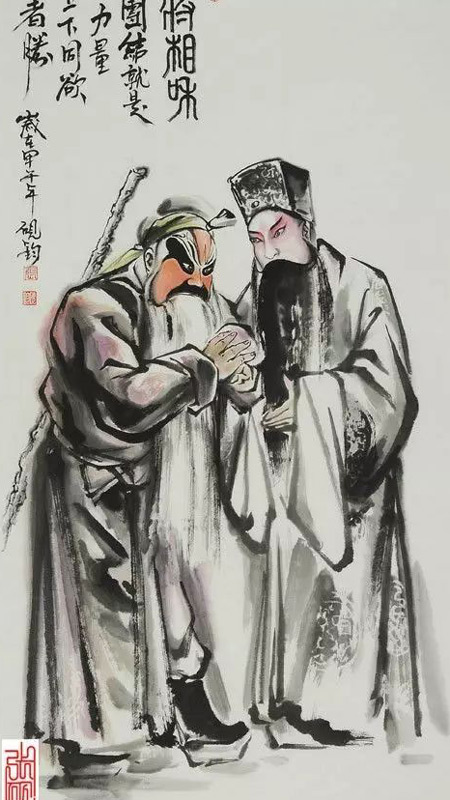
Peking Opera has developed a complete system of vocalization methods. Chest voice requires breath to come from the lower abdomen, creating a rich and natural timbre through laryngeal resonance. Male roles, painted-face roles, clown roles, and elderly female roles all use this technique. Falsetto achieves higher pitches by narrowing the laryngeal opening and raising the vocal position. Primarily used by female roles and young male roles, young male roles also use a unique mix of chest voice and falsetto in spoken parts.
Actors strengthen their singing skills through systematic training. Daily morning vocal exercises: These train vocal organs using vowels such as "wu (唔)," "yi (伊)," and "a (啊)." Accompanied singing practice: With accompaniment from the huqin (a traditional Chinese stringed instrument), actors develop brighter and fuller vocals while familiarizing themselves with musical coordination.
These training methods help actors master the lower abdomen resonance technique, allowing their voices to project clearly over long distances.
The Peking Opera community places great emphasis on vocal protection and training. Outstanding performers in elderly male roles can develop a "cloud-veiled moon" vocal quality—initially seeming dry but growing brighter as they sing, with enduring appeal. However, actors must also guard against "voice loss in middle age."
A rich system of rhythmic variations
Rhythmic patterns in Peking Opera refer to the structural forms of vocal rhythm, mainly divided into four types: one-beat meter, three-beat meter, unmeasured rhythm, and free rhythm. The original rhythm serves as the foundation for various rhythmic variations, evolving into multiple forms, including slow rhythm, fast rhythm, introductory rhythm, swinging rhythm, two-six rhythm, flowing rhythm, and fast three-beat.
Each rhythmic pattern has a unique expressive function: slow rhythm excels at lyrical expression, fast rhythm suits tense emotions, introductory rhythm often opens scenes, and swinging rhythm is characterized by free-flowing beats. Actors need to accurately grasp the rhythmic features of different patterns to avoid issues like rhythmic errors, pitch that is too low, or pitch that is too high.
Exquisite Breath Control Techniques
Breath control is a core technical skill in Peking Opera singing. "Breath points" include two methods. Obvious breath—taken during musical intervals, it is clearly perceptible. Imperceptible breath—Taken during phrase transitions, it is barely noticeable.
Skilled actors use these techniques adeptly to maintain steady breath during long arias, such as those in Catching and Releasing Cao (捉放曹).
Particularly notable is the "sudden pitch rise" technique—raising the pitch abruptly on specific words. An example is the word "fan" (meaning "fan") in the line "Standing at the palace gate I call the fan" from Silang Visits His Mother. This technique demands exceptional breath control. However, actors must also avoid "overly forceful phrasing"—singing with excessive strength that results in awkward, heavy tones at the end of phrases.
Refined by generations of artists, Peking Opera's vocal system has become a scientific and highly expressive singing method. It is not only a treasure of traditional Chinese vocal art but also a vital part of world musical culture. By systematically studying these vocal classifications, pronunciation methods, and rhythmic patterns, one can better appreciate and understand the unique charm of Peking Opera.