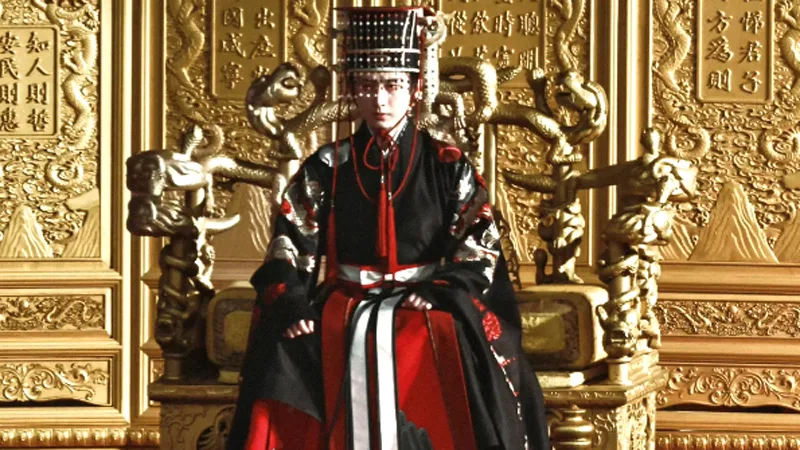
In Liang Jing Shi Wu Ri (两京十五日), Cheng Yi (成毅) steps out in a black-and-red robe with wide sleeves and a beaded crown. Fans instantly compare it to older historical dramas such as Romance of the Three Kingdoms (三国演义) and Eastern Zhou: Spring and Autumn (东周列国春秋篇). The garment is called Gunmian (衮冕), and it belongs to Zhu Zhanji (朱瞻基), the Ming crown prince who later became emperor. Why does this outfit feel so old-school? And why do modern costume dramas rarely show it? The answer lies in rank, ritual, money, and camera angles. Gunmian is not everyday fashion. It is a full ceremonial system, and every bead, color, and layer carries rules that date back centuries.
Inside the Robe
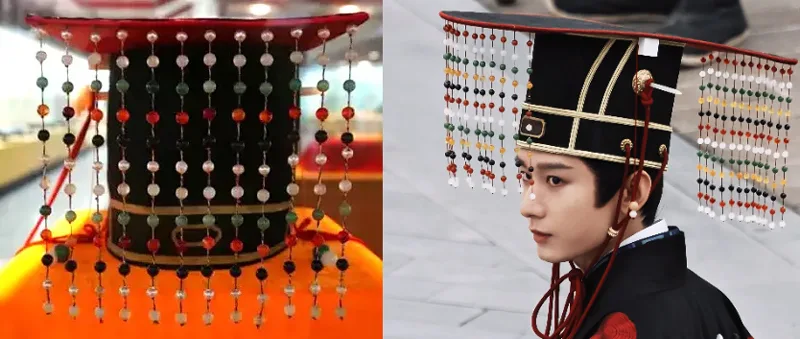
At the top sits the Mian crown. Its flat board, hanging beads, hairpin, and side plugs form a strict hierarchy. The front and back beads are called liu (旒). A Ming emperor wore twelve strings; a crown prince wore nine. In the drama, Cheng Yi wears twelve, which suggests the moment is his accession. The small jade beads beside his ears are called chong’er (充耳), a reminder to ignore slander. A twelve-string crown found in Dingling (定陵) matches the show’s shape closely. The crown is heavy, but it tells viewers exactly who holds power without a single line of dialogue. It is costume as political text.
The upper robe is the Xuanyi (玄衣), a broad black garment with a strong drape. Golden dragons and the Twelve Symbols (十二章纹) decorate it. These symbols include the sun, moon, mountains, and pheasants. Each mark carries meaning: light, stability, or virtue. Historical manuals such as the Collected Statutes of the Great Ming (大明会典) and the History of Ming: Carriages and Robes (明史舆服志) list them for emperors. The sleeves fall in heavy folds, making the body look larger and slower. When he walks, the fabric forces a measured pace. That slowness matters. Ritual clothing is designed to stop a ruler from moving like an ordinary man.
Below, the red skirt is the Xunchang (纁裳). Black above and red below echo the colors of sky and earth in old Chinese thought. A wide belt, a knee cover, jade pendants, and tassels complete the look. Several layers sit between the body and the outer robe. Dressing is not a quick task; it is a small ceremony. In close-up, the red and black mix creates contrast, yet the crown’s hanging beads can hide the face. That tension is part of the appeal. Gunmian looks majestic on a poster, but it fights the actor in motion. Every step becomes formal, almost trapped.
Why So Rare
The first reason is simple: Gunmian has few scenes. It was not daily wear. An emperor used it for enthronement, sacrifices to heaven and earth, and ancestral rites. In a forty-episode drama, it might appear for less than ten minutes. Many shows focus on court debates, palace intrigue, or romance. Those stories need tea rooms, desks, and bedrooms, not cosmic ceremonies. Even when a script includes a coronation, some productions cut corners and use a common dragon robe. The result is practical, but the audience loses a rare visual link to formal Ming pageantry. Fewer rituals mean fewer chances for this garment to shine.
The second reason is cost. A faithful Gunmian is not one costume; it is a set. Designers must draft patterns, choose fabrics, embroider symbols, make the crown, string beads, and fit jade pieces. Each part demands skilled hands and time. If the outfit appears for only a few minutes, a producer may ask whether the money is worth it. Cheaper alternatives look fine on a small screen, especially when the camera stays at medium range. Yet those shortcuts flatten history. A real Gunmian carries weight, sound, and shadow. The beads click. The sleeves sweep. The layers change how an actor stands. Cutting it saves budget, but it also removes a special kind of presence.
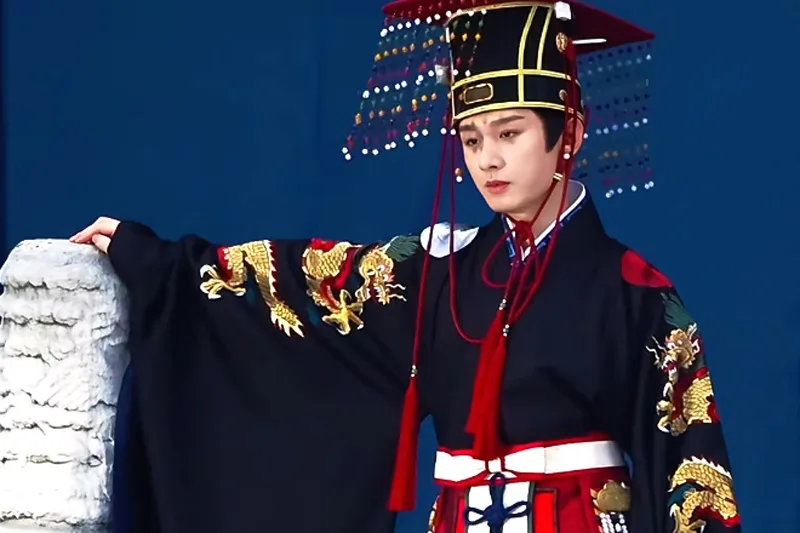
The third reason is performance. The crown is heavy. The robe is wide, thick, and hot under studio lights. Hanging beads block the face, so close-ups of emotion become difficult. Actors must move carefully, and directors must frame shots around the headpiece. Compared with a light robe or a simple hairpin, Gunmian limits movement. That makes it less friendly for fast dialogue and expressive acting. Still, limitation can create power. When Cheng Yi wears it in Liang Jing Shi Wu Ri, the stiffness reads as royal distance. He does not need to shout. The costume does the talking. If the scene is an enthronement, the choice fits both character and moment. It is a rare sight, and it deserves notice.
What makes the return worthwhile? A restored Gunmian gives viewers more than nostalgia. It shows how rank became visible, how cloth controlled a body, and how ritual turned a man into a symbol. The black and red layers also connect the drama to older classics, where costume designers trusted audiences to read status without explanation. In Liang Jing Shi Wu Ri, the outfit may last only a short time, but it leaves a strong image. It reminds us that historical costume is not just decoration. It is a language of power, silence, and memory. If more productions invest in it, viewers will gain richer pictures of the past. Do you like Cheng Yi’s Gunmian look?