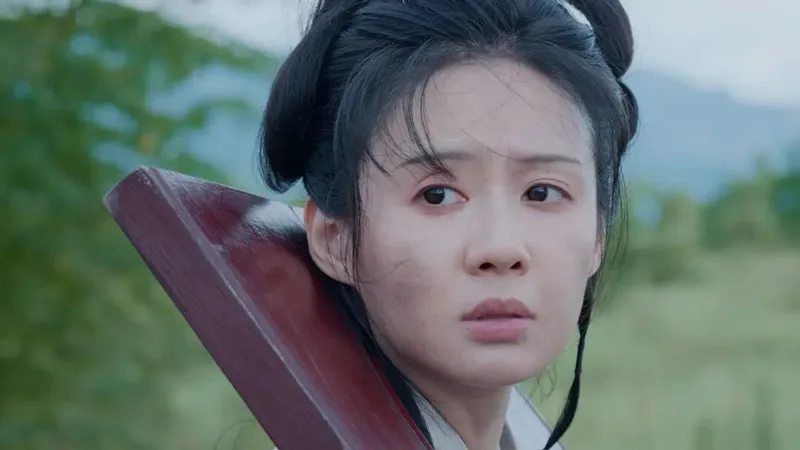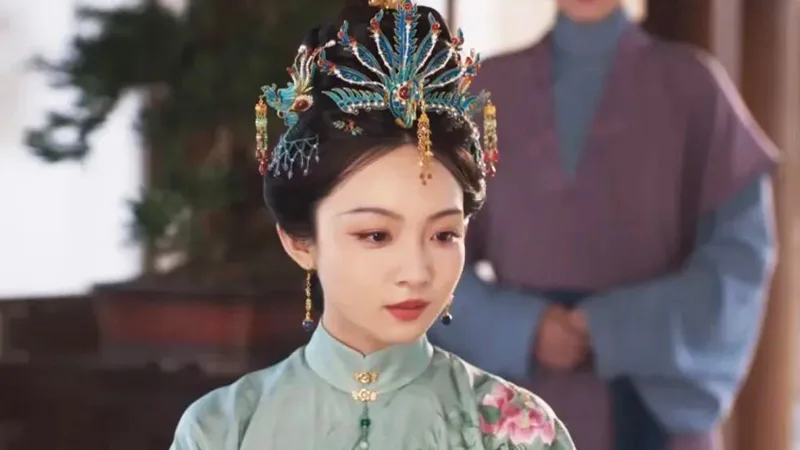
When Lin Xiuru (林绣茹) returns home in Against the Current (兰香如故), her phoenix hairpin lands like a memory grenade. The pin rises above her brow, trembling with pearls and gold, and suddenly every plain hairstyle in the scene looks dull. Viewers who grew up on older costume dramas feel the jolt at once. Why did such a bold ornament mostly disappear? The answer is not a single rule or trend. It is a knot of faces, camera styles, character writing, and a changed beauty standard. A hairpin can be a crown, a warning, or a joke. Its fate on screen depends on what the story needs it to do.
Status and Story
Costume design is never just decoration. In Against the Current, Zhao Xingtang (赵星棠) wears a central phoenix hairpin when she feels powerful. Lin Xiuru wears one when she returns to Rongguo (荣国) Mansion. The same shape carries different meanings: pride, rank, pressure, performance. The style echoes ladies in Song and Ming dynasties paintings and heavenly figures in old religious art. Yet television bends history to serve emotion. A pin can make a character look untouchable in one shot and absurd in the next. That tension is the point.
Older dramas loved giant phoenix pins. Their scale matched rounder, fuller faces and broad shoulders. The ornament sat like architecture, giving actors a solid, regal outline. Today’s screen beauty often favors small, delicate faces and slim frames. A massive traditional pin can swallow the face instead of framing it. This is one practical reason the look faded. It is not that actresses lack presence. It is that casting, lighting, and close-up framing changed. A hairpin built for a wider canvas can feel heavy in a tight shot.
Story logic matters even more. Lin Xiuru’s formal return is meant to be grand. Her central phoenix pin announces status, yet people mock her in private because she has no son to inherit the title. The splendor becomes bitter. Zhao Xingtang’s only phoenix-pin scene is followed by a scandal. Her dignity collapses into irony. The pin does not simply make her beautiful; it sets up a fall. This is why the best costume choices are narrative weapons. They promise something, then let the plot break that promise.
Wang Xifeng (王熙凤) remains the gold standard. In Dream of the Red Chamber (红楼梦), her entrance is a storm of gold and pearls: a jeweled bun, a pin with five phoenixes facing the sun. Each phoenix holds a string of pearls. Round beads and tiny mirrors near the heads catch light like dawn. Even in words alone, the image feels expensive, sharp, and dangerous. Old productions also invented looks beyond modern imagination. Journey to the West (西游记) used velvet-flower craft in the Women’s Kingdom. Such details made fantasy feel tactile, not generic.
History, Not Hierarchy
Did these pins exist? Yes, but not exactly as television shows them. Phoenix hairpins appear in Song and Ming paintings of palace women and elegant ladies. In daily life, they were accessories, not helmets that covered the whole bun. The idea that a central phoenix marked the wife and a side phoenix marked a concubine is mostly a later drama convention. Exaggerated pins belong more to heavenly paintings and modern costume design than to ordinary wardrobes. History gives us materials, shapes, and craft. It does not give us a simple status code that every writer must obey.
Ancient hair ornaments did not prove rank by size alone. Craft and material spoke louder. A filigree gold phoenix hairpin from the Ming Liangzhuang Prince Tomb (明梁庄王墓) is small, but its gold work is astonishing. Modern machines still struggle to match that handmade precision. The pin served as the main ornament on a bun, paired with smaller pieces. By today’s drama logic, someone might call it a side phoenix. In truth, it belonged to a princess. Small scale, high value: that combination says more than a giant prop.
Many phoenix pins hold pearls or ribbons in the bird’s beak. A phoenix is a lucky bird. The word for ribbon sounds like the word for longevity, so the design wishes good health. Round pearls suggest harmony and completion, like a perfect match. Hanging beads also move. When the wearer walks, the pearls sway and catch light. A static bird becomes a tiny performance. This dynamic detail is why ancient jewelers gave the phoenix something to carry. The object looks bigger in photographs than it is; the actual bird body in one relic is only about ten centimeters long.
Wearing rules did follow occasion. A central phoenix sat upright in the middle of the bun. It felt formal, controlled, and ready for ceremony. By the late Ming period, such pins could replace a full phoenix crown in serious rituals. A side phoenix was easier and smaller, good for daily wear and simple outfits. Opera and later costume dramas exaggerated these differences. In household-power stories, the central pin became the wife and the side pin became the concubine. Traditional jewelry turned into an all-purpose badge of rank. Once a pin appears, the whole look seems to level up.
Now phoenix pins are returning. Some viewers complain that today’s actresses cannot carry their weight. Others welcome the revival as a turn toward classical taste. Both views make sense. A hairpin is not a test of face shape; it is a tool. When a director, actor, and designer understand its history and its theatrical power, it can still stop a scene. The question is not whether every drama needs a giant phoenix. The question is whether the ornament serves the person wearing it. Which phoenix-pin look still lives in your memory?