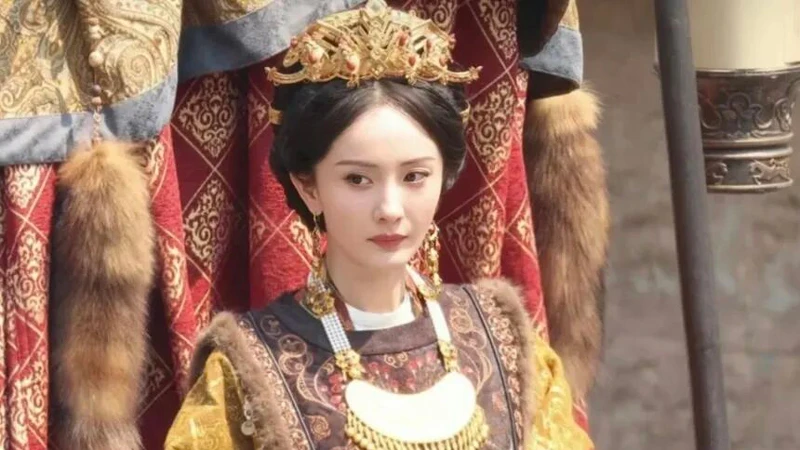
Why is this ancient accessory suddenly appearing on Yang Mi’s forehead, and what does it reveal about a forgotten chapter of Chinese fashion history? The new historical drama Jiangshan Datong (江山大同) has sparked heated online discussions, not for its plot, but for the striking triangular metal piece perched prominently on the empress dowager’s forehead. This is no mere prop designer’s fantasy. It is a meticulous recreation of the Biji (蔽髻), a ceremonial headpiece that served as a powerful status symbol during the Wei and Jin Dynasties.
More than just an ornament, it represents a physical artifact of a massive cultural shift, a time when nomadic traditions were being reshaped by Han Chinese court rituals. The accessory is a rare visual key to understanding how an empire transformed its identity, one headpiece at a time.
The Forgotten Crown of the Northern Wei
To understand this unique ornament, we must first look at its roots in the Han Chinese ritual system. During the Eastern Jin period, murals and artifacts depict a precursor to this piece, a golden triangular ornament inlaid with kingfisher feathers and pearls. The poet Gong Sui (公绥) even wrote a famous inscription, the Biji Ming (蔽髻铭), praising its radiant beauty. However, it was not until the Northern Wei dynasty that this accessory took on its most politically charged form. It was not a simple hairpin or a decorative flower, but a comprehensive frontal covering that anchored the towering hairdos of the era.
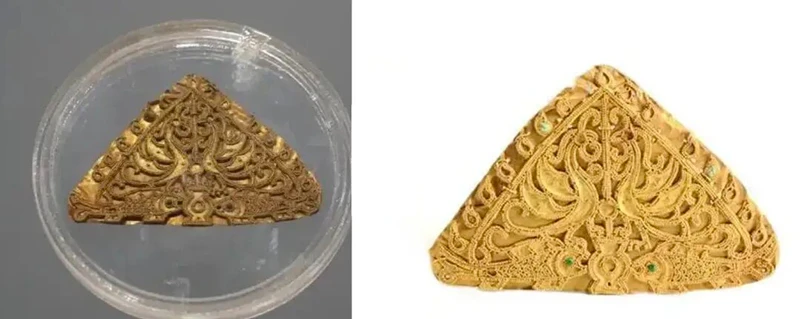
Under the rule of Empress Dowager Feng (冯), the accessory became a tool of statecraft. It was a conscious adoption of Han Chinese etiquette to legitimize and solidify the ruling power of the Xianbei (鲜卑) people. The Biji was integrated into the official court attire for ceremonies and sacrifices, with strict regulations on the number of ornamental pieces allowed. This system transformed a simple piece of jewelry into a rigid hierarchical code. When Yang Mi’s character appears wearing it, she isn’t just accessorizing; she is visually communicating her supreme authority and her commitment to a new, sinicized court order.
More Than Just a Pretty Face
The design of the Biji is a study in deliberate aesthetics and practical functionality. It was typically placed directly above the forehead, at the front of the towering “loose temples and tilted bun” hairstyle. This placement served a dual purpose. Aesthetically, it drew all attention to the wearer’s face, creating a visage of solemn dignity and unapproachable majesty. Functionally, it acted as a counterweight. The heavy gold or silver piece, often supported by a base and pinned with hairpins, helped stabilize the massive, elaborate wigs that were in vogue, ensuring the entire structure remained perfectly balanced.
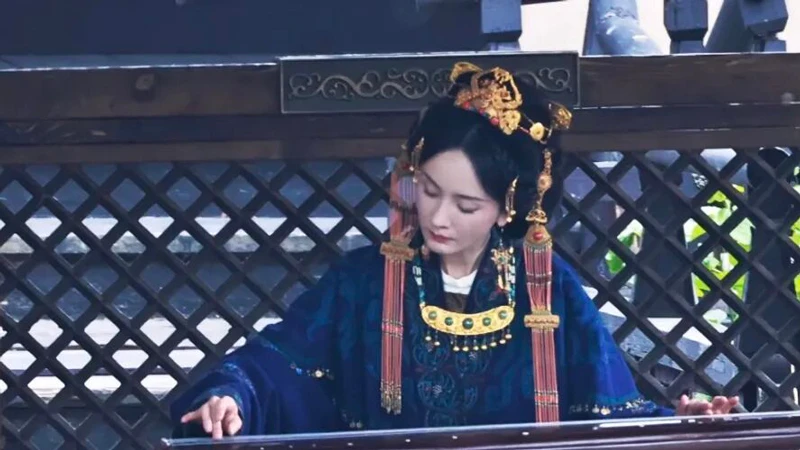
This was a stark contrast to the exuberant, flower-heavy styles of the later Tang dynasty. The Northern Wei preference was for clean lines and a minimalist, almost severe, nobility. Materials were typically pure gold or gilt, with subtle embellishments of pearls or jade, but never in excess. The goal was a “rich yet restrained” look. It reflected a society in transition, one that valued order and clarity over decadent display. This aesthetic choice was a powerful visual statement that the new empire was built on a foundation of controlled, dignified power rather than simple, barbaric wealth.
A Symbol of Cultural Fusion on Screen
Perhaps the most fascinating aspect of this headpiece is its representation of cultural fusion, not just in politics but in the very fabric of fashion. While the Empress Dowager adopted the Han Biji, the drama’s costumes also feature the distinctive left-over-right collar, a key difference from traditional Han clothing. This juxtaposition is historically accurate. It shows that the Northern Wei were not simply abandoning their Xianbei heritage to become Han Chinese. Instead, they were selectively incorporating Han rituals to define their own unique identity. The Biji became a symbol of this new, hybrid aristocracy.
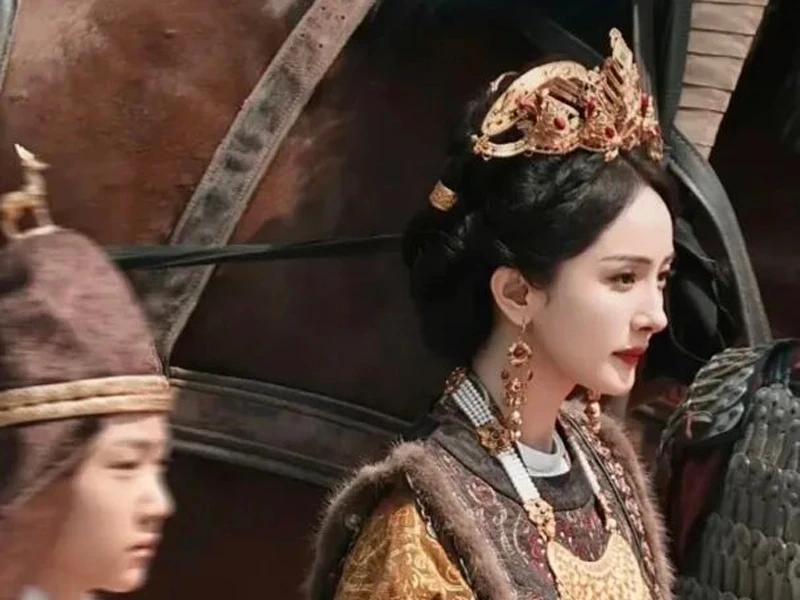
This historical nuance is what makes this particular costume detail so compelling. For years, the Northern Wei period has been underrepresented in historical dramas, often overshadowed by the more popular Tang and Qing dynasties. The attention to detail in Jiangshan Datong offers a fresh perspective, demonstrating that authentic Chinese period drama doesn’t have to be about the most well-known eras to be visually and intellectually stimulating. It challenges the audience to appreciate that true “classical beauty” lies not in blind retrospection, but in the careful preservation and representation of cultural evolution and the complex stories woven into the details of historical dress.