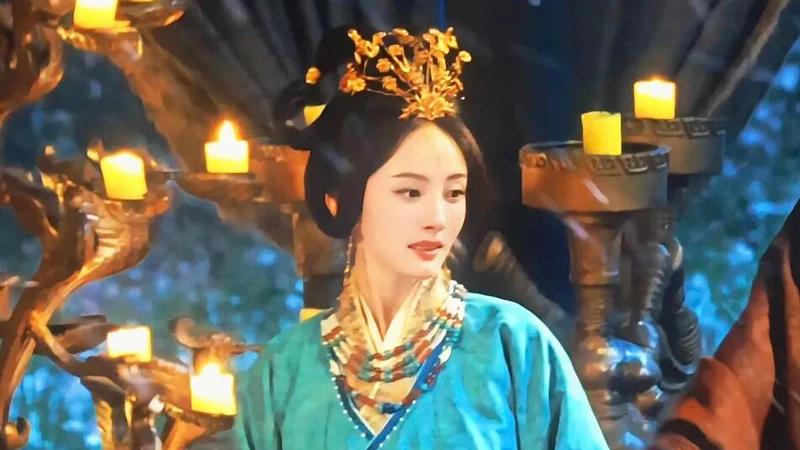
Is Yang Mi’s New Drama Costume a Historical Masterpiece or a Modern Fantasy? The internet is buzzing, and for once, it’s not just about her acting. A single image from the set of her upcoming historical drama, Jiangshan Datong (江山大同), has ignited a passionate debate among fans and history enthusiasts alike. The outfit, a striking ensemble of layered fabrics and glittering gold, looks like it has stepped directly out of an ancient mural. It possesses a weight, a sense of authenticity that feels rare in the often-glamorized world of period dramas. This isn’t just another pretty costume; it’s a conversation starter about how we visualize the past.
The immediate question on everyone’s mind is simple: why does it look so historically convincing? The answer lies not in a single element, but in the meticulous combination of silhouette, fabric, and ornamentation. It transcends the typical “ancient costume” trope and ventures into the realm of archaeological recreation. Yang Mi’s portrayal of a noblewoman from the Wei and Jin Dynasties is grounded in specific references, from the shape of her dress to the placement of her makeup. It seems the production team has traded pure fantasy for a grounded, research-based aesthetic, and the public is taking notice.
The Blueprint of an Era
The foundation of this stunning look is the clothing itself. Yang Mi is wearing a traditional Ruqun (襦裙), a two-piece outfit typical of the Wei and Jin periods. However, its authenticity is in the details. The silhouette is not a modern designer’s interpretation but a direct reference to terracotta figurines unearthed in Datong and the iconic Buddha statues of the Yungang Grottoes (云冈石窟). The half-sleeve jacket, worn over an inner blouse, creates the layering effect that was so popular at the time. What truly captures the eye is the decorative ruffle-like pleating along the edges of the sleeves and the hem of the skirt, a detail that adds a touch of elaborate softness.
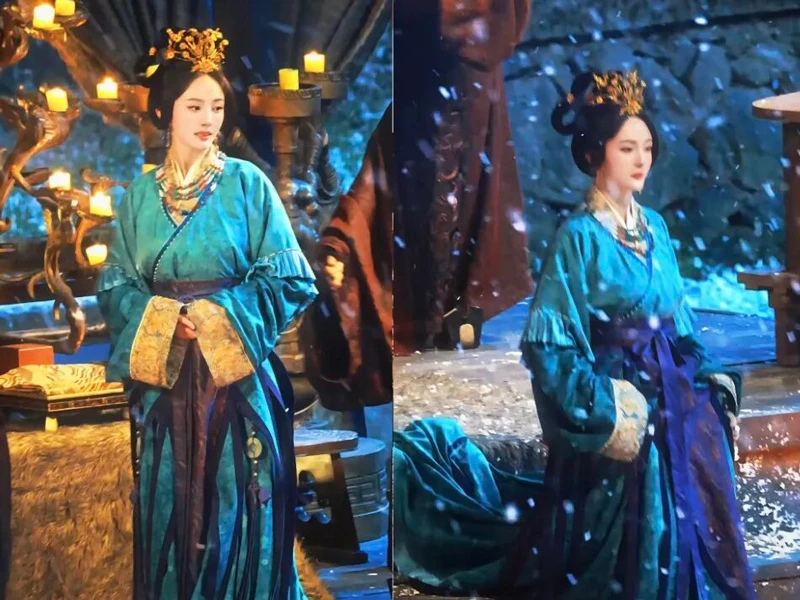
The skirt itself tells a story of practical elegance. It appears to have an enormous, flowing volume, but this isn’t achieved with excessive fabric. Instead, it uses a method called a “broken skirt” or Poqun (破裙). This technique involved sewing trapezoidal panels of cloth together, creating a shape that naturally flares outward as the wearer moves. This design, similar to a modern A-line skirt, allows for a graceful, sweeping motion. The dress is also adorned with a decorative tassel or pendant known as a Gui (袿), commonly referred to as a “hanging skirt” or Chuishao Shang (垂髾裳), which adds another layer of visual interest and historical accuracy to the lower half of the ensemble.
A Face Painted for the Gods
Moving upward from the flowing robes, the makeup is just as crucial to the historical verisimilitude. The style is a direct homage to the indigenous cosmetic trends of the Wei and Jin Dynasties. The most striking features are the inverted triangle pattern on her forehead, known as a Huadian (花钿), and the small round dots of rouge on her cheeks, called Mianye (面靥). To the modern eye, this can initially appear quite unusual or avant-garde. However, these were not arbitrary choices. These specific motifs have been identified on painted pottery figurines and female donor figures found in the grottoes of the era, confirming them as a hallmark of the period’s beauty standards.
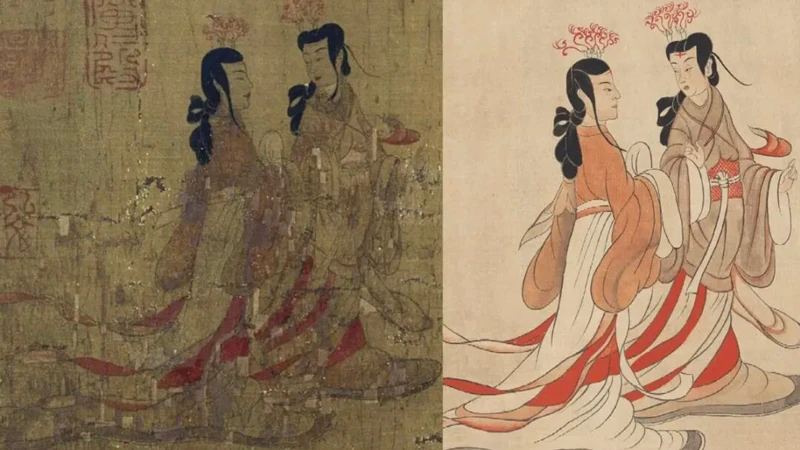
While the internet might find this “niche,” it represents a bold shift from the generic, modernized makeup often seen in historical dramas. It connects the character directly to the visual evidence left behind by the people of that time. By adopting these authentic features, the show’s creators are challenging our modern perception of ancient beauty. It forces the viewer to acknowledge that our ancestors’ aesthetic sensibilities could be vastly different from our own. It is less about what we find beautiful today and more about respecting the integrity of the historical period they are trying to portray, even if it feels “peculiar” to a contemporary audience.
The Crown that Sways with History
However, the piece de resistance, the element that truly captivates the viewer, is the magnificent golden crown perched atop Yang Mi’s head: the Buyao (步摇). Its name, which translates to “shake as you walk,” is a literal description of its function. This headpiece was the pinnacle of accessory fashion for high-ranking aristocratic women in the Han and Jin Dynasties. It wasn’t merely decorative; it was a symbol of supreme social status. According to ancient texts like the Shiming (释名), its defining characteristic was the delicate leaves and dangling pearls that would tremble and sway with every step, reminding the wearer to move with grace and dignity.
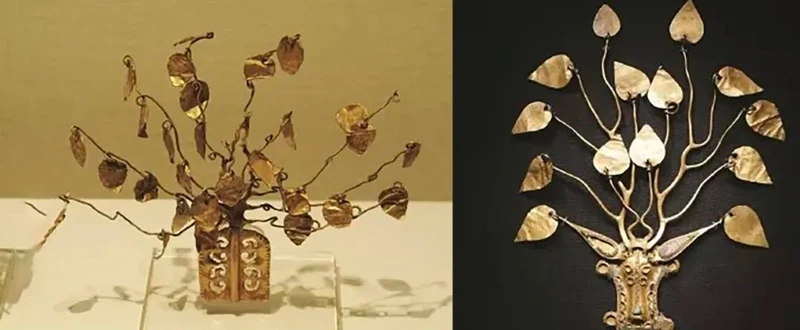
It’s important to note that Buyao is a general category, not a specific item. It evolved over time, ranging from simple hairpins to elaborate full crowns, often adorned with precious materials like gold, pearls, and jade. The version seen here in a previous leaked still, which is more structured, is a type of Buyao Guan, or shaking crown. This particular style appears more unisex and formal, appropriate for ceremonies and official appearances. After the Wei and Jin period, the concept evolved as foreign “shaking leaves” were incorporated into existing designs, but the core principle remained: a hair ornament that “shakes as you move.” By wearing this, Yang Mi’s character is not just adorned; she is visually announcing her rank and the weight of her heritage.
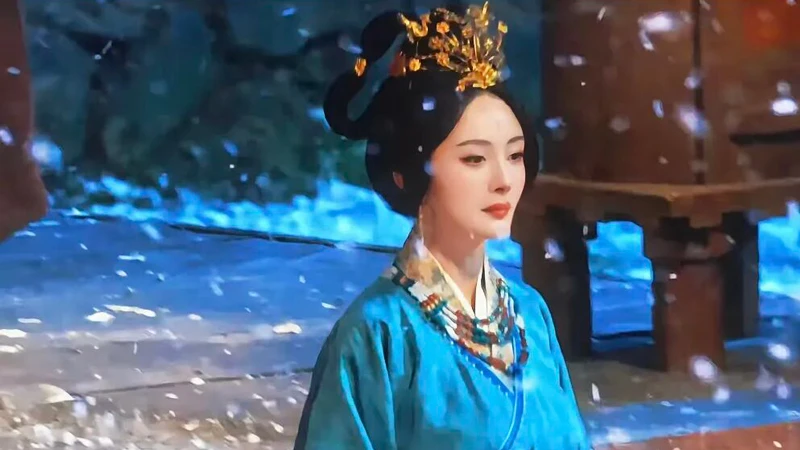
In a media landscape where historical dramas often prioritize aesthetics over accuracy, this detailed approach is a breath of fresh air. The team behind Jiangshan Datong is using costume to tell a story—not just of a character, but of a civilization. It is a powerful form of cultural transmission. By bringing these museum pieces to life on screen, they are fostering a deeper appreciation for the artistry and sophistication of ancient China. This ensemble, from the Shuanghuan Ji (双鬟髻) hairstyle to the golden Buyao, is a rare example of historical research translating into captivating visual storytelling.