
On June 13, 2026, China observed its annual Cultural and Natural Heritage Day with Shandong Province once again serving as a major national stage. The provincial cultural bureau rolled out 280 distinct events across the region between June 4 and June 21, anchored by a six-day performing arts lineup at the Shandong Provincial Cultural Center in Jinan. The 2026 theme, "Intangible Heritage Makes Life Better," framed a program that ranged from folk-song marathons to puppet theater, acrobatics, and shadow plays.
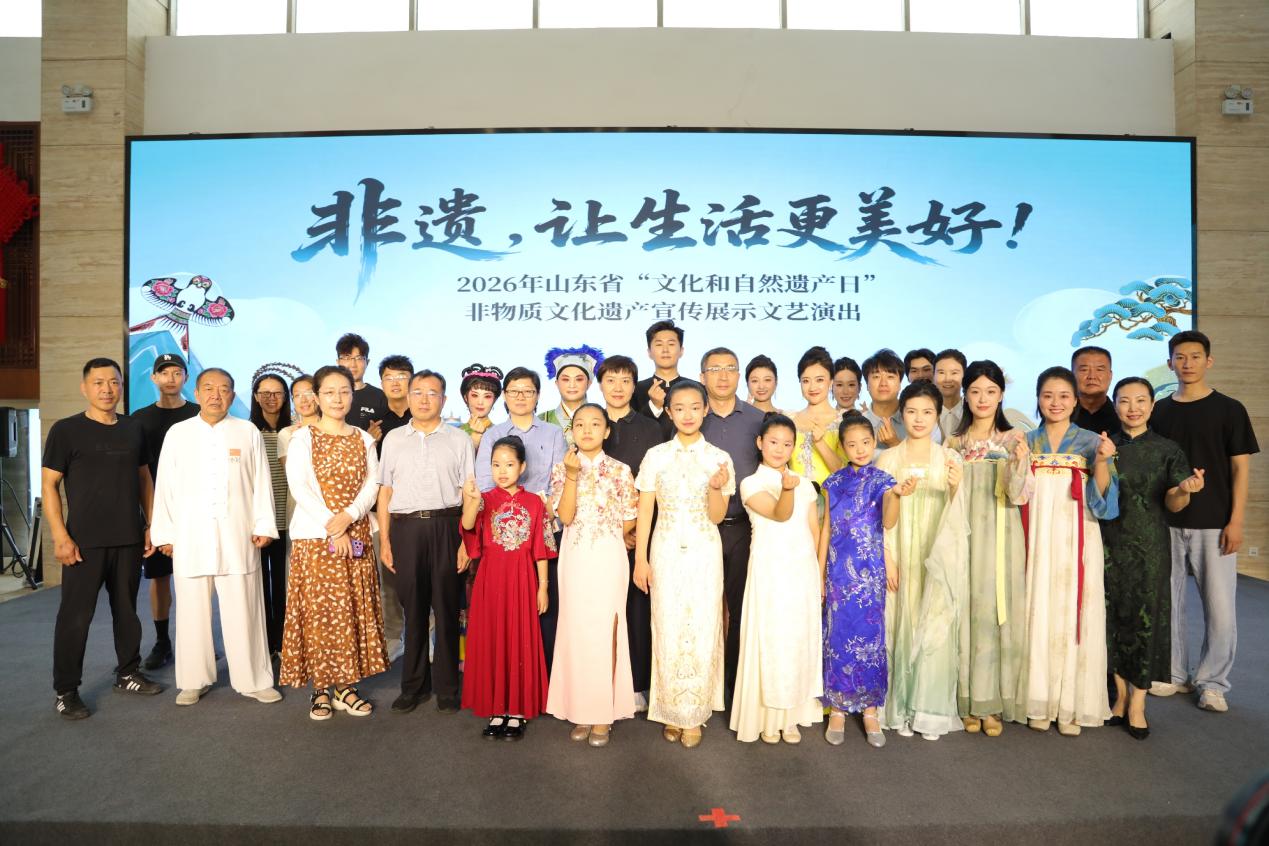
Jinan Main Venue and the Nine-Performance Program
The Shandong Provincial Cultural Center hosted the flagship Jinan main venue, with nine stage performances split across two daily sessions on June 13–14 and again on June 19–21. The program included folk song, traditional Chinese opera (Lüju, Liuzixi, Peking opera), cross-talk, acrobatics, shadow puppetry, magic, and a youth-oriented showcase called "Stellar Gravity" featuring new-generation performers. Day-and-night rotations were designed to accommodate both commuters and tourists.
According to the Shandong Provincial Department of Culture and Tourism, the program is the largest single-province cultural heritage event in China this year, with participants drawn from over 60 city- and county-level heritage bureaus. Free admission to most events kept the programming accessible to families, school groups, and independent travelers alike.
Taian Feicheng: The Local Opening Salvo
The series kicked off on June 5 in Feicheng, a county-level city under Taian, with a heritage fair that included 32 local intangible heritage items, food tasting zones, and a traditional medicine exhibition that drew unusually heavy foot traffic from younger visitors. The opening event, titled "Luan Tai Tan Cui," explored newly excavated cultural relics alongside living heritage practices, an editorial choice that reflected 2026's broader emphasis on "archaeology-meets-living-culture" programming.
Local officials noted that the Feicheng opening was specifically designed to test event flows before the Jinan main venue — a logistical dress rehearsal that fed directly into the central programming.
Jinan's 100-Event Satellite Program
Jinan separately launched its own 100-event cluster running June 10–14 (with some exhibitions continuing through the end of August), anchored at the Jinan Cultural Center. Highlights included a "Wulin Assembly" folk music gathering, a heritage market, hands-on craft classes, and a paper-cutting competition. The program was explicitly positioned as a "discovery tour" — encouraging visitors to experience heritage as embodied practice rather than museum display.
On the same day, Qingdao's Laoshan Scenic Area hosted its own heritage day program, jointly organized by the Laoshan Administration and the district's cultural bureau. The event centered on folk performances, heritage markets, and immersive theater scripts that re-staged legendary tales of the mountain's Taoist heritage. The Laoshan program signaled a wider trend: 2026's heritage calendar moved beyond the traditional museum-hall format into scenic areas, plazas, and even commercial streets.
What 280 Events Tell Us About 2026 Heritage Strategy
Shandong's 280-event tally is not a one-off. It reflects a national pattern in which "heritage day" is becoming a season rather than a date. Provincial governments have discovered that dispersed, multi-venue programming dramatically increases public engagement metrics compared to single-museum events, while also distributing tourism revenue across secondary cities.
For Hanfu enthusiasts, the most relevant takeaway is the proliferation of heritage-friendly public spaces: many 2026 events specifically invite traditional costume wearers and run side programming that overlaps with hanfu communities. Shandong, Henan, Guangdong, and Zhejiang have all adopted this approach, signaling a stable annual fixture for the heritage fashion crowd.
