
The mamianqun, or horse-face skirt, has experienced one of the most remarkable revivals in contemporary fashion history. What was once a garment confined to historical reenactment circles and period dramas has, since 2024, become a bona fide global fashion phenomenon. The skirt's distinctive silhouette — characterized by its flat front and back panels flanked by knife-sharp pleats — traces its origins to the Ming Dynasty (1368–1644), when it served as a staple of Han Chinese women's formal and everyday attire. The name "horse-face" derives from the shape of the front panel, which resembles the long face of a horse when viewed head-on, though the Chinese term "mamian" actually refers to the architectural feature of a city gate's defensive bastion rather than an equine visage.
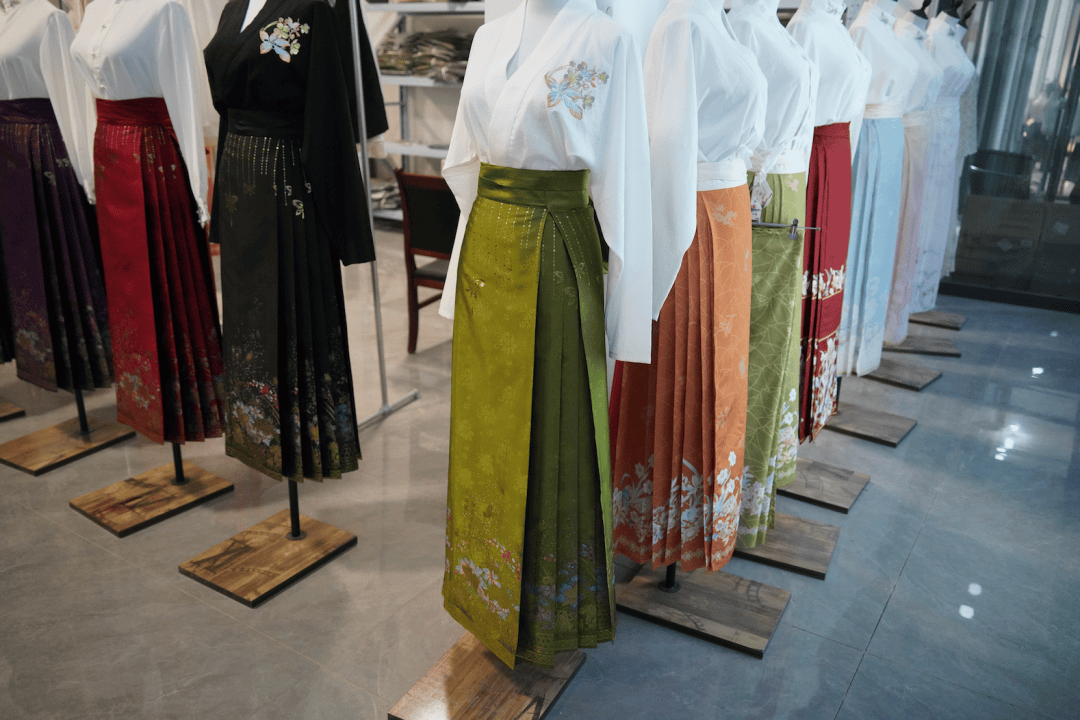
By early 2026, the mamianqun had transcended its niche origins entirely. According to reports from Caoxian County in Shandong Province — now widely recognized as the production epicenter of China's hanfu industry — overseas orders for mamianqun surged roughly tenfold compared to the previous year. Brazilian cultural media companies began actively seeking distribution partnerships to bring Caoxian-made mamianqun to South American markets. Meanwhile, fashion influencers from Paris to Tokyo incorporated the skirt into street-style looks, demonstrating its surprising versatility. The skirt's journey from Ming Dynasty court dress to international runway-adjacent fashion represents something deeper than a fleeting trend: it signals a broader cultural shift in which traditional Chinese aesthetics are being reinterpreted for contemporary global audiences.
The numbers tell a compelling story. In Caoxian County alone, thousands of factories and workshops now produce hanfu garments, with mamianqun accounting for a dominant share of output. The county has leveraged its existing textile infrastructure — originally built around costume manufacturing for the entertainment industry — to become what industry observers call the "cosmic center" of horse-face skirt production. This industrial capacity, combined with an explosion of creative design talent, has made the mamianqun accessible to consumers at virtually every price point, from affordable polyester versions to premium silk brocade pieces featuring intricate gold-thread embroidery. The democratization of this once-elite garment is perhaps the single most important factor behind its global spread.
2026 Mamianqun Design Trends
The defining theme of the 2026 mamianqun season is functional elegance. Designers across China are moving decisively away from heavy brocades and rigid constructions that characterized earlier iterations of the revival, instead embracing fabrics and cuts that make the skirt genuinely wearable in warm weather. Linen, ramie (zhuma), and lightweight cotton have emerged as the season's hero materials. These natural fibers offer breathability and moisture-wicking properties that make the mamianqun viable for daily summer wear — a critical evolution for a garment that many consumers previously reserved for special occasions or photo shoots. The shift toward these fabrics also aligns with a broader sustainability conversation in fashion, as linen and ramie require significantly less water and fewer chemical inputs than conventional cotton.
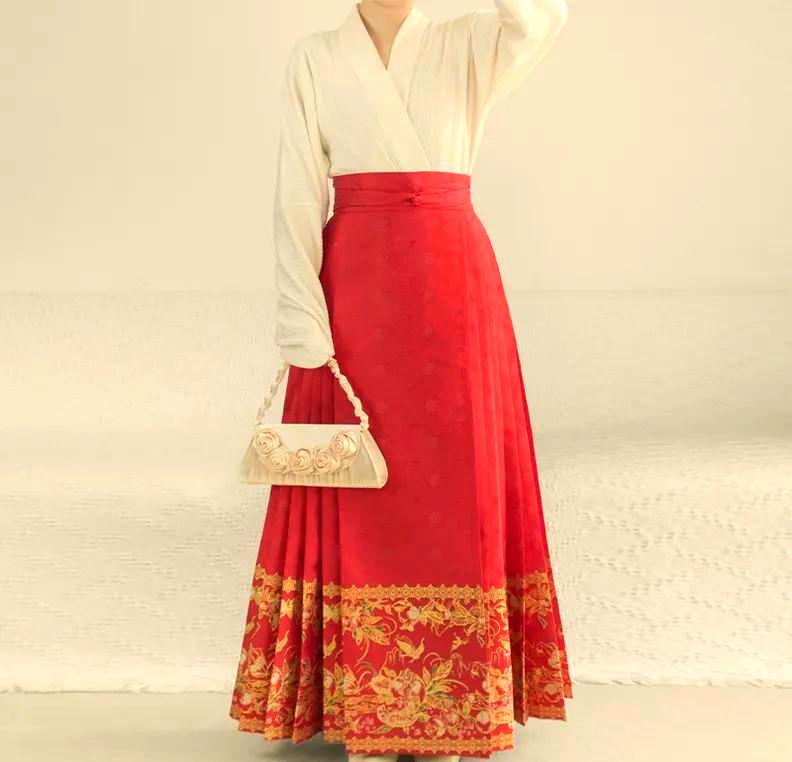
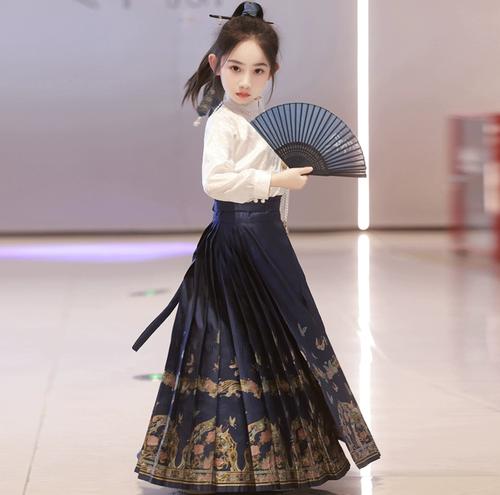
Color palettes for the 2026 spring summer season reflect a confident departure from tradition without abandoning it entirely. While classic combinations like deep red with gold embroidery and navy blue with silver threadwork remain popular for formal occasions, designers are introducing an array of fresh hues. Soft pastels — particularly celadon green, blush pink, and sky blue — have gained significant traction for daytime and casual looks. At the bolder end of the spectrum, vibrant tangerine, electric violet, and even neon-adjacent accents are appearing on younger-skewing lines. The traditional mamianqun embroidery motifs — phoenixes, peonies, cloud patterns, and auspicious Chinese characters — are being reimagined at different scales: some designers opt for all-over micro-patterns, while others favor a single dramatic motif placed asymmetrically across the pleats.
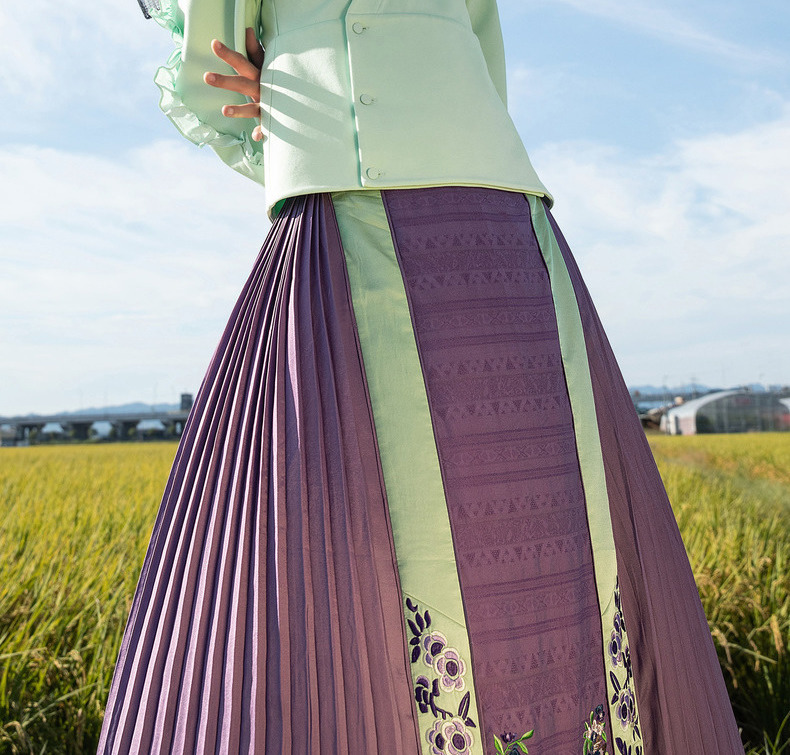
Structurally, the 2026 summer mamianqun has undergone meaningful modifications that enhance comfort without sacrificing the skirt's iconic silhouette. Many designers are reducing the number of pleats — from the traditional twenty-plus to a more manageable eight to twelve — which lightens the garment considerably and reduces bulk around the waist. Elasticated waistbands, once considered anathema by purists, are now commonplace on casual and mid-range pieces, making sizing far more forgiving. Some avant-garde designers have even introduced detachable panels that allow wearers to convert a full mamianqun into a simpler A-line skirt. These innovations reflect a maturing market that understands the difference between historical accuracy and contemporary relevance, and wisely chooses to serve both.
The Industrial Engine Behind the Mamianqun Boom
No discussion of the mamianqun phenomenon is complete without understanding the role of Caoxian County in Shandong Province. This unassuming administrative region has transformed itself into the undisputed production capital of China's hanfu industry, with mamianqun as its flagship product. The county's journey to this position is a case study in industrial agility. Originally known for costume manufacturing and stage wear production, Caoxian's workshops and factories pivoted rapidly when demand for hanfu — and mamianqun specifically — began surging in 2023 and 2024. The existing ecosystem of textile mills, embroidery workshops, cutting facilities, and logistics networks meant that Caoxian could scale production faster than virtually any other region in China.
By the first quarter of 2026, Caoxian-based manufacturers were reporting order volumes ten times higher than the same period in the previous year. The surge was driven not only by domestic demand but by a dramatic increase in international orders. Export markets in Southeast Asia, Europe, and the Americas have all shown strong appetite for authentic Chinese-made mamianqun, with buyers valuing the combination of competitive pricing and genuine cultural provenance. The county's manufacturers have responded by investing in digital printing technologies, automated cutting systems, and — crucially — design teams that can interpret global fashion trends through the lens of traditional Chinese aesthetics. This marriage of industrial efficiency and cultural authenticity has proven extraordinarily potent.
The economic impact on Caoxian has been transformative. Young entrepreneurs who might previously have migrated to coastal cities for employment are instead returning to the county to open hanfu businesses. E-commerce livestreaming has become a major sales channel, with hosts demonstrating mamianqun styling techniques to audiences that span continents. The Caoxian model is now being studied by other regions hoping to replicate its success, though few possess the same combination of manufacturing density, cultural heritage, and entrepreneurial energy. As one factory owner noted in early 2026, the challenge is no longer finding customers — it is keeping up with demand while maintaining quality standards that honor the garment's cultural significance.
Summer Styling Guide: How to Wear the Mamianqun in 2026
The most common question among newcomers to mamianqun fashion is deceptively simple: what do you wear with it? The answer in 2026 is far more expansive than it was even two years ago, reflecting the garment's evolution from formal hanfu piece to versatile wardrobe staple. The fundamental styling principle remains the same — the mamianqun is a high-waisted skirt that sits at the natural waist, typically falling to the ankle or mid-calf — but the options for pairing have multiplied dramatically. For summer 2026, the guiding philosophy is relaxed elegance: the mamianqun should feel as natural as throwing on a favorite sundress, not like donning a costume.
For casual daytime looks, the simplest and most effective pairing is a fitted crop top or a tucked-in cotton blouse. A white linen button-down tucked into a pastel-colored linen mamianqun creates an effortlessly chic silhouette that works for brunch, shopping, or a casual office environment. For those who prefer a more covered look, a lightweight knit top with a boat neck or subtle puff sleeves pairs beautifully with the skirt's structured waistline. Footwear choices have also liberalized considerably: while traditional embroidered slippers remain popular for formal occasions, white sneakers, flat leather sandals, and even minimalist heels all work harmoniously with the mamianqun's elongated line. The key is maintaining visual balance — since the skirt makes a strong statement, the upper half should complement rather than compete.
For more formal or evening occasions, the mamianqun shines in its traditional pairing with a matching or coordinating short jacket, known as a shan or ao, which creates the classic two-piece hanfu silhouette. In 2026, designers are offering these jackets in sheer organza, lightweight silk, and embroidered mesh — fabrics that provide coverage without adding heat. A silk camisole worn underneath a sheer jacket offers a modern compromise between traditional layering and summer practicality. Accessories deserve careful consideration: a simple jade bracelet or a pair of delicate gold earrings can elevate the look without overwhelming it. The mamianqun's elaborate embroidery or bold color choices should be the focal point; accessories play a supporting role.
For those interested in a more experimental approach, the 2026 season offers ample inspiration. Street-style photographers have captured mamianqun paired with graphic T-shirts, cropped denim jackets, and even oversized blazers — combinations that deliberately juxtapose the ancient and the modern. This high-low styling strategy has proven particularly popular among younger consumers who want to signal cultural awareness without sacrificing personal style. A minimalist black mamianqun with subtle tonal embroidery, worn with a simple white tank top and chunky sandals, reads as contemporary fashion first and traditional garment second. This versatility — the ability to code-switch between heritage piece and modern staple — may be the mamianqun's greatest strength as it continues its global ascent.
The Future of Mamianqun
As the mamianqun moves further into the global fashion mainstream, important conversations are emerging about sustainability, cultural appreciation, and the tension between innovation and tradition. The garment's popularity has prompted legitimate questions about production ethics, particularly given the volume at which Caoxian factories now operate. Encouragingly, the 2026 season has seen a noticeable uptick in brands emphasizing natural fibers, plant-based dyes, and transparent supply chains. Several emerging designers have built their entire brand identity around sustainable mamianqun, using organic linen, recycled polyester blends for embroidery threads, and packaging made from agricultural waste. These initiatives suggest that the mamianqun industry is capable of evolving beyond fast-fashion production models toward something more enduring.
On the design front, the coming seasons are likely to see further experimentation with hybrid forms. Early indications from fashion weeks in Shanghai and Beijing suggest that designers are exploring mamianqun-inspired culottes, wrap-skirt variations that reference the horse-face structure without replicating it exactly, and even menswear pieces that borrow the pleating and paneling techniques. These developments raise fascinating questions about where the boundary lies between a genuine mamianqun and a garment that merely references it — questions that designers, consumers, and cultural critics will continue to negotiate. What seems clear is that the mamianqun has achieved something rare in fashion: it has become both a living tradition and a canvas for contemporary creativity.
The international dimension of the mamianqun's rise also invites reflection on cultural exchange. When a Brazilian distributor showcases Caoxian-made horse-face skirts to South American consumers, or when a European influencer styles a mamianqun with local accessories, something more complex than simple appropriation or appreciation is occurring. These encounters represent genuine cultural dialogue, facilitated by the garment's aesthetic appeal and the global reach of e-commerce. The mamianqun carries within its pleats centuries of Chinese history, craftsmanship, and symbolism — and as it travels the world, it creates opportunities for that cultural richness to be encountered, appreciated, and reinterpreted by new audiences. For a garment that began its journey in the courts of Ming Dynasty China, that is a remarkable trajectory indeed.
