
The Dragon Boat Festival, known in Chinese as Duanwu Jie (端午节), falls on June 19 in 2026 — a Friday that sets the stage for a long weekend of celebrations across China and Chinese communities worldwide. The festival, occurring on the fifth day of the fifth lunar month, boasts a history spanning more than two thousand years. While scholars debate its precise origins — some trace it to ancient dragon worship rituals, others to seasonal health practices — the most widely embraced narrative centers on the poet-statesman Qu Yuan (c. 340–278 BCE). A minister of the Chu kingdom during the Warring States period, Qu Yuan drowned himself in the Miluo River upon learning his homeland had fallen to invading forces. According to legend, locals raced out in boats to rescue him and threw packets of rice into the water to prevent fish from consuming his remains. These two actions are commemorated today through dragon boat racing and the eating of zongzi, the festival's iconic food.

The historical accuracy of the Qu Yuan story is less important than its cultural resonance. Over centuries, the festival absorbed a rich tapestry of folk customs and symbolic meanings. The fifth day of the fifth month was traditionally considered a time when poisonous creatures were particularly active, leading to protective rituals: hanging mugwort (ai cao) and calamus (chang pu) on doorways, drinking realgar wine (xionghuang jiu), and wearing five-color silk threads (wu se si xian). These practices, while less universal today, remain vibrant in many communities and have experienced a modest revival alongside the broader resurgence of interest in traditional Chinese culture. The Dragon Boat Festival was inscribed on the UNESCO Representative List of the Intangible Cultural Heritage of Humanity in 2009, cementing its status as one of China's most beloved traditional holidays.
The Dragon Boat Festival is also one of the few Chinese holidays with genuine global reach. Dragon boat racing has evolved into an international sport with competitions from San Francisco to Sydney, and zongzi can be found in Asian grocery stores worldwide. Understanding the festival through its food — the endlessly varied and regionally distinctive zongzi — provides perhaps the most delicious entry point into this rich cultural tradition.
The Five Great Zongzi Regions
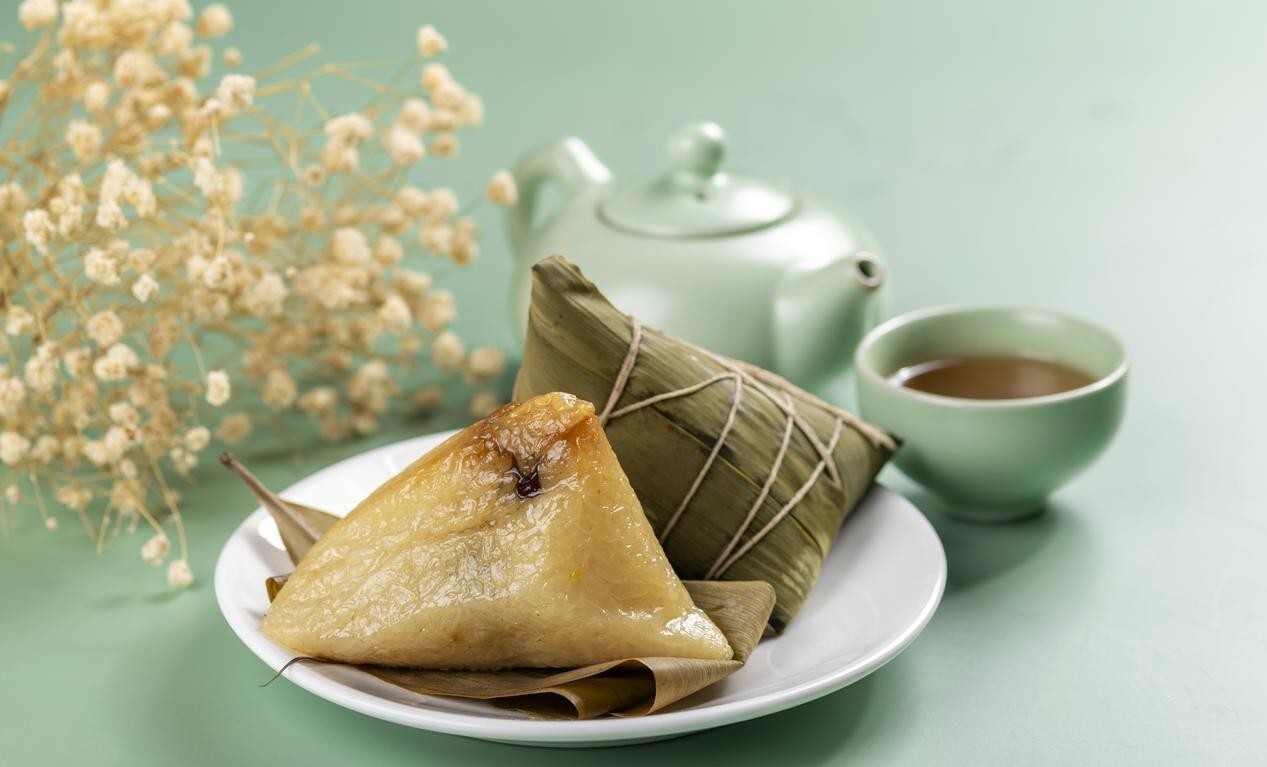
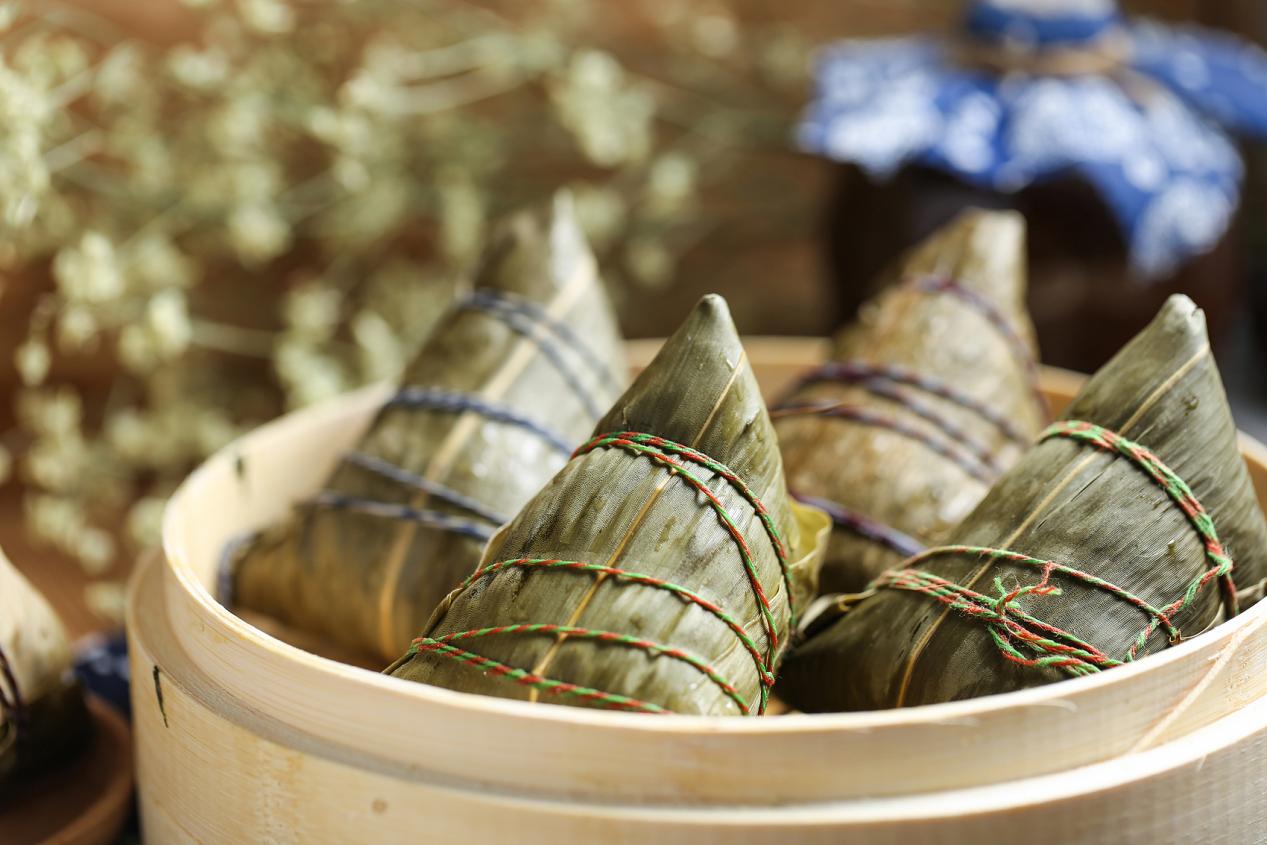
Zongzi (粽子) are the undisputed culinary centerpiece of the Dragon Boat Festival. At their most fundamental, they consist of glutinous rice wrapped around a filling and encased in bamboo or reed leaves, then boiled or steamed until the rice achieves a tender, slightly chewy texture and the leaf imparts a subtle grassy fragrance. Beyond this basic description, zongzi vary enormously across China's regions. The most fundamental divide is between the sweet zongzi of the north and the savory zongzi of the south — a culinary fault line that mirrors broader patterns in Chinese cuisine. In 2026, exploring China through its zongzi traditions has become an increasingly popular way to engage with the festival.
Jiaxing (嘉兴), in Zhejiang Province, is arguably the most famous zongzi-producing region in China. Jiaxing zongzi, particularly those from the century-old brand Wufangzhai, are known for their plump, pillow-like shape and soy-sauce-marinated glutinous rice that takes on a deep amber hue during cooking. The classic filling is fatty pork belly that melts during the long steaming process, infusing the surrounding rice with rich, savory flavor. Jiaxing also produces sweet versions filled with red bean or jujube paste, and the region's zongzi culture is so developed that it has spawned a dedicated museum and annual cultural festival. The craftsmanship involved — from leaf selection to the precise wrapping technique — has been recognized as part of China's intangible cultural heritage.
The Cantonese (广东) zongzi tradition represents the savory pole in its most elaborate form. Cantonese zongzi are typically larger, pyramid-shaped, and packed with an extravagant array of ingredients: marinated pork belly, salted duck egg yolk, dried shrimp, Chinese sausage (lap cheong), shiitake mushrooms, and chestnuts, all wrapped around a core of mung beans and glutinous rice. The combination of rich, oily pork with creamy, salty egg yolk and earthy mushrooms creates a deeply satisfying complexity. In Hong Kong and among overseas Chinese communities, the Cantonese style — particularly the version featuring cured pork and salted egg yolk — is often considered the definitive zongzi experience.
Sichuan (四川) brings its characteristic boldness to the zongzi tradition with spicy varieties. Sichuan-style zongzi incorporate the region's famous chili oils, Sichuan peppercorns, and sometimes fermented bean pastes into the rice or filling, producing a distinctive numbing heat (mala) that cuts through the richness of the glutinous rice. Common fillings include spicy pork, preserved vegetables with chili, and — in innovative versions — mapo tofu-inspired combinations. For adventurous eaters, Sichuan spicy zongzi offer a thrilling departure from convention and a reminder that tradition is never static.
Beijing (北京) represents the northern sweet zongzi tradition at its most classic. The Beijing-style zongzi is typically smaller and simpler, often triangular or tetrahedral in shape. The most iconic filling is candied jujube (蜜枣), which imparts a gentle sweetness to the surrounding glutinous rice. The rice is left unseasoned — stark white and subtly fragrant from the reed leaves preferred in the north. This minimalist approach allows the natural sweetness of the jujube and the perfume of the leaves to shine through. Beijing zongzi are often served with a dusting of sugar and pair beautifully with jasmine tea on a summer morning.
Yunnan (云南) offers perhaps the most distinctive regional zongzi tradition, reflecting the province's extraordinary botanical diversity and ethnic minority cultures. Yunnan-style zongzi frequently feature puréed fillings from local ingredients: flower pastes made from rose or osmanthus, taro purée, purple rice from terraced highlands, and fillings incorporating Yunnan ham or wild mushrooms. The province's Zhuang, Dai, and Bai ethnic minorities each have their own traditions, some using banana leaves instead of bamboo leaves. A notable Yunnan specialty is the "five-color zongzi," made by dyeing glutinous rice with natural plant-based colorings, creating a visually stunning food that symbolizes good fortune and harmony.
Hanfu and Zongzi
The convergence of two major cultural trends — the hanfu revival movement and the explosion of food photography on social media — has created a distinctive Dragon Boat Festival aesthetic in 2026. Across platforms from Instagram to Xiaohongshu, images of elegantly dressed hanfu enthusiasts holding steaming zongzi against atmospheric backdrops have become a seasonal genre. For those looking to create their own Dragon Boat Festival content, a few thoughtful approaches can elevate the results from simple snapshots to compelling visual storytelling.
The first principle of hanfu food photography is context. Rather than simply posing with a zongzi in hand, consider the narrative your image tells. A Tang Dynasty-style qixiong ruqun worn while unwrapping zongzi at a wooden table strewn with bamboo leaves tells a story of preparation and anticipation. A Ming Dynasty-style mamianqun paired with a simple cross-collar top, seated by a lotus pond with a zongzi on a celadon plate, evokes the elegant leisure of classical Chinese aesthetics. The key is creating a scene that feels lived-in rather than staged — crumbs on the table, a partially unwrapped zongzi, a cup of tea that has clearly been sipped. Natural light is almost always preferable; the soft, diffused light of early morning or late afternoon complements the warm tones of bamboo leaves and glutinous rice beautifully.
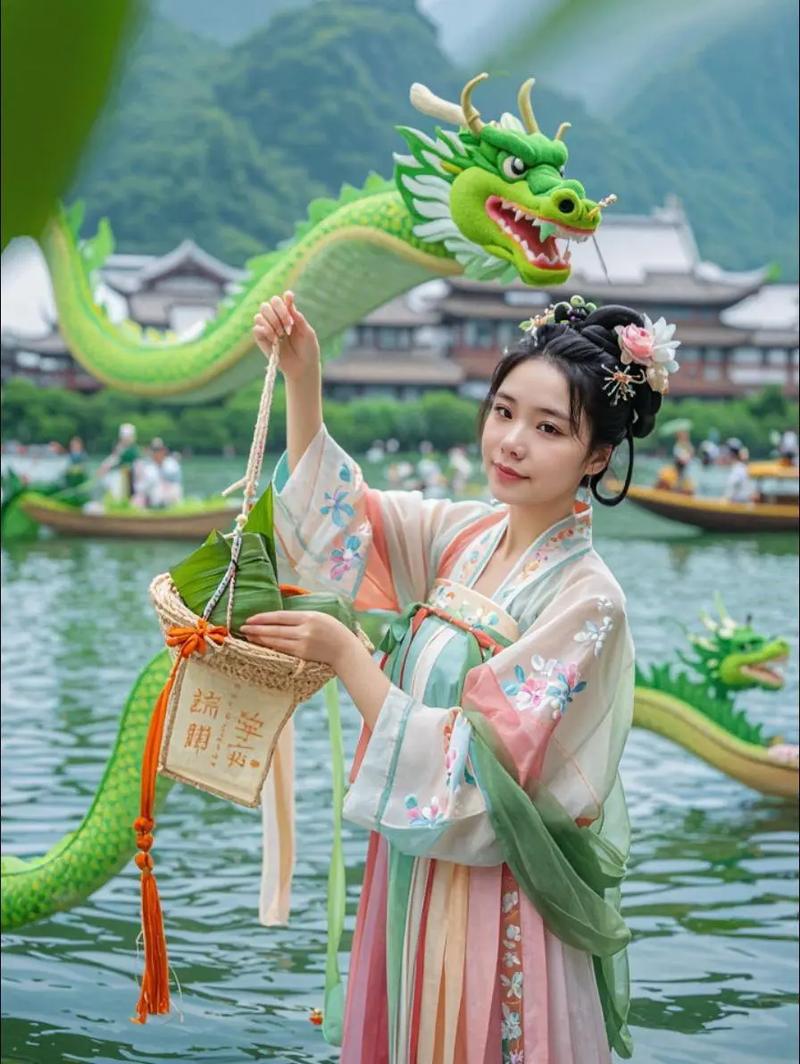
Color coordination between hanfu and food deserves careful attention. Zongzi themselves are relatively neutral — deep green leaves and creamy white glutinous rice — which means they pair well with almost any hanfu palette. A hanfu in soft pastels — sage green, dusty pink, or pale yellow — creates a gentle, romantic mood suited to the summer festival. Bolder choices, like a vermillion red Tang-style dress or an indigo-dyed Song-style ensemble, create striking contrast. Consider the overall color story: a blue-and-white porcelain plate holding the zongzi, a wooden surface in warm brown tones, and a sprig of mugwort or a five-color silk bracelet as a subtle accent that reinforces the festival theme.
Technical considerations matter, but they need not be intimidating. The most common mistake is getting too close — stepping back allows the hanfu, the setting, and the food to coexist in a balanced frame. A 50mm equivalent focal length (or the 2x lens on most smartphones) produces a natural perspective that flatters both subject and food. Pay attention to hands: they should look relaxed and natural, whether cradling a zongzi, pouring tea, or adjusting a sleeve. The interplay between flowing hanfu sleeves and textured bamboo leaves creates visual interest even in still images. For solo shoots, a tripod and timer are essential — many of the most compelling hanfu food photographs are self-portraits requiring patience and multiple attempts. The effort, however, is part of the ritual.
Celebrating the Dragon Boat Festival in 2026
As the 2026 Dragon Boat Festival approaches, the holiday occupies a fascinating position in contemporary Chinese cultural life — simultaneously ancient and modern, sacred and commercial, local and global. In China's major cities, dragon boat races draw crowds in the hundreds of thousands, with corporate-sponsored teams competing alongside community clubs. In the countryside, families gather to make zongzi using recipes passed down through generations. Abroad, Chinese diaspora communities organize festivals that introduce their neighbors to zongzi, dragon boat racing, and the story of Qu Yuan. The festival's adaptability across these diverse contexts speaks to the enduring power of traditions that remain meaningful even as their forms evolve.
For those planning to celebrate in 2026, the options are richer than ever. Culinary adventurers might attempt making zongzi from scratch — a rewarding if technically demanding project. Cultural enthusiasts might don hanfu and attend traditional ceremonies at temples and cultural sites. Families can engage in simpler traditions: tying five-color bracelets, hanging mugwort bundles, or reading the story of Qu Yuan together. Even those with no direct connection to Chinese culture can participate by seeking out zongzi at a local Asian grocery store, watching a dragon boat race, or learning about the festival's history. In a world that often feels fragmented and fast-paced, seasonal festivals like Duanwu offer something precious: a moment to pause, to gather, and to taste the flavors that have connected generations across millennia.
