
On April 30, 2026, a long-awaited Donghua (动画) in the Xuanhuan (玄幻) genre finally arrived. Coiling Dragon (盘龙), produced by China Year Year and streaming exclusively on Tencent Video, dropped its first three episodes in one go. With a planned 20-episode first season (each about 20 minutes long), this adaptation of I Eat Tomatoes’ classic web novel (2008–2009) brings back the epic story of Linley Baruch.
Set on the vast Yulan (玉兰) Continent, the fallen noble teenager discovers a mysterious ring in his ancestral house. Inside sleeps Delin (德林) Kowart, a saint-level magician who awakens after 5,000 years. What follows is a thrilling journey of magic, combat, and revenge. For fans who grew up with the novel, this is a nostalgic return. For newcomers, it’s a fresh fantasy epic worth exploring.
A Thrilling Debut
The first episode focuses on Linley’s daily life and his family’s decline. In the quiet town of Wushan (乌山), the Baruch family struggles to survive by selling off ancestral assets. His father’s helplessness fuels Linley’s inner frustration. While cleaning an old storage room, he accidentally touches the Coiling Dragon ring. Delin’s voice echoes: “Boy, do you want to become a strong warrior?” That single line ignites the story’s tension and flips Linley’s fate completely.

Episodes two and three shift into ability awakening and early training. Delin tests Linley’s talent and discovers his rare dual affinity for earth and wind magic. Even more striking, he awakens the dormant Dragonblood Warrior bloodline within Linley. Guided by Delin, he begins systematic practice—from basic meditation and elemental perception to actual combat drills. The boy’s transformation has officially started.
The episodes also weave in family warmth, budding friendships, and an early crisis. These moments make Linley feel real: he is not just a destined hero but a young man who misses his mother and argues with his father. The pacing is tight, the world-building clear, and the emotional hooks land well. After three episodes, the show earns a solid “above average” rating—sincere and promising.
Art and Action
China Year Year, known for hits like The Blood of Youth (少年歌行), delivers impressive visuals here. Character modeling is precise: Linley’s youthful determination and Delin’s wise, weathered face are both captured effectively. The environments blend Western fantasy’s grandeur with Eastern animation’s delicate touch—Wushan’s pastoral beauty, the old house’s rustic charm, and the dazzling magic effects all show the team’s dedication.
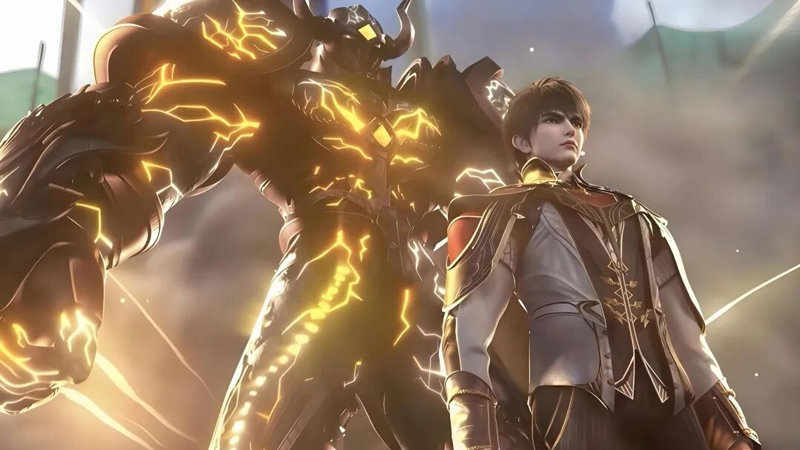
Combat sequences are fluid and impactful. When Linley throws his first real punch or casts a beginner spell, the camera work follows the motion cleanly. Magic and physical combat collide with real weight. While not yet “explosive” at this early stage, the action ranks above average among similar Donghua titles. Each clash feels earned, not flashy for its own sake.
The studio reportedly “rebuilt scenes three times” before finalizing the look. That effort shows in small details—the way light filters through leaves, the texture of old stone walls, the glow of Delin’s spectral form. For a weekly series, Coiling Dragon sets a high bar for consistency. It respects the source material while using animation’s strengths to enhance mood and momentum.
For Old and New
The first season is split into three arcs. Arc one: The Mountain Range of Magical Beasts (six episodes). Linley follows Delin into the wild, tames a magical beast partner, defeats powerful enemies, and grows stronger. Arc two: The Ernst Institute (seven episodes). He enters a prestigious magic academy, makes close friends and a lover, and faces pressure from the Radiant Church. Arc three: The Kingdom of Fenlai (seven episodes). He gets pulled into regional conflicts, fights dark forces, seeks revenge for his family, and uncovers ancient secrets of the Dragonblood lineage.
As the finale of I Eat Tomatoes’ “Hongmeng Trilogy”, which features Stellar Transformations (星辰变) and Swallowed Star (吞噬星空), Coiling Dragon fills a gap in Donghua’s Western fantasy subgenre. Most Chinese fantasy series lean toward Eastern cultivation or immortal heroes. This one offers a different flavor—wizards, dragons, knights, and magical beasts—while keeping the emotional core of a young man fighting against fate. It complements rather than competes with the rest of the field.
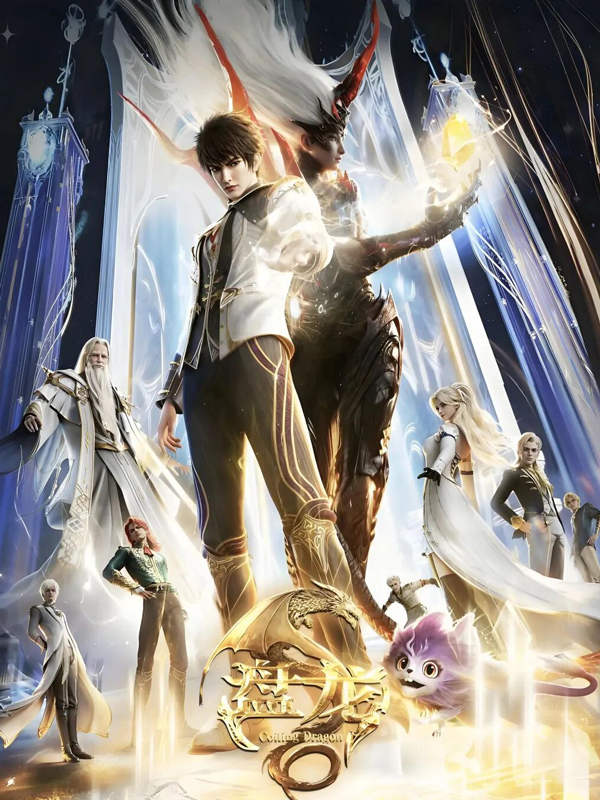
New episodes drop every Thursday at 10 AM on Tencent Video, with 20 episodes in total. From the first three, the adaptation stays faithful to the novel, the animation delivers honest craftsmanship, and the pacing avoids filler. Minor flaws exist—some secondary character designs feel generic, a few dialogue lines are stiff—but the overall package shines. For returning readers, it closes a decade-old wish. For first-time viewers, it opens a door to a sprawling, heartfelt fantasy saga.
