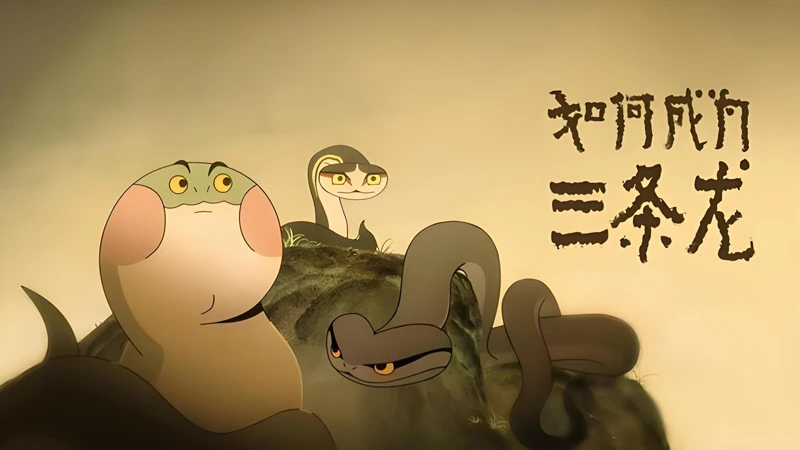
The first day of 2026 brought a new episode of the animated anthology Yao-Chinese Folktales 2 (中国奇谭2). Like many, I had enjoyed the first season, yet its stories faded from memory too quickly. This time, I decided to do more than just watch. The tale of the three snakes presented a simple fable, but one that clung to the mind long after the screen went dark. It asks a profound question: what defines a dragon? Is it the celestial mandate, the horns and the majesty, or is it something earned through grit and sacrifice on the dusty earth? This story, set against a drought-stricken village and a forbidding mountain, offers a quiet, powerful answer.
A Hopeless Quest
The three brothers—a pragmatic leader, a chatty second, and a simple, kind-hearted third—begin their journey with a clear, almost naive goal. They are not mighty. They are small snakes surviving on stolen offerings from villagers praying to the Dragon King for rain. The eldest understands a cruel truth: people worship power that solves problems. Their reverence for the Dragon King stems not from love, but from a desperate need for his rain. So, the snakes embark on a pilgrimage to learn this divine skill themselves.
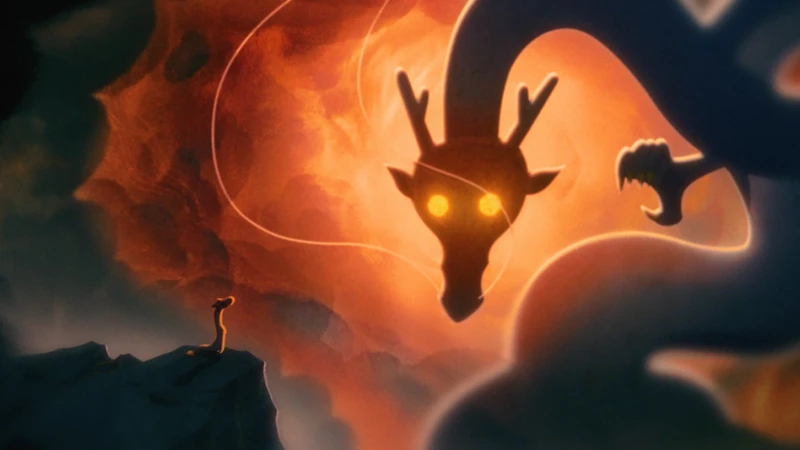
They travel far, visiting temples and observing rituals. But the ways of gods and other spirits are not meant for creatures like them. The methods are incompatible; the knowledge is guarded. Their quest for a magical solution, for a shortcut to divinity, ends in failure. They return home weary, to a village still parched and praying. Their source of stolen food dwindles with the villagers’ hope. Faced with this dead end, their grand ambition to become dragons seems like a childish dream. Yet, returning empty-handed forces a pivotal shift in thinking.
Action Over Prayer
Abandoning the pursuit of magical power, they turn to the tools at hand: carrying-poles and buckets. They decide to bring water from a distant source, one bucket at a time. It is backbreaking, futile work against a vast drought. Their ignorance leads to comedy and danger—they water weeds instead of crops, alarming the villagers who see them as troublesome pests. They are nearly killed, not out of malice, but from misunderstanding.
This failure sparks innovation. The eldest observes his youngest brother’s unique ability to hold large amounts of water. A new, clandestine plan forms. Under the cover of darkness, the youngest would drink from a stream, climb a hill, and spray the fields. To the villagers waking to damp soil, it seemed like a minor, miraculous shower from the heavens. The snakes traded the desire to be worshipped for the quiet satisfaction of providing aid. Their actions were small, a deception born of compassion, but for the first time, they were actively shaping their destiny and helping others.
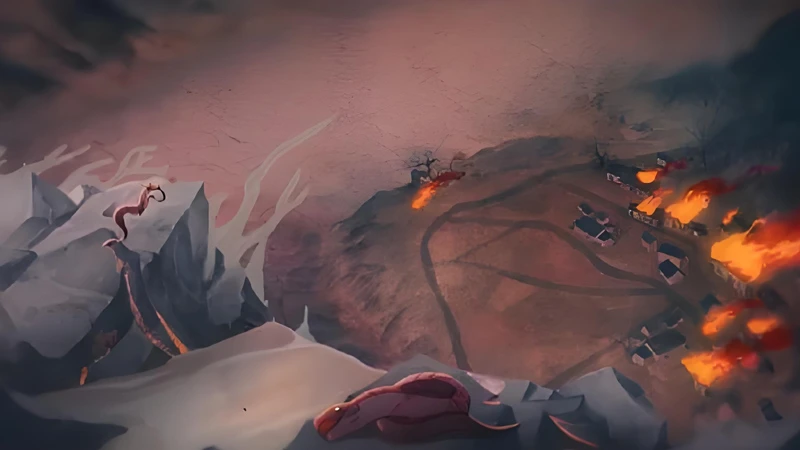
Their tiny interventions, however, attract the wrath of the true Dragon King. This celestial bureaucrat views the unsanctioned “rain” as an affront to his authority. His punishment is not aimed at the snakes, but at the village he is supposed to protect. He summons a storm of terrifying lightning, setting the dry land ablaze. The very village he neglected is now punished for receiving help from elsewhere.
The Final Sacrifice
In the chaos, the eldest snake sees not just disaster, but a final, desperate opportunity. The mountain that blocked the river, the true cause of the drought, might be shattered by the Dragon King’s own violent lightning. With no power of their own, they would use the tyrant’s strength against him. The eldest races toward the mountain peak, into the heart of the storm, aiming to guide the bolts into the rock. His brothers, fearing for his life, follow without hesitation.
What follows is a tragedy of sheer determination. The Dragon King, enraged by their defiance, focuses his attack on them. To shield their leader, the second and third brothers are struck down. The eldest, heartbroken but resolved, presses on. His mission is no longer about becoming a dragon; it is about finishing what they started. With a final, concerted effort, he draws the last catastrophic bolt into the heart of the mountain.
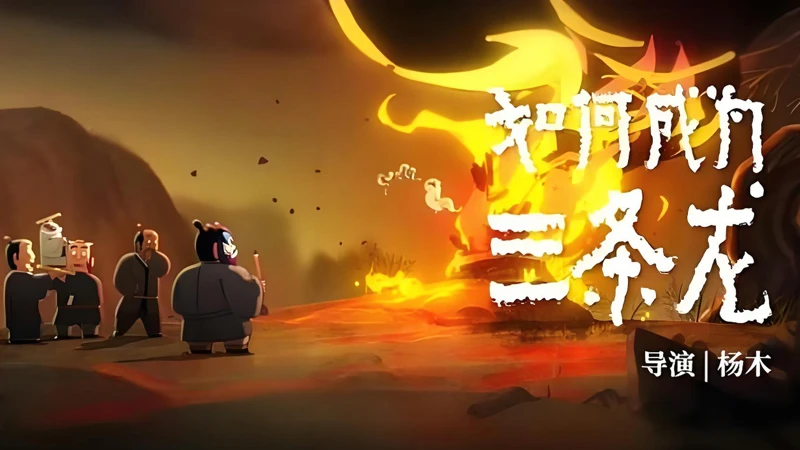
The peak explodes. The imprisoned river surges free, quenching the fires and flooding the barren fields with life-giving water. The snakes perish, their bodies lost in the deluge they unleashed. The villagers witness only the result: the miraculous breaking of the mountain and the end of the drought. Only one little girl, who had quietly observed the snakes’ struggles from the beginning, understands the true cost.
The story closes not with heavenly recognition, but with earthly grace. No celestial title is bestowed. In the villagers’ new prosperity, they erect a statue to the dragons who saved them. The carved figures, however, have no horns. “The dragons of our village have no horns,” a villager says. It is the highest praise. The three snakes never transformed into mythical beasts, but through their empathy, perseverance, and ultimate sacrifice, they achieved something greater. They became what a dragon should be: a force that serves the people, not one that rules them from afar. Their legacy is not in a title, but in the flowing river and the grateful memory of those they chose to help.
Redefining Heroes
This story strips away the spectacle. The snakes’ power lies not in transformation but in persistent choice. They face skepticism and failure, yet continue moving stones to dig a well. Their struggle mirrors countless real-world acts: medical workers during crises, volunteers facing floods, neighbors offering help. These are the true heroes, defined by action, not title.
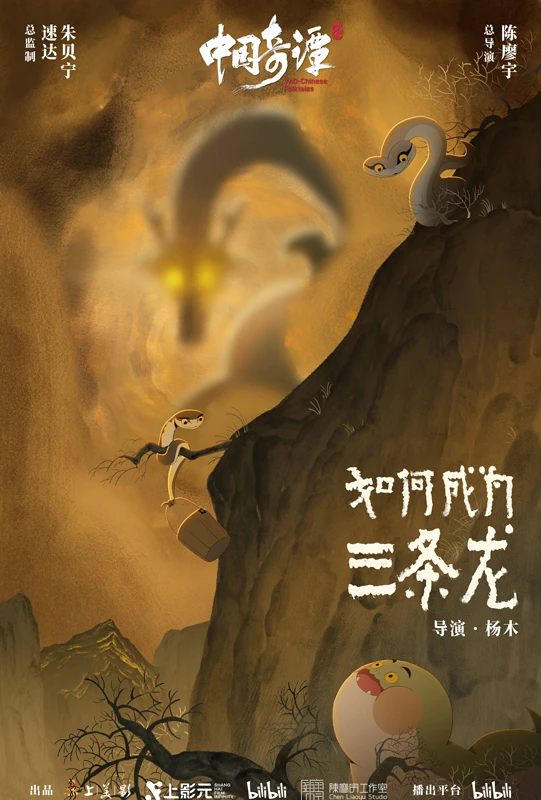
The director chose not to let his characters achieve the legendary dragon form. This refusal to endorse a simplistic “effort guarantees glory” narrative is its own kind of honesty. The snakes’ significance is built through each small decision, each act of stubborn kindness that alters their world. Their legacy is the change they create, not a title they earn.
Beyond Black and White
The film warns against easy labels. A seemingly lowly creature can perform a dragon’s duty, while a worshipped figure might be hollow. In an age of quick judgments and online noise, the short is a calming reminder to look deeper.
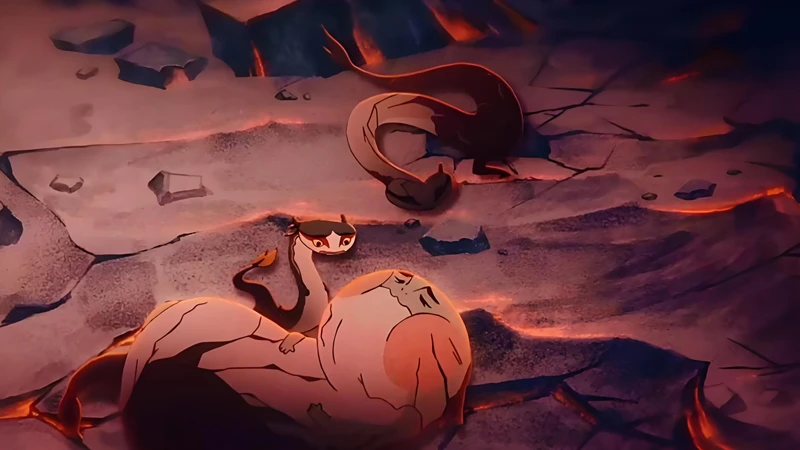
How to Become Three Dragons offers more than a plot; it suggests a method for seeing. It asks viewers to pause, to question popular narratives, and to value quiet conviction over loud authority. The true victory is learning to discern the real helpers, often unnoticed, who walk among us every day.