
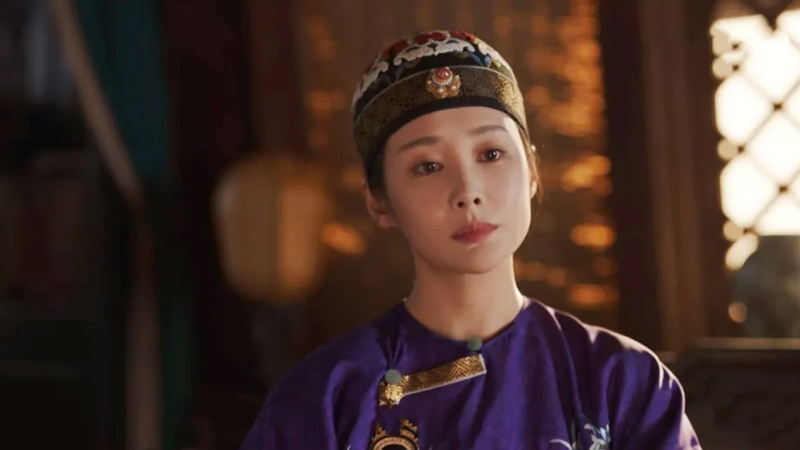
In the sweeping drama Legend of the Magnate (大生意人), amidst the cunning deals and political machinations of the late Qing dynasty, one figure stands apart. Su Zixuan (苏紫轩), a former princess of the imperial clan, moves through the world of commerce and rebellion not for wealth, but for a singular, all-consuming purpose. Her journey reveals a profound truth: the most formidable business strategies are often born not from greed, but from profound personal loss and an unwavering desire for justice. This is not merely a story of profit and loss; it is a portrait of a woman navigating a man’s world, her every calculation shadowed by the ruins of her past.
A Princess's Vendetta
Stripped of her title and family after a political downfall, Su Zixuan was raised with one directive: revenge. This mission shaped her into a formidable strategist. Her introduction is iconic, establishing her fearless nature. In the remote, frozen trading post of Ningguta (宁古塔), she confronts a cheating gambler not with words, but with a pistol to his forehead. It is here she first encounters the shrewd merchant Gu Pingyuan (古平原). While others see a barren outpost, she sees opportunity, arriving to procure 300 warhorses for the rebel cause she supports. Her nobility is not displayed in silks but in steely resolve, using her keen intellect as her primary currency in a society that offered women little power.
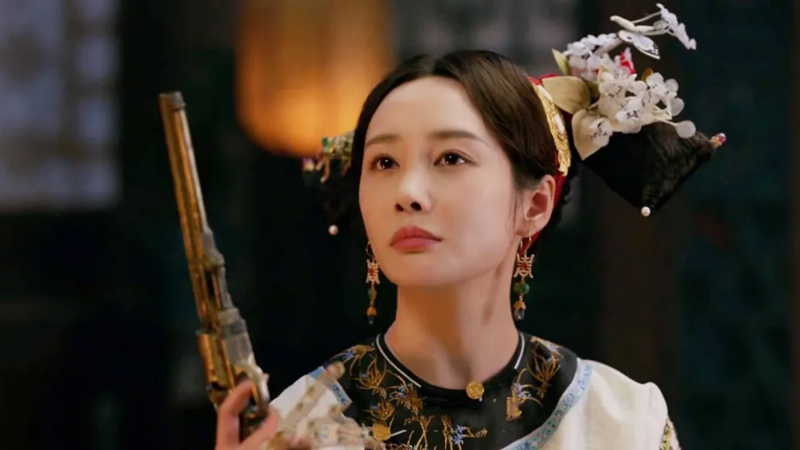
Her alliance with the rebel leader Li Cheng (李成) was the engine of her early plans. She traveled, networked, and brokered deals solely to fund his movement against the Qing court, the very institution that destroyed her family. Every transaction, every relationship was a thread in a larger tapestry of retribution. When Gu Pingyuan inadvertently disrupts one of her crucial fundraising schemes, it forces a recalculation. She recognizes a formidable mind in him, one that cannot be brushed aside. Their relationship evolves into a complex dance of opposition and uneasy respect, each aware the other could be a valuable asset or a significant obstacle.
This single-minded pursuit came at a high personal cost. There was no room for the conventional life of a woman of her era—no courtship, no family of her own. Her world was one of safe houses, coded messages, and dangerous liaisons. The rebellion was her family, and its success her only promised solace. This focus gave her a clarity and ruthlessness that often left her male counterparts bewildered. She operated in a moral gray area, her actions justified by the righteousness of her cause, making her one of the drama’s most compelling and ambiguous characters.
The Weight of Understanding
Su Zixuan’s depth is most sharply revealed not in her schemes, but in her moments of unexpected empathy. A pivotal scene involves Gu Pingyuan’s heartbroken pursuit of his childhood sweetheart, Bai Yimei (白依梅), who has left to join Li Cheng. Gu Pingyuan, blinded by betrayal and tradition, seeks to drag her back home. Su Zixuan, tasked with escorting Bai Yimei, challenges him with piercing insight. She questions how he can assume Bai Yimei is living in pleasure, and whether forcing her return would lead to anything but further misery. Her words silence him.
This confrontation highlights a stark contrast. Gu Pingyuan is bound by social expectation and personal hurt. Su Zixuan, however, understands the desire for agency, for choosing one’s own path—even a dangerous one. She facilitated Bai Yimei’s choice to become Li Cheng’s consort, not out of malice, but from a rare recognition of another woman’s will. This moment transcends rivalry; it shows a woman who, despite her own hardened path, has not lost the capacity to comprehend another’s heart. It is a glimpse of the person she might have been under different circumstances.
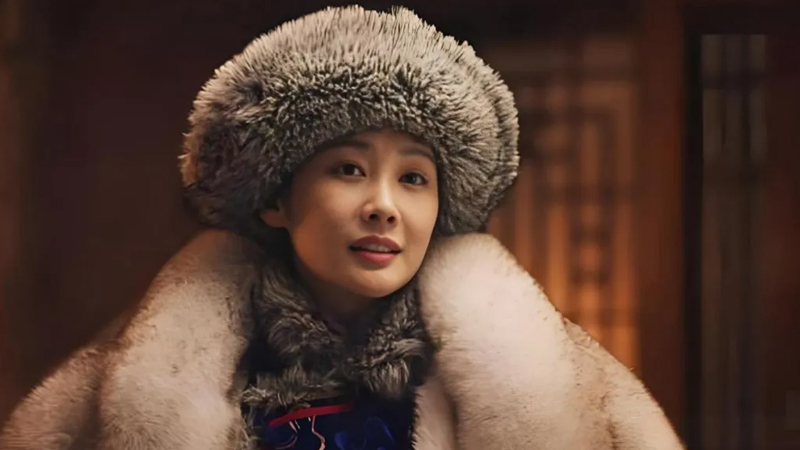
Her compassion, however, remained strictly separate from her goal. When a prime opportunity to strike at the Empress Dowager Cixi presented itself at a tea merchant conference—where Su Zixuan brazenly posed as a noblewoman—Gu Pingyuan’s inadvertent interference ruined the plot. Her reaction was not that of a thwarted romantic, but of a furious general. His well-intentioned bumbling sent him back to Ningguta, nearly costing him his life. For Su Zixuan, the mission was everything; sentimental attachments were a luxury she could not afford.
The Price of Freedom
The collapse of the rebellion and Li Cheng’s suicide shattered the framework of Su Zixuan’s life. Her partner in cause was gone, her decade-long plan rendered obsolete. This was her most definitive defeat. The show does not present a heroic recovery, but a stark, pragmatic pivot. With her purpose extinguished, she faced a simple, brutal question: what now? The woman who once moved mountains for a revolution quietly began cultivating ties with Qing officials like the powerful Jiu Shuai (九帅). Survival replaced vengeance as her new strategy.
Her final choice was neither a triumphant victory nor a tragic demise. It was withdrawal. Having outlived her vendetta and the world that created it, she chose obscurity. This quiet exit is perhaps her most powerful statement. In an era of constant struggle, choosing to leave the stage was a final act of control. She walked away from the identity of the avenger, the merchant, the plotter, and simply became a person seeking peace.
Su Zixuan’s legacy is a complex sigh. She possessed more courage and vision than most of the men around her, yet her life was defined by an absence—of family, love, and ultimately, the fulfillment of her quest. She was neither purely heroic nor villainous. She was a survivor who used every tool at her disposal, reminding us that behind the most formidable façades often lies a history of unspoken sorrow. Her story in Legend of the Magnate is ultimately a testament to the human spirit’s resilience, even when that resilience leads away from the battle and into the quiet unknown.
