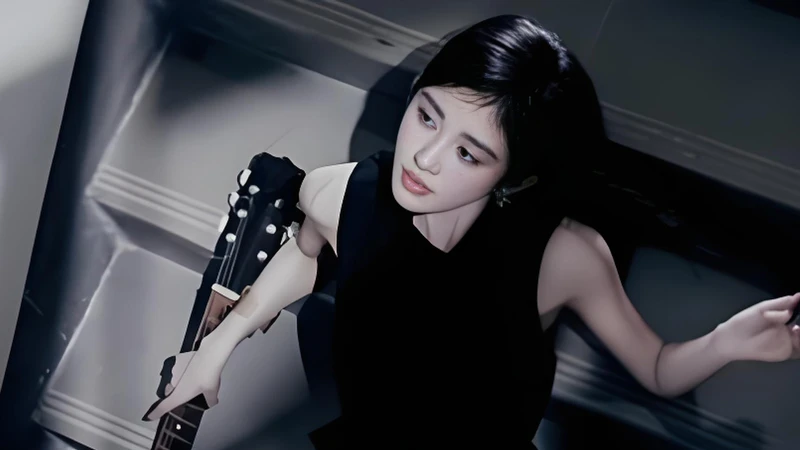
In a recent series of images that flooded social media, Chinese actress and singer Ju Jingyi (鞠婧祎) offered a masterclass in personal style evolution. The photos, capturing a seemingly private moment of her applying lipstick, showcase a striking departure from her earlier public persona. Gone is the unadulterated youthful innocence; in its place is a woman who has meticulously crafted an image of graceful maturity. Her jet-black, long straight hair, sharply cut with a Hime Cut, frames her face with a blend of softness and structure.
This is not a mere fashion statement; it is a visual narrative about growth, self-possession, and the nuanced performance of femininity in the modern spotlight. The mirror she looks into reflects more than her image—it reflects the very expectations and discussions she effortlessly ignites.
The Style Shift
Ju Jingyi’s current aesthetic presents a fascinating case study in the language of hair. Her signature long black hair, a constant throughout her career, now serves a different purpose. Where it once complemented a doll-like image of pure youth, it now acts as a canvas for a more sophisticated identity. The introduction of the Hime Cut is the pivotal element. This traditional Japanese style, characterized by straight, cheek-level front strands and longer back hair, carves a sharp yet tender line against her face. It introduces an architectural element to her soft features, creating a visual metaphor for the structured elegance she now embodies.
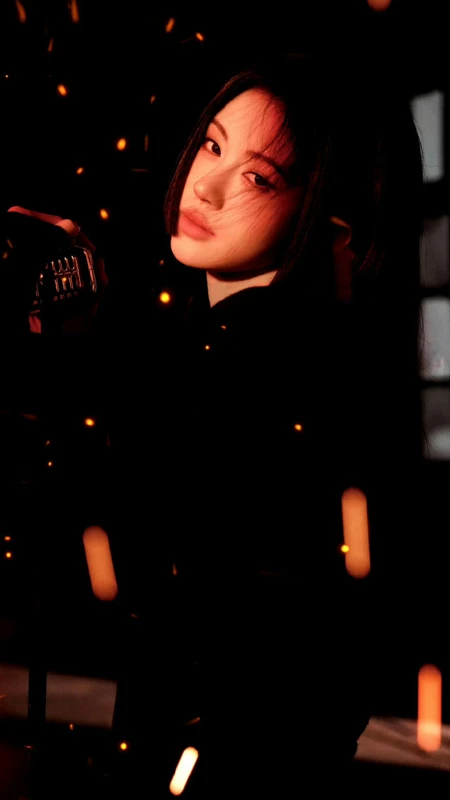
This transformation speaks volumes beyond personal preference. For an idol whose career was built on a foundation of youthful charm, navigating the transition to a mature artist is a public endeavor. Every strand of her hair is analyzed. The subtle waves at the ends of her once perfectly straight locks and the precise geometry of the Hime Cut represent a calculated move. She is walking a tightrope between the girl she was and the woman she is becoming, and she is doing it with an enviable balance that resonates deeply with her audience.
Observers note that this shift from a “youth template” to a “stable yet dynamic” new paradigm is significant. It is not just an aesthetic upgrade but a public rehearsal of how a professional woman in entertainment can command her identity. She demonstrates control over her image, seamlessly moving between the grand stage and the perceived intimacy of her private moments, all while maintaining a coherent and compelling personal brand.
The Power of a Pout
The act of applying lipstick, a universal ritual, becomes a powerful tool of expression in Ju Jingyi’s hands. In the viral photos, her expression is not one of mere vanity or a generic, camera-ready smile. Instead, it holds a flicker of playful self-awareness. A slight smirk plays on her lips as she focuses on the task, creating a moment that feels both intimate and performative. This micro-expression transforms a simple act of grooming into a snippet of storytelling, inviting interpretation and forging a deeper connection with her fans.
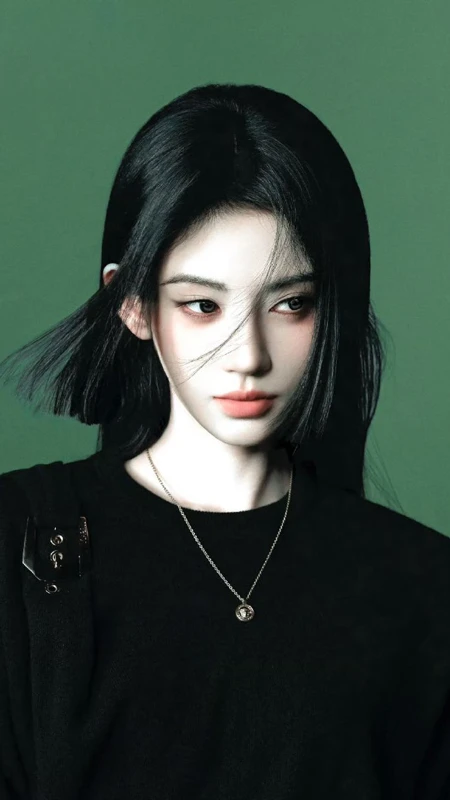
This subtle display of personality highlights a shift in audience expectations. The public no longer craves just a flawless exterior; they seek a glimpse of an inner world. They want stars who possess not only glossy magazine-cover looks but also a relatable, interpretable inner life. Ju Jingyi’s combination of a traditionally gentle and elegant hairstyle with a momentarily cheeky expression hits this exact nerve. It suggests a multifaceted individual who can be both composed and spontaneously charming.
Her choice of a classic, elegant base with a pop of playful energy creates a potent emotional resonance. In an industry often dominated by extreme or fleeting trends, this “graceful plus playful” formula feels both fresh and authentic. It suggests that maturity does not necessitate the abandonment of fun, and that elegance can coexist with a lighthearted spirit, a message that clearly strikes a chord in today’s cultural landscape.
A Broader Conversation
Ju Jingyi’s stylistic choices inevitably intersect with larger, often contentious, public debates. In an era obsessed with authenticity, discussions about natural beauty versus cosmetic enhancements are never far from the surface. Her evolving appearance, from her hairstyle to her makeup, is frequently dissected in this context. Yet, through her consistent presentation, she seems to advocate for a different perspective: that beauty is not a monolithic standard but a diverse form of personal expression.
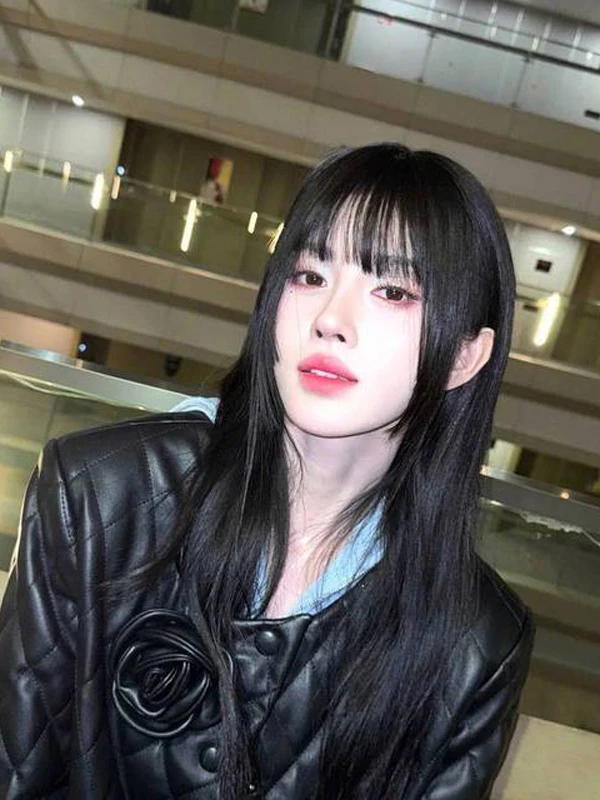
Her simple act of applying lipstick in front of a mirror carries the dual weight of self-adornment and self-assured display. It is a gesture of claiming one’s own image. Some online commentators see it as a posture of self-affirmation, a declaration of owning one’s look on one’s own terms. Others argue that in a hyper-commercialized entertainment industry, celebrities are increasingly pressured to cultivate this kind of “authentically discernible” micro-aesthetic—small, relatable details that make them feel real and accessible.
Ultimately, these discussions point to a single reality: in the age of social media, an individual’s aesthetic choices have become a form of public dialogue. Ju Jingyi, through her poised and deliberate styling, has positioned herself at the center of a conversation about age, style, and the evolving definition of beauty for her generation. She has not denied the changes that come with time, nor has she allowed herself to be confined by a single stylistic label. Instead, she uses the most mundane of moments to present a compelling, multi-dimensional vision of herself, challenging rigid stereotypes and inspiring others to find their own unique glow.