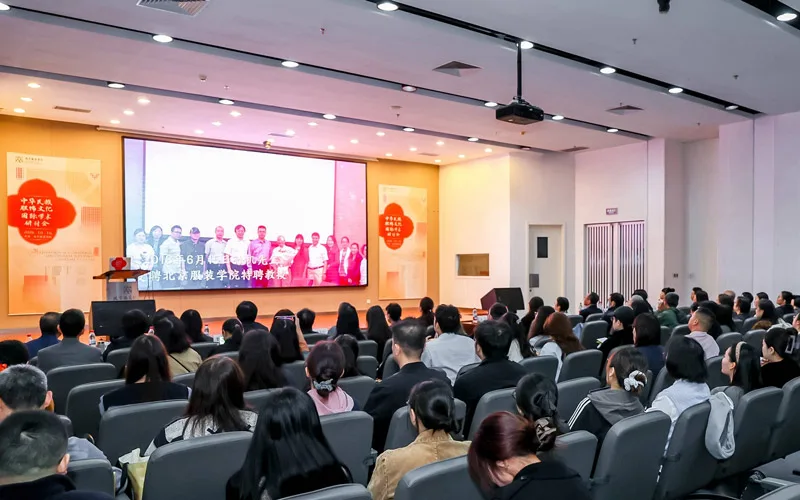
Dress history has an awkward problem that its exhibitions rarely show: the same garment can be named three ways across three dynasties, and the same sleeve can be drawn convincingly at a shape the fabric could never hold. On 16 October, the 2026 International Symposium on Chinese Ethnic Costume Culture met in Beijing to argue about method, under a four-character theme, Wuyuan Xinzhi, that translates roughly as new knowledge from the source of things. Beijing Institute of Fashion Technology hosted the meeting, which drew 48 speakers across three sessions and more than a hundred scholars and students from 73 institutions.
Reading Images Against Surviving Cloth
The three sessions were divided into dress history, ethnic costume with conservation and restoration, and inheritance and innovation in design. What the papers covered was specific: the naming and verification of garments and their parts under the court dress system, the cross-checking of images against objects, ethnic weaving and embroidery techniques, textile archaeology, cross-regional exchange, the transmission of traditional craft, and the application of Dunhuang costume motifs in design and digital display.
Image against object is the core method and the hardest one. Murals, silk paintings and sculpture supply silhouette and layering; excavated textiles and transmitted garments supply weave, motif, stitching and dimensions. When the two agree, a reconstruction can begin. When they disagree, the honest result is an open question. Naming is the second wall. The same garment may carry several names across periods, and the work of verification is to pin the object to the word again, one artefact at a time.
Two shortcuts were named and dismissed. One runs from text to text, where terminology is copied forward without ever being checked against a surviving object. The other runs from image to image, where a painted outline is read as a structure, ignoring what the loom and the seam can physically do. Evidence from objects, in this framing, means every conclusion has to rest on something that can be pointed at: a dated find, a catalogue number, a site that can be revisited.
The Scholar the Theme Comes From
The theme was set as a tribute. The meeting opened by honouring Sun Ji (孙机), the material-culture historian who served as academic adviser to the institute’s costume-culture research programme. Wuyuan, the organisers explained, continues his route of deriving history from objects and building arguments that can stand on evidence; Xinzhi refers to what newer work on materials, images and excavated pieces has added.
Huang Keying, party secretary of the institute, framed the stakes in his address. Chinese dress carries historical memory, practical knowledge and an aesthetic outlook, he said, and it records the exchange and intermingling between ethnic groups. Research, in his account, has to attend both to the beauty of the garment and to the institutions, techniques and culture standing behind it.
Seventy-Three Institutions in One Room
Attendance explains why the arguments carry beyond a seminar room. It included the National Museum of China, the Palace Museum, the Zhejiang Provincial Museum, the University of California, Berkeley, the Royal College of Art, Hong Kong Baptist University, Saga University in Japan, Pusan National University in Korea, Tsinghua University and Donghua University, among 73 universities, research institutes and museum bodies.
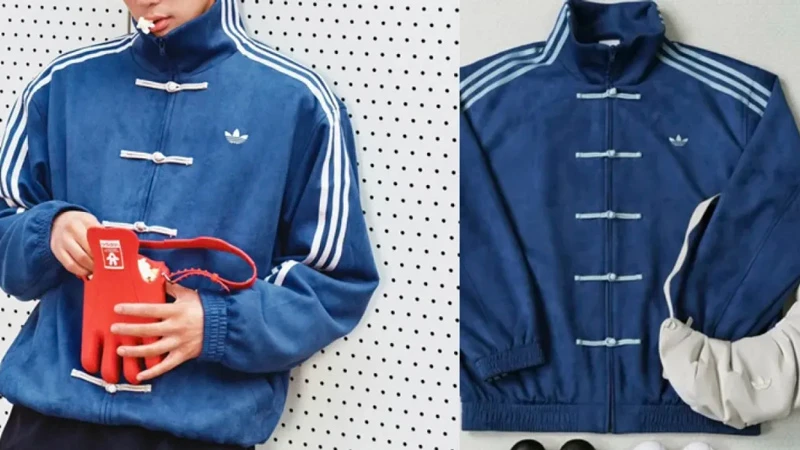
Why a naming argument matters commercially is easier to see downstream. Research output does not reach a shop shelf directly, but it sets the accuracy of three things: the form a museum reconstruction is built to, the floor a film or stage costume is held to, and the vocabulary a brand uses when it borrows a traditional element. A garment mislabelled once as a particular dynasty’s wear can be cited as a traditional form for years, and each repetition makes the correction more expensive.
That is the practical argument for the sequence the conference kept returning to. Confirm the object before discussing the form; settle the name before discussing the symbol. Reverse the order, and the cultural narrative becomes a premium with nothing underneath it.