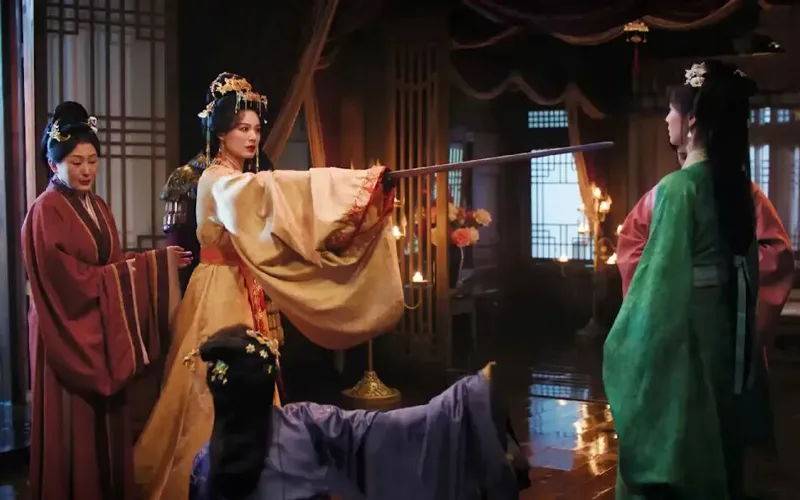
iQIYI (爱奇艺) has already pushed four dramas past its 10,000 heat index this year, so November needs a serious contender. Enter River of No Return (两京十五日), a historical escape thriller led by Cheng Yi (成毅). It pairs a popular novel by Ma Boyong (马伯庸) with director Zhang Li (张黎), a combination that promises tension, texture and star power. The platform’s year has been loud; this one could be its most tense. The real question is simple: can this one become the fifth? Fans have reasons to bet yes, but the show must earn that number.
Cast and Source
The source material arrives with a strong track record. Ma’s books have become reliable screen material, including The Longest Day in Chang’an (长安十二时辰). His trick is not dry history; he drops ordinary people into conspiracies with deadlines, clues and dangerous strangers. River of No Return follows that model. A historical footnote about repeated earthquakes in Nanjing (南京) becomes a race against time, and the novel’s tight structure gives the series a spine.
Zhang Li brings weight to the project. His past dramas are known for thick period detail and complicated inner lives, not glossy shortcuts. With Zhang behind the camera, palace politics should feel cramped, dusty and personal. The Grand Canal becomes more than scenery; it is a moving trap, a highway of barges, checkpoints and rumors. That setting gives the chase a geography audiences can follow, instead of a vague map on a wall. It also makes every delay feel costly.

Cheng Yi’s presence widens the audience. His roles in Mysterious Lotus Casebook (莲花楼) and Immortal Samsara (沉香如屑) made him a familiar face in costume drama, and his fight scenes and emotional restraint are part of the appeal. Here he plays Zhu Zhanji (朱瞻基), a prince who starts as a spoiled heir and ends as a ruler who understands hunger, fear and responsibility. That arc gives Cheng more to do than look noble in robes. It also asks viewers to watch a careless man learn the cost of power.
The supporting cast adds texture without turning the story into a parade of cameos. Lin Gengxin (林更新), Jiang Peiyao (姜珮瑶), Zhang Zhijian (张志坚) and Chen Shu (陈数) bring experience and contrast. Court intrigue and riverside loyalties can collide without every scene becoming a speech. Costumes, sets and location work aim for Ming dynasty detail, which helps immersion when the plot slows for breath. The risk is familiar: a lavish package can still feel hollow if the race loses urgency. Yet the ingredients are strong.
Race and Risks
The premise is built for speed. Zhu Zhanji survives an explosion in Nanjing, learns his father is gravely ill, and must reach Beijing within fifteen days. The route runs along the Grand Canal, with pursuers closing in. He is joined by Wu Dingyuan (吴定缘), a constable; Su Jingxi (苏荆溪), a female doctor; and Yu Qian (于谦), a low-ranking official. Four strangers become a fragile team, and each stop brings a new crisis. The countdown is not decoration; it forces choices before anyone is ready.
Water prisons, angry crowds and hidden masterminds keep the pressure on. The show can lean on chase mechanics, but its better promise is political awakening. A prince who once took comfort for granted must read people quickly and decide what kind of emperor he might become. The canal setting also matters: boats, docks, warehouses and night markets can make the journey feel physical rather than decorative. If the pacing holds, the fifteen-day limit can carry every episode, even when the plot pauses for a quiet conversation.

What could stop it? A crowded November, high expectations and the usual risk of a big production mistaking scale for story. Still, the package has a clear hook: a famous novel, a director with a strong record, and a lead with a devoted audience. If River of No Return keeps its race sharp and its people messy, the 10,000 mark is not fantasy. The fifth slot is waiting. The show only needs to move as fast as its title promises.
For now, the buzz is understandable. iQIYI needs a November anchor, Cheng Yi needs a role that proves range, and Zhang Li needs a project that rewards his patience with detail. Ma Boyong’s story offers all three a meeting point: a deadline, a journey and a prince who cannot hide behind ceremony. If the series trusts that simple engine, viewers will forgive minor flaws and follow the barges. The final test is not whether it looks expensive, but whether every mile feels dangerous. That is the promise the show must keep.