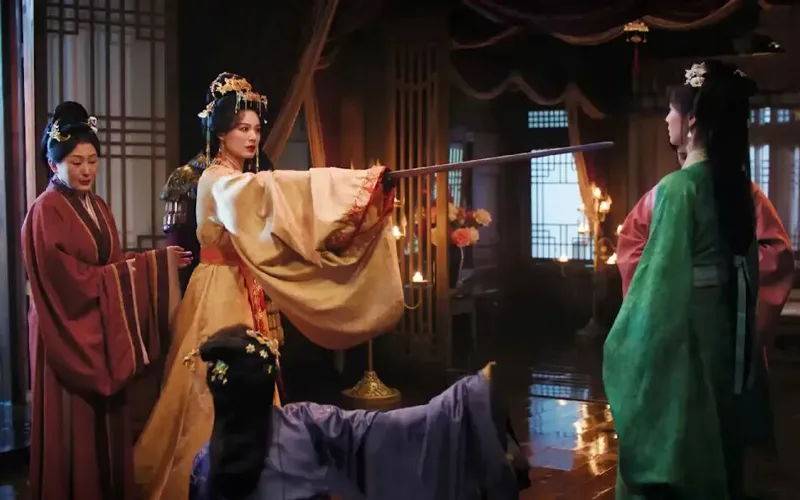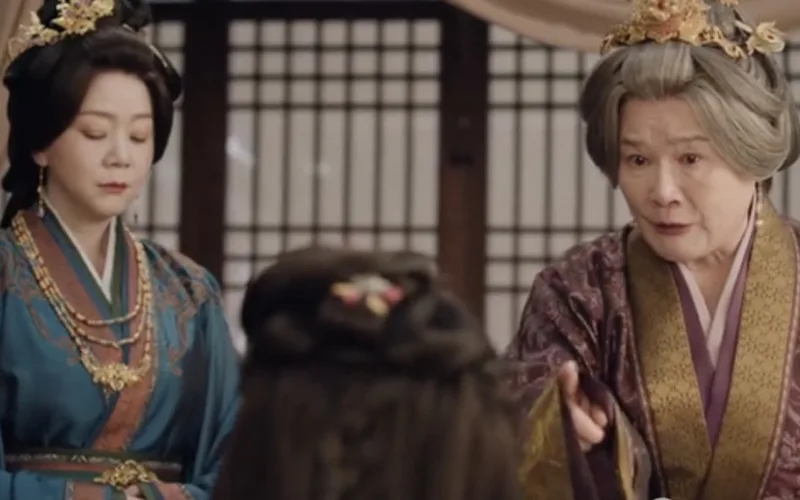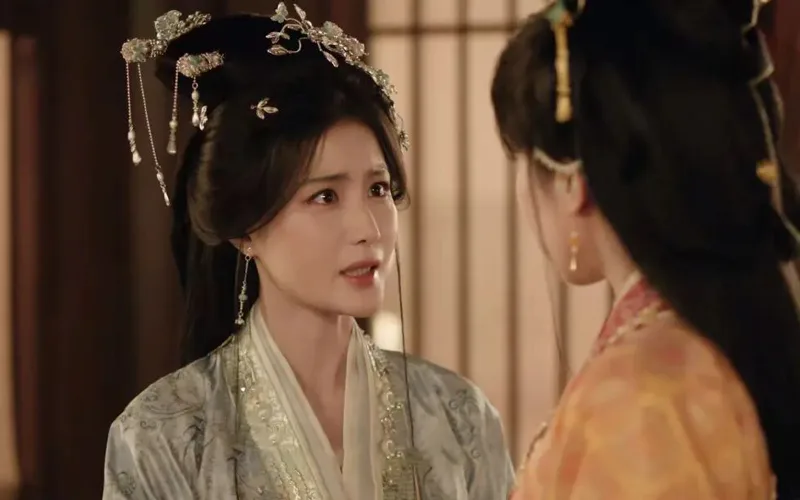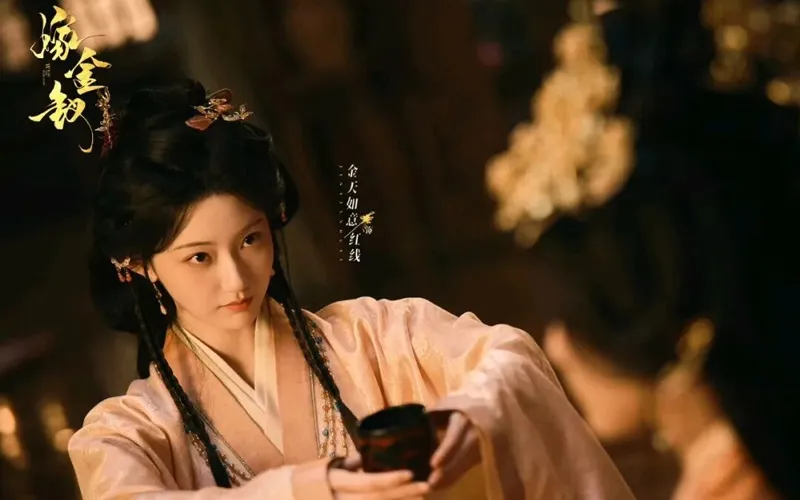
Fans of Where the Mask Ends (嫁金钗) often hand the “lucky” label to Hongxian (红线). They see Wei Rao (魏娆) taking the hard road for her, then watch Hongxian rise with little effort. Yet luck is not a trophy passed to the person who suffers least. It belongs to someone who can choose, refuse, and recover. By that measure, Hongxian is not the freest woman in the story. Xie Hualou (谢画楼), a rival who once schemed against Wei Rao, may wear the brighter crown.
Red Thread’s Luck
Hongxian looks blessed only when the camera stops at the silk and servants. Earlier, her mother Qiao (乔) arranged for Wei Rao to absorb the family’s punishment. That was not Hongxian’s plan; she was a child inside another person’s decision. In the original household, she was also the one who treated Wei Rao with some warmth. Later, she helped her sister more than once, including a case at the Lu family shrine that caught Han Liao (韩辽) off guard. She was not a parasite. She was a girl with very few exits.
When Wei Rao reclaimed her name, Hongxian did not rush to claim a grand identity. In the capital, she rented a small stall and tried to feed herself. That detail matters. It shows she wanted independence, not a parade of luxury. Then the crown prince’s household grabbed her. The crown princess destroyed her voice. Powerful people discussed her body as if it were a parcel. Liu Shuo (刘朔) publicly declared his feelings before the emperor, and that declaration spared her from a worse cage. Even rescue arrived as a change of owners, not a real choice.
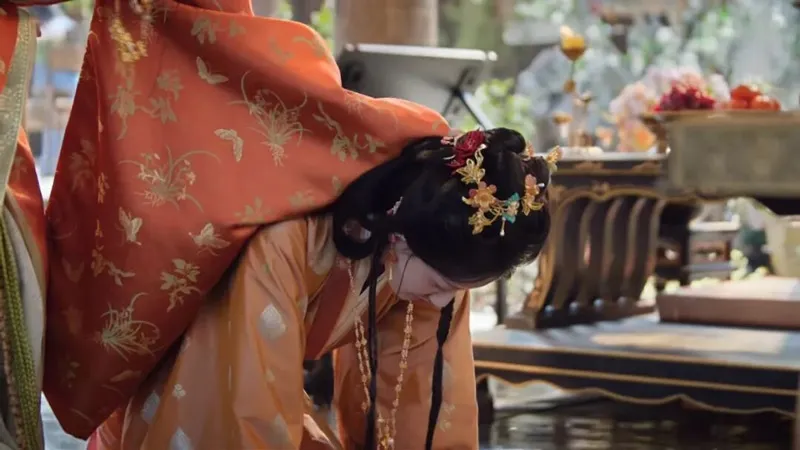
By then, Hongxian had begun to care for Xiao (枭). Her heart was moving, but her life was still steered by others. She drifted like duckweed on a pond: every current pushed her somewhere new. Viewers may envy the palace gates, the title, the attention. Yet envy misses the cost. Her voice was broken, her body was contested, and her future was often decided in rooms she never entered. Calling her lucky is like calling a bird lucky because its cage is gold. The cage still closes.
This is why the “golden ending” language feels slippery. Hongxian’s story is full of rescue scenes, but rescue is not freedom. A voice can be stolen, a marriage can be staged, and a woman can be praised for surviving while nobody asks what she wanted. Her gentleness is real, and so is her gratitude. Still, gratitude is not the same as choice. If luck means having options, Hongxian spends much of the story with the menu already written by other hands. That is not a blessed life; it is a life under glass.
Hualou’s Fortune
Xie Hualou enters with a near-death scare at Jun Dai’s (君黛) hands, yet she keeps her eyes on Lu Zhuo (陆濯). Her family prefers a match with Prince Fu, a man with many concubines, grown children, and a favorite woman whose word carries weight. Hualou refuses. She does not want a husband who is already a household full of rivals. At the same time, Wei Rao has divorced Lu Zhuo, and the Lu family sounds out the Xie house. Lu Zhuo says no. Hualou, used to getting her way, starts pushing.
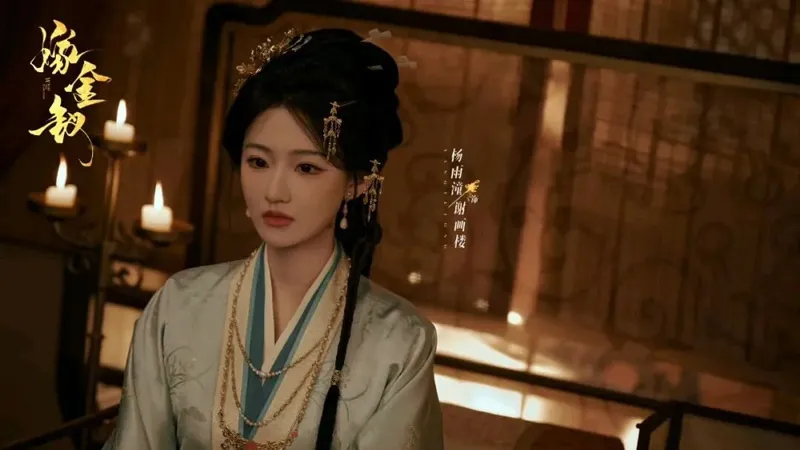
She threatens Wei Rao with old secrets, then asks for help to meet Lu Zhuo. When that path narrows, she joins Wei Shu (魏姝) in a plot against Wei Rao. At the Spring Viewing Banquet, Liu Shuo notices the scheme. He stops Hualou’s carriage as she leaves the palace and proposes. His offer is blunt: respect, the status of a princess consort, and no one placed above her. In exchange, she must stop hurting Wei Rao. Hualou agrees. It is a bargain, not a love story, but it gives her a clean road out of her own mess.
Before Liu Shuo leaves, Hualou asks him to warn Wei Rao about Wei Shu and the refugees from Ancheng (安城). That warning turns Hualou from enemy to ally. Liu Shuo later takes the throne, and she becomes empress. Even after his death, she remains tied to Wei Rao, who by then holds real power through Hongxian’s unborn child. Hualou had beauty, education, and a wealthy start. She made a cruel detour, yet the road still curved toward comfort. That is not moral luck; it is social luck. She could afford mistakes that would crush someone like Hongxian.
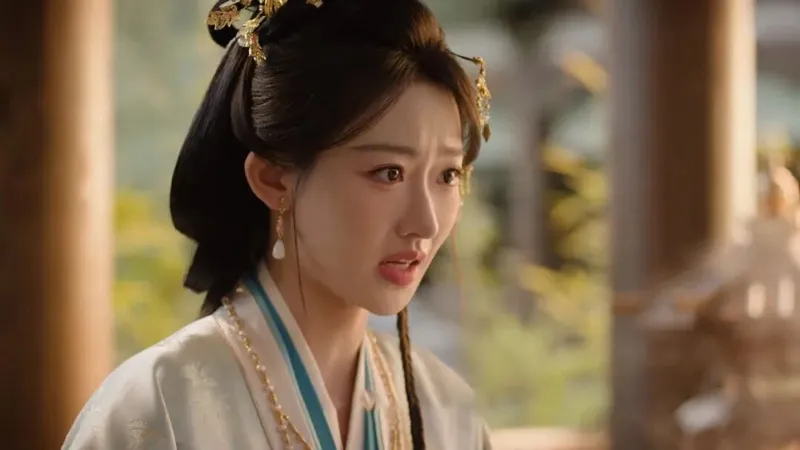
The sharpest contrast is not beauty or rank. It is the room to fail. Hualou can scheme, apologize, switch sides, and still land in a palace. Hongxian can do almost nothing wrong and still lose her voice, her peace, and her control. One woman’s mistake becomes a plot twist; the other’s innocence becomes a burden. So when readers ask who is luckier, the answer may sting. The story gives Hualou the softer landing, but it gives Hongxian the harder truth: survival is not the same as being favored by fate.