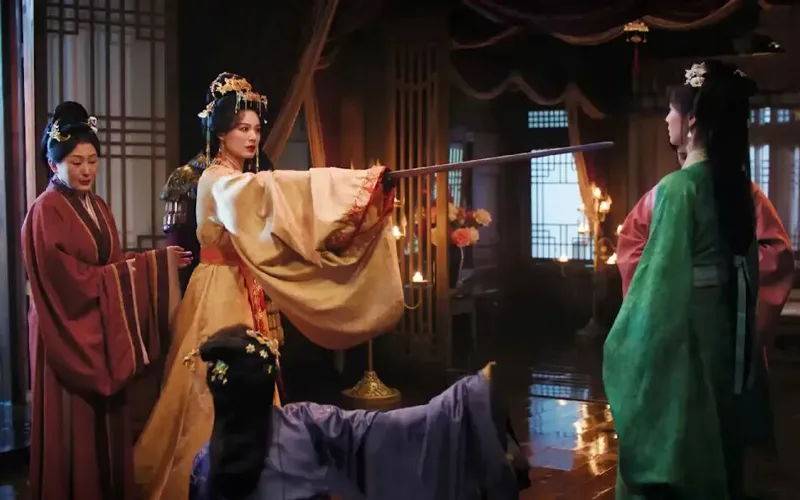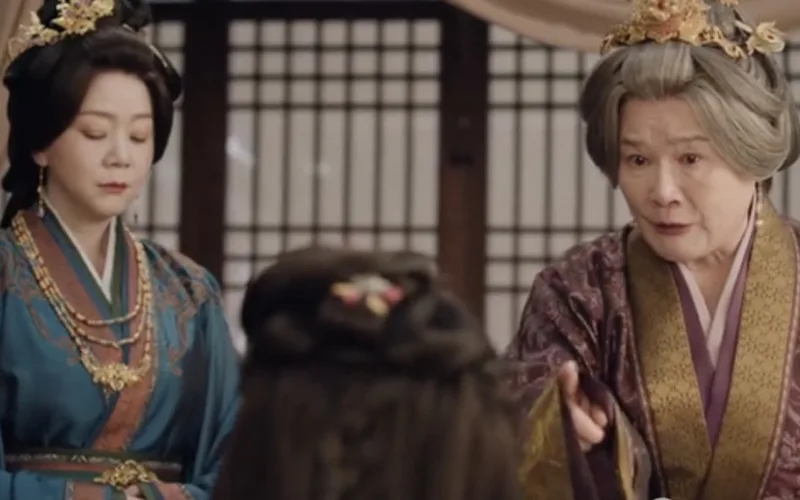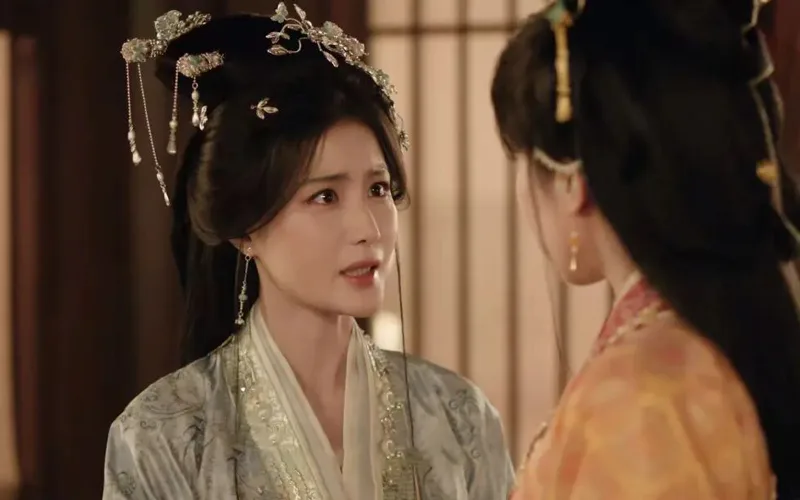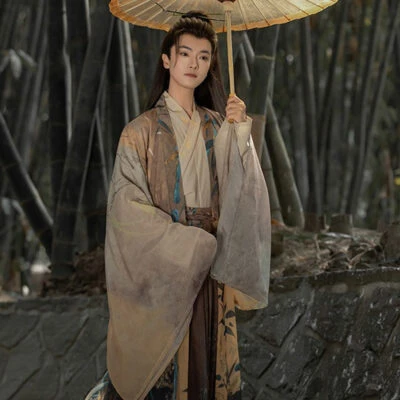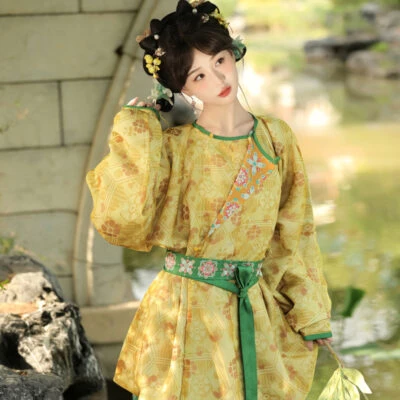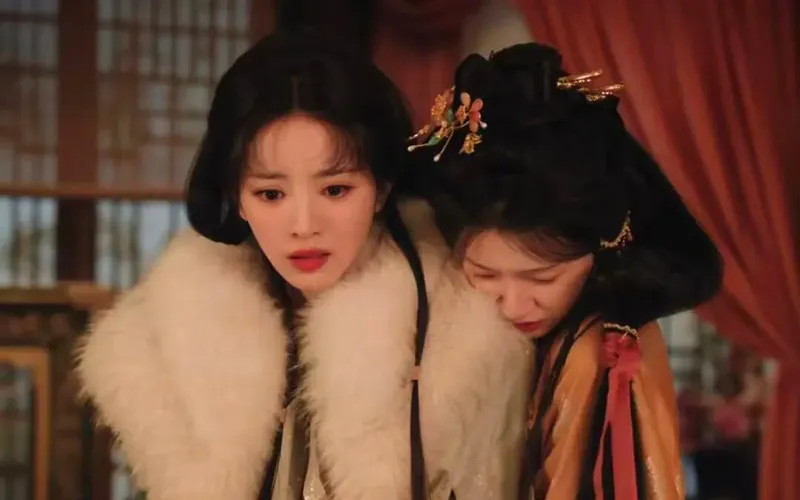
In Where the Mask Ends (嫁金钗), Wei Rao (魏娆) makes a choice that looks reckless: she brings Hongxian (红线), the girl she calls her adopted sister, into a palace banquet hosted by Zheng Jieyu (郑婕妤). The invitation smells of trouble. Yet Wei Rao goes, with Hongxian beside her. Is this careless affection, or a protective gamble? The answer sits between love, strategy, and the limits of control. The drama asks a sharp question: what does it mean to guard someone when every safe room has a leak?
A Calculated Risk
Wei Rao does not hide Hongxian in a quiet courtyard. She keeps her visible. That visibility is a shield. As Wu’an Wengzhu (武安翁主), Wei Rao lends the girl a status that ordinary predators must respect. If someone still wants to use Hongxian, they must calculate the cost of touching the adopted sister of a titled woman. The palace visit is not a casual outing; it is a public statement. Affection alone would whisper. Wei Rao chooses to announce.
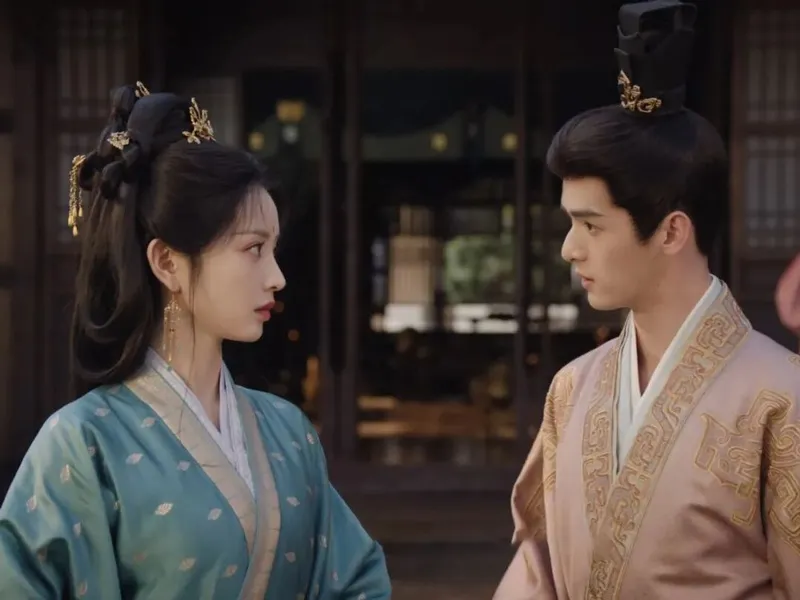
There is also Wei Shu (魏姝). Wei Rao knows her enemy will not quietly retreat. Endless defense invites endless schemes. By walking into the banquet with Hongxian, Wei Rao forces the confrontation into the open. She can watch faces, test motives, and answer each move. When Zheng Jieyu demands the girl, Wei Rao is ready to resist. Yet preparation cannot control every variable. The clash with Li Zhaoyi (丽昭仪) and her daughter turns ugly, and Hongxian ends up tied to Liu Shuo (刘朔) as a concubine. A plan made for safety can still crack when other hands push.
So was Wei Rao wrong? Not exactly. She acted with intention, but not with perfect foresight. Her power has edges. She was not born with a map for court politics; pressure taught her. The banquet exposes that painful truth. Protection can still produce a worse path when other people push back. Her mistake is not that she cared. Her mistake is that she trusted her care to outrun every trap in one afternoon.
Beyond the Court
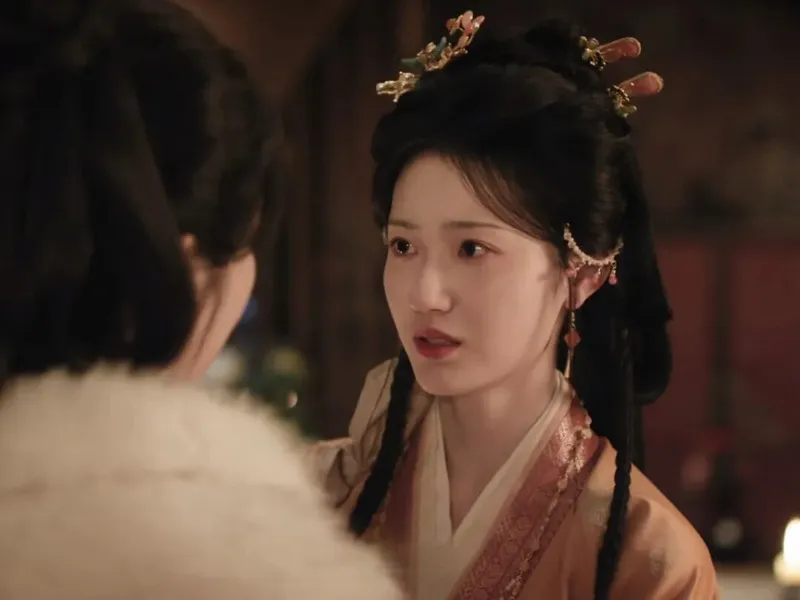
The bond between the two women is not one-sided. Hongxian is not a passive doll waiting for rescue. She has known hardship too. When Han Liao (韩辽) captures her, a single message from Runsheng (润生) is enough for her to read her sister’s warning. When she is trapped in the Eastern Palace, Wei Rao feels her danger at night. Their trust works like a private language. That language explains why Wei Rao keeps her close: not to show off, but to teach her how to breathe in rooms full of knives.
Wei Rao also distrusts Liu Shuo, her own brother. For Hongxian’s future, she is willing to embarrass her mother and brother and send the girl away at night. That choice is not sentimental decoration. It shows where her loyalty lives. Keeping Hongxian close is another version of the same instinct: help her move through a hostile world without bowing. A sister may protect, but no sister can stand in front forever. The palace is a lesson, however brutal, in standing without a shadow.
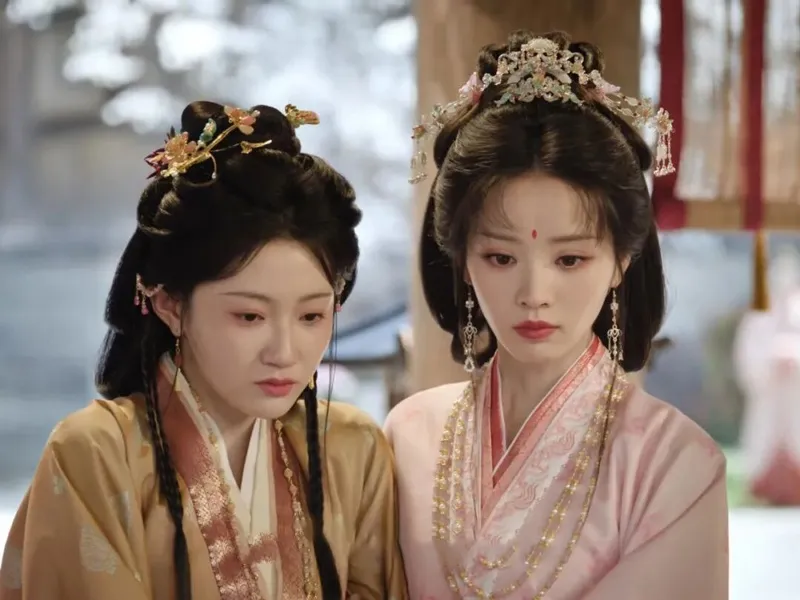
Shen Yifei (沈奕斐) has a useful point about leaving a family of origin. What shapes a person is not only the event but how she interprets it. Wei Rao could drown in the abuse she suffered in her foster home. Instead, she mines small warm memories and turns them into motion. Her care for Hongxian becomes fuel, not weakness. Having suffered, she opens shelters for displaced people and saves lives even when disease threatens. She does not erase pain; she refuses to let it write every sentence. That is why the question of intent matters less than the pattern: Wei Rao keeps choosing to protect, even when the cost lands badly.