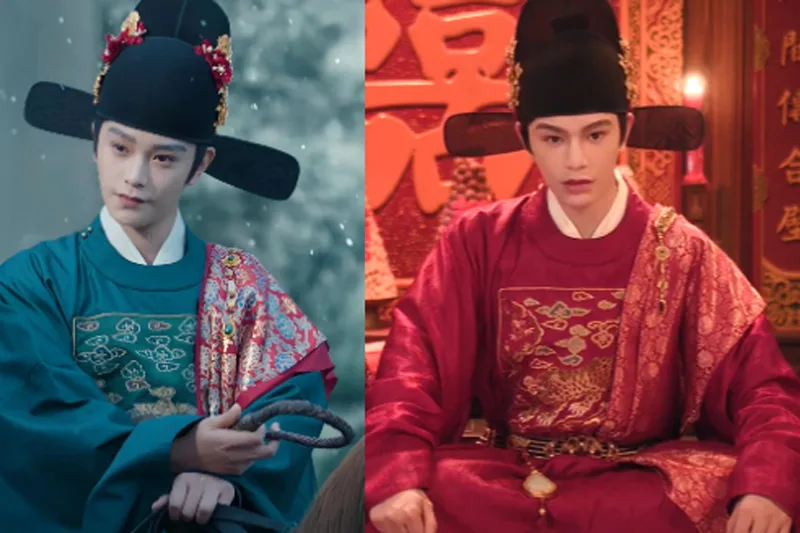
In The Road to Splendor (花开锦绣), Zhao Ling (赵凌), played by Ding Yuxi (丁禹兮), stands at the center of two marriage ceremonies. Both scenes promise joy, yet his clothing shifts sharply. One robe is green-blue; the other is crimson. Viewers may wonder whether the costume team changed its mind. The answer is not fashion whimsy. It is rank, ritual, and timing.
Set in Ming China, the drama uses wedding dress to mark Zhao Ling’s social movement. His first wedding belongs to a private salt seller. His second belongs to a court official. The same man, the same ritual, but two different lives. That contrast gives the story a quiet visual language, one that asks viewers to watch cloth as closely as dialogue.
Green Beginnings
At the first wedding, Zhao Ling has no official post. He is a private salt seller, outside the formal bureaucracy. Ming rules did not let commoners casually wear official-style clothing. Yet wedding customs offered a playful exception. A groom could borrow a round-collar robe and a black gauze cap, resembling a ninth-rank official. People called him “bridegroom official.” This lucky borrowing was recorded in the Yufu Zhi (舆服志), a treatise on carriages and robes. Ninth-rank color was green-blue. The costume team chose the highest formal look a commoner could borrow, and the choice feels both humble and hopeful.
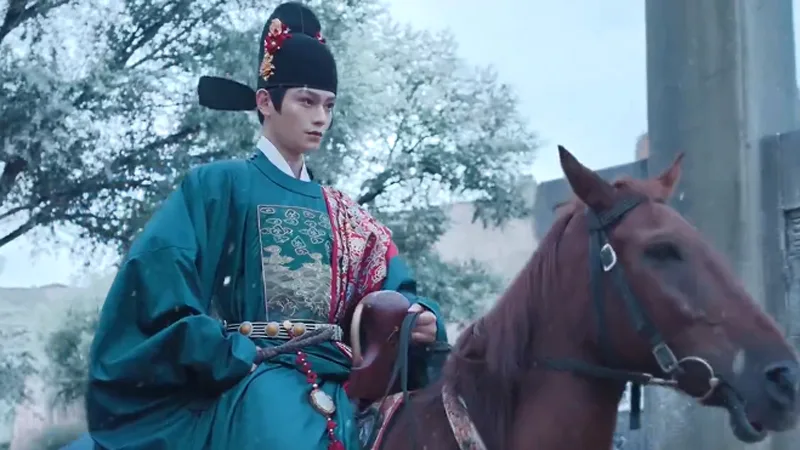
His chest badge, or buzi (补子), also follows commoner taste. It shows sea-water and cloud motifs, popular auspicious patterns. It does not use the bird-and-beast badges reserved for real officials. The red silk draped over his shoulder is pihong (披红), a Ming wedding custom that still survives in some Chinese ceremonies. His pihong carries double happiness characters and interlocking floral scrolls. The fabric feels folk, warm, and hopeful. Nothing on him claims power he does not yet hold. The outfit fits a man betting on luck, not a man already seated in office. It turns a borrowed rank into a private wish for a better future.
This first look also keeps him visually close to the street. The green-blue shade is modest, not royal. The round collar and cap suggest permission borrowed for one day, not permanent rank. Even the red shoulder cloth stays folk in pattern and scale. He is celebrating inside the rules that usually keep him out. That tension makes the scene richer. He can look almost official, but everyone knows he is not. The costume lets him taste status while reminding viewers where he started. It is a temporary door into a world he has not yet entered, and the audience can feel the gap.
Red Promotion
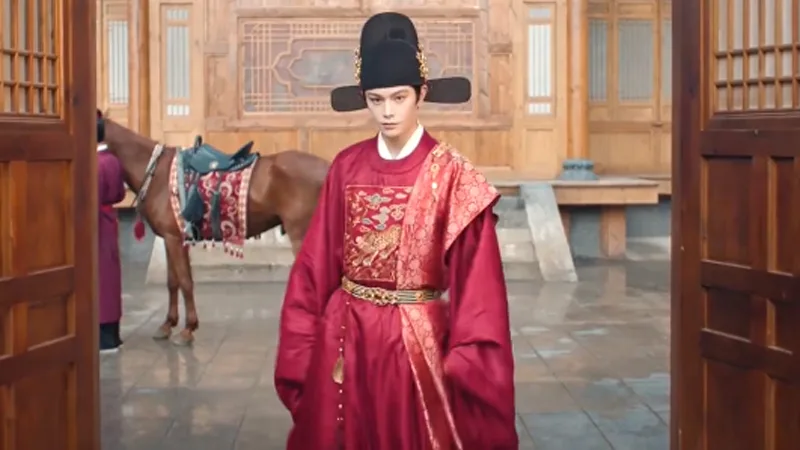
The second wedding arrives after Zhao Ling has become an official. He now holds the post of assistant commissioner, a fourth-rank military officer. In Ming official dress, rank controlled color. Only high officials of the fourth rank and above could wear crimson, the true red many people now associate with Chinese weddings. His chest badge changes as well. A leopard badge marks his military fourth-rank status. The pihong becomes gold-woven, with denser patterns. The costume no longer borrows a commoner’s lucky disguise. It announces a man who has entered the state system and earned its visible privileges. The red is not just festive; it is proof of place.
Still, scholars debate what Ming officials actually wore at weddings. The Collected Rites of the Great Ming (大明会典) mentions court dress in its general clothing section, while the welcoming-bride step sometimes calls for public dress. Later, the Collected Statutes of the Great Ming does not repeat a strict rule for official weddings. That gap leaves room for ordinary dress. In mid-to-late Ming woodblock prints and novels, officials often marry in ordinary dress with rank badges. The Plum in the Golden Vase describes wedding clothing with badges too. So Zhao Ling’s choice is not an error; it reflects a flexible practice that varied by text, region, and moment.
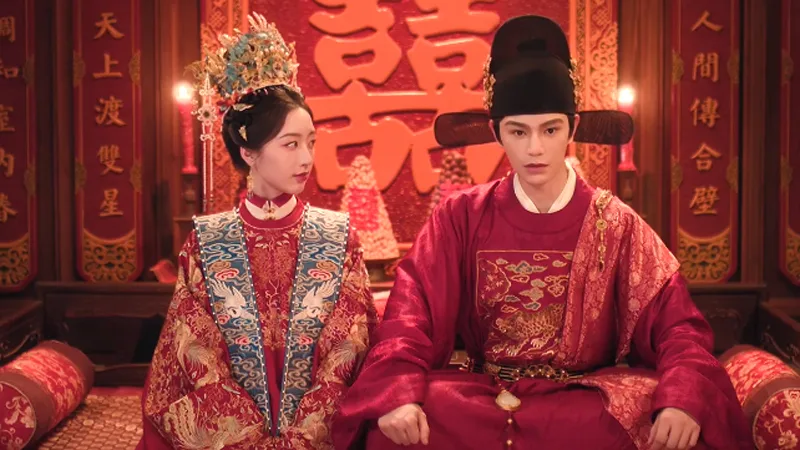
Many people assume ancient Chinese grooms always wore full red. That idea is too simple. Each dynasty shaped wedding dress differently. In Zhou and Han times, a groom could wear black on top and pale red below. Tang weddings often used a full red set. Song commoner grooms sometimes wore green. Red was powerful, but not universal. Costume in historical drama works best when it respects such layers. It should show time, status, and custom, not just romantic color. When a series ignores those layers, wedding scenes blur together. When it honors them, clothing becomes a quiet record of change.
So the two wedding robes of Zhao Ling are not a random upgrade. The first is a commoner’s borrowed joy, stitched with folk hopes and legal limits. The second is an official’s ranked display, colored by crimson and marked by a leopard badge. His clothes move with his life. The green-blue robe hides ambition. The red robe reveals arrival. In The Road to Splendor, costume becomes a silent plot point, letting viewers read power, ritual, and change without a single line of dialogue.