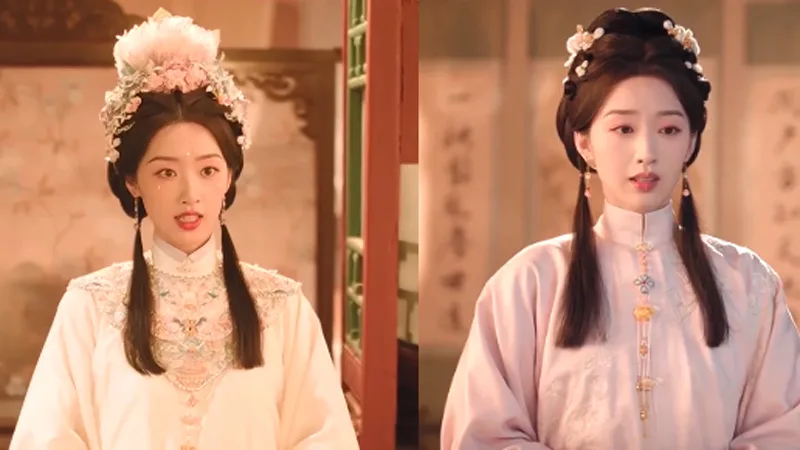
In The Road to Splendor (花开锦绣), Deng Enxi (邓恩熙) plays Fu Tingyun (傅庭芸), while Ding Yuxi (丁禹兮) plays Zhao Ling (赵凌). It is their second TV pairing after Melody Of Golden Age (长乐曲). Fu has several costumes, but one detail keeps drawing comments: two thick locks fall behind her ears and slide down her shoulders.
Other women in the drama pin their hair fully on top. Some viewers call the look abrupt and modern. Is it really a recent idea? The answer is no. Those hanging strands belong to an old hair style with a name, a history, and a reason it can still surprise people on screen. The shape may feel new, but its roots are not.
Ancient Hanging Locks
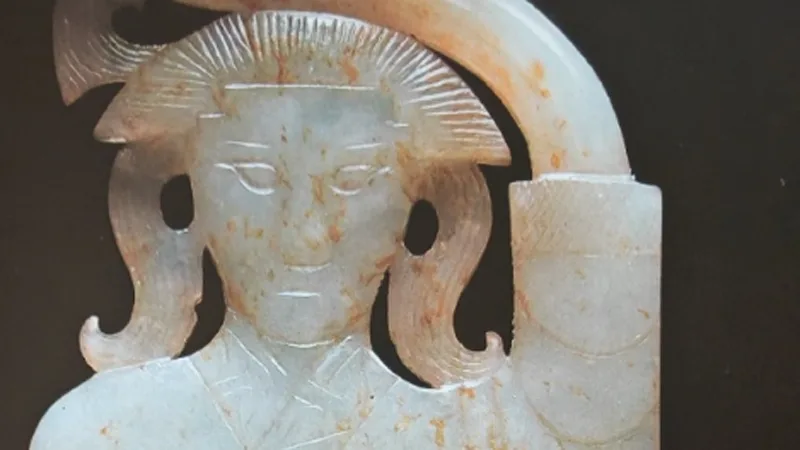
The two locks are not a modern invention. In the Warring States period, jade carvings unearthed in Henan show women with strands hanging beside their ears. People called this chuishao (垂髾), or fenshao (分髾). Both names mean hair tips that hang down. Early examples were simple, but they prove the idea existed long before film, cameras, or fashion magazines. It was a small detail, yet a lasting one. Even then, hair could do more than hold a bun in place; it could frame a face, mark age, and signal taste.
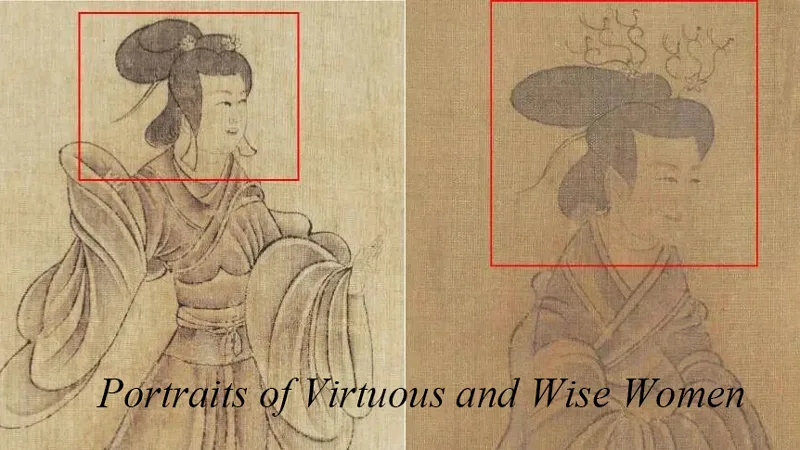
By the Han dynasty, the style had clearer rules. A woman would finish her bun, then leave one lock down the back of her head. Han pottery figures and Portraits of Virtuous and Wise Women (列女仁智图) show this form. It was not wild, loose hair. It was a controlled tail, tied and placed with care, often used to soften the head’s shape from the side. The look could be modest, elegant, and deliberate all at once, which may explain why it moved from tomb figures into painting.
During the Wei, Jin, Northern and Southern Dynasties, flowing movement became a popular ideal. Hanging locks grew longer and took many shapes. Some women split them into two strands, dropping from the front or back of the ears toward the chest. That is close to Fu’s screen look. Others let the tail float behind the head. In Gu Kaizhi’s (顾恺之) Admonitions Scroll (女史箴图), many women wear such tails, proving how common the style had become among the elite. The hair was not just decoration; it added motion to a still image.
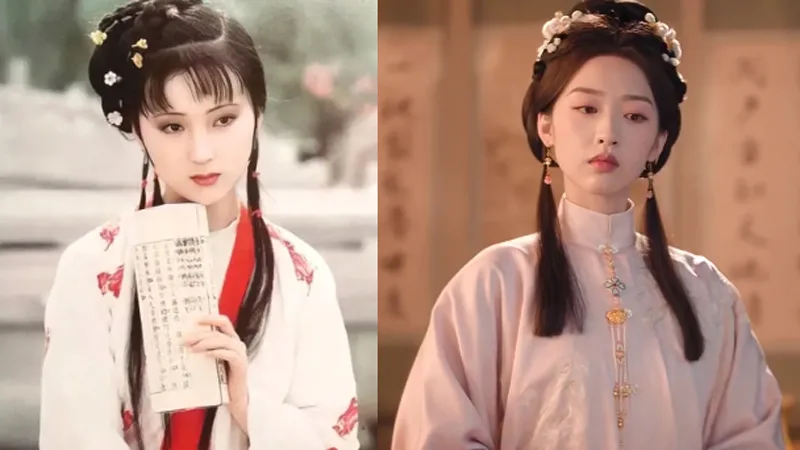
Sui and Tang brought endless new buns, yet the hanging tail survived. Unmarried Tang women liked a “hanging bun with split tips,” leaving ends behind the ears. History of Song (宋史) also uses shao for hanging ends. In the Ming and Qing dynasties, unmarried girls still wore it as a main style. The 1987 Dream of the Red Chamber (红楼梦) gives Lin Daiyu (林黛玉) this look. Today, a loose strand on each shoulder remains a familiar choice, though few people know its old name.
Why It Feels Odd
If the style is so old, why does Fu’s hair bother some viewers? One reason is screen memory. Ming-era dramas usually fill women’s heads with tight buns, hairpins, or diji (狄髻) headpieces. Audiences have seen that image so often that it feels like the default. Two loose locks break the pattern. The eye notices the difference first and asks questions later. Costume dramas train us to read certain shapes as “correct,” even when history offers more than one answer.
Another reason is the Republican era. Two long tails by the ears often recall schoolgirl braids from the 1920s and 1930s. That image is strong in films, photos, and textbooks. So when viewers see Fu’s strands, they may think of modern students, not ancient court ladies. The link is understandable, but it hides the older truth: chuishao came thousands of years before those braids. A familiar modern image can easily cover a much longer past.
In The Road to Splendor, Fu begins as an unmarried girl. Hanging locks fit that stage of life. The production, however, makes the strands thicker and cuts the ends flat. This choice strengthens her youthful image on camera, but it also pushes the style toward a modern, stylized read. Historical shape and television shape are not always the same thing. A small change in weight or edge can shift how the whole head reads.
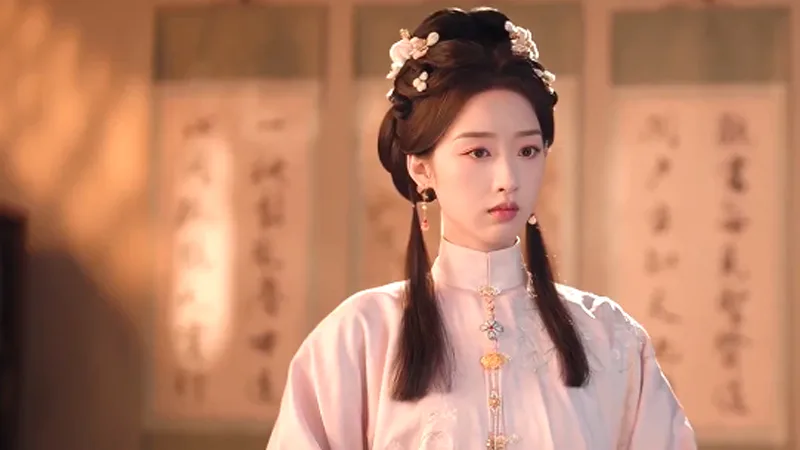
So the hairstyle is not a careless mistake. It belongs to a long hair tradition, then gets adjusted for visual impact. Costume dramas always balance evidence with clarity. When a historical detail feels strange, the gap may come from what earlier shows taught us, not from the detail itself. Fu’s two locks may look new, but their roots are far older than the doubt they create. The next time they catch your eye, they carry more history than they seem to hold.