-

Did Ming Women Really Wear Men’s Hair Crowns?
In The Road to Splendor (花开锦绣), Lady Wang (王) enters a room with the calm authority of a noble family’s matriarch. Portrayed by Lü Xiaolin (吕晓霖), she seldom needs a loud voice; her posture, gaze, and unhurried gestures carry weight. Viewers who remember Lü from Day and Night (白夜追凶) as Gao Yanan (高亚楠) may recognize the same restraint. Yet one detail in her new costume has sparked debate: the ornament on her head looks like a man’s hair-binding crown. Why would a married noblewoman wear an item associated with male scholars and officials? The answer is more interesting than a simple costume mistake. In fact, women of the Ming dynasty did wear such crowns, though the habit was neither universal nor well known. The confusion reveals how clothing, memory, and screen habits shape what we assume about the past. Not Only Men The hair-binding crown, sometimes called a small hair crown, began in the Five Dynasties. It looked like a small bowl turned upside down. A complete cap covered the gathered bun, with holes on both sides. A hairpin passed through the bun and held the crown firmly. Materials varied. Aristocratic families used jade or pure gold. Officials and commoners… -
What Does a Young Lady’s Hairstyle Reveal in a Historical Drama?
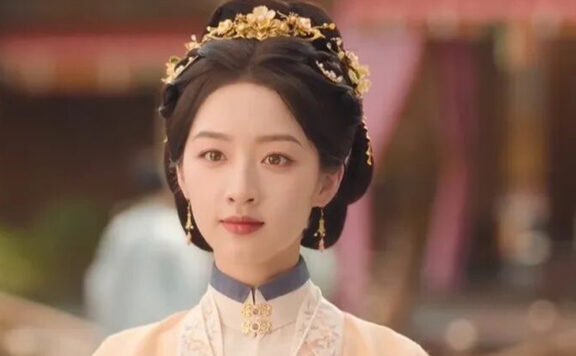
In the new series The Road to Splendor (花开锦绣), a quiet moment at the Wanfang (万芳) Garden poetry gathering turns into a puzzle for viewers. When Fan Yake (范雅客) first lays eyes on Fu Tingyun (傅庭芸), she blurts out: “Why are you still dressed like an unmarried girl?” Many audiences pause at this line. How could Fan Yake tell, at a single glance, that Fu Tingyun has not taken a husband? The answer lies not in gossip or intuition, but in a tiny cluster of buns on top of Fu Tingyun’s head. That style—known as the “Three Small Bun” hairdo—was one of the most telling markers of maidenhood in the Ming Dynasty. And it turns out that unmarried girls in that era differed from married women not only in hair, but also in headpieces and daily attire. These visual cues were as clear as a spoken announcement—if you knew where to look. Hair An unmarried girl in the Ming period never wore the large, neat bun that signified a married woman. Instead, she chose styles like the double-yarn bun, the hanging-ring bun, or the three-small-bun. The last one involved parting the hair into several sections and coiling them into three…- 38
- 0
-
The Crown Controversy in The Road to Splendor
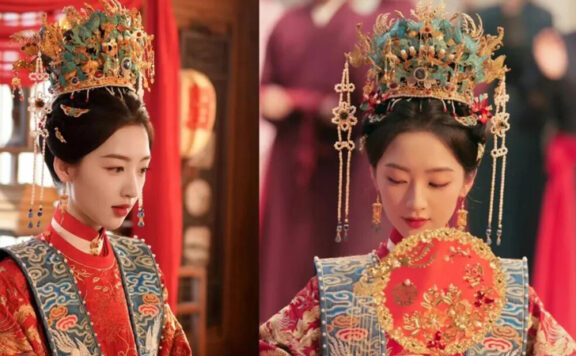
In a recently released still from the historical drama The Road to Splendor (花开锦绣), young actress Deng Enxi (邓恩熙) appears in full bridal regalia. Atop her head sits a gilded ceremonial crown, its base inlaid with kingfisher feathers, decorated with intertwining dragon and phoenix motifs, and flanked by cascading pearl tassels. This striking image has sparked a spirited debate among costume drama enthusiasts: is that a legitimate Phoenix Crown, or is it the lesser-known Flycatcher Crown? The distinction matters because, in the rigid social hierarchy of the Ming dynasty, wearing the wrong hat was not a fashion faux pas—it was a potential political crime. Royal Rules The Phoenix Crown was the ultimate status symbol for the empire's top-tier women. It was not an accessory one could simply purchase or borrow. Strictly reserved for the empress dowager, the empress, and the crown prince's consort, it could only be worn during the grandest state occasions: enthronements, imperial audiences, and the emperor's own weddings. Its construction was a marvel of meticulous craftsmanship. The framework was woven from lacquered bamboo silk, over which a base of kingfisher feather inlay was applied. Gold-crafted dragon and phoenix components were then soldered on, followed by the setting…- 23
- 0
-
Ming’s Lesser‑Known Purple Imperial Robe
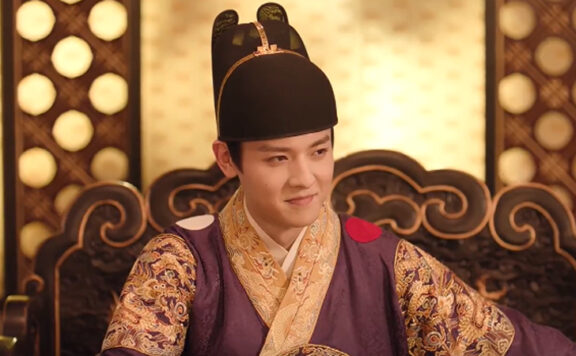
Ming dynasty dramas often dress their emperors in bright yellow robes with round collars and golden dragons. So when the emperor in The Road to Splendor (花开锦绣) appears in a deep purple, cross-collared robe with two round emblems on his shoulders, it looks jarring. Is this a costume mistake? Or did the production team uncover a lesser-known chapter of imperial fashion? Why Purple? Purple was not always a royal color in China. During the Spring and Autumn period, Duke Huan of Qi (齐桓公) popularized it as a personal preference. By the Tang and Song dynasties, purple had climbed the social ladder—only officials of the third rank or higher could wear it. The New Book of Tang (新唐书) and History of Song (宋史) both document this rule. But at the start of the Ming, purple was officially banned for civilians and officials alike. Some historians suggest the ban came from a Confucian saying, “Purple usurps red,” which treated purple as a deceptive substitute for the orthodox red. Yet the ban softened over time. The Ming History Chronicles (明史纪事本末) mention that the Wanli (万历) emperor wore purple, and his portrait in the Rubi Tu (入跸图) confirms it. That painting shows him in… -
The Road to Splendor: Why Wu Won and Fan Yake Lost
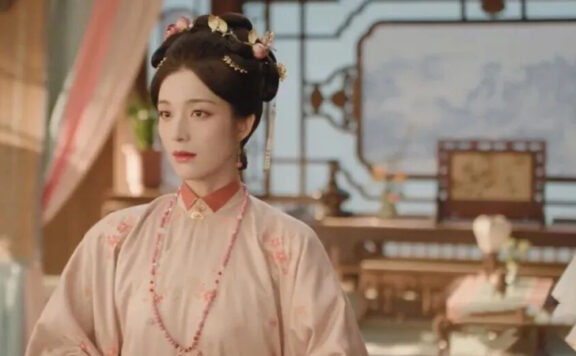
Why One Copycat Won a Husband While the Other Lost Everything In the intricate dance of love, marriage, and survival, imitation often becomes a strategy. Yet, as the drama The Road to Splendor (花开锦绣) reveals, the outcome of such mimicry depends entirely on the imitator's endgame. When two women, Wu (吴) and Fan Yake (范雅客), both model themselves after the ethereal Fu Tingyun (傅庭芸) to win the heart of Yu Jingxiu (俞敬修), the results are polar opposites. One secures her shelter and security; the other loses her identity and her husband's respect. This is not a simple tale of a man seeking a replacement for his first love. It is a story about strategy, self-awareness, and the dangerous cost of losing oneself in the shadow of another. Winning Through Utility Wu enters Yu’s life not as a romantic ideal, but as a practical survivor. He initially refuses to take her as a concubine, but she quickly identifies his deepest vulnerability: his unresolved obsession with Fu Tingyun. Wu does not try to be a perfect replica of Fu; instead, she becomes the keeper of the memory. She listens to Yu talk about Fu all night, a move that earns her the…- 88
- 0
-
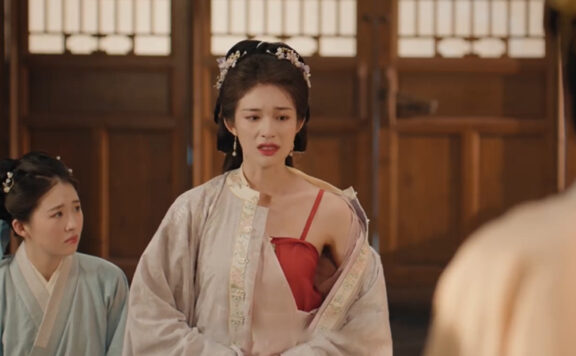
The Road to Splendor: Why Fu Tingyun Helped Threat‑Making Miss Wu
In the latest episodes of the hit drama The Road to Splendor (花开锦绣), a scene leaves viewers scratching their heads. Miss Wu (吴), a young woman forced into a terrible arrangement, rushes to Fu Tingyun (傅庭芸) for help. Here is the catch: Miss Wu is nobody to Fu Tingyun. She has no blood ties, no old friendship. Worse, she once set up Zhao Ling (赵凌) and directly threatened Fu Tingyun herself. So why does Fu Tingyun say yes without hesitation? Most would call it simple kindness. But the drama lays out a far more complex truth. Her decision is not just about being good. It is about recognition, history, and a quiet rebellion against the rules that trap women like them. A Woman Who Refuses to Be a Caged Bird Miss Wu arrives at Fu Tingyun's door in desperation. Her guardian, Lady Wu, has arranged for her to become a kept woman for Minister Wei (卫), a high-ranking official of the third rank. For most young ladies in that era, this would look like a golden ticket. It means wealth, status, and security. Marrying up is the dream. But Miss Wu does not want it. She hates the plan. She…- 37
- 0
-
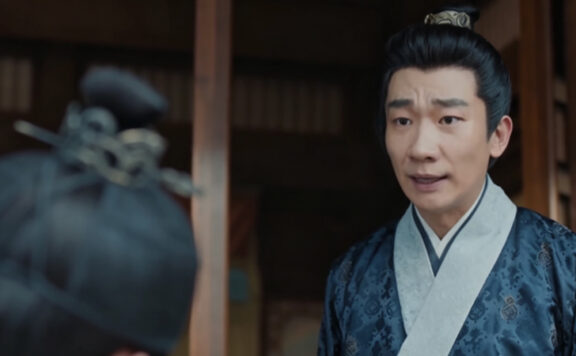
The Road to Splendor: Was Jin Yuanbao Only a Pawn in Zhao Ling’s Scheme
The Road to Splendor (花开锦绣): Did Zhao Ling’s (赵凌) official document hurt his brother more than the scheme itself? This drama has sparked heated debates. While viewers curse Jin Yuanbao (金元宝) for his greed and betrayal, a closer look reveals that Zhao Ling might be the one who truly broke their bond. The infamous document he prepared was not a safety net—it was a quiet dismissal of their brotherhood. What if the villain isn’t who we think? Why the Audience Hates the Wrong Man When Jin Yuanbao storms into Zhao Ling’s home after the latter is stripped of his title, the screen fills with angry comments. Viewers call him a fair-weather friend, someone who shares joy but flees at hardship. The verdict seems clear: Jin Yuanbao is a traitor, and Zhao Ling is the tragic hero. But this judgment comes from watching the story from above, knowing all the secrets. If we step into Jin Yuanbao’s shoes, his anger becomes less shocking and more human. Remember their history. Zhao Ling was once a salt smuggler in Huaying (化营), and Jin Yuanbao was his business partner. A single notice from Fu Tingyun (傅庭芸) claiming Zhao Ling took twenty thousand taels from…- 59
- 0
-
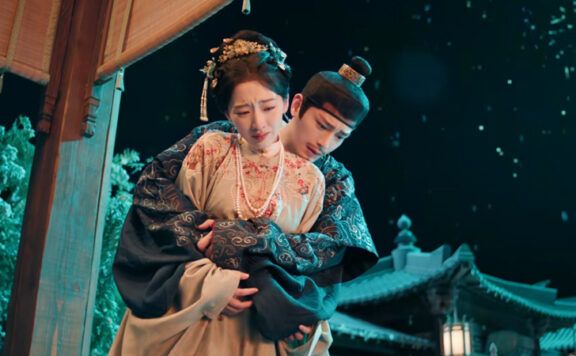
The Road to Splendor: The Poisoned Cup That Shattered Zhao Ling’s Loyalty
The Road to Splendor (花开锦绣) is a historical drama that continues to haunt its audience long after the credits roll. It does not rely on grand battle scenes or sweeping romances. Instead, it builds its tension inside claustrophobic chambers where the emperor's words can kill as swiftly as any blade. At its heart lies a simple, devastating question: what happens when you discover that your ruler, your friend, and your world, is not merely flawed but profoundly cold? Viewers have watched Zhao Ling (赵凌) transform from a loyal tiger minister to a man desperate to escape. The catalyst for this change is not a battlefield injury or a public humiliation. It is a single, meticulously planned act of psychological cruelty that forces him to stare into the abyss of imperial power and see his own reflection in it. Loyalty’s Gilded Cage Initially, Zhao Ling is the perfect model of a devoted subject. He accepts his dangerous missions without protest. When the emperor orders him to execute Lord Mo (陌) personally, he does it. He does it knowing his friend is innocent, a convenient sacrifice to quell public anger about salt reforms. The scene is not tragic in a classical sense;…- 89
- 0
-
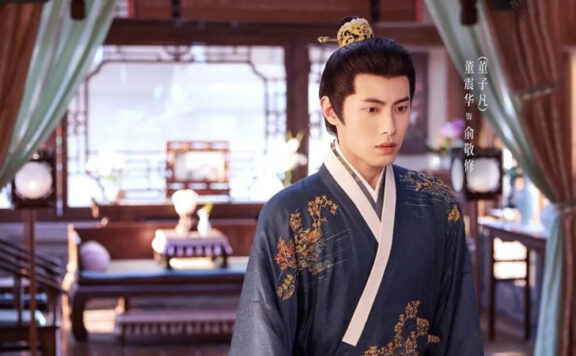
The Road to Splendor: Narcissus Foretold the Yu’s Fall
Why Did the Mighty Yu Family Collapse? The Clues Were Hiding in Plain Sight The hit period drama The Road to Splendor (花开锦绣) has reached its finale, and the fall of the Yu clan feels almost cathartic. The matriarch loses her mind, and the once-promising Top scholar Yu Jingxiu (俞敬修) ends up on the street, writing letters for three coppers each. But was this downfall sudden? Not really. The cracks in this seemingly unshakeable political dynasty had been spreading for a long time—long before the imperial edict arrived. Three seemingly small incidents, each involving a misplaced flower, a overheard secret, and a careless servant, exposed a fatal flaw: the Yu family could not even manage its own household, let alone control the court. And in the game of power, internal rot always shows up first in the smallest details. The Abandoned Narcissus: A Test That Everyone Failed Early in the story, Yu Jingxiu finds a pot of narcissus tucked away in a corner and instantly falls for Fan Yake (范雅客), the woman who grew it. He insists on marrying her, despite her obscure background. His mother, Lady Yu, tries to dissuade him but eventually gives in. Stop right there. Why…- 29
- 0
-
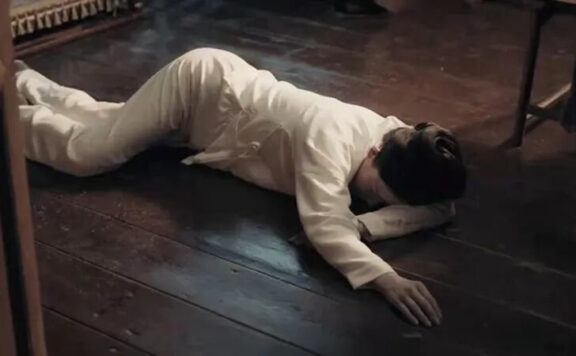
The Road to Splendor: Fu Mother’s Self‑Inflicted Tragedy
The Road to Splendor (花开锦绣): Did the Mother’s Self-Neglect Make Her the Hidden Accomplice to Her Own Murder? The latest episodes of The Road to Splendor deliver a heartbreaking gut punch. As Zhao Ling (赵凌) digs into the accounting books of Anzhou (安州), the trail leads directly to the Yu family’s corrupt dealings. Desperate to buy time and cover up their illicit finances, Grand Secretary Yu dangles a coveted official post in front of the Fifth Master of the Fu family. It is a poisoned bait, and Fu takes it. To secure that phantom promotion, he turns on his own wife—the mother of his children—and poisons her in the cold, dead of night. The show makes it easy to condemn the husband’s cold-blooded ambition. But a closer look at the face of the elderly servant who delivers the news to Fu Tingyun (傅庭芸) reveals a more unsettling truth: this murder had more than one perpetrator. The true accomplice is not another power-hungry relative, but someone so obvious that the audience almost misses her. She is the victim herself. The Selfless Matriarch It is genuinely tragic to watch the mother’s story unfold. She was a woman of immense talent and sharp…- 41
- 0
-
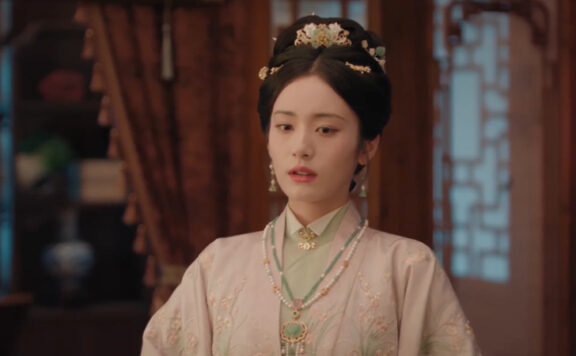
The Road to Splendor: Fan Yake’s Arrogance Cost Her Greatly
Madam Yu (俞) promised Fan Yake (范雅客) all the gift money from her son’s first birthday banquet. So why did she take it all back right after the meal? If you are watching The Road to Splendor (花开锦绣), you might have missed the real reason. It was not that Madam Yu went back on her word. It was that Fan Yake brought it upon herself. A closer look reveals three deep cracks in her behavior that day—each one pushing Madam Yu from promise to punishment. The Host’s Humiliation Fu Tingyun (傅庭芸) had just returned to the capital. She bought a grand courtyard on the city’s most competitive and bustling street. When Madam Yu heard this, she could not help but admire her ability and wealth. To build a good relationship with Fu, she deliberately used her grandson’s first birthday banquet as an excuse to invite her to the house. It was a strategic move, a gesture of goodwill from one powerful woman to another. But Fan Yake was not happy. She openly and secretly tried to undermine Fu Tingyun at every turn. This made Madam Yu furious. Fu was Madam Yu’s personal guest. No matter how many reasons Fan Yake…- 32
- 0
-
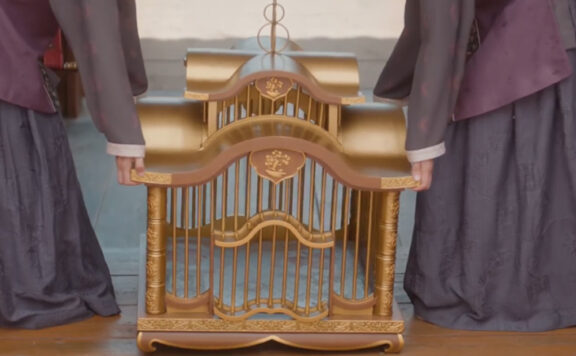
The Road to Splendor: A Test for Fan Yake Behind the Political Task
Guochao (国潮) dramas are finding new ways to keep viewers hooked. While the genre often centers on grand historical battles or imperial court schemes, the recent hit The Road to Splendor (花开锦绣) proves that the most intense drama can happen within a single household. The story presents a tricky puzzle: why would the clever and seasoned matriarch, Madam Yu (俞), put her daughter-in-law Fan Yake (范雅客) in charge of a life-changing political deal, especially when Fan is known for having no real political instincts? Fan’s mission to secure her husband a powerful post as the Salt Inspector seems like a setup for disaster, given her clumsy attempts to impress high-society ladies. But look closer, and you realize this isn't poor judgment on Madam Yu’s part. It is a calculated act of family management, where the goal is not just a government appointment but the molding of her son's future and the protection of the family’s legacy. The question isn’t about Fan Yake’s ability, but about the long-term vision that guides the Yu family’s actions. It is the only logical decision Madam Yu had her hands tied. The decision for the Salt Inspector post was assigned to Zhao Ling (赵凌), a…- 37
- 0
-
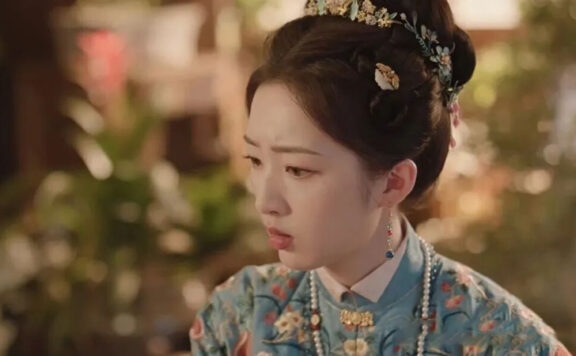
The Hidden Truth Behind the Yu Family’s Fall in The Road to Splendor
Ganlin (甘霖) Town and the Yu (俞) Family mansion serve as two opposing poles in this narrative, where the collapse of an entire dynasty isn't triggered by an outsider's sword but by the frost that builds from within. Readers often pinpoint Zhao Ling (赵凌) as the catalyst for the Yu Family's downfall, yet a deeper look reveals that the rot was always there. The real drama isn't about a feud; it is about two women who stand as mirrors to each other. One, Fu Tingyun (傅庭芸), found warmth in a forgotten town and transformed; the other, Lady Yu, withered under the weight of a gilded cage. The conversation they shared within the palace walls wasn't just idle gossip—it was the key that unlocked the true reason for the family's destruction. What happens to people when they are stripped of connection? Is survival possible without love? Two Paths, One Choice Fu Tingyun emerged from the cold house of the Fu family, where blood was merely a currency for power. Her father lusted for authority, her mother was a prisoner of circumstance, and her grandmother would trade her for a single advantage. Logic dictates that she should have become a hollow shell,…- 61
- 0
-
Decoding Di‑Ji and Fu‑Jin in Historical Drama
In the historical drama The Road to Splendor (花开锦绣), actress You Jingru (尤靖茹) portrays Zuo Shi (左氏), a secondary wife in a wealthy household. While other female characters dazzle with gold and jade ornaments in their hair, Zuo Shi appears with either a dark, cap-like object perched on her head or a plain grey cloth wrapping her entire coiffure. To modern viewers, these choices might seem odd, even dowdy. But these are not stylists' eccentricities; they are accurate reproductions of two specific types of headwear worn by women during the Ming Dynasty (1368–1644): the Di Ji (狄髻) and the Fu Jin (幅巾). Far from being mere decoration, these pieces were silent indicators of social status, economic standing, and even personal taste within the rigid hierarchy of the time. Di Ji: The Social Ladder on Her Head The Di Ji itself is not a full hairstyle but a foundation—a mesh cap woven from silver wire, horsehair, or human hair. It was placed over a tightly coiled bun to hold the shape and provide a stable base for pins and ornaments. This practical item appears in countless Ming-era portraits, such as those in The Happy Reign of Emperor Chenghua (明宪宗元宵行乐图), and has… -
Where Did Ming Damao Actually Come From?
Ding Yuxi wears a striking black broad-brimmed hat in his new historical drama The Road to Splendor (花开锦绣), yet many viewers instantly label it “Korean-style.” That snap judgment reveals more about our screen habits than about history. The hat in question, a tall-crowned black headpiece with a flat, wide brim, a gold finial on top, and a beaded string dangling below, looks unfamiliar because period dramas rarely feature it. But this distinctive accessory is not a borrowed Korean design. It is a faithful recreation of a Ming-dynasty male hat called Damao (大帽), a common everyday headwear worn by everyone from officials to commoners during that era. Its story stretches back over a thousand years, evolving through successive dynasties before settling into the form we see on screen. So why does a native Chinese artifact get mistaken for something foreign? The answer lies in a mix of visual similarity and a modern lack of exposure to our own traditions. A Hat Born from the Road Long before the Ming dynasty, the broad-brimmed hat already served travelers well. As early as the Wei and Jin periods (220–420 AD), people on long journeys wove sun-shielding headgear from rattan and called it Ximao (席帽).… -
Zhao Ling’s Gamble for Power in The Road to Splendor
Zhao Ling (赵凌) handed in a blank memorial to the emperor. Everyone in the court thought it was a death sentence. Instead, it became his promotion ticket. How does a battlefield general outsmart a nest of scheming civil officials in the capital? The answer lies not in swords, but in a single, empty sheet of paper. The Road to Splendor (花开锦绣) delivers a masterclass in power dynamics, where the real battle isn't fought on the frontier, but inside the emperor’s throne room. This is the story of a man who learned that the highest law isn't justice—it's the will of the one on top. When a Blank Page Becomes a Weapon The moment Counselor Li (李) died from poison, the vultures circled. The faction led by Grand Secretary Yu (俞) smirked, certain they had caught Zhao Ling red-handed. He had overstepped his authority, investigated a case without proper jurisdiction, and now the only witness was dead. The evidence was damning. Yet, Zhao Ling showed no fear. He stood before the court and declared that the dead man had confessed and written a list of co-conspirators before taking his last breath. With every eye upon him, he presented that "list"—a completely…- 109
- 0
-
The Tragedy of Fan Yake in The Road to Splendor
Fan Yake (范雅客) from the hit costume drama The Road to Splendor (花开锦绣) is the kind of character who makes you wince and laugh in equal measure. She is not evil, not exactly stupid, but possessed of a particular brand of self-destructive cleverness that turns every situation against her. In a household where political acumen is the real currency, she trades in petty wins and loses the war. The series, set against the intricate backdrop of dynastic politics and family power struggles, uses her as a cautionary tale: intelligence without wisdom is a weapon that wounds the wielder. Her story is a masterclass in how not to navigate a world of sharp tongues, sharper minds, and the ever-present shadow of the imperial court. While she struts and schemes, others like the formidable Wu Shi (吴氏) simply watch, understand, and wait. The Cost of a Clever Refusal Fan Yake’s first major miscalculation involves a simple act of refusing to lend books to her mother-in-law, Lady Yu. The matriarch, a woman whose vision extends beyond the household walls to the very heart of the court, needs these books as a gift to curry favor with the crown prince. When Fan Yake’s husband,…- 197
- 0
-
Miss Wu’s Tactical Survival in The Road to Splendor
In the sprawling narrative of The Road to Splendor (花开锦绣), few characters evoke as much quiet sympathy as Miss Wu (吴). She is gifted, graceful, and perceptive—yet her lineage traps her in a cycle of transactional maneuvering. Her aunt, Madame Wu, treats her not as kin but as currency, bartering her through one household after another: first the Zhao estate, then the Wei residence, and finally the Yu (俞) mansion. Each arrangement collapses until the third, when Miss Wu, who once fought desperately to escape such fates, steps into the Yu household as a concubine to Yu Jingxiu without protest. What changed? Was it resignation, exhaustion, or something sharper—a cold-eyed calculation born of survival? Her Own Reckoning To understand her choice, one must first clear away the fog of pity. Miss Wu is no naïf. When her aunt tried to push her into the Wei family as an unofficial consort, she sought out Fu Tingyun (傅庭芸)—a woman she barely knew—and begged for intervention. She had watched Fu Tingyun disarm Madame Wu with nothing but measured words, and she recognized power when she saw it. That plea succeeded; the Wei match dissolved. But the act itself reveals a woman who refuses…- 87
- 0
-
Betrayal and Pawns in The Road to Splendor
Miss Wu (吴) – a name that barely registers in the grand chessboard of The Road to Splendor (花开锦绣) – yet her presence rattles three powerful households, shifts political alliances, and exposes the ugliest side of female friendship. She is not a heroine, not a villain, but a piece passed from hand to hand: first as a gift to Zhao Ling (赵凌), then a pawn in the Wei (卫) family’s inner chamber, and finally a consolation trophy for Yu Jingxiu (俞敬修). How did a woman with no noble blood and no sharp tongue manage to destabilize so many lives? The answer lies in her two lethal identities – and in the calculating women who weaponized them. This is not a story of love or revenge; it is a cold dissection of how a society trades human value, and how even a "lowly" figure can become the pivot on which fates turn. Two Masks, One Price Miss Wu’s first identity is that of a Thin horse– a term from imperial China for a young woman raised from childhood to please wealthy men. Trained in music, conversation, and seduction, she was never meant to marry, only to be sold. Her foster mother,…- 70
- 0
-
3 Upcoming Dramas of Grassroots Heroes
Who Said Heroes Must Be Born Noble? The summer TV season has an unexpected new champion. The historical drama The Road to Splendor (花开锦绣) isn't just popular; it has become a genuine phenomenon, with viewership ratings soaring to S+ level. At its heart is a salt smuggler named Zhao Ling (赵凌) and an aristocrat, Fu Tingyun (傅庭芸), whose relationship evolves from cynical exploitation to life-and-death loyalty. It is a mix of family intrigue, road survival, and political cunning. Yet, what truly captured the audience's imagination is the character of Zhao Ling, played by Ding Yuxi. He is a man from the muddy bottom of society—street-smart, ruthless when needed, but fiercely loyal. His journey from a humble salt peddler to a powerful court minister has sparked a massive trend. The "grassroots" male lead, a character type once rare in the glamorous world of historical epics, is now the hottest ticket in town. And there are three more such heroes waiting in the wings. The Road to Glory (归鸾) - Raw to Ruler First in line is The Road to Glory, starring Zhang Linghe as Xiao Li (萧厉). He is not your typical noble hero. This is a story about a street…- 79
- 0
-
Why Ding Yuxi’s Ming‑Style Outfit Looks Unfamiliar
Why does Ding Yuxi (丁禹兮) wear such an odd red robe and belt in his new period drama? Is it a costume mistake, or is there a historical story behind those puzzling flaps and dangling straps? The answer takes us deep into the official dress code of the Ming dynasty, where every extra piece of fabric served a purpose. For anyone tired of generic, simplified costumes in historical dramas, these details are a fascinating glimpse into a lost world of rules, status, and practicality. The Robe's Secret Flaps That seemingly redundant piece of cloth hanging at the side of his red robe is called the wai bai (外摆), or "outer drape". During the Ming dynasty, officials wore a standard round-collared robe for daily court duties. The robe had slits on both sides to allow for easy walking and kneeling during ceremonies. However, these slits exposed the inner garments underneath, which was considered improper and undignified in the formal setting of the court. To solve this, the Ministry of Rites mandated the addition of curved fabric panels attached at the slits, hanging gracefully over the outside to conceal the underclothes. This design was not an invention of the Ming. Similar prototypes…- 19
- 0
-
Why Its Groom Wore a Green Wedding Robe in The Road to Splendor
Ding Yuxi's new drama, The Road to Splendor (花开锦绣), sparked immediate viewer backlash the moment his character Zhao Ling's (赵凌) wedding costume was revealed. The groom wore a green robe with a red sash across his shoulder—a jarring combination that led to a barrage of sarcastic comments. For most viewers, a wedding means one thing: bright, unadulterated red. This look, however, seemed to violate that unwritten rule of Chinese historical dramas. But does this criticism hold up against actual history? Or have we been conditioned by decades of romanticized television to expect a version of the past that never truly existed? The Shock of Green To the modern eye, the outfit appears to be a clash of primary colors. The titular character dons a green round-collar robe, a stark contrast to the brilliant red ceremonial sash thrown over it. Viewers immediately took to social media, questioning the wardrobe department’s decision. The immediate consensus was that the stylists had made a grave error, prioritizing "edgy" visuals over historical accuracy. But the truth is far more fascinating than a simple mistake; it is a deep dive into the rigid social hierarchies of the Ming Dynasty. This reaction highlights how historical understanding is…- 78
- 0
-
Why Did Fan Yake Misname the Narcissus in The Road to Splendor?
Fan Yake (范雅客) knows the difference between a narcissus and an orchid. She has always known. But when she casually misnames the flower that once sealed her engagement, she reveals something far more damning than botanical ignorance: she has already forgotten who she really is. In the latest episode of the period drama The Road to Splendor (花开锦绣), her husband Yu Jingxiu (俞敬修) turns cold not because he has fallen for another woman, but because he finally sees that they were never walking the same road. Her desperate climb into the Yu family mansion was built on a lie—not a single falsehood about flowers, but a steady, years-long betrayal of her own nature. And that, more than any rival’s charm, is what pushes him away. Why She Married Up, Not Out Let us be honest about Fan Yake from the start. She did not marry Yu Jingxiu because his poetry moved her soul or because his smile made her heart flutter. She married him because he was the golden ticket out of a life she hated. Growing up as a poor relation in the Fu household, she watched the legitimate daughter Fu Tingyun (傅庭芸) receive every privilege while she herself…- 79
- 0
-
Miss Wu’s Path to Self‑Liberation in The Road to Splendor
In The Road to Splendor, How Did a Silent Girl Seize Her Freedom? She arrived at the Fan mansion in Anzhou (安州) as a shadow—quiet, obedient, and easily overlooked. But beneath that meek exterior lay a mind sharp enough to calculate every move. In a world where women were traded like goods, Miss Wu (吴) knew that survival meant playing the fool until the right moment came. This is not a story of love or loyalty; it is a cold-eyed account of how one woman outmaneuvered her captors, her rivals, and even her own despair, using nothing but patience and perception. The Merchandise From the start, Miss Wu was never a niece to Mrs. Wu—she was an investment. Mrs. Wu measured her waist daily, controlled every bite she ate, and once banned her from dinner for half a month because she had gained "half an inch." The maid Cairong (彩蓉) whispered that this was not a family visit but a sentence of hard labor. Yet Miss Wu said nothing. She swallowed every humiliation because she knew the logic: a good marriage was her only ticket out. Mrs. Wu paraded her before the powerful Fan Yake (范雅客), hoping to catch his…- 95
- 0
The Road to Splendor






Scan to open current page
-
$CouponsLimitation of use:Expired and UnavailableLimitation of use:
before
Limitation of use:Permanently validCoupon ID:×Available for the following products: Available for the following products categories: Unrestricted use:Available for all products and product types