When viewers watch The Road to Splendor (花开锦绣), one small detail keeps catching their eyes: the collar of Fu Tingyun (傅庭芸), played by Deng Enxi (邓恩熙), often turns outward. Whether she wears embroidered daily clothes or a plain inner layer, a neat band sits above her neck.
Some people call it a modern trick, maybe added to make her face look smaller. It is not. Women in the Ming Dynasty already wore collars in this way. The look belongs to a longer story about weather, manners, comfort, and style. Once you notice that story, a costume detail becomes a quiet clue about how people once lived.
Standing Collars Spread
Many people picture Ming women’s dress as cross-collar robes with wide sleeves. That image is only part of the picture. After the mid-Ming period, the standing collar became common. Palace women wore it. Market women wore it. It appeared on padded jackets and light shirts. Historians still debate why it spread. One idea points to the Little Ice Age, when temperatures dropped. A collar that hugged the neck blocked wind and kept warmth. Another idea points to stricter expectations for women’s clothing. Since old objects usually answer practical needs first, I think cold weather mattered most.
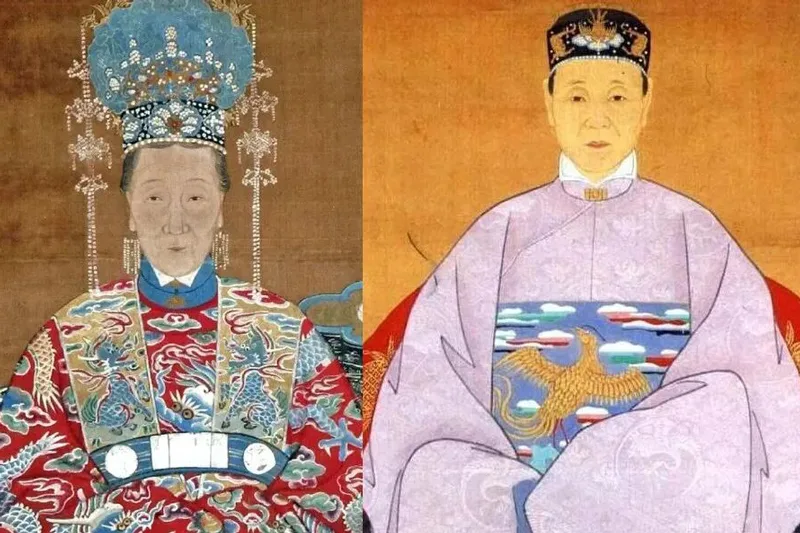
Once the standing collar became popular, the upturned collar followed. Some women folded the whole collar outward. Others turned out only a small corner. Paintings of Ming women show this detail again and again. The shape looks close to what Fu Tingyun wears on screen. Yet Ming rules about dress were strict. A folded collar was not formal wear for every public event. It belonged mostly to home life, visits with relatives, and friendly gatherings, where a woman could relax a little without leaving good taste behind.
After the Qing Dynasty entered China, Han women kept some old Ming customs, so the folded standing collar survived for a time. Then Manchu (满族) dress grew more influential. High standing collars became shorter. Folding the edge no longer led the fashion. Many garments simply fixed the collar in an outward shape, or added a wide lace border. What had once been a practical turn of cloth became a decorative edge. The change was slow, but it altered the neckline of women’s clothing for good.
This history also explains why the detail can look both old and new. A folded collar is easy to mistake for a modern design because it changes the neckline so clearly. In Ming paintings, however, the fold often follows the body’s needs rather than a painter’s fantasy. It can be tight, loose, narrow, or slightly uneven. Those small differences matter. They show that women were not following one rigid rule. They were adjusting a shared style to their own bodies, budgets, and daily plans.
Comfort, Face, Beauty
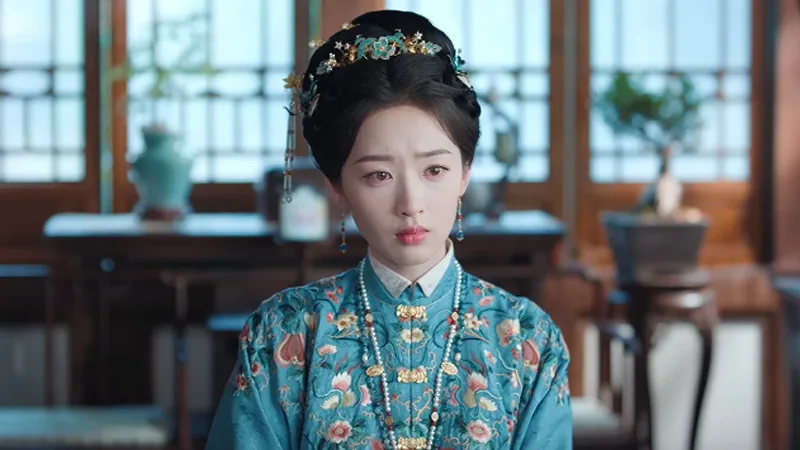
Why did Ming women enjoy turning a standing collar outward? The first reason is comfort. Many standing collars were made high. When left upright, they could press against the throat. A folded edge gave the neck room to move. Eating, talking, or bending over needlework felt easier. Indoors, or when the weather turned warm, a full standing collar could feel hot and damp. Folding the top band outward let air pass around the neck. It was a small change, but daily life is built from small changes.
The second reason is the face. A tall standing collar wraps the whole neck. It can make a face look shorter or rounder. When the collar turns outward, the neckline opens sideways. That movement softens the face’s outline and gives the head a lighter balance. This does not mean Ming women were chasing camera angles. They simply noticed what looked pleasing in a mirror, just as people do today. A collar can frame a face the way a window frame shapes a view.
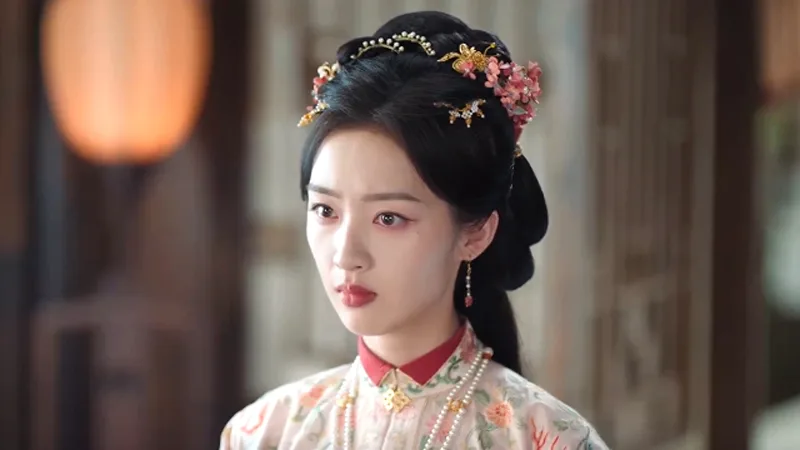
The third reason is decoration. A standing-collar shirt in a deep or bright color could use a contrasting fabric for the edge. A narrow band of embroidery could add another layer. The folded collar gave the eye a place to rest and a place to wander. In the mid and late Ming, this kind of detail became an important part of a woman’s outfit. It was not loud. It was precise. A thin line of color near the throat could make a plain garment feel finished, personal, and alive.
Costume dramas often make old clothing feel familiar and strange at once. A detail that looks like a modern stylist’s trick may come from real habits. In The Road to Splendor, Fu Tingyun’s upturned collar echoes the Ming practice of folding a standing collar. The production team adjusted color contrast and the collar’s outline to make each layer read better on camera. So the next time the collar flips out, do not see only a fashion choice. See weather, manners, comfort, and a woman making daily dress work for her.