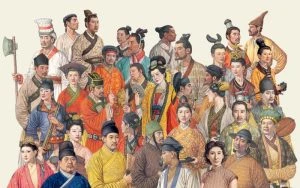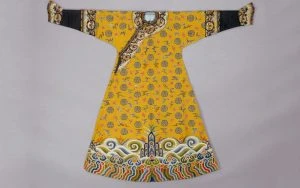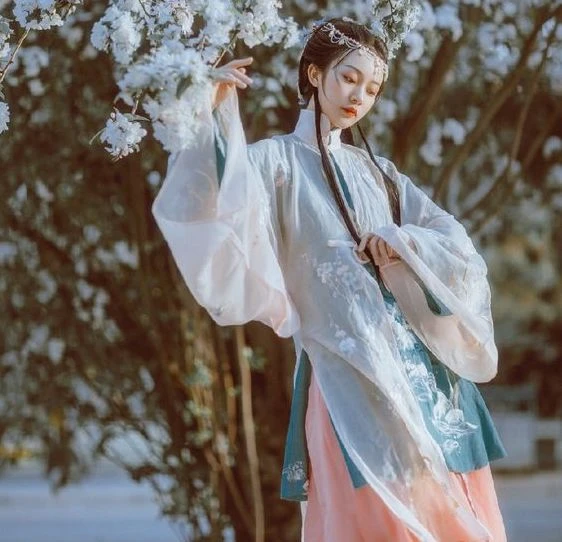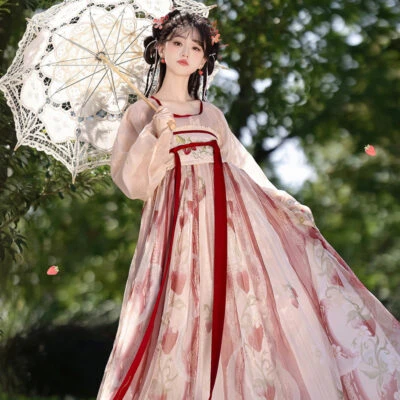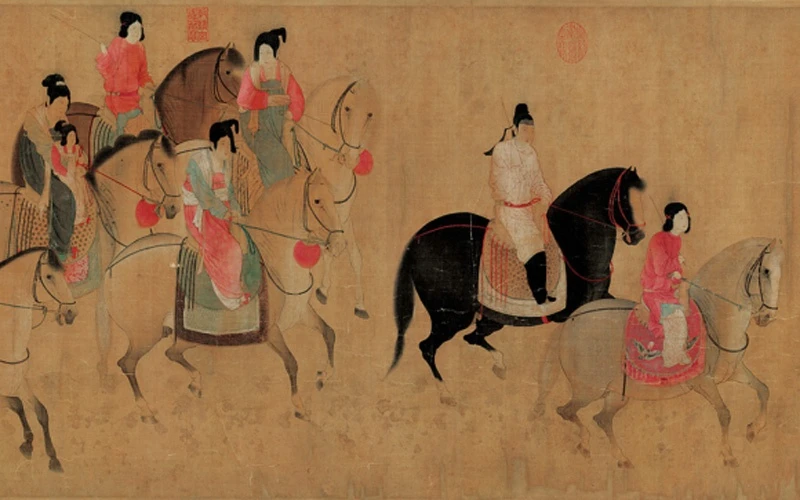
Why does Tang dynasty clothing still feel like the first image of classical Chinese dress? The answer does not lie only in bright colors, flowing sleeves, or museum treasures. It comes from a moment when wealth, craft, confidence, and open exchange met in one capital. During the reign of Emperor Xuanzong (唐玄宗), also known as Tang Mingh-uang, the empire reached a high point called the Kaiyuan Prosperity. In that atmosphere, clothing became more than fabric. It became a public language of power, taste, and daily life.
Order on the Imperial Body
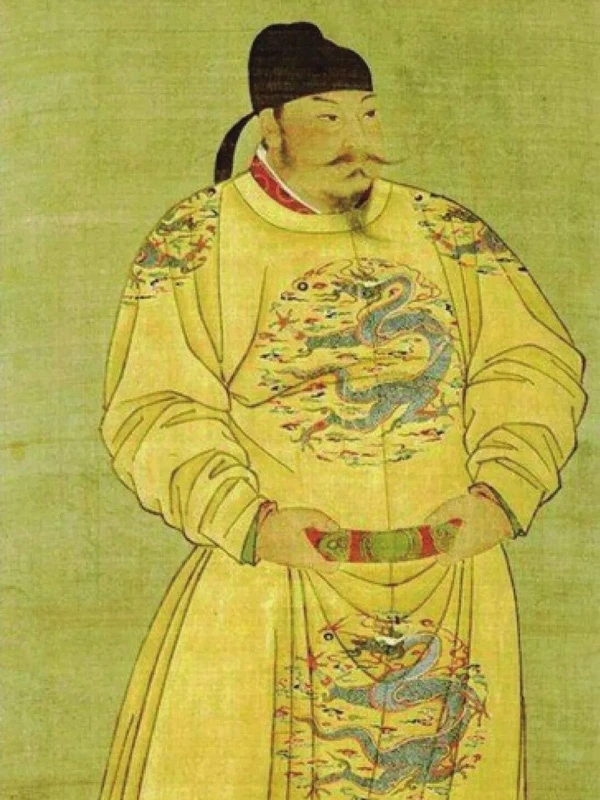
Royal dress kept old forms but raised their level. Court robes followed earlier ceremonial systems, yet gold and silver embroidery became reserved for the emperor, empress, and imperial consorts. Officials wore fine work too, but not the highest grade. The result was a clear visual order, from headwear to shoes.
Ceremonial outfits included the Six Crowns, each matched to specific rites. The highest form, the Da Qiu Mian (大裘冕), belonged to the most solemn occasions. Every detail mattered: the robe, the sash, the jade ornaments, the shoes. Nothing was left to chance.
Even palace life carried that precision. A short poem by Wang Ya describes a maid with a green cloud hairpin and cloud-toed shoes, hurrying to help the emperor’s carriage. The image is small, yet it shows how dress, movement, and status were woven together inside the palace.
Robes for Everyone
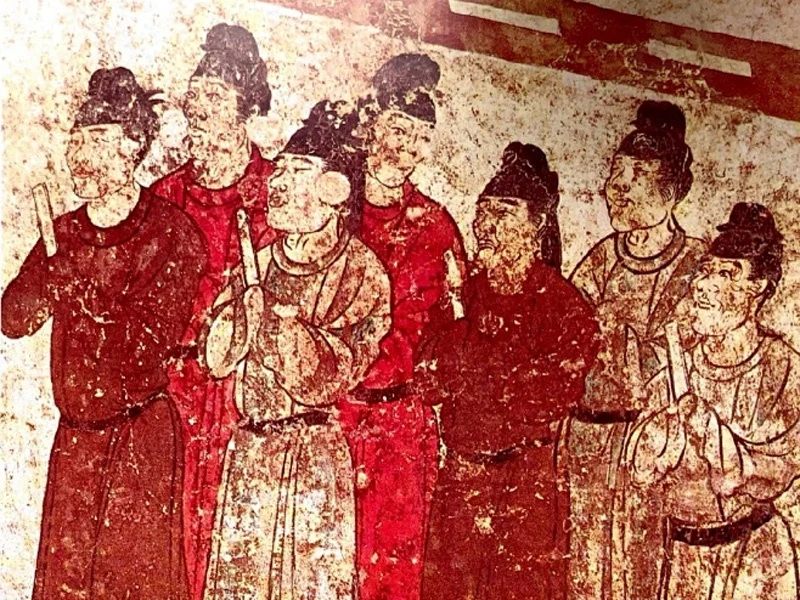
Not all Tang clothing belonged to grand ceremonies. Round-collared robes spread widely among men of many backgrounds. Officials and ordinary people alike wore them, and the style crossed ethnic lines. Later versions adjusted the collar for warmth, but the basic shape stayed familiar.
A mural from the tomb of Crown Prince Yide (懿德) shows officials in these robes, their wide sleeves, lower skirts, jade pendants, and ribboned sashes arranged with quiet authority. The painting does not need explanation. One look tells us how official dress carried dignity without excessive ornament.
This everyday elegance helped Tang style feel alive. It was not only for altars and thrones. It moved through streets, offices, stables, and markets. That reach is one reason Tang clothing still feels accessible. It belonged to ritual, but also to ordinary motion.
Women’s Dress in Full Bloom
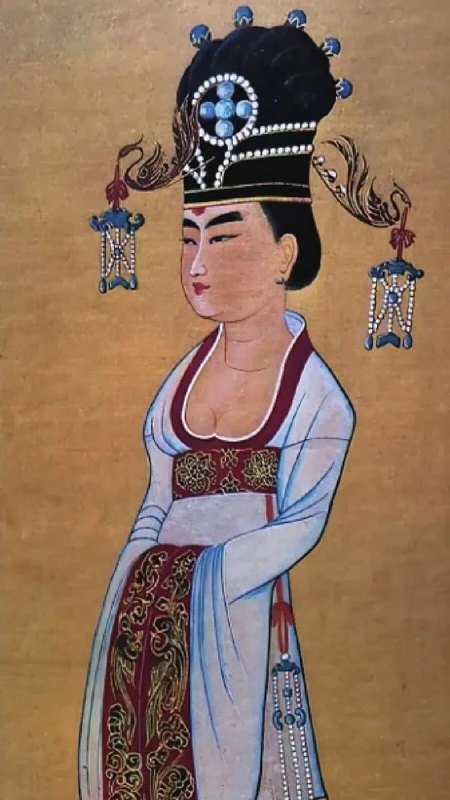
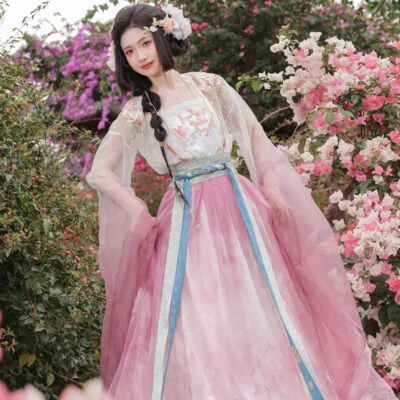
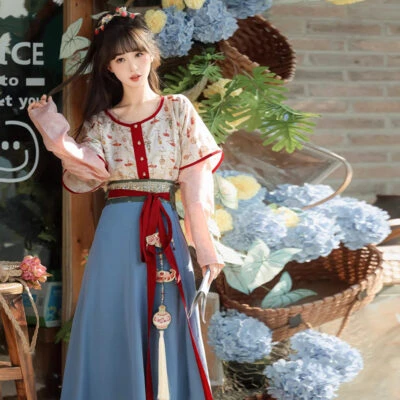
Tang women’s clothing dazzles because it refused to be simple. High-waisted skirts, sheer outer robes, delicate shawls, and tall hairstyles created a silhouette that felt light, confident, and richly layered. The colors were bright, the fabrics luxurious, and the accessories bold.
In Lady Guoguo’s (虢国) Spring Outing, noblewomen ride horses in narrow-sleeved jackets, splendid skirts, and flowing shoulder scarves. Their hair rises high, and their presence feels relaxed rather than confined. The scene captures a striking truth: elite Tang women could appear in public with grace, mobility, and style.
Court Ladies Adorning Their Hair with Flowers shows another side. Thin gauze sleeves, a chest wrap called a Hezi (诃子), long skirts, and large peonies in the hair give the figures a slow, sumptuous rhythm. Meanwhile, tomb carvings and murals add more variety, from tall crowns to gold and jade hair ornaments. Together they prove Tang fashion was not one look, but many.
Gold Thread and Poetic Light
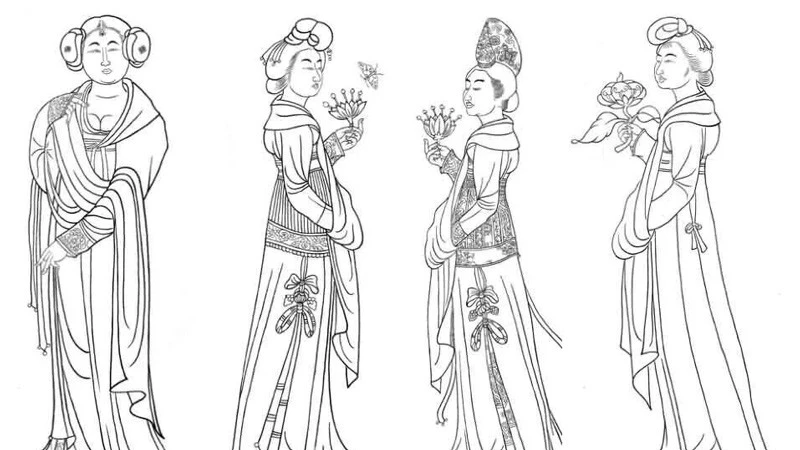
The craft behind these garments was extraordinary. Some Tang gold-wrapped threads measured only 0.06 millimeters across, finer than a strand of hair. Embroidered peacocks, kirins, flowers, and clouds shimmered on silk, catching light from a distance while revealing delicate work up close.
Poetry preserved what fabric alone could not. Du Fu’s Beautiful Women Walking describes gold-threaded peacocks, silver kirins, kingfisher ornaments, and pearl-buckled sashes. Li Bai’s lines turn silk into clouds and flowers into faces. Their verses make Tang dress feel airborne, as if the clothes themselves were dancing.
That combination of skill and imagination gives Tang clothing its lasting glow. The empire produced many kinds of silk, and its capital welcomed people from hundreds of regions. Foreign residents, traders, and envoys brought new shapes, patterns, and habits. Tang dress absorbed them, changed them, and sent its own beauty back into the world. That is why it still stands first in the memory of classical Chinese fashion.