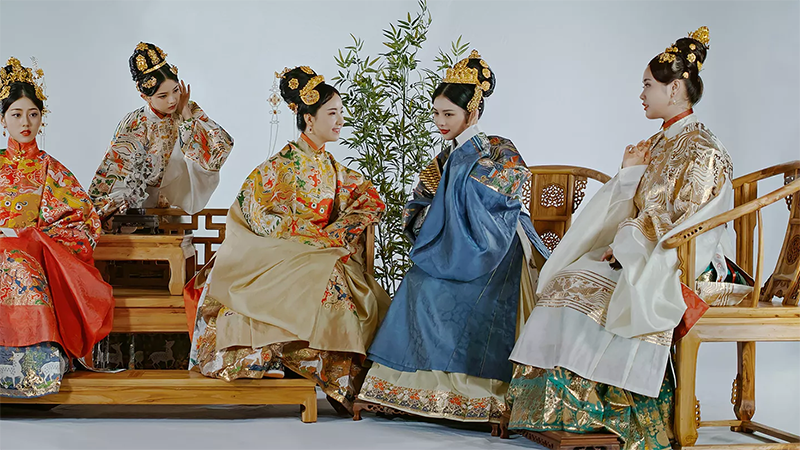
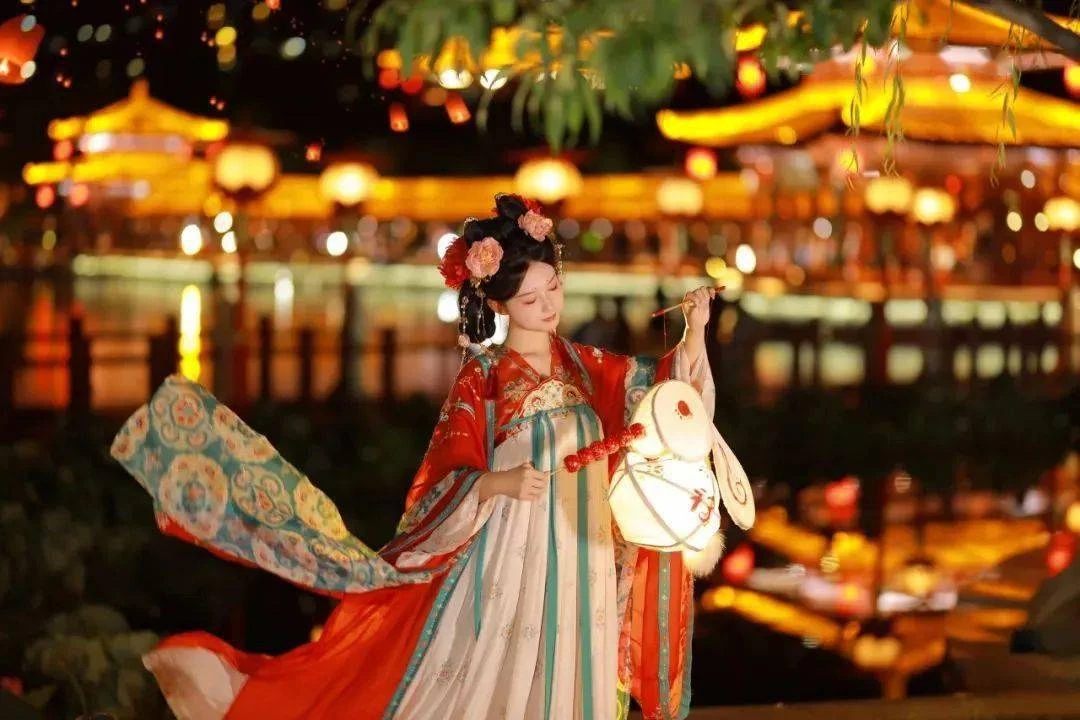
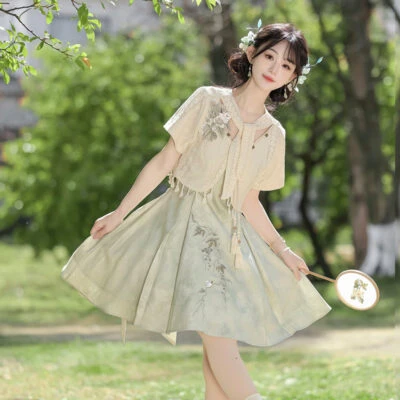
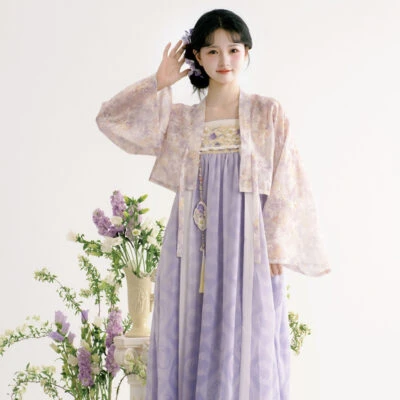
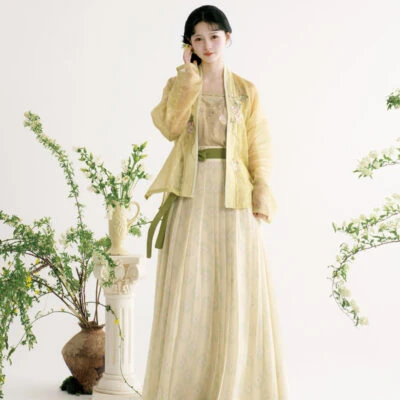
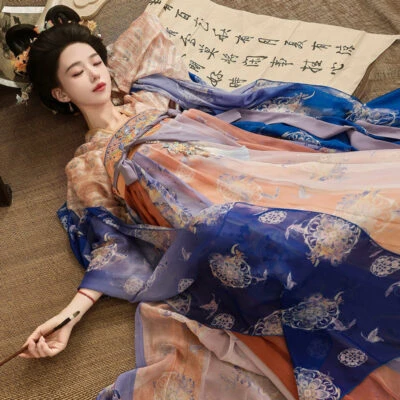
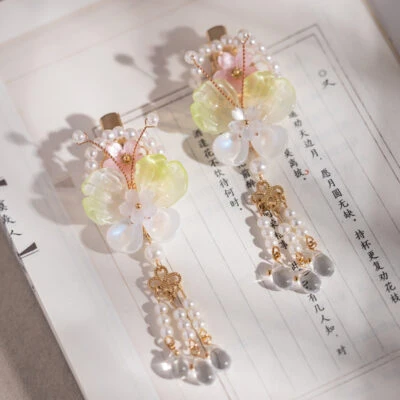
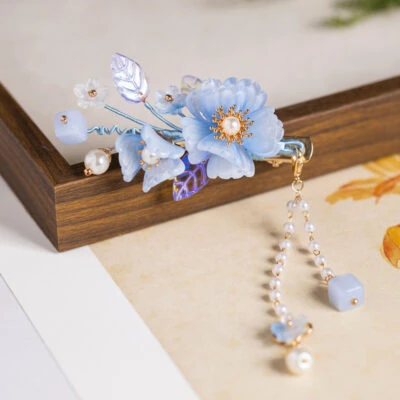
Shaanxi Ya’er’ai Industrial Group, one of the province’s largest Hanfu manufacturers, signed a lease of more than 2,000 square metres in the Chengjian Xinshidai tower on Dong Dajie, in Xi’an’s Beilin District, and registered a new subsidiary there, Shaanxi Jin Hantang Hanfu Makeup Co. The Beilin district government announced the move on 2 November through its investment cooperation bureau. A city-level association, the Xi’an Guofeng Culture Development Association, landed with the company, which holds the chair.
For a group that has kept its production lines in Qianxian county for years, the lease is the first time the display, makeup and sales end of the business sits inside the provincial capital’s core shopping district.

The Factory Stays in Qianxian
Ya’er’ai’s industrial base is in Qianxian, west of Xi’an, where the Qianling mausoleum of the Tang emperors anchors local tourism. Xianyang News reported on 23 October that the company built its product line around that heritage, drawing mural figures from Qianling into garment patterns and running production, display and study programmes as one chain. Digitised processes reproduce traditional work; computer-controlled cutters handle fabric; output reaches more than twenty provinces and exports to Central Asia.
The same capacity supports the Qianling scenic area’s all-scenario Hanfu offer, where staff work in Hanfu and visitors can rent robes, take a VR tour or join a study programme. A Hanfu trading centre under construction is planned to hold exhibitions, product launches, craft workshops and livestream commerce under one roof.
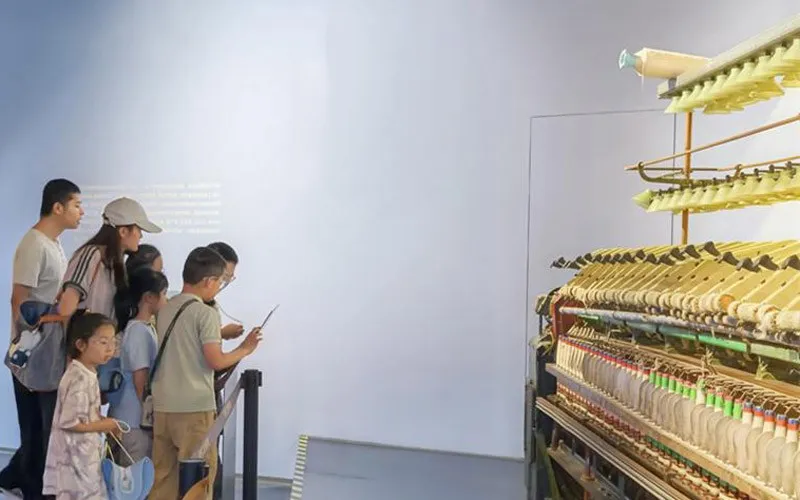
Shaanxi Daily added the capacity numbers on 4 October: the province has built 17 textile and garment parks, with distinct clusters in Xi’an, Baoji, Xianyang and Yulin. The Qianxian plant runs the full chain from printing, dyeing and embroidery through garment making to washing, sterilising and recycling, and turns out 500,000 Hanfu pieces a year. The county’s development zone lists the new textile and garment sector as a lead industry.
Why the New Company Is Named for Makeup, Not Sales
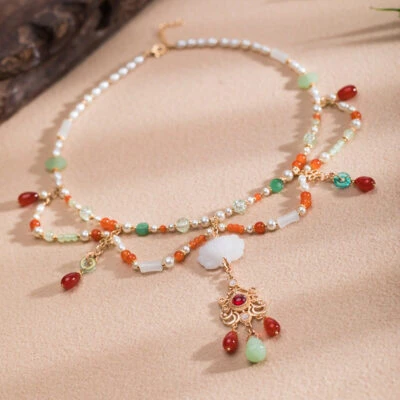
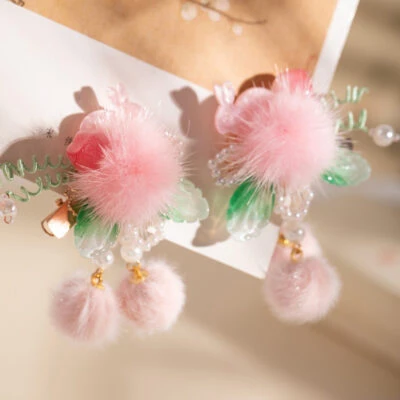
The subsidiary’s registered name is worth reading closely. It is a Hanfu makeup company, not a Hanfu retail company. Retail in Xi’an is crowded; what stays scarce is the service that reliably produces a usable photograph, meaning makeup, hair, the robe itself, accessories and a camera position. The district’s own outline for the site points the same way: display, makeup experience, online sales and cultural exchange in one platform.
A manufacturer entering the city centre is therefore not opening a warehouse. It is opening the service end. A visitor with half a day in Xi’an will not travel to a county factory; she will walk into a shop near the drum tower, be dressed, be photographed and leave. Dress her in a Qixiong Ruqun at ten in the morning and she can still reach the city wall by noon. The shorter that route, the higher the conversion, and a Dong Dajie address puts the service directly on the tourist path.
That logic only works because the upstream is already solved. Tang dynasty clothing is the commercial core of the Xi’an trade, and the city’s studios restock constantly; a maker with its own dye house, embroidery floor and pattern room can supply those studios and undercut the wholesale market at the same time.
The Paper Trail the District Office Published
Beilin’s investment bureau described its own work in three steps: matching the company to a building, closing the lease with the property owner, and handling registration. Staff went with the company to the district administrative approval bureau, helped with the subsidiary’s name approval and its business licence, and compressed the paperwork.
Those details matter more than the usual language about a welcoming business environment. A Hanfu company’s hard part is not capital. It is siting, because the site has to sit near a scenic cluster and inside a building that can carry a studio; registration, because the business scope spans garment manufacturing, rental and cultural services; and cross-district coordination, because the plant answers to Qianxian and the shop answers to Beilin. The two administrative territories do not connect on their own.
The bureau said it will keep tracking the subsidiary’s operations, and set its goal in the standard three phrases: brought in, landed quickly, developed well.
County for Capacity, Downtown for Experience
Read as industrial geography, the lease is less a single investment than a structural signal. Manufacturing needs land, equipment and a settled workforce, all cheaper in a county. Experience needs footfall, sets and immediate service, all cheaper in a city centre. Wholesale and logistics used to connect the two ends; direct stores and industry associations are beginning to do it instead. The association arriving alongside the company, with the company as its chair, suggests an interest in local agenda-setting as much as in a shopfront.
There is a transferable test in this for anyone watching the Hanfu trade. Whether a maker is becoming a brand shows up less in how many online stores it runs than in whether it will pay for the most expensive footfall in town to sell a service rather than a garment. Makeup, rental and photography cannot be shipped; they can only be delivered in person, at density. Once that density exists it pulls on fabric, embroidery and pattern work upstream, which is exactly what the Qianxian chain from dyeing to recycling is built to absorb.
One caveat belongs here. Almost every operating figure in this story comes from a government release or a local newspaper, with no independent audit behind it. The subjects, addresses, floor area, capacity and business lines above are reported as published. Revenue and market share are not estimated.