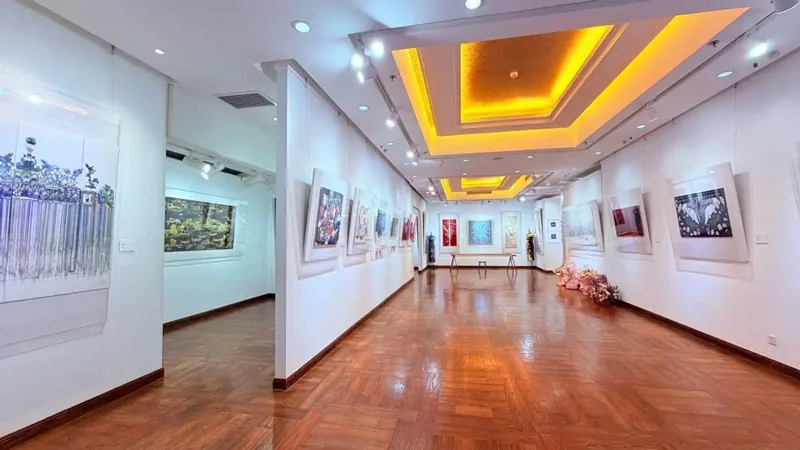
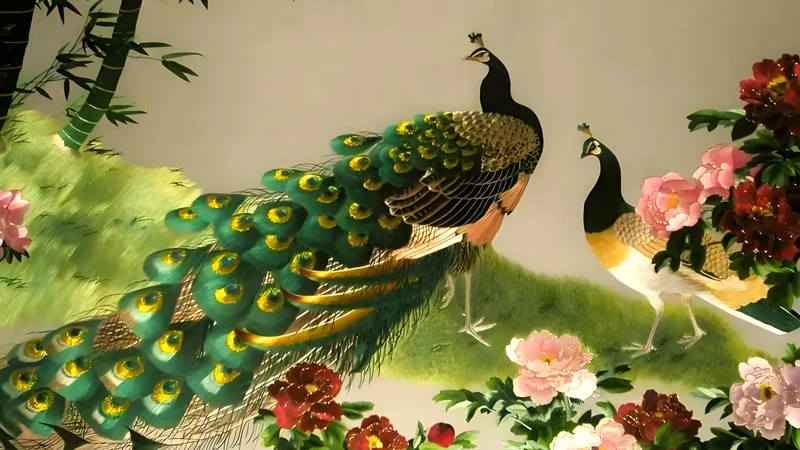
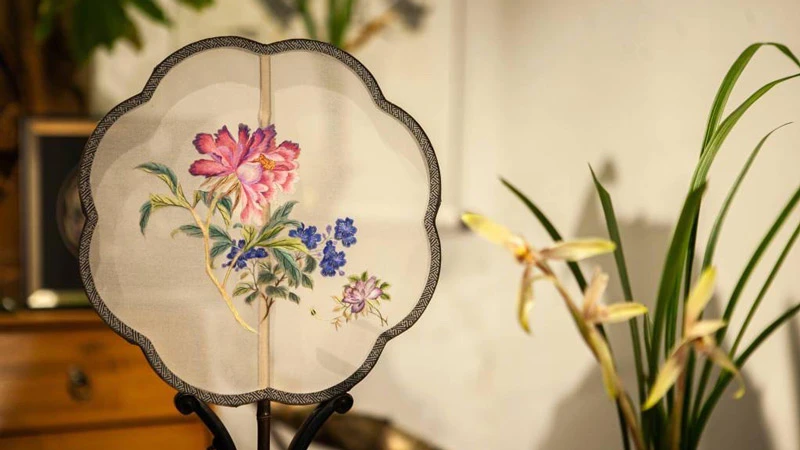
Twenty booths of Sichuan minority handicraft open at Mount Fortress Garden in Macao on 6 November, with the opening ceremony at 5 p.m. and the display running to 8 November. The lineup runs from Shu brocade and Shu embroidery in Chengdu to Qiang spinning and weaving in Aba, and the organisers have paired the display with four free workshops and four neighbourhood performances.
| Dates | 6 to 8 November 2026; opening ceremony 6 November, 5 p.m. |
| Venue | Mount Fortress Garden, the outdoor site of the Macao Museum |
| What it is | A Sichuan ethnic handicraft promotion with static display, live demonstration and hands-on sessions |
| Scale | 20 booths; 4 workshops at about 25 people each; 4 neighbourhood performance stops |
| Hours | 6 Nov 15:00 to 18:30; 7 Nov 10:00 to 12:00 and 14:00 to 18:30; 8 Nov 10:00 to 12:00 and 14:00 to 16:00 |
| Cost and booking | Workshops are free; register through the Macao One Account activity list, places allocated by ballot if oversubscribed |
Twenty Booths, One Textile Chain
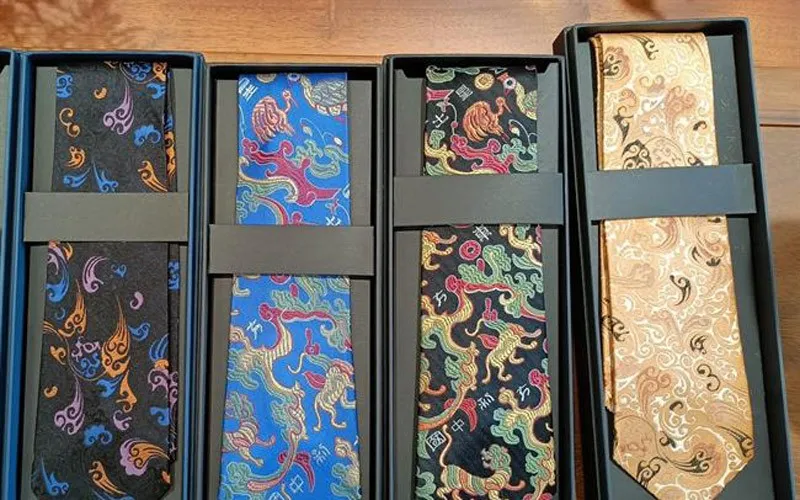
Read the booth list as a map of the province rather than a list of souvenirs. Chengdu brings Shu brocade and Shu embroidery, including a brocade panel titled Brocade City in Bloom and a line of brocade neckties. Deyang brings Mianzhu woodblock New Year prints. Ganzi brings Dege Maisu handicraft and hand-rolled Tibetan incense. Aba brings Qiang spinning, dyeing and weaving plus Qiang embroidery. Mianyang brings plaiting and binding from Beichuan and Pingwu, and Beichuan ink lacquerware. Liangshan brings lacquer decoration, Yi lacquerware and Yi embroidery. Santai paper-cutting and a set of lucky dolls fill out the display.
The value of that arrangement is that the links in one chain sit side by side. A visitor can follow silk filament from the mulberry feed through the drawloom that makes brocade, then the needle work that turns the brocade into embroidery, then the dyeing and weaving that Qiang households do by hand. Most craft exhibitions separate those stages into galleries; here they are within a few metres of each other. A demonstration area for inheritors sits in the middle, so the argument is made by hands rather than by labels.
Materials are on show as well as finished goods: hanks of reeled silk, flat gold thread, round gold thread, silver thread, peacock-feather thread and ostrich plume. The tools beside them are the unglamorous half of the craft, reeling frames, quilling wheels and warp frames, each with a screen explaining what the motion does.
Four Workshops and Four Neighbourhoods
The workshops run on 7 and 8 November at the Zheng Guanying Memorial Hall and the Macao Museum lecture hall, four sessions in all, two of them for parents and children, each capped at about 25 people. The subjects are Andou Tibetan incense, Mianzhu New Year print pulling, Tibetan gold script and Santai paper-cutting, all taught by inheritors from the province. Registration goes through the Macao One Account platform and places are drawn by ballot when a session is oversubscribed, which is the standard mechanism for free municipal workshops in the city.
A salon on the morning of 7 November at the Macao Cultural Centre takes the conversation off the display floor, with the theme set as how ethnic handicraft converts into contemporary products and reaches buyers. In the afternoons the programme moves into residential districts: the pavement at Seac Pai Van’s Harmony Square, the lakeside at Nam Van, the Three Lamps rest area and the forecourt at Rua de Musgo. Traditional music, dance and instruments carry the performance, with the Yi men’s group dance Yuanxing, or Setting Out, as the signature piece.
Why Macao Comes First
The series behind the event, a Sichuan Ethnic and Religious Affairs Commission brand that has already toured Guangdong and Zhejiang, is running its first promotion outside the mainland here. The official reasoning is straightforward: Macao holds a trade cooperation platform with Portuguese-speaking countries, so a handicraft that clears the city’s exhibition and retail channels has a second route into markets that Sichuan cannot reach directly. The event doubles as a warm-up for the second China Culture Performance Season.
For the crafts themselves the harder question starts after 8 November. Qiang weaving, Dege Maisu work and Yi lacquerware all depend on individual handwork, which means high unit value and long lead times, and neither fits a standard wholesale order. Two routes out are visible in the booths themselves: license a motif and a technique to an established brand so the handwork stays where it is while volume moves to a factory, or compress the technique into a small object that can be delivered in quantity, which is what a brocade necktie or a print-pulling session is.
The small object is usually the one that pays. A visitor who buys a paper-cut or pulls a print leaves with something made in front of them, and the workshop that produced it costs the organiser a few hundred renminbi and a room. Getting from that transaction to a standing order is the step these promotions exist to test, and the test is answered months later, in whether any booth leaves with a contract rather than a stack of business cards.