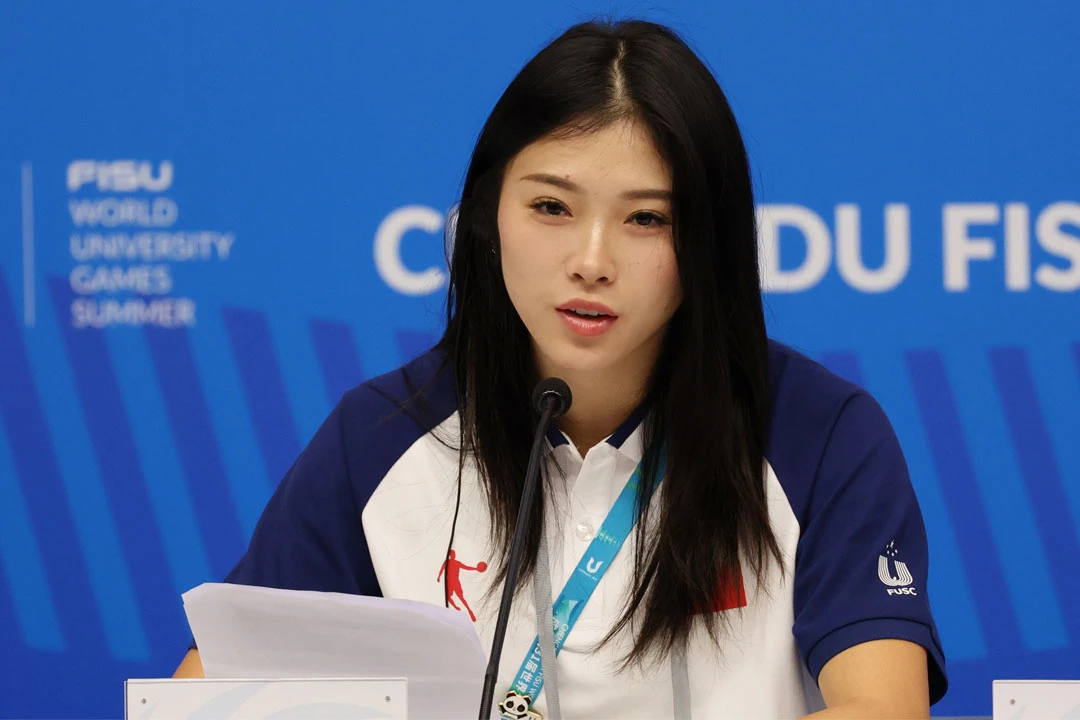
Huang Liyong, national representative inheritor of the Xunpu women’s customs in Quanzhou, Fujian, spoke at the 2026 Chinese Culture Tianfu Forum in Chengdu on 30 and 31 October. In an interview with Huaxi Metropolis Daily and Cover News she set out the rules behind the flower wreath tourists now queue for in the fishing village: how the three-piece set is matched, how the four-coil bun is built, and which requests she has refused since the crowds arrived.
The three-piece set, read from the earrings down
In Xunpu, a wreath is not decoration for its own sake. Huang brought traditional headpieces to the forum and laid them out one by one. For everyday work, women of the village wear a few simple fabric flowers, chosen because the colour holds and the material lasts. Only at weddings, or for a baby’s first month and first birthday, do three or four full strings of seasonal fresh flowers go on the head.
Flowers at a celebration carry obligation as well as ornament. Relatives give according to closeness: full sisters two or three strings, cousins and neighbours one or two, distant relatives a flower or two. Her wording was blunt. Receiving her flowers means she respects you, and arriving at the feast means you value her; the fresh blooms are the thread that holds a family together.
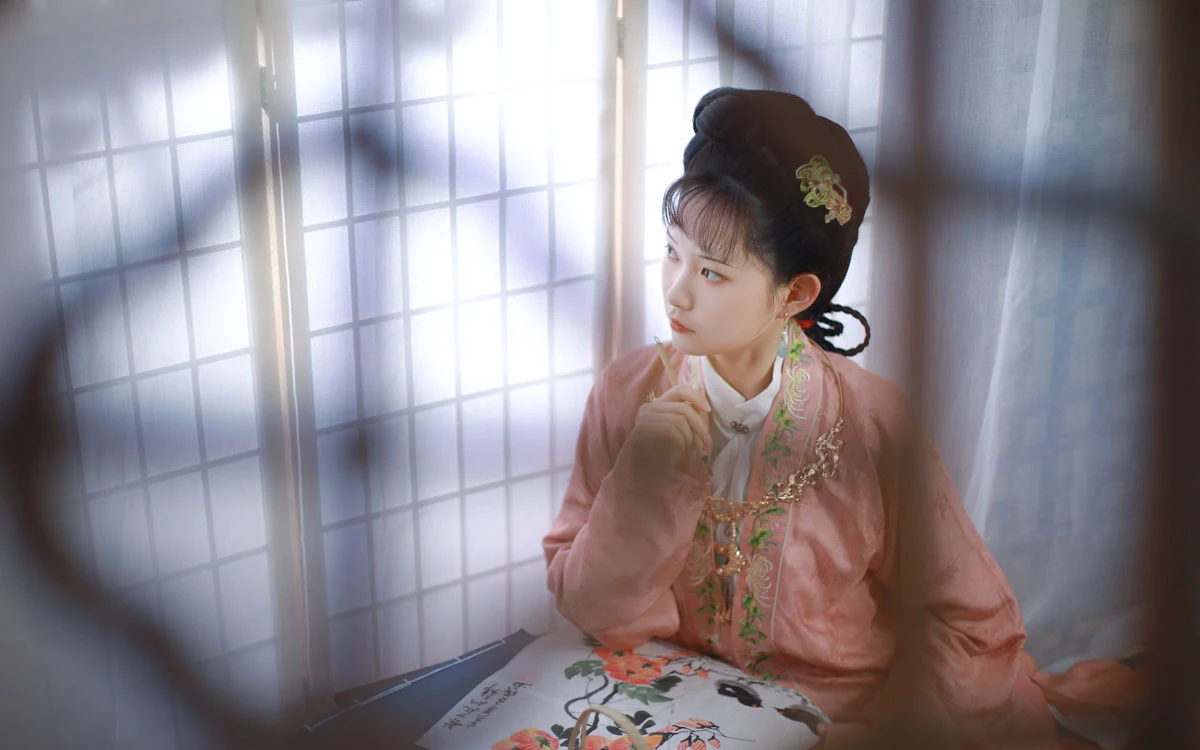
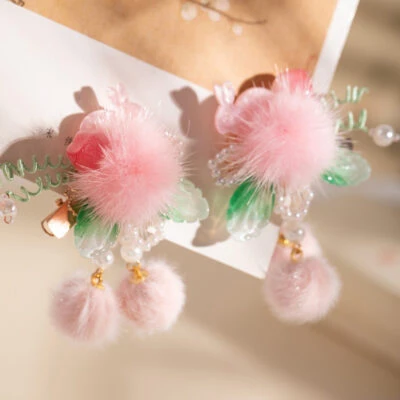
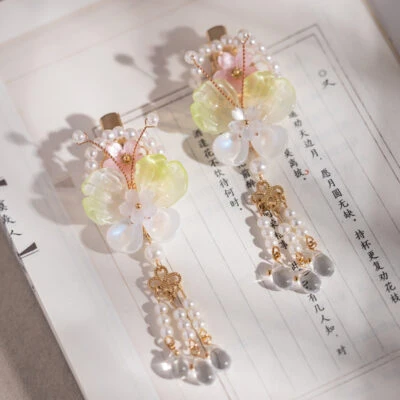
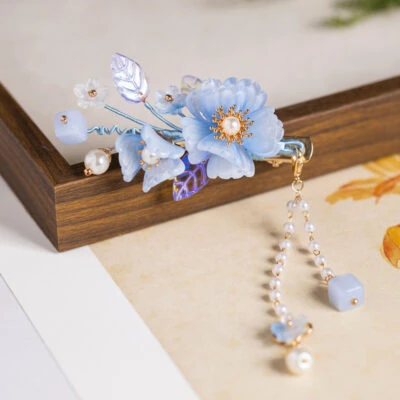
The fittings are more specific than they look. Symmetric side flowers say that a daughter is the golden branch and jade leaf of her parents’ hearts and that they stand behind her. Five small flowers in mixed colours stand for siblings reunited. Add the hawksbill comb handed down as part of a dowry, the bee-and-butterfly hairpin that speaks of rising before dawn to work and of a couple flying together after marriage, and the earrings, and the three essentials are complete. Earrings double as a rank marker: round hoops on unmarried girls, lilac studs on married women, and the mother’s lilac stud with a staff-shaped gold pin on the eldest, four generations under one roof.
A lifetime wound into four coils
Older women of Xunpu never cut their hair. Huang said her mother’s hair measured 1.8 metres when she was young. Younger women now wear long extensions, but the added hair has to be coiled into four complete rounds, and each round carries a stage of life: safety and health in childhood, courage in youth, the middle years spent contesting the sea to keep the family safe, and comfort in old age.
Several steps are never trimmed. The bun must run to four full coils, with the bone hairpin, the red pin and the red cord all present. Extension cord is made by hand and takes days of oiling and sun-drying. Fabric flowers are sewn in four layers so that they stand upright, because a flattened one collapses the moment it is worn. Drop one step and the wearer may not notice, but the maker does.
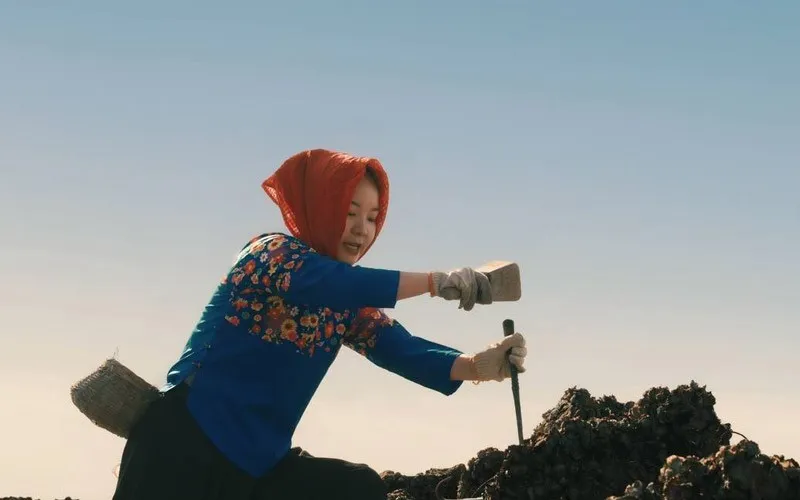
Huang is Xunpu-born. She left a kindergarten teaching post in 2011 and opened the Qingtian Zanhua studio in the village, becoming the first woman there to work the craft full time; online she is known as Sister Qingtian. Early in 2023 a wreath she built for the actress Zhao Liying (赵丽颖) travelled widely, and several hundred photo studios appeared in the fishing village within months.
The boom redrew the village economy. Huang recalled that many people in Quanzhou itself had never heard of the wreath, and that women in their seventies and eighties used to go down to the tidal flats in the sea wind to dig oysters. Now they sell flowers at their door and pin wreaths on visitors when the weather turns, and the income is steady. Younger residents have come back, women learning styling and young men learning photography. Through the China Women’s Development Foundation’s Genius Mother programme she trains stay-at-home mothers, disabled women and women from low-income households in making fabric flowers or building the bun, and one deaf student, unusually sensitive to colour, now sells through her own photographs.
Taboos, refused orders, and a grammar of hair
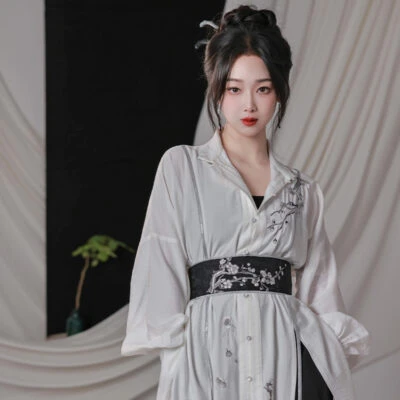
Traffic brought a different kind of risk. Photo teams arrived, and some stylists, working only for a striking image and without local knowledge, broke rules they did not know existed. Huang gave three examples. Shops have placed side flowers at the centre top of the head, which locally reads as a knife planted above it. Clients have asked for white cord, used only in mourning, to match a dark outfit, or for heads packed with black, white and blue blooms. Minnan people favour red, she explained: red-brick houses, red clothes, red flowers, all of it a fishing family’s wish that the boats come home.
Her answer has been to refuse the order. Tradition carries hope, she argued, and should not be used to mislead the public in pursuit of traffic; a culture kept for more than a thousand years should not be wrecked for a season of revenue, which would cost both conscience and livelihood. A Zanhua association has since formed locally, issuing technique standards and assessment criteria for inheritors, which amounts to drawing a boundary around the photography business: photograph freely, but leave the form alone.
Read as a system, the wreath works like a grammar. Flower position carries meaning, material marks the occasion, the number of strings records the relationship, the coils mark a life stage, and the earring states status. Unlike the chinese hairstyles catalogued in museums as a sequence of dynastic fashions, this one encodes a single biography, and pulling any element out to make it prettier strips the others of their function. Much of the styling sold to visitors sits closer to stage makeup than to traditional chinese makeup, which is why the association bothered to write the rules down. For a traveller, there is a simple test at the door: a shop that asks what occasion the flowers are for probably knows the grammar.