In Tang China, admiring a poet could look like a full-time job, a medical experiment, or a tattoo convention. There were no phones, trains, or fan clubs. Yet people walked for months, swallowed ashes, and turned their bodies into reading material. Their methods were strange. Their motives were not simple. They wanted nearness to talent, maybe a little of it for themselves. This is not a parade of oddities. It is a story about how literature lived in streets, inns, and skin.
1. The Long Pursuit
Wei Wan (魏万), a man from Wangwu Mountain (王屋山), read Li Bai (李白) and lost interest in ordinary life. He quit his job, left home, and followed the poet’s travel route. With no location app, he asked innkeepers and travelers for news. He heard Li was in Liangyuan (梁园). He rushed there. Li had gone. He heard Li was in Shandong (山东). He rushed there too. Again, empty rooms and cold tea.
Wei did not give up. He took a boat along the canal and kept moving south. Half a year passed. He covered about three thousand li. At last, in Guangling (广陵), he caught Li Bai. Wei pulled out a long poem in forty-eight sections, a homemade fan book handed to the author in person. Li was moved. The two became friends despite the age gap, and Li trusted Wei with his manuscripts.
Later war scattered many texts. The Li Hanlin Collection (李翰林集) helped save a large body of Li’s work. Wei began as a pursuer and ended as a guardian. He did not just chase a star. He helped keep the poems alive. That is a rare kind of fan devotion: loud feet, quiet use.
2. Eating the Master
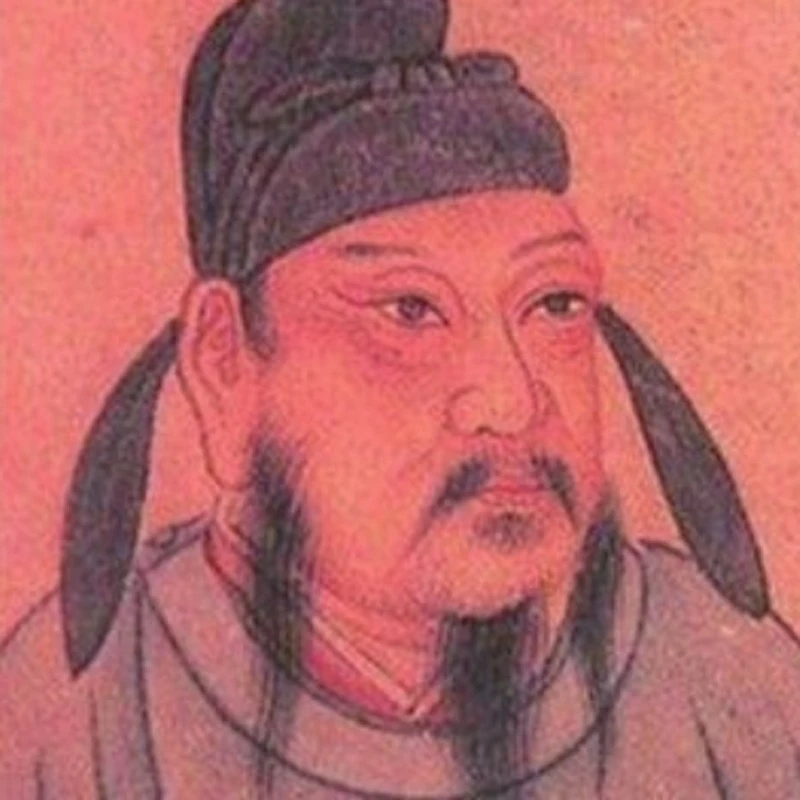
Zhang Ji (张籍) adored Du Fu (杜甫) in a way that sounds like a dare. He found a copy of Du’s poems, burned it, mixed the ashes with honey, and swallowed the paste. Then he wiped his mouth and said the words would change his guts. Modern readers may wince. Tang readers might have understood the logic: you are what you eat.
Did the bowl make him a poet? No. Zhang later became a notable voice in his own right, writing about ordinary hardship and small lives. His real tools were reading, copying, and revision. The ash story survives because it makes admiration physical. It asks a blunt question: what would you do to make a hero’s words part of you?
Fans today buy shirts and posters. Zhang tried digestion. The method was absurd, but the wish was familiar. He wanted Du Fu’s seriousness to enter his bones. He got there by practice, not by honey. Still, the story gives us a vivid picture of a reader who refused to keep his love at a safe distance.
3. Poetry on Skin

Ge Qing (葛清) was a minor guard in Jingzhou (荆州) and a devoted reader of Bai Juyi (白居易). His fandom was visible from the neck down. He covered his body with more than thirty of Bai’s poems, each with a small illustration. Friends could point at a spot, and Ge would name the line and explain the picture. His back became a catalog with legs.
One image showed a person holding a cup among chrysanthemums. Another showed trees hung with fine dyed cloth. People called him a walking poetry map. The nickname was teasing, but also accurate. Ge had turned a book into a public performance. He could not carry a scroll everywhere. So he carried the scroll in his skin.
Modern fans may hesitate for years before tattooing a name. Ge wore a whole collection. Bai Juyi might have written him a poem, then told him to keep the needles clean. The tale is funny, but it shows how close reading can become. For Ge, a line was not only something to recite. It was something to live inside.
4. When Obsession Turns Strange
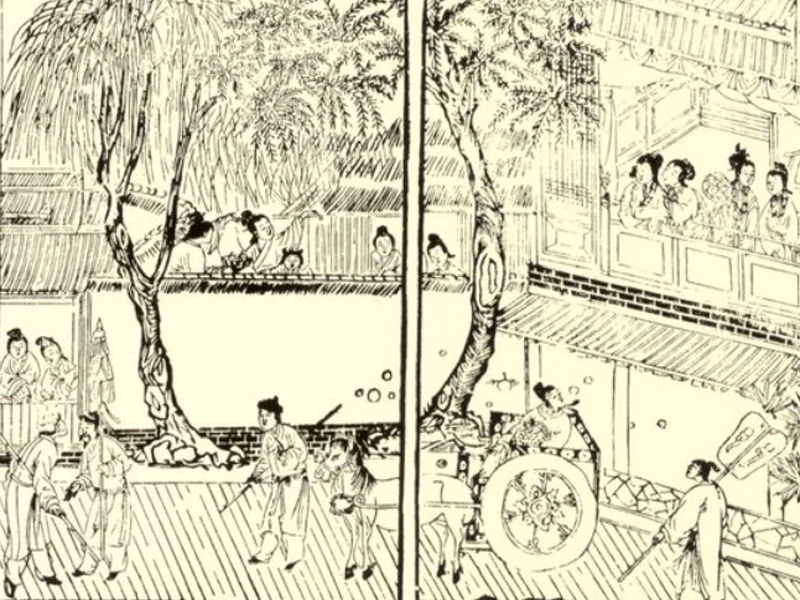
Pan An (潘安) was so admired that women linked arms to block his path, and older admirers threw fruit into his carriage until it overflowed. Wei Jie (卫玠) was so fragile and so stared at that crowds pressed around him until he died. People called it being looked to death. Praise had become a physical force, with no off switch.
Su Shi (苏轼) had a fan named Zhang Yuanbi (章元弼). Zhang read Meishan Collection (眉山集) day and night. His wife complained that he ignored her. He divorced her and said he loved Su more. Tang Xianzu (汤显祖) had a female reader who fell deep into The Peony Pavilion (牡丹亭). She vowed to marry him, traveled far, and waited by a lake. When she finally saw a man in his fifties, not a young romantic hero, she jumped into the water. People pulled her out.
What were they chasing? Not only a person. They chased a voice that made daily life feel larger. Wei Wan wanted Li Bai’s untamed talent. Zhang Ji wanted Du Fu’s heavy concern for people. Ge Qing wanted Bai Juyi’s plain, piercing lines. Their methods were clumsy, bodily, sometimes foolish. But they turned admiration into action. A hero can light the road. The feet still have to do the walking.