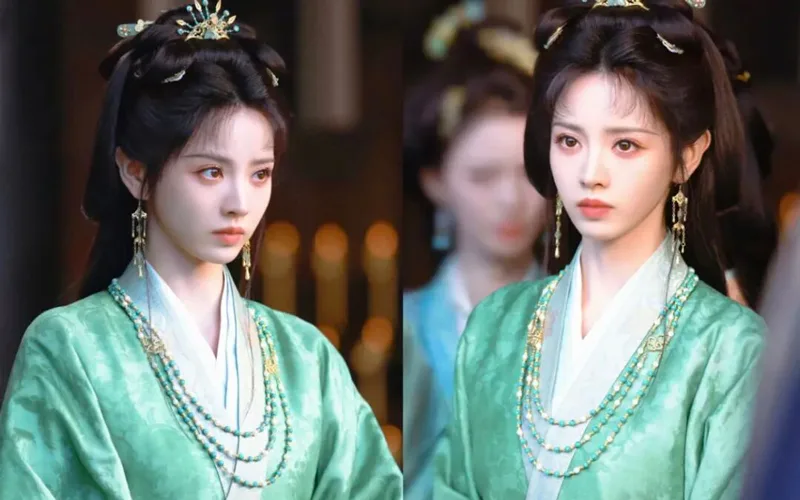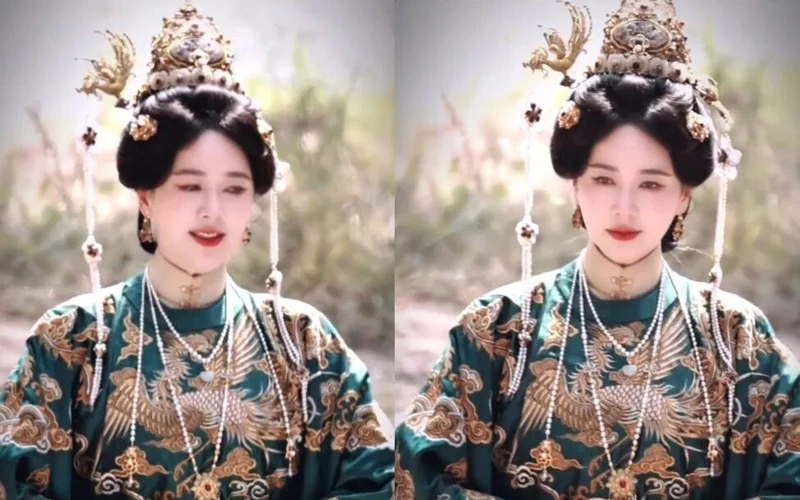
A behind-the-scenes photo from Daobi Niangzi (刀笔娘子) has given viewers a sharp first impression of Zuo Xiaoqing (左小青) in court dress. She stands in deep green, with a gold phoenix and pearl hair ornament above a calm face. The image does not rely on action. It sells rank, age, and restraint at once. For an actor once known as a rhythmic gymnast, the posture makes sense: shoulders open, neck long, weight balanced. She became familiar as Juanzi (娟子) in Chinese Style Divorce (中国式离婚). That history matters less here than the silhouette. The costume does the talking first; her stillness finishes the sentence.
Pearl Hair Ornaments
The most eye-catching piece is the gold phoenix pearl pendant hairpin fixed to a Ming-style hair bun. In Ming ritual dress, such ornaments signaled rank. A royal version could use a phoenix head; titled ladies often wore pheasant forms; ordinary women were not supposed to wear pearl pendants at all. The drama bends history for visual force. Its pearl strands fall near the chest, longer than the shoulder-length examples seen in Ming portraits. That extra length catches light and movement, making the hairpiece feel alive even when she is still.
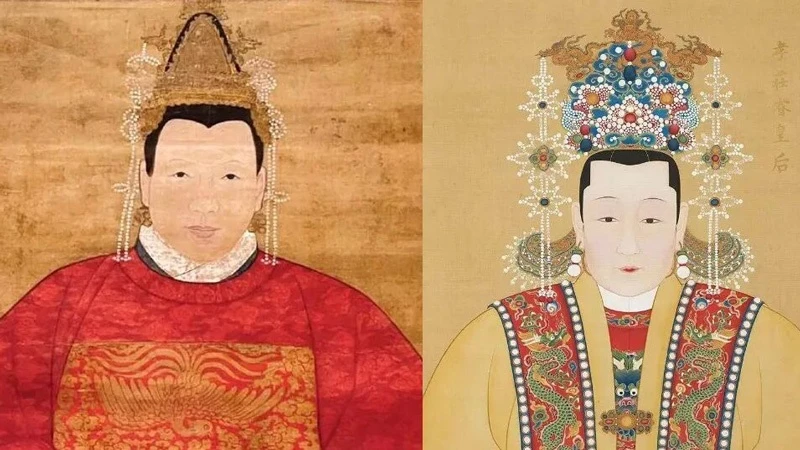
The hair bun itself is built from gold and jade hairpins, but the design avoids clutter. Each piece has a job: the phoenix marks authority, the pearls soften the gold, and the side pins hold the shape. Zuo Xiaoqing’s straight back helps. A weaker posture would let the ornament look heavy. Here, the weight reads as rank. The hairpin does not simply decorate her; it explains why other characters would step aside.
Late Ming portraits sometimes show women wearing pearl pendants on both sides of a bun. The drama echoes that habit without copying a single painting. It keeps the recognizable outline and changes the scale. The result is a costume choice that works on camera: clear at a distance, detailed up close. It also gives the character a public face before she speaks.
Face and Necklace
The makeup refuses loud color. Brows are smoothed into a gentle line, with no sharp peak. Lips carry full red, but the finish stays matte. Skin is even and quiet, without glitter or bright highlight. This choice fits Ming portraiture, where dignity often comes from control rather than display. The face looks older than a young bride’s, which suits a senior figure in a court family. Nothing on the cheeks asks for attention; the eyes hold it.
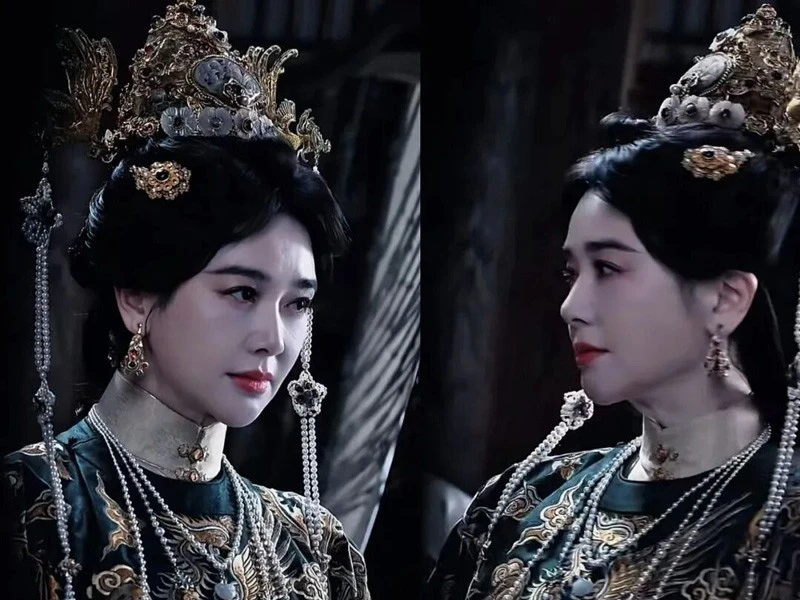
Around the neck, two layers of pearl necklace create a second frame. The short strand sits close to the throat; the long one drops toward the chest, ending in a gold and gem pendant. Pearls above and pearls below answer each other without matching exactly. The design is a production invention, not a strict historical copy. That freedom helps. It ties the headpiece to the robe and keeps the upper body from looking top-heavy.
The necklace also controls how the viewer reads age. A single tight choker would feel young and severe. Two soft layers add weight and patience. They suggest a woman who has already earned her place. When she turns, the lower strand moves a little later than the head. That small delay gives her a quiet presence, even in a still photo.
Green Robe Signals
The robe is deep green, covered with gold phoenix and cloud patterns. Green was common for titled women in Ming daily dress, and court casual wear did not reject it. The drama chooses a dark shade instead of festive red. Gold embroidery on that ground gives a low, steady shine. It marks royal connection without turning the character into a walking ceremony. The color also separates her from younger women in brighter dress.
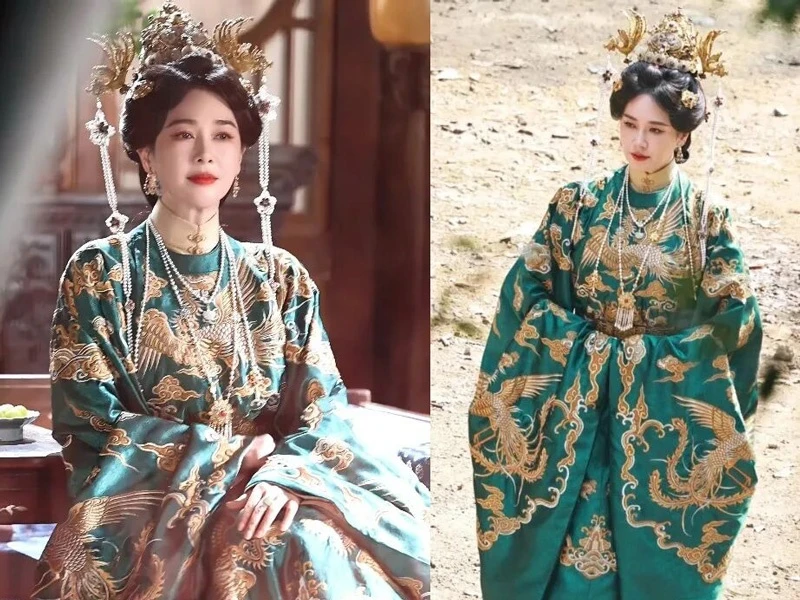
Below, a red horse-face skirt with woven gold creates a clean break. Red and green meet at the waist, but neither color shouts. The contrast sets upper and lower body apart, which matters in wide sleeves and long lines. The cut stays loose. No tight waist is forced into the shape. Ming dress often hides the body inside cloth, and this costume follows that idea. The person matters more than the figure.
Every major element repeats the same message. The phoenix hairpin says royal rank. The phoenix embroidery says it again on the robe. The dark green and doubled pearls add age, rank, and reserve. A viewer can read her position in one glance, before any plot arrives. That is useful costume design: it gives the audience a map.
Still, the look would fail on a weaker frame. Zuo Xiaoqing stands tall, with broad sleeves falling from level shoulders. In a crowd, she becomes the visual center without moving. The costume supplies the symbols; her bearing supplies the pressure. Does the look work? Yes, because it never begs. It waits for the viewer to look closer.