A catalogue of 800 heritage projects tells a visitor nothing about where any of them sits in daily life, so the ninth China Intangible Cultural Heritage Expo cuts its floor by setting instead of by category. The fair runs from 6 to 10 November at the Chongqing International Convention and Exhibition Centre in Nanping, the first time the biennial national event has been held in western China. More than 800 projects from 31 provinces, regions and municipalities plus the Xinjiang production corps are on show, 139 of them from Chongqing, and every hall and riverside performance is free.
| Dates | 6 to 10 November 2026 |
| Venue | Chongqing International Convention and Exhibition Centre, Nanping; riverside events at Danzishi Square, Chaotianmen Square and Nanbin Road |
| What it is | Ninth China Intangible Cultural Heritage Expo, held every two years, first edition in western China |
| Scale | Over 800 projects from 31 provinces, regions and municipalities plus the Xinjiang production corps; 139 Chongqing projects, 96 inside the themed zones |
| Tickets | Free, including all riverside performances |
| Programme | Five exhibition zones, 12 staged performances, an ICH night, a taiji demonstration, more than 30 linked citywide events |
Five Zones Cut by Daily Life
Organisers count five exhibition zones. Four of them are themed shows aimed at ordinary visitors, each answering one question about position in modern life: worn on the body, eaten, used for health, or recorded by technology. The fifth gathers the opening display on protection work and the provincial stands, where each province shows its workshops and how it trains inheritors.
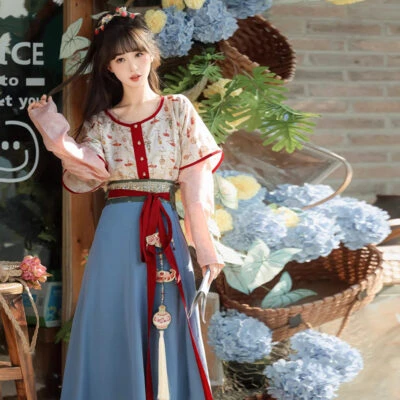
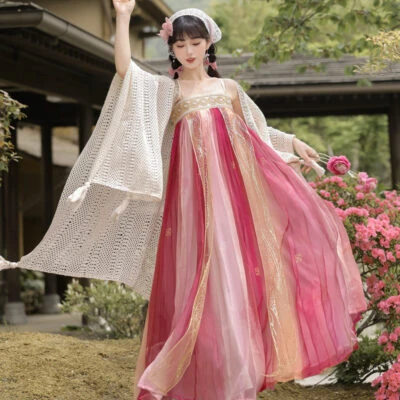
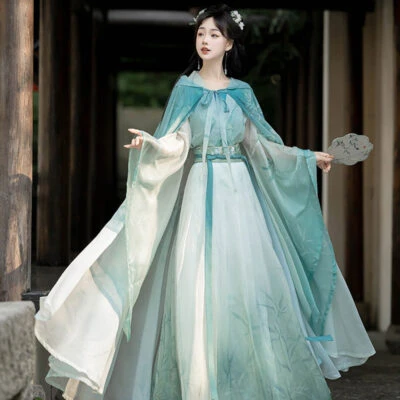
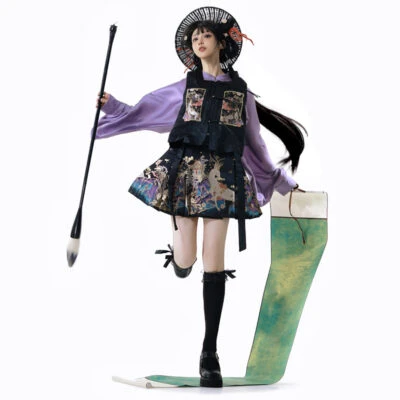
Dress comes first. The Guofeng Yayun zone builds rooms rather than cabinets, staging scenes of home and daily use with traditional chinese clothing, furniture and tableware in place, then adds merchandise and film tie-in products. Its purpose is stated as display, experience and transmission in one space, which in practice means a visitor can see how a piece of embroidery behaves when it is worn and paired instead of pinned behind glass. Anyone who has only met these crafts in vitrines will find the change of setting more informative than any label.
Food takes the largest single share of the floor. The Baiwei Shanhe zone gathers more than 100 food-related heritage items, with the eight great cuisines, Hong Kong and Macao flavours and time-honoured snacks in one hall, and inheritors cooking in front of visitors rather than posing for photographs. Traditional medicine occupies the next zone, pairing herb specimens with on-site consultation. The last zone is about technique applied to heritage itself: digitisation for recording, display and interaction, including the scanning and modelling work that keeps a craft’s motions on file after a master stops teaching.
Concerts on the River, Taiji by the Gate
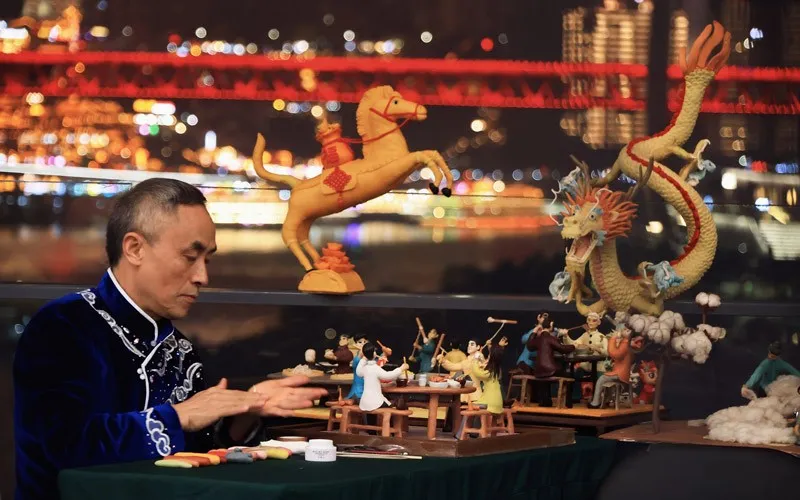
The programme started before the official opening. On 30 October a riverside ICH night ran at Nanbin Road with drum ensembles, high-pole dragon dance, Sichuan opera face-changing, Guqin, ballad singing and clapper talk, while a dough-figurine maker shaped horses and dragons on the spot. Organisers treat that evening as the expo’s prologue, and the setting did half the work: performers in traditional dress against river water and tower lights.
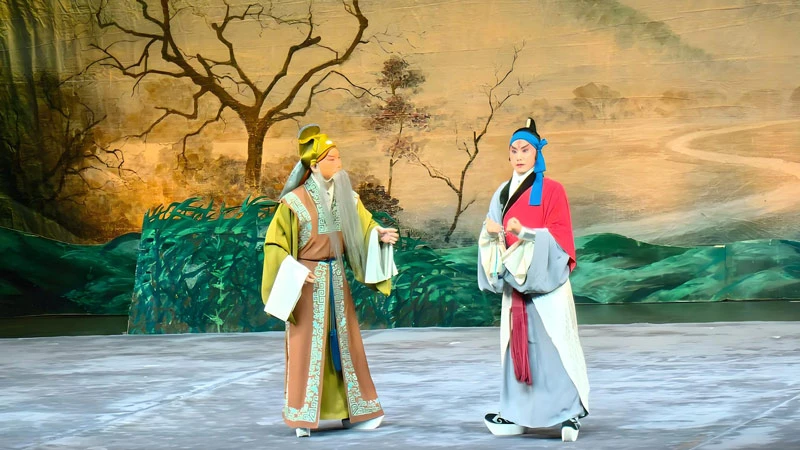
Two set pieces follow inside the official dates. On the evening of 6 November, Danzishi Square hosts the main ICH night with 14 national programmes, a traditional costume show and a drone light display over the river. On the morning of 7 November, Chaotianmen Square hands the floor to taiji: inheritors of eight schools lead 600 enthusiasts through a joint demonstration. Indoors, 12 staged performances run from 6 to 9 November, drawing on Xingguo folk song, Xinjiang muqam, Korean farmers’ dance, guzi yangge, Fujian puppetry, Suzhou pingtan and Heluo drum, with Chongqing’s own river boatmen’s work songs and Mudong folk songs in the mix.
What a District Actually Runs
Nan’an district is the host, and its load is heavier than the title suggests: opening and closing ceremonies, six exhibitions and performances, one trade matchmaking session, plus an ICH night, a food development workshop, a study programme for children, and outreach into communities, scenic areas and schools. A consumption month covering the district’s main attractions and shopping areas runs alongside. Across the city, more than 30 linked events include the fifth Sichuan-Chongqing quyi showcase, an academic forum on heritage, and a Three Gorges heritage market.
Official framing is administrative and unusually specific. The point of hosting in Chongqing is to rebalance where the national fair lands, lift protection levels across the west, and give Ba-Yu heritage a national stage. Eight working groups and 26 execution plans were set up to deliver it, which is the kind of number that explains why the zones are cut by life setting: a five-day fair with one hall and 12 performances cannot be browsed project by project, so it has to be organised by where a craft sits in a day.