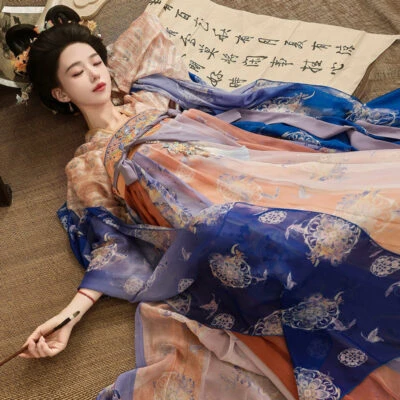
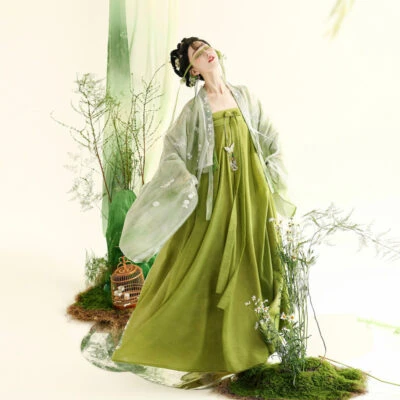
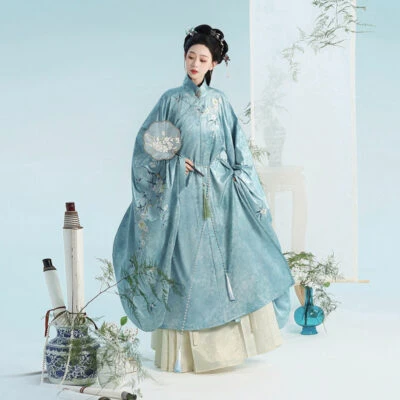
An exhibition of women’s ornaments and garments from the Ming and Qing dynasties through the Republican era opened on 30 October at Baojuzhai on Di’anmen Outer Street in Beijing’s Xicheng district, and runs to 28 February 2027. Close to 300 pieces from the Beijing Cultural Relics Exchange Centre fill a single ring-shaped route. What earns the show a visit is its filing system rather than its count.
| Dates | 30 October 2026 to 28 February 2027 |
| Venue | Baojuzhai, 83 Di’anmen Outer Street, Xicheng district, Beijing |
| What it is | A supporting exhibition of the 2026 Beijing China Cultural Relics International Fair |
| Scale | Close to 300 women’s ornaments and garments, drawn from one institutional collection |
| Categories | Hairpins, Buyao, earrings, necklaces, bracelets, rings, embroidered accessories |
| Layout | One loop in dressing order: head, ears and neck, fingers and wrists, then garments |
Body Order Instead of Material Order
Costume exhibitions usually sort by material or by dynasty: gold in one case, kingfisher-feather inlay (diancui) in the next, then Ming, late Qing and the Republic in sequence. Visitors walk past clusters of similar objects and leave remembering the categories. This show dropped that order and adopted the sequence in which a woman put things on: head first, then ears and neck, then fingers and wrists, and finally the clothes.
Swapping the order changes what a visitor does with their eyes. Following the loop once replays a dressing routine, from the first hairpin to the last embroidered robe. Hairpins, earrings and bangles that sit in separate cabinets in a material-based show land next to each other because the body parts are next to each other, and a complete set from one period becomes legible as a set rather than as four unrelated objects. The exhibition describes its own method as breaking with conventional classification and carrying aesthetic change along the act of wearing.
A second layer runs underneath the first. Ming, late Qing and Republican pieces are braided into the same loop, so every few steps the visitor changes period as well as body part. The same category across three eras can be compared front to back, which a cabinet sorted by material cannot deliver.
Why the Clothes Come Last
Of the four segments, garments close the loop for a reason. Head, ears and neck, fingers and wrists all handle detachable ornaments: small, dense in technique, each piece complete on its own. Clothing handles decoration stitched into fabric, which cannot be separated from the material, from the wearer, or from a system of dress.
Putting the hardest segment to exhibit at the end also does work on attention. By the time a visitor arrives there, the eye has spent three segments on motifs, stitch density and colour pairing. The payoff is practical rather than ceremonial: ornaments and garments share one route instead of occupying two halls, so questions such as which hairpin suits which collar, or how an earring answers the embroidery on a lapel, can actually be answered by looking.
Two Passes Through the Loop
Four months is a long run even for a Beijing winter, and this is one of the few costume shows in the city that does not have to be seen in a hurry. Volume is modest at close to 300 pieces, but the categories are narrow, which suits a systematic refresher on how ornament relates to dress rather than a tour of trophy objects.
Walking it twice pays. The first pass follows the exhibition’s own order, body part by body part and period by period. The second reverses direction, starting among the garments and working back to the head, watching one technique perform on different body parts: metal chasing on a hairpin against the same skill on a bangle, embroidery on a robe against embroidery on an accessory. Two passes leave a firmer sense of Ming, Qing and Republican ornament than reading every label once.
The venue sits on Di’anmen Outer Street, beside Shichahai and the Drum and Bell towers, so the show pairs with half a day of lanes and old shops. Its run crosses New Year and Spring Festival, when queues lengthen; a weekday visit is the calmer option for anyone going only to look.