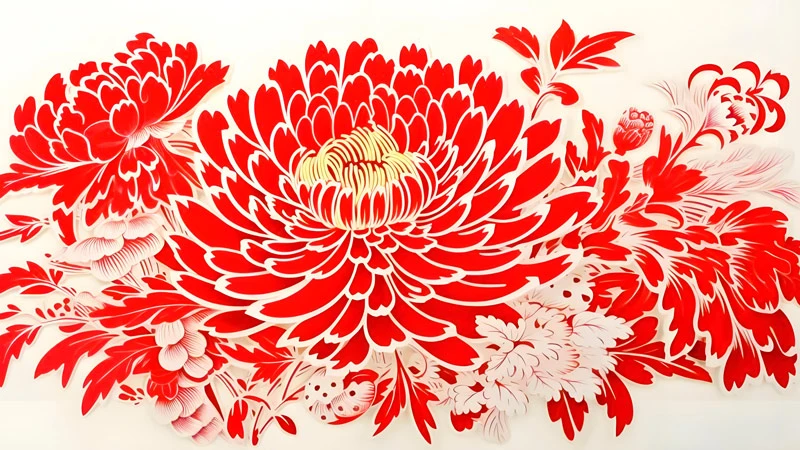
A Tuanshan is a flat, rigid fan whose handle and face share one axis, built on a bamboo or wooden frame with silk, gauze or paper pasted over it. Two living workshop systems still produce them: Guilin in Guangxi, where a single bamboo is split into dozens of ribs and the ribs themselves become the structure, and Suzhou in Jiangsu, where a mortise-and-tenon frame carries a stretched silk face. The first tests knife work. The second tests paste work and painting.
Starting From Bamboo, or From a Frame
Making a Tuanshan means picking one of those routes before any tool comes out, because the two systems start from different materials. Guilin’s version begins with a bamboo and ends with a woven rib cage; Suzhou’s begins with a frame and ends with a painted silk panel. Nothing in the middle stages is shared.
Guilin’s workshops produce three variants. The round-bamboo split-rib fan and the flat-bamboo split-rib fan keep the ribs and handle continuous, divided only by a bamboo node, with the face pasted on afterwards. The inserted-rib fan uses a drilled ring instead of a split bamboo. Suzhou’s silk court fan, called a wan fan or luo fan in older texts, comes in round, hexagonal, rectangular and waist-round shapes; its frame is joined without nails and its face is pasted from damask, gauze or plain silk before painting and edge binding.
The shape and history layer is already covered in our guide to the history and shapes of the Tuanshan, so this page stays on materials and hand movements. What the histories compress into a sentence is, in the workshop, a sequence of decisions about thickness, moisture and timing.
Guilin’s Split-Bamboo Route, Stage by Stage
Guilin’s round-bamboo work runs past twenty processes. They group into five stages, and every one of them can ruin the fan on its own.
- Select and condition the bamboo. Local li bamboo, moso or mian bamboo is cut at three years or older, then treated against insects and mould. Before splitting, the culm is soaked to soften the fibres; dry bamboo snaps under the knife.
- Split the ribs. A culm about one centimetre across is divided into eight segments with an eight-petal splitting knife, the tool Qiu Guangchu developed to replace repeated hand scoring. The inner yellow layer is scraped away, then the green outer wall is split lengthwise into thirty to fifty ribs, each roughly 0.5 to 1 mm thick. Ribs must match in width and length; this cut decides the fan.
- Bind the rib cage. The split bamboo is pinned to a mould with locating pegs and bound with cotton thread, worked over and under the ribs in crossing passes until they fan out and hold. Uneven spacing here shows up later as a warped face.
- Paste the face. Rice paste is brushed evenly onto a single-sided paper, the rib centre is aligned, each rib is nudged into even spacing, and the paper, cotton or silk is laid over. A blunt brush beats the air out from the centre outward, and the fan dries in the air for three to four days.
- Trim and bind the edge. A fan-shaped mould guides the trim. A strip of adhesive is laid along the rib-to-face junction, a long paper binding presses over it, and the fan is weighted and dried.
Two details explain why the local industry could scale without losing the technique. The eight-petal knife turns a cut that once took several passes into one, and the peg mould replaces fingers as the clamp during thread binding. Qiu Yanzhen, who took over the family workshop in 2009, describes both as shop-floor inventions rather than heritage set pieces. Our earlier coverage of DIY round fans of intangible cultural heritage follows the visitor-facing side of the same craft.

Suzhou’s Eight Steps on a Silk Frame
Suzhou divides the work into eight named stages: alum the silk, cut the silk, tap the frame, mount the frame, paste the face, paint, bind the edge, finish. The order is fixed because each stage constrains the next.
- Alum the silk. A sizing coat stops colour from bleeding into the weave.
- Cut the silk. The panel is cut to the frame’s dimensions, with allowance for stretch.
- Tap and mount the frame. The frame is trued, then the mouth is fitted so the silk has an even bed.
- Paste the face. The silk is tensioned onto the frame without slack at the rim.
- Paint. Landscape, bird-and-flower, figure subjects or inscribed verse go onto the mounted face.
- Bind the edge. A binding covers the frame mouth and the silk edge together.
- Finish. Trimming, pressing, and fitting the tassel or jade drop.
Material thresholds are higher than the process list suggests. Frames may be bamboo or hardwood but must hold tension for decades; faces are chosen by weave density and thickness rather than colour; handles run to speckled bamboo and rosewood. Sheng Chun, a recognised inheritor of the Suzhou craft, has reproduced palace-held fans including a long parasol-form fan in paulownia leaf shape, and developed a three-material inlay technique known as sanheqing with mother-of-pearl.
Suzhou’s museum calendar keeps the reference set visible: the 2026 Suzhou Museum round fan exhibition gathered period fans and modern work in one place, which is the fastest way to see what an eight-stage finish looks like when it is right.
Tools, Materials and Beginner Shortcuts
For a first attempt, the honest question is not which technique is better but how much of the process you want to own. Three entry points exist, and the first two were created deliberately to lower the barrier.
| Entry point | What you actually do | Who it suits |
|---|---|---|
| Inserted-rib fan | Push prepared ribs into a drilled rattan or bamboo ring or a wooden disc and glue them, skipping splitting and thread binding | First-timers who want the assembly experience |
| Blank paper fan | Buy a pre-mounted blank face and do only the painting, inscription and trim | Painters who do not want bamboo work |
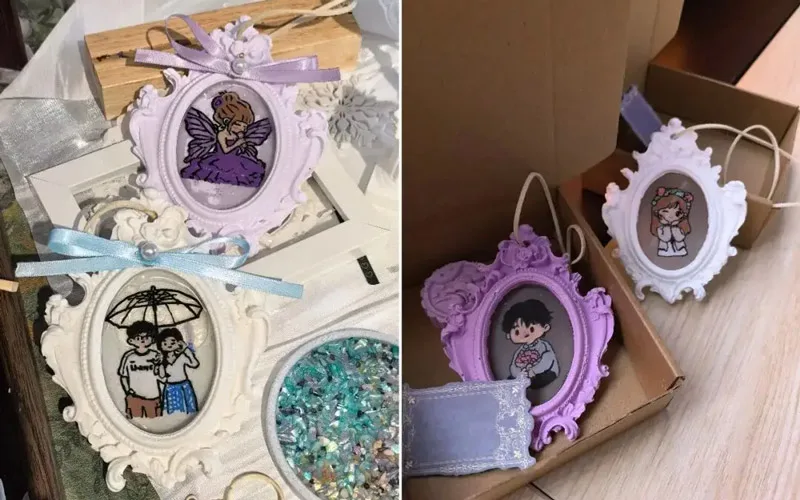
| Workshop kit class | Pre-woven bamboo ribs plus a Song brocade face and pearl trim, finished in about two hours with an instructor | People who want the whole sequence once |
The inserted-rib and blank-paper routes were both introduced by Huang Shuofu and his daughter Huang Keren, precisely so that beginners could finish something in a session. Public venues have absorbed the format: on 25 October 2026 the Guangzhou Culture Centre’s heritage library runs a bamboo-and-brocade fan class at 45 yuan a head for thirty people, ages twelve to sixty-five, using woven bamboo ribs, a Song brocade face and AI-placed pearl decoration. Museums in Shenzhen and Zhenjiang have run the same format for Double Ninth programmes.
If you build from scratch, the material list is short and unforgiving: three-year bamboo, a splitting knife, cotton thread, rice paste, single-sided paper or silk, a peg mould, a fan-shaped trimming template, edge binding and a blunt brush. The rest is time. Our materials reference for the Tuanshan lists the historical face materials if you want to match a period piece.
Where the Work Goes Wrong
Failures cluster at four points, and each has a physical cause rather than a matter of skill.
- Uneven ribs. A thickness difference of a fraction of a millimetre makes one side of the cage stiffer than the other, and the pasted face wrinkles along the divide.
- Trapped air under the face. If the blunt brush does not work from the centre outward, bubbles stay between rib and paper and surface as blisters once dry.
- Drying too fast. Guilin dries in air for three to four days. Forced drying warps the face, and the warp is permanent.
- A drifting edge binding. If the adhesive strip sits off the junction line, the rim lifts within weeks.
- Unalumed silk. On the Suzhou route, painting onto silk that has not been fully sized bleeds the colour into one stain.
Behind the workshop sits a documented record. Guilin’s fan work traces to the Song period, more than eight hundred years of it, and Zhou Qufei’s Southern Song account Lingwai Daida already describes round fans in use around Guilin. In 1982 Qiu Guangchu rebuilt the round-bamboo split-rib technique and took a first order of one hundred fans; on 20 December 2018 the regional government listed Guilin fan-making in its seventh batch of regional heritage items under document Guizhengfa 2018 No. 58, with Guilin Guangheng Crafts as the protection unit. Suzhou’s fan-making entered the first national batch on 20 May 2006 as item VIII-81. Our account of the round fan’s changing roles covers the ceremonial side, and the Hanfu form index is where to match a finished fan to a robe.