-

10 Actors Dominated 2025 as China’s Top Drama-Carriers
In 2025, the Chinese entertainment industry witnessed a significant shift as performers transcended traditional boundaries, embracing roles that defied expectations and showcased their depth. This year highlighted a move towards authentic storytelling, where actors demonstrated remarkable versatility across television and film. Their journeys from familiar archetypes to complex characters not only captivated audiences but also redefined success metrics, emphasizing artistic growth over mere popularity. 1. Liu Yuning (刘宇宁) - The Prisoner of Beauty, and A Dream Within a Dream Liu Yuning began his career as an online musician, but 2025 marked his emergence as a compelling actor. In the series The Prisoner of Beauty (折腰), he portrayed a leader with a mix of authority and vulnerability. His attention to small details, like subtle facial shifts, brought depth to intense scenes. This performance challenged perceptions about artists transitioning from digital platforms to mainstream media. He further displayed his range in A Dream Within a Dream (书卷一梦), where he took on two distinct roles. Switching between a cunning prince and a carefree swordsman, he used vocal variations and eye movements to differentiate them seamlessly. His dedication to refining each part underscored a self-taught approach that resonated with viewers and critics alike. Beyond…- 132
- 0
-
Top 5 Revenge-Themed Historical Dramas of 2025
Where ancient grievances meet modern storytelling, these Chinese historical dramas weave tales of vengeance, redemption, and exquisite beauty that will captivate your imagination. The revenge motif taps into universal themes of justice, resilience, and moral complexity, offering more than just simple tales of retribution. Today's revenge dramas explore profound transformations, philosophical depths, and the psychological costs of vengeance, all set against richly detailed historical backdrops. Here are five exceptional revenge-themed historical dramas from 2025 that deserve your attention. Legend of Zang Hai 藏海传 Aired: May 21, 2025 Period Background: Fictional Yong Dynasty Genres: Historical Political Intrigue, Revenge, Growth Drama Main Roles: Xiao Zhan as Zang Hai, Zhang Jingyi as Xiang Tutu, Zhong Hanliang as Kuai Duo, Chen Yanxi as Zhao Shangxian Adapted from: Original screenplay Plot Overview "Legend of Zang Hai" traces the story of Zang Hai (originally named Zhi Nu), whose family falls victim to a purge orchestrated by the powerful minister Pingjin Hou. After being rescued and trained for ten years in specialized skills—including architecture, astronomy, and statecraft—he returns to the capital under a concealed identity. Rather than pursuing direct confrontation, Zang Hai employs a calculated approach, embedding himself within the power structures of the court and using…- 782
- 0
-
Xiao Zhan's Floral Headpiece in Monster Hunt 2
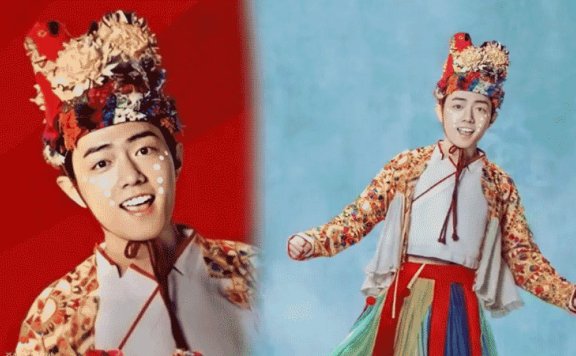
When actor Xiao Zhan (肖战) appeared in the 2018 fantasy film Monster Hunt 2 (捉妖记2) wearing a bizarre hat adorned with a colorful array of flowers, it sparked curiosity and amusement among viewers. Many wondered about the inspiration behind such an unusual accessory, which looks like a miniature garden perched on his head. Little did they know that this design has historical roots dating back to China's Northern Song Dynasty (960-1127), where a similar aesthetic known as Yi Nian Jing (一年景) was popular. This concept involved combining floral elements from all four seasons to symbolize completeness and eternal beauty, often used in clothing, jewelry, and art. The hat in the film, set in the fictional Yongning Village, echoes this tradition, showing how ancient Chinese culture continues to influence modern storytelling. This article explores the fascinating connection between Xiao Zhan's cinematic headpiece and the historical Yi Nian Jing, delving into its origins, significance, and contemporary relevance. Historical Roots The Yi Nian Jing aesthetic first gained prominence during the late Northern Song Dynasty, particularly around the Jingkang period (1126-1127), as recorded in historical texts such as Lu You's (陆游) Lao Xue An Notes (老学庵笔记). According to these records, it was a style… -
Chen Yanxi's Mother Costume in The Legend of Zang Hai
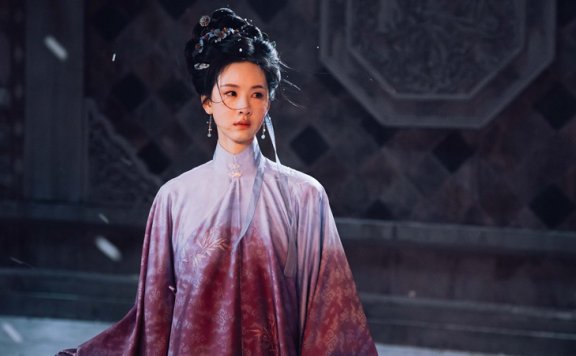
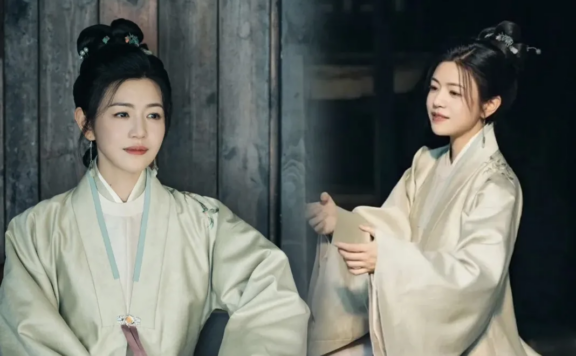
In the ancient cdrama The Legend of Zang Hai (藏海传), although Chen Yanxi only appeared in a few scenes, she left a deep impression. She played the mother of Zang Hai (played by Xiao Zhan), wearing a Ming-style cape, showing a different kind of mature charm from before. Let's first talk about the outfit on the left side of the main picture. Chen Yanxi wore a front-buttoned narrow-sleeved cape, with a round-collared shirt and a cross-collared middle garment inside, and a horse-faced skirt below. The whole set was in the Ming style. The overall color of this outfit was a combination of light blue and light colors, so it looked gentle and elegant. Her hair was simply styled in double buns or a single bun, making her look fresh, elegant, and refined. The cape is a relatively formal style in Ming Dynasty clothing. Its style features a straight collar and slits on both sides. It evolved from the Bei Zi in the Song Dynasty. In some Ming Dynasty books, the terms 'Bei Zi' and 'cape' were often used interchangeably. The main difference between them is that in the middle and late Ming Dynasty, the collar of the cape was mostly…- 95
- 0
-
Xiao Zhan: Crafting Spotlight Beyond Reality Shows
At 33, an age where many Chinese celebrities actively court exposure through popular variety shows, Xiao Zhan (肖战) stands apart. His infrequent appearances on such programs spark constant speculation. While assumptions often point to restrictive management, the actor himself offers a different, surprisingly grounded rationale for his selective visibility. This deliberate approach, prioritizing artistic substance over fleeting fame, defines a unique path within China's fast-paced entertainment landscape. Choosing Depth Over Distraction Xiao Zhan's rise to stardom, propelled by the phenomenal success of the drama The Untamed (陈情令), brought immense pressure and scrutiny. Rather than capitalizing solely on this initial surge through ubiquitous variety show bookings, he articulated a clear preference in interviews. He consciously dedicates significant time and energy to selecting and developing substantial acting projects, viewing them as the true core of his career. This focus signifies a long-term commitment to craft over the immediate, often superficial, boost offered by constant reality TV presence. His management team operates with exceptional discernment. Invitations flood in, but acceptance is never guaranteed. Each potential variety show undergoes rigorous evaluation based on its core concept, target audience alignment, and potential impact on Xiao Zhan's carefully cultivated image. This meticulous filtering process reflects lessons…- 136
- 0
-
What's the Name of the Hairband in The Legend of Zang Hai
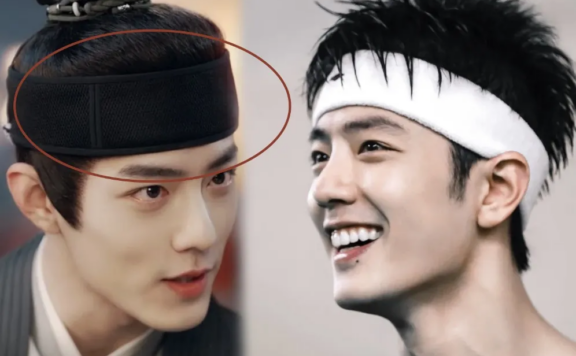
In the ancient costume cdrama The Legend of Zang Hai, when Xiao Zhan's character Zang Hai makes his appearance, he wears a similar 'hairband'. Netizens are saying, 'Isn't this the essential hairband for modern sportswear? Was it already around in the Ming Dynasty?' Let's start with the answer. It's a 'net cap' from the Ming Dynasty, more precisely, a simplified version of the Lazy Net Cap (懒收网巾) that was popular in the late Ming Dynasty. The net cap was a net-like headdress used by adult men in Ming Dynasty China to tie up their hair and gather loose strands. It has the same function as modern 'hairbands'. It can not only gather loose hair but also prevent hats from slipping. It's actually quite practical. The net cap could be worn alone in daily life. In the Ming Dynasty, people of status had to wear a cap over the net cap when attending important occasions. However, for convenience in daily life or among common people, they often didn't need to wear other hats after putting on the net cap. The popularity of the net cap can be attributed to Zhu Yuanzhang. It's said that one day, Zhu Yuanzhang visited the Shenleguan…- 180
- 1
-
Exploring the Pockets in Cdrama: The Legend of Zang Hai
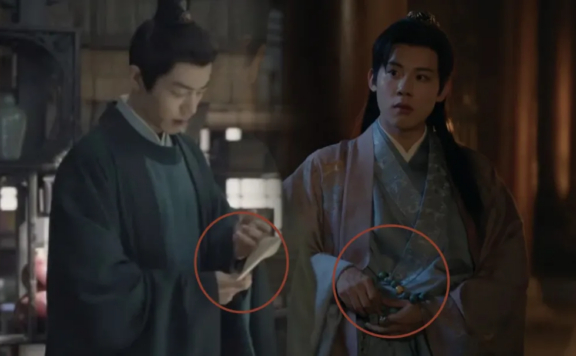
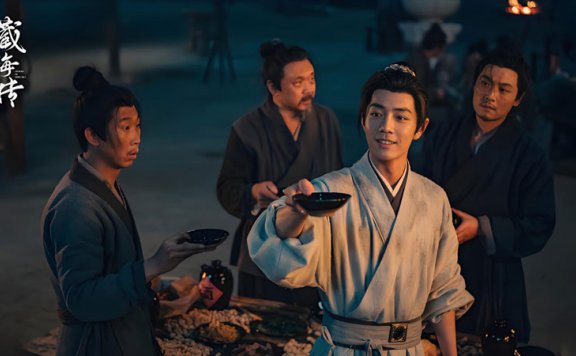
In the costume TV drama The Legend of Zang Hai, played by Xiao Zhan, can put letters in his sleeves. Can such seemingly large sleeves really hold things without them falling out? Let's start with the conclusion. In the past, most sleeves that could hold things had cuffs. Those completely open large sleeves were mainly for ceremonial purposes and generally couldn't hold things directly. Usually, there would be attendants following to carry bags. And Zang Hai's sleeves clearly have cuffs, so things can be directly stuffed into them. Additionally, apart from sleeves, the ancients also used handbags and backpacks. So, when we see characters like Zhuang Er taking out or stuffing things from their bosoms or belts, we can't help but wonder if it's uncomfortable. Moreover, things would fall out once the belt was loosened. Back to the issue of sleeves, there were actually some "tricks" in the design of ancient people's sleeves. Generally speaking, cuffed sleeves have two characteristics. One is the type with narrow - ended sleeves, such as the pipa - shaped sleeves popular in the Ming Dynasty and the hanging - beard sleeves popular in the Han Dynasty. The shape of these sleeves naturally forms a…- 169
- 0
-
The Genuine and Approachable Side of Actor Xiao Zhan
Xiao Zhan (肖战) captivated global audiences with his intense portrayal of Wei Wuxian (魏无羡) in the 2019 phenomenon The Untamed (陈情令). This role cemented his status as a leading man known for powerful, often brooding characters. Yet, recent glimpses into his life reveal a delightful contrast to his on-screen personas, showcasing a youthful, authentic side that has surprised and charmed fans worldwide. This exploration delves beyond the actor's acclaimed performances, uncovering the genuine personality and relatable lifestyle that endear him to millions. Style Shift Stuns Observers Gone are the flowing robes and stern expressions of his dramatic roles. Recent candid shots showcase Xiao Zhan embracing a strikingly casual, almost boyish aesthetic. Think cozy cream hoodies paired effortlessly with wide-leg trousers, topped with a fuzzy baseball cap and trendy sneakers. The most unexpected touch? A large, cartoonish shoulder bag adding a playful vibe. This relaxed ensemble stands in stark contrast to the commanding presence fans associate with characters like Wei Wuxian or his modern CEO roles. The reaction was immediate and widespread. Fans expressed astonishment at the transformation, flooding social media with comments like, "I did a double-take! Is that really the same person?" Many highlighted the overwhelming sense of youthfulness…- 280
- 0
-
6 Historical Dramas Reviving China's ICH
Historical dramas are breathing new life into China’s intangible cultural heritage (ICH), transforming age-old crafts into dynamic narrative tools. From woodwork magic to culinary traditions, these series weave cultural preservation into gripping storytelling. Six recent productions stand out for their authentic integration of ICH, introducing global audiences to traditions once confined to regional workshops and ritual spaces. 1. The Legend of Zang Hai (藏海传) Premiering May 18, 2025, on CCTV-8 and Youku, this Quantum Entertainment production stars Xiao Zhan as Zang Hai, an architectural prodigy. The drama spotlights yaofa puppet theatre from Zhejiang’s Taishun County, where gunpowder propels intricate wooden figures. These pyrotechnic puppets become tactical tools in Zang Hai’s political schemes, showcasing a 300-year-old art recognized by UNESCO in 2006. Zang Hai’s mastery of mortise-and-tenon joinery drives key plot developments. This 7,000-year-old woodworking technique—China’s UNESCO-listed architectural heritage—enables complex structures without nails or glue. When Zang Hai enters the capital, an eight-meter Qinhuai lantern screen illuminates his arrival. Crafted using Nanjing’s 2008 nationally listed lantern techniques, this piece merges paper art, painting, and sculpture. The production team creatively scaled up shadow puppetry (UNESCO 2011), using tiger and centipede silhouettes as metaphors for court factions. These enlarged "ancient IMAX" projections visualize…- 157
- 1
-
How Xiao Zhan Redefines Global Stardom
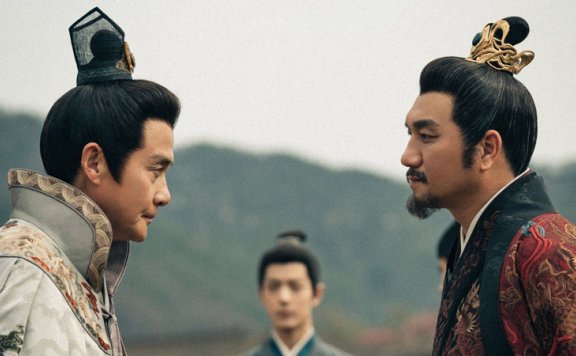
In an era saturated with fleeting digital fame, Xiao Zhan (肖战) emerges not merely as an entertainer but as a cultural phenomenon. His portrayal of Zang Hai in The Legend of Zang Hai (藏海传) transcends conventional idol appeal, embodying a renaissance of classical Chinese aesthetics while forging unprecedented international pathways. This evolution—from Wei Wuxian’s (魏无羡) fiery idealism in The Untamed (陈情令) to Zang Hai’s intricate duality—reveals an artist mastering the alchemy of beauty, intellect, and emotional resonance. Zang Hai: The Fractured Elegance Zang Hai’s allure lies in his contradictions: a strategist draped in jade-like composure yet fractured like Song-dynasty porcelain. Director Zheng Xiaolong’s (郑晓龙) vision demanded this duality—Zang manipulates political webs with Sun Tzu-inspired precision while radiating vulnerability that disarms tyrants. When Pingjin Hou (平津侯), a lord notorious for silencing dissent, races into flames to save him, the character’s psychological complexity crystallizes. Costuming becomes narrative. Zang’s black-gold robes, woven from 1,200 meters of hand-embroidered silk. This deliberate fusion of historical artistry and character depth transforms him into a living artifact, where every fold of fabric whispers tradition. Princess Xiang Anxue’s (香暗雪) loyalty—defending him even against her mother—stems not from grand romantic gestures but quiet reciprocity. Their bond mirrors contemporary desires…- 219
- 0
-
The Official Hanfu Robe in The Legend of Zang Hai
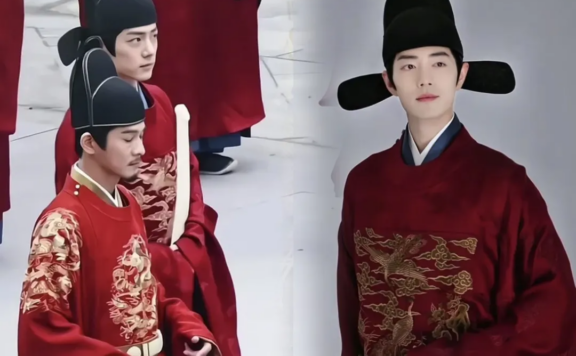
As soon as the official robe looks of Xiao Zhan in "The Legend of Zang Hai" came out, some netizens exclaimed, "This Hanfu really has a good texture. No wonder it's an official robe!" First, let's conclude. Actually, the official robes in the Ming Dynasty were the professional formal wear for officials. The basic style was a long robe with large sleeves and a round collar or cross collar. There were 'emblem patches' on the front and back to show different identities, distinguishing official robes from ordinary formal wear. Here, the 'emblem patches' represent one's status. Not only men, but also women who were granted imperial titles or served as female officials would wear robe - skirts with emblem patches. For many people, the Ming - Dynasty clothes have relatively high - quality textures, and the emblem patches on official robes enhance another aspect of the clothing's texture. In ancient times, flying 'birds' and running 'beasts' were embroidered on official robes to show the ranks of civil and military officials. According to the "Ming Huidian", in the 24th year of Hongwu (1391), it was stipulated that civil officials should have birds embroidered on their robes, and military officials should have…- 156
- 0
-
Ming Dynasty Hanfu Costumes: Zang Hai's Sartorial Journey
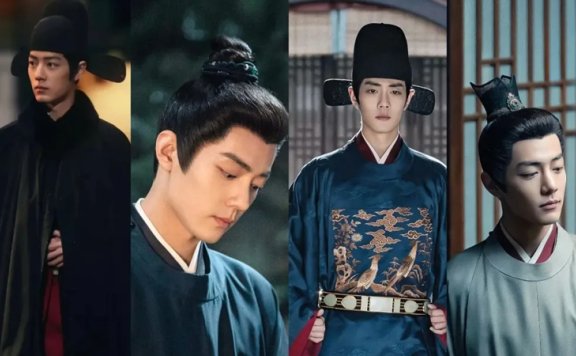
Set against the backdrop of Ming Dynasty China, Legend of Zang Hai (藏海传) captivates audiences not only with its intricate plot but also with its meticulous recreation of historical attire. Actor Xiao Zhan’s (肖战) portrayal of Zang Hai—a scholar navigating political intrigue—is elevated by costumes that visually chart his evolution from obscurity to prominence. Each garment, grounded in Ming Dynasty dress codes, serves as a silent narrator of status, ambition, and cultural identity. The Period of Civilians Zang Hai’s early scenes feature the straight robe (Zhiduo), a garment emblematic of Ming-era scholars and commoners. This cross-collared, side-slit robe, often belted at the waist, reflected a balance of practicality and modesty. Xiao Zhan’s turquoise-hued version, inspired by the turquoise damask robe housed in the Confucius Museum, subtly elevates the basic design with fine silk, hinting at Zang Hai’s latent potential—the choice of color, reminiscent of scholars’ inkstones, bridges humility and intellectual aspiration. As Zang Hai enters scholarly circles, his attire shifts to the scholar’s gown. Distinguished by a round collar and a horizontal seam at the knees—a Ming-era nod to ancient Confucian dress—this robe signifies his formal entry into the literati class. Historical texts, such as Sancai Tuhui (三才图会), depict its…- 199
- 0
-
Is There a Story Behind Xiao Zhan's Scarf Headgear?
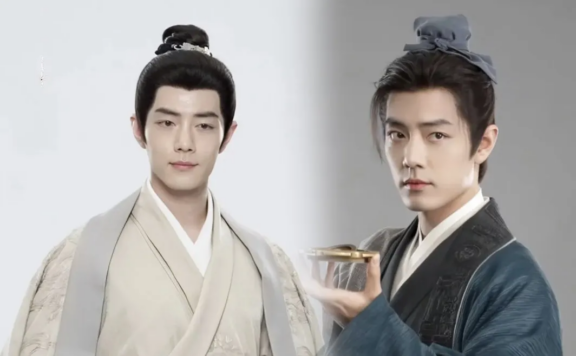
In the ancient - costumed TV drama The Legend of Zanghai, is there a story behind Xiao Zhan's scarf headgear? Does it seem to represent the typical outfit of a poor scholar in old - fashioned TV dramas? Comparing the picture on the left where he isn't wearing the scarf, he does seem more innocent. First, let me conclude. This is an ancient handkerchief, a square piece of cloth. You wrap it around your head with two corners on the outside to secure it. Both men and women often used it to cover their heads. The purpose is the same as using a hairband to hold back loose hair today, just to keep the hair in place and make the appearance neater. This way of wrapping the head with a scarf has appeared throughout the dynasties and was mostly used by the common people. It could be made from scraps of clothing. However, don't look down on the scarf headgear. It's a 'veteran' among head - scarf accessories. Before the Wei and Jin Dynasties, both men and women could wrap their heads with scarves, with men using it more often. One type is called 'Zi Cuo' (缁撮), which is the…- 143
- 0
-
Legend of Zang Hai: Xiao Zhan’s Restraint
Fresh from the editing suite and diving into interviews, The Lost Tomb Reborn (Zang Hai Zhuan) director Cao Yiwen (曹译文) radiates energy discussing the show's global impact. Premiering on May 18th on CCTV-8 and Youku, the drama sparked discussions across 190 regions, igniting fan theories and creative buzz. Cao credits its success to intentional narrative gaps. "We planted 'hooks' and left space for fan creation," he shares. This deliberate openness fueled a dynamic wave of audience participation. But how did a period drama sustain such fervor? How did protagonist Zang Hai's (藏海) journey captivate millions? Director Cao reveals his approach. Starring Xiao Zhan (肖战) as Zang Hai, the series avoids flashy revenge tropes. "We focused solely on Zang Hai's fate," Cao states. "His revenge stems from devastating personal loss -the destruction of his innocent childhood. We built his growth meticulously." This meant rejecting overpowered heroes. Despite talents in geomancy (Kanyu) and architecture (Ying Zao), Zang Hai starts as an underdog. "He’s smart, young, inexperienced within brutal feudal power structures. He faces real setbacks." Complexity extends to the villains, notably the fan-dubbed "Skinny Monkeys" (Pi Jin Hou Nan Tuan) – Yang Zhen (杨真), Qu Jiao (瞿蛟), and Chu Huaiming (褚怀明). Cao…- 221
- 0
-
The Look of Xiao Zhan in Cdrama Zanghai Zhuan
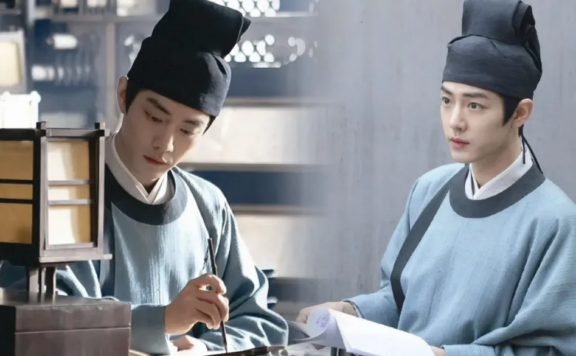
The trailer of the ancient - costumed TV drama "Zanghai Zhuan (藏海传)" has been released, and Xiao Zhan's looks in different periods are eye - catching. Netizens said, "This is what the costumes of Ming Dynasty scholars should look like!" First, the clothing Xiao Zhan wears in "Zanghai Zhuan" is a round - collar lanshan (襕衫). The round - collar refers to the collar style. Lanshan was particularly popular in the Song and Ming dynasties. Wearing a Confucian cap, it became the iconic clothing for the scholar - official class, Confucian scholars, and students at that time. Also, it was widely used in the Confucius worship ceremonies in local rural schools as the exclusive clothing for the dancers in the six - column dance. The lanshan in the Song and Ming dynasties had differences, but both had a horizontal hem. According to "History of the Song Dynasty: Records of Ritual Paraphernalia", "The lanshan is made of fine white cloth, with a round collar and large sleeves. A horizontal hem is added at the bottom as a skirt, and there are pleats around the waist. It is worn by Jinshi (successful candidates in the highest imperial examinations), students of the Imperial…- 101
- 0
-
The Untamed: What If the Villain Was Never Wrong
Sixteen years. A mysterious return. A flute that summons the dead. The Untamed isn't just another xianxia drama—it's a layered story of loyalty, injustice, and love in a world where righteousness is often just a mask. If you're new to the series, or just trying to figure out why everyone online is crying about rabbits and swords, here's your complete guide through the twists and turns of The Untamed. Chapter 1: Bright Beginnings (Ep 1–5) Setting the stage: a world of cultivation, clans, and quiet bonds in bloom. At first glance, The Untamed opens like many fantasy dramas—a beautiful, intricate world of magic, sects, and sword-wielding disciples in flowing robes. But behind the lush aesthetics is a tightly-woven story of friendship, fate, and the beginning of something much deeper. The first five episodes introduce us to Wei Wuxian, the charismatic, mischievous adopted son of the Jiang clan. He's skilled, clever, and always smiling—the kind of guy who laughs off danger and breaks rules with charm. But there's more to him than the prankster image. He's loyal, kind-hearted, and deeply protective of those he loves. His journey begins with a visit to the Cloud Recesses, the strict and serene home of…- 309
- 0
Xiao Zhan

Scan to open current page
-
$CouponsLimitation of use:Expired and UnavailableLimitation of use:
before
Limitation of use:Permanently validCoupon ID:×Available for the following products: Available for the following products categories: Unrestricted use:Available for all products and product types