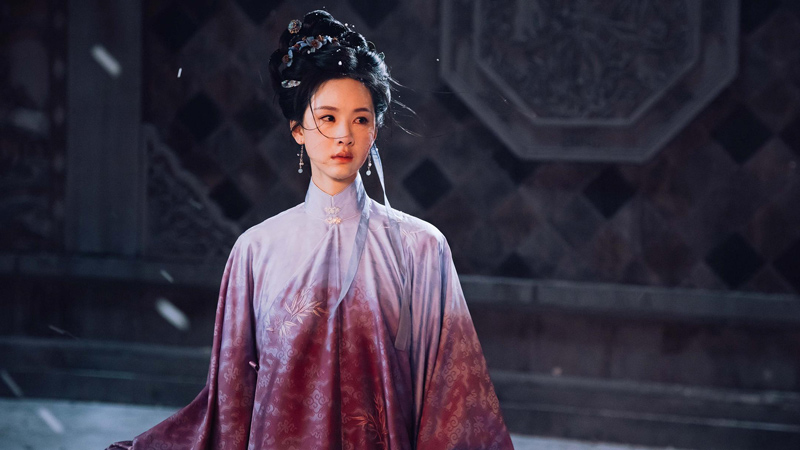
Where ancient grievances meet modern storytelling, these Chinese historical dramas weave tales of vengeance, redemption, and exquisite beauty that will captivate your imagination.
The revenge motif taps into universal themes of justice, resilience, and moral complexity, offering more than just simple tales of retribution. Today's revenge dramas explore profound transformations, philosophical depths, and the psychological costs of vengeance, all set against richly detailed historical backdrops.
Here are five exceptional revenge-themed historical dramas from 2025 that deserve your attention.
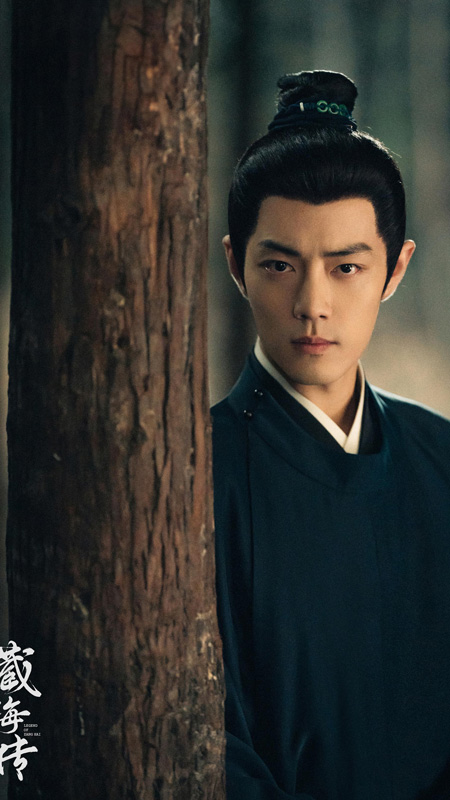
Legend of Zang Hai 藏海传
Aired: May 21, 2025
Period Background: Fictional Yong Dynasty
Genres: Historical Political Intrigue, Revenge, Growth Drama
Main Roles: Xiao Zhan as Zang Hai, Zhang Jingyi as Xiang Tutu, Zhong Hanliang as Kuai Duo, Chen Yanxi as Zhao Shangxian
Adapted from: Original screenplay
Plot Overview
"Legend of Zang Hai" traces the story of Zang Hai (originally named Zhi Nu), whose family falls victim to a purge orchestrated by the powerful minister Pingjin Hou. After being rescued and trained for ten years in specialized skills—including architecture, astronomy, and statecraft—he returns to the capital under a concealed identity. Rather than pursuing direct confrontation, Zang Hai employs a calculated approach, embedding himself within the power structures of the court and using his unique knowledge to systematically undermine his enemies. His initial objective of revenge gradually broadens into a struggle to prevent national instability, compelling him to weigh personal grievances against public good.
The series distinguishes itself through a revenge framework built on strategy and cultural sophistication. One emblematic scene involves Zang Hai using his architectural expertise to redesign a critical waterways project, initially proposed by Pingjin Hou, into a functional failure—publicly humiliating his opponent while positioning himself as a solution. Another key moment occurs during a royal astronomical ceremony, where Zang Hai accurately predicts a celestial phenomenon, leveraging it to challenge the legitimacy of his adversaries and win the emperor's trust.
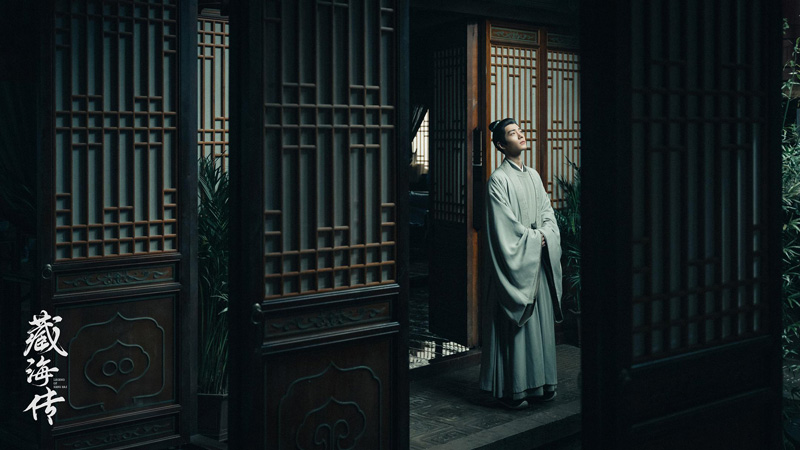
Director Zheng Xiaolong integrates traditional arts as narrative devices. In one sequence, a Kunqu Opera (昆曲) performance parallels Zang Hai's hidden motives, with lyrics and choreography reflecting his inner conflict and strategic intentions. The use of Shadow Puppetry (皮影戏) in the opening credits and transition scenes further reinforces themes of manipulation and obscured truth.
The revenge plot is advanced through these layered methods—intellectual, cultural, and psychological—rather than physical force. This approach allows the narrative to explore how knowledge and tradition can serve as instruments of power and retribution.
Legend of Zang Hai stands out for its precise integration of character development with narrative action. Xiao Zhan's portrayal of Zang Hai captures a transformation from isolated vengeance to tactical leadership, particularly in moments where he must choose between a narrow victory and a broader moral outcome. The supporting characters, such as Xiang Tutu as a principled royal physician and Kuai Duo as a cynical minister, create a network of alliances and tensions that deepen the central themes.
The production emphasizes authenticity through carefully researched settings, costumes, and props. Key elements—such as ancient astronomical instruments, architectural models, and period-accurate court rituals—are woven into the storyline, providing a rich and credible world.
The series appeals through its balance of narrative intricacy and cultural specificity, offering a story that is both engaging and reflective of deeper themes such as integrity, strategy, and the ethical dimensions of justice. It presents revenge not as a simplistic act of retaliation, but as a complex process that tests the limits of wisdom and character.
The Glory 雁回时
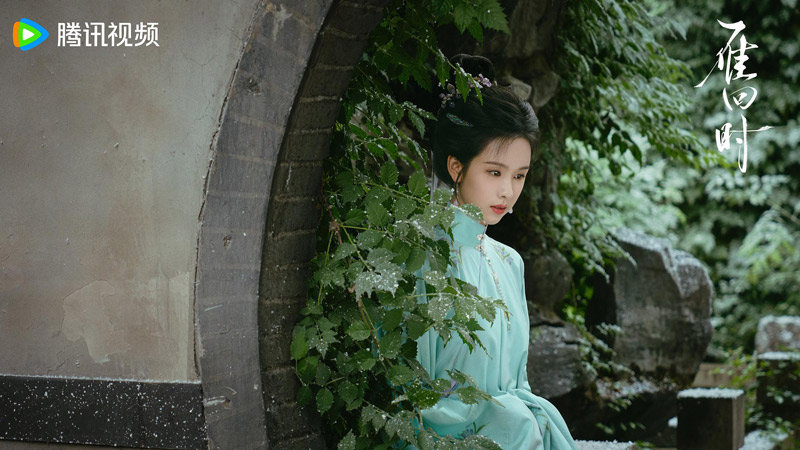
Aired: March 18, 2025
Period Background: Ming Dynasty
Genres: Female-Centric Revenge, Court Intrigue, Suspense
Main Roles: Chen Duling as Zhuang Hanyan, Xin Yunlai as Fu Yunxi
Adapted from: Qian Shan Chake's novel "Reborn of Noble Daughter"
Plot Overview
Zhuang Hanyan is exiled from her family as a child due to superstitious beliefs that she brings bad fortune. For years, she endures hardship and isolation, developing resilience and keen insight into human nature. She returns to the Zhuang family compound not as a helpless victim, but as a calculated and strategic figure determined to expose and dismantle the corrupt power dynamics that ruined her life. Posing with refined manners and ambiguous intentions, she navigates the complex social hierarchies of the Ming-era elite, using wit and psychological manipulation to turn family members against each other. Her evolving alliance with Fu Yunxi, an astute official capable of seeing through her crafted persona, adds further tension and nuance to her mission.
The revenge narrative is built around subtle manipulation and social intrigue rather than physical confrontations. In one key scene, Zhuang Hanyan orchestrates the exposure of her aunt's embezzlement by deliberately misplacing account ledgers in view of the family patriarch. In another episode, she uses knowledge of herbal medicine—gained during her exile—to simulate illness and frame a rival for attempted poisoning.
The series excels in layering deception through costume and dialogue. Zhuang Hanyan's changing attire—from modest, earth-toned robes to elaborate embroidered gowns—visually signals her rising influence and shifting identity. Director and costume designers meticulously incorporate Ming fashion details, such as Pifeng (披风) cloaks and Mamian (马面) skirts, tying garment choices to specific plot developments.
The use of space also enhances narrative tension. Scenes set in opulent yet claustrophobic family halls, courtyards, and chambers mirror the constrained social roles of women and the pervasive atmosphere of surveillance and suspicion.
Chen Duling delivers a compelling performance as Zhuang Hanyan, balancing subtle facial expressions and controlled dialogue to convey intelligence and restrained emotion. One standout moment occurs when she confronts her father in the ancestral hall—outwardly composed, yet revealing layers of anger and resolve through slight vocal tremors and deliberate pauses.
Xin Yunlai's Fu Yunxi serves as both foil and ally, recognizing her tactics but often allowing them to unfold for mutual benefit. Their relationship evolves through intellectually charged exchanges, such as a conversation conducted entirely through double meanings during a lantern festival sequence.
The plot avoids predictable revenge tropes by emphasizing psychological realism and historical authenticity. Twists arise from characters' hidden weaknesses and ambitions rather than contrived external events.
Production quality stands out through attention to Ming Dynasty material culture—from scholar's utensils and furniture to architecture and garden design—rooting the story in a tangible, immersive world. The series doesn't romanticize the past; instead, it presents a sharp critique of gender inequality and familial oppression through a tightly-woven plot and strong character development.
With its refined execution and focus on a sophisticated, intellect-driven revenge arc, The Glory offers a memorable viewing experience for those who appreciate narratives where emotional and psychological stakes are as compelling as the visual spectacle.
Legend of The Female General 锦月如歌
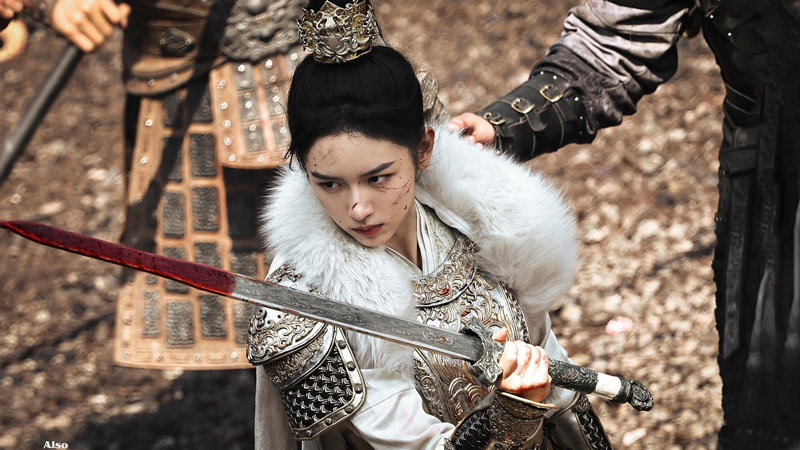
Aired: August 6, 2025
Period Background: Fictional Historical Period
Genres: Military Romance, Revenge, Female Empowerment
Main Roles: Zhou Ye as He Yan, Cheng Lei as Xiao Jue
Adapted from: Qian Shan Chake's novel "Reborn of Female General"
Plot Overview
He Yan, once the overlooked daughter of a prestigious military family, is coerced into disguising herself as a man to take her ailing brother's place in the army, thus protecting her family's standing. However, after being betrayed by that very brother and left to die on the battlefield, she miraculously survives. Vowing to reclaim her identity and exact justice, she re-enters the military under a new alias: "He Rufeng."
In the camp, she must continuously conceal her true identity while demonstrating strategic brilliance and combat prowess. It is here she encounters Xiao Jue, a revered but emotionally reserved general renowned for his tactical genius and uncompromising discipline. Initially suspicious of her unusual background and delicate features, Xiao Jue gradually becomes intrigued by her unyielding determination and unique insights on warfare. Together, they navigate battlefield crises and political schemes orchestrated by corrupt court officials, with their relationship shifting from guarded rivalry to deep mutual trust and restrained romantic longing.
The revenge arc is advanced through He Yan's strategic military achievements and intellectual superiority rather than mere physical confrontations. In one crucial sequence, she devises an ingenious counter-siege strategy during the Battle of Qingcheng, using terrain and weather to outmaneuver a larger enemy force—a victory that exposes her brother's past military failures and cowardice. In another narrative turn, she reveals her brother's treachery not through direct accusation, but by presenting battle records and witness testimonies during a military council, forcing him to confess publicly.
The series uses the military environment to reflect themes of identity and power. Training and battle scenes—such as archery competitions, night ambushes, and strategic war games—are depicted with attention to period-accurate tactics and equipment. He Yan's disguise is continuously tested in scenes where she must treat wounds alone or conceal her voice during commands, adding layers of tension and realism.
The evolving dynamic between He Yan and Xiao Jue is developed through shared command experiences. A notable scene involves them coordinating a river assault using fire attacks, where their mutual trust is cemented through life-saving actions and nonverbal understanding. The narrative avoids melodrama, instead building emotional depth through tactical dialogues and silent glances that convey unspoken respect and affection.
Zhou Ye embodies He Yan's resilience and intelligence with remarkable physical and emotional commitment. Her performance captures both the character's vulnerability—such as moments of exhaustion and isolation—and her fierce determination in leading troops and challenging corrupt superiors. Cheng Lei portrays Xiao Jue with layered restraint, conveying a transformation from a frosty commander to a devoted ally through subtle gestures and tone shifts.
The action direction stands out for its clarity and historical inspiration. Fight choreography incorporates traditional Chinese martial arts and military formations, emphasizing strategy over spectacle. The production design reflects extensive research into ancient military camps, armor, and weapons, creating an immersive and believable world.
Unlike many palace-centered dramas, this series offers a fresh narrative space—the wartime frontier—where character development is driven by survival, loyalty, and tactical intellect. The romance is woven naturally into the broader framework of duty and justice, avoiding clichéd tropes and prioritizing emotional authenticity.
With its focused narrative, strong lead performances, and thoughtful integration of military history and character growth, Legend of The Female General delivers a satisfying and distinctive story that appeals to viewers interested in nuanced historical fiction with action, emotional depth, and a compelling central journey.
Kill My Sins 掌心
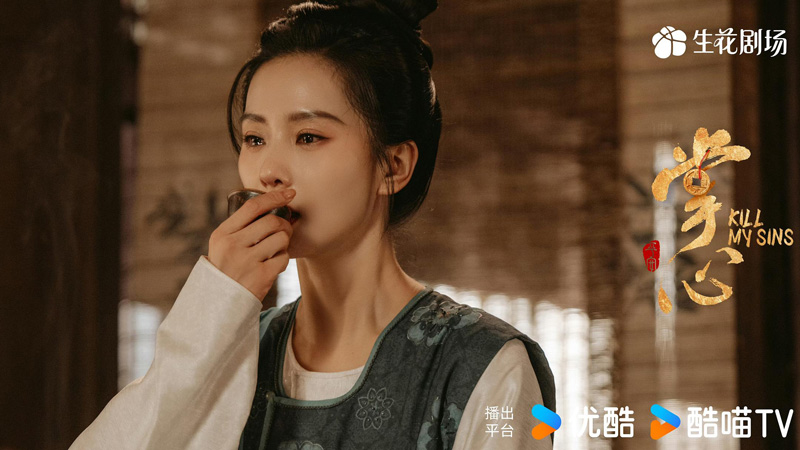
Aired: February 7, 2025
Period Background: Fictional Historical Period
Genres: Female Alliance Revenge, Suspense, Crime Investigation
Main Roles: Liu Shishi as Ye Ping'an, Dou Xiao as Yuan Shaocheng
Adapted from: Original screenplay
Plot Overview
Ye Ping'an begins as an unwilling accomplice within a powerful criminal network that kidnaps and exploits young women from impoverished backgrounds. Her deep knowledge of herbal medicine and psychology makes her valuable to the organization, but when her own parents are murdered after she attempts to withdraw, she experiences a profound moral awakening. Determined to atone for her past actions, she seeks out other survivors—women who have suffered at the hands of the same aristocratic circle—and forms a covert alliance aimed at dismantling the system from within.
Rather than employing physical force, Ye and her group employ guile, manipulation, and deep social insight to provoke their enemies into making fatal errors. Her path intersects with that of Yuan Shaocheng, a judicial official who rose from humble origins. Though bound by his duties to uphold the law, he becomes increasingly sympathetic to Ye's cause, creating a complex partnership rooted in ambiguity and mutual suspicion.
The series distinguishes itself through its psychological and procedural approach to revenge. In one meticulously constructed sequence, Ye Ping'an identifies a high-ranking official's susceptibility to superstition and manipulates him into believing he is cursed—using carefully placed herbs that induce paranoia and nightmares, ultimately leading him to make a public confession. In another storyline, she and her alliance plant fabricated evidence within a corrupt merchant's accounting ledgers, triggering a chain of investigations that expose a broader human trafficking network.
Narrative cohesion is strengthened through visual storytelling. The use of color is particularly intentional: cool blue and grey tones dominate scenes within the aristocracy's lavish but morally barren environments, while warmer amber and natural hues appear in moments of solidarity among the female protagonists. Each episode opens with an eight-word phrase—such as "He Who Digs a Trap May Fall In It" —which thematically frames the moral and psychological contest to follow.
The directors employ tight framing and restrained camera movement in dialogue-heavy scenes to accentuate tension and subtle emotional shifts. This is evident in confrontations where characters speak politely while engaging in psychological warfare, their true intentions conveyed through micro-expressions and compositional tension.
Liu Shishi delivers a nuanced and emotionally resonant performance as Ye Ping'an, embodying a character who is simultaneously strategic, vulnerable, and morally evolving. In key scenes—such as when she confronts a victim's family or struggles with the consequences of her manipulations—her expressive subtlety conveys deep conflict without resorting to melodrama. Dou Xiao provides a compelling counterbalance as Yuan Shaocheng, whose internal struggle between duty and justice is portrayed with quiet intensity.
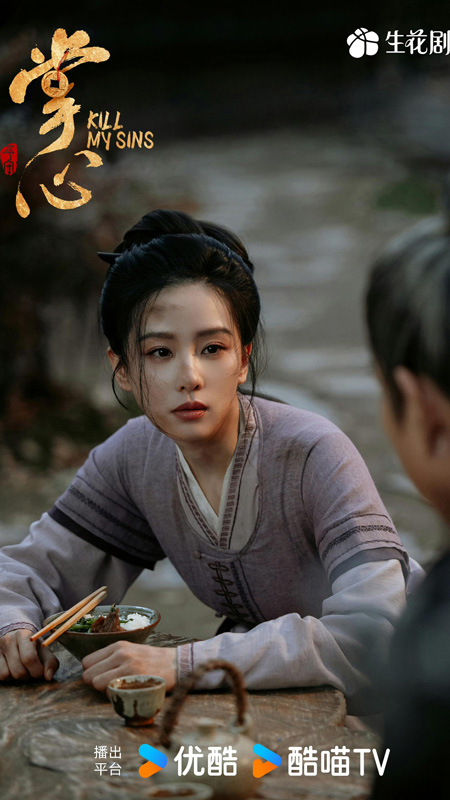
The production excels in its creation of a believable and textured historical world. Costumes and settings reflect a blend of different ancient Chinese aesthetics, with attention to social stratification through fabric, accessories, and interior design. Medical practices and investigative procedures are depicted with a degree of historical accuracy, lending credibility to the plot developments.
What sets the series apart is its emphasis on collective action and moral ambiguity. The revenge is a collaborative effort, with each member of the female alliance contributing unique skills—forgery, networking, intelligence gathering, or psychological manipulation. The story does not shy away from asking difficult questions about guilt, redemption, and the price of justice.
With its sophisticated narrative structure, restrained yet powerful performances, and elegant visual language,Kill My Sins offers a thought-provoking and emotionally engaging viewing experience. It stands as a refined example of how historical drama can explore contemporary themes—including gender solidarity, systemic corruption, and ethical choice—through smart, character-driven storytelling.
The Wanted Detective 定风波
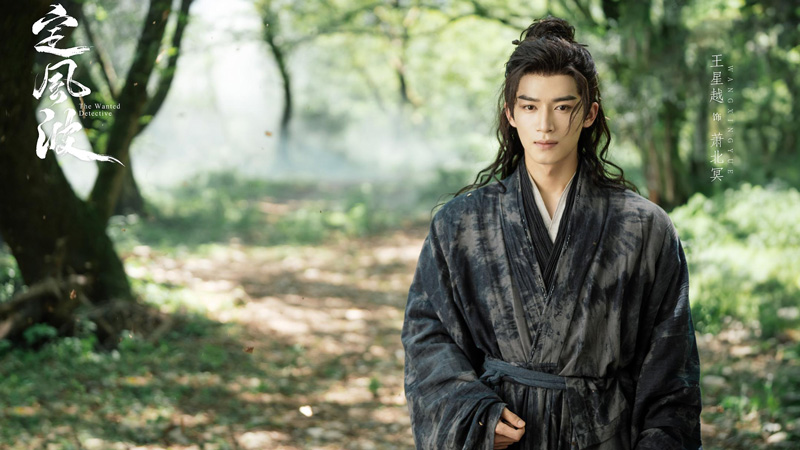
Aired: September 5, 2025
Period Background: Fictional Great Qi Dynasty
Genres: Investigative Suspense, Revenge, Conspiracy Thriller
Main Roles: Wang Xingyue as Xiao Beiming and Bei Kun (dual role), Xiang Hanzhi as Zhong Xueman
Adapted from: Original Screenplay
Plot Overview
The Wanted Detective follows detective Xiao Beiming as he investigates a series of revenge killings tied to the "Haiya Massacre" , a tragic military incident from two decades earlier. The case forces him to confront his own past when he discovers the mastermind behind the murders is his estranged twin brother, Bei Kun, who seeks vengeance against those responsible for covering up the massacre. The narrative explores two contrasting approaches to justice: Xiao Beiming's commitment to lawful investigation versus Bei Kun's ruthless pursuit of retribution.
The revenge plot unfolds through forensic investigation and psychological manipulation. In one key episode, Bei Kun uses his knowledge of herbal medicine to make a corrupt official experience haunting hallucinations that mirror the suffering he inflicted on massacre victims, ultimately driving him to confess publicly. The series employs parallel storytelling between present-day investigations and flashbacks to the massacre, visually contrasting the brothers' divergent paths toward justice.
Authentic historical elements strengthen the narrative. The production team consulted experts in ancient Chinese forensic medicine to accurately depict investigative techniques, including the analysis of poison and bloodstain patterns. One pivotal scene shows Xiao Beiming discovering that "Ningxue Han" , believed to be a deadly poison, was actually developed as an antidote to the military drug "Jifeng Dan" that caused the original tragedy.
The Wanted Detective stands out for its sophisticated dual character study and procedural depth. Wang Xingyue delivers a remarkable performance in dual roles, capturing both Xiao Beiming's principled determination and Bei Kun's tortured ruthlessness. Their contrasting approaches to justice create sustained tension throughout the series.
The production incorporates meticulously researched historical elements. According to production notes, the team replicated Song Dynasty forensic tools and investigation manuscripts, providing authentic visual details that ground the fictional narrative in historical practice. The title's reference to classical Chinese poetry reflects the show's thematic concern with maintaining moral integrity in turbulent times.
Director Zhang Lu creates a distinctive visual language for the series, using weather and environment to enhance mood. Key sequences set in rain-soaked streets, mist-shrouded archives, and lantern-lit tribunals emphasize the constant tension between truth and deception. The aesthetic avoids stylized action in favor of realistic investigative procedures and psychological tension.
For viewers interested in historically-grounded narratives, The Wanted Detective offers a fresh perspective on revenge stories by emphasizing forensic investigation and moral complexity over physical confrontation. Its focus on systemic corruption and the personal costs of justice provides a compelling, culturally authentic viewing experience.
Together, these five series represent the evolution of revenge-themed historical dramas in 2025. By prioritizing strategy over violence and moral growth over simplistic triumph, they offer nuanced explorations of justice, power, and redemption. Their compelling characters, innovative narratives, and cultural depth provide both entertainment and insight, marking a significant contribution to the genre and inviting global audiences to appreciate contemporary Chinese storytelling.