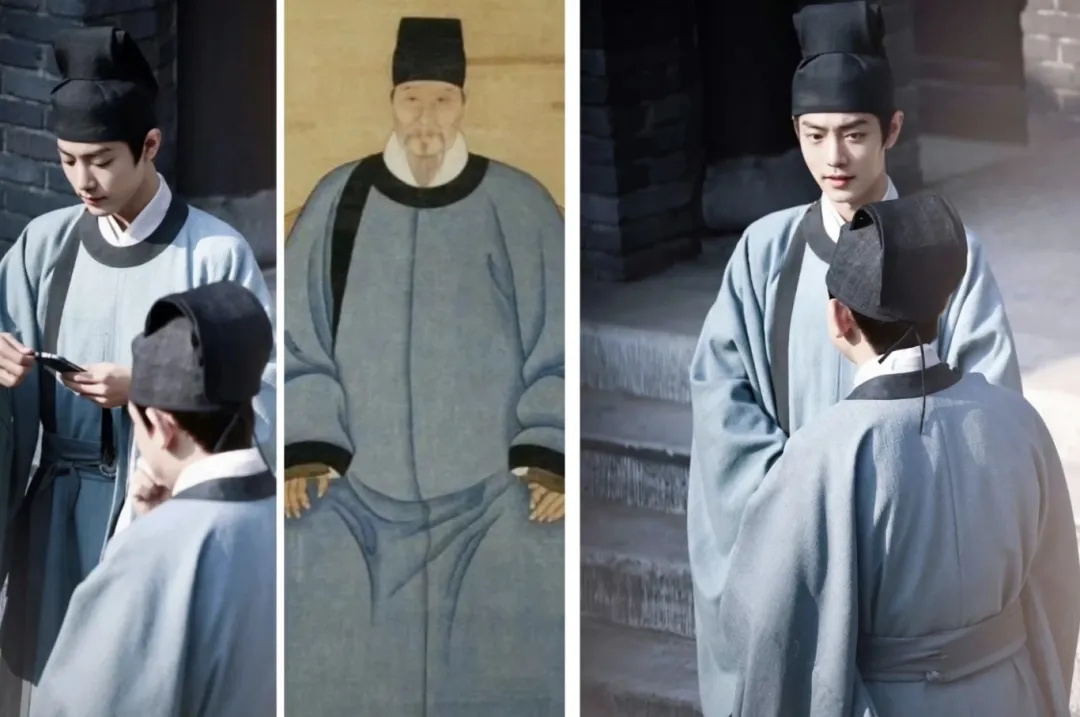
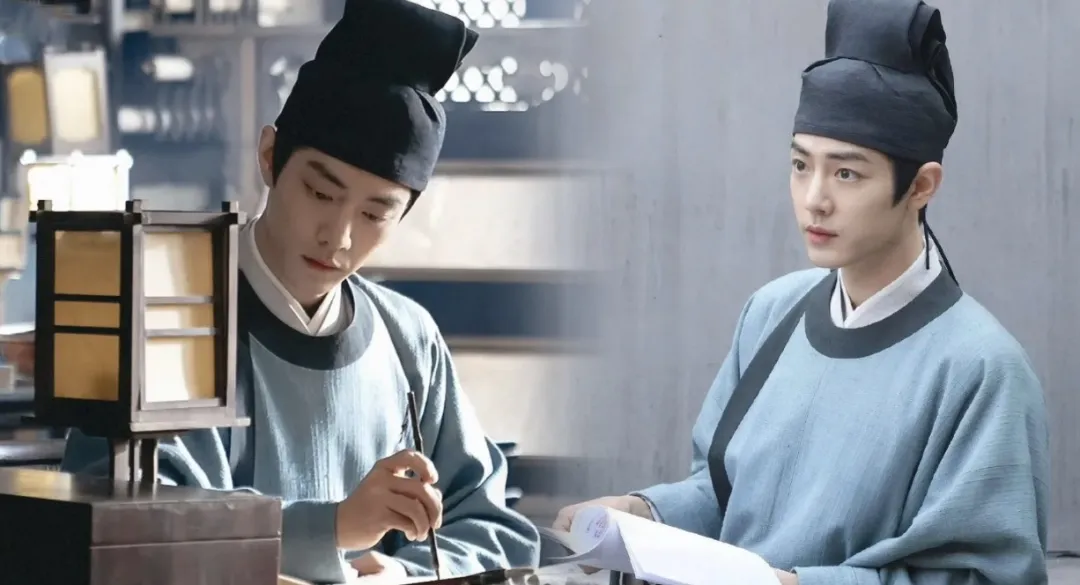
The trailer of the ancient - costumed TV drama "Zanghai Zhuan (藏海传)" has been released, and Xiao Zhan's looks in different periods are eye - catching. Netizens said, "This is what the costumes of Ming Dynasty scholars should look like!"
First, the clothing Xiao Zhan wears in "Zanghai Zhuan" is a round - collar lanshan (襕衫). The round - collar refers to the collar style. Lanshan was particularly popular in the Song and Ming dynasties. Wearing a Confucian cap, it became the iconic clothing for the scholar - official class, Confucian scholars, and students at that time. Also, it was widely used in the Confucius worship ceremonies in local rural schools as the exclusive clothing for the dancers in the six - column dance.
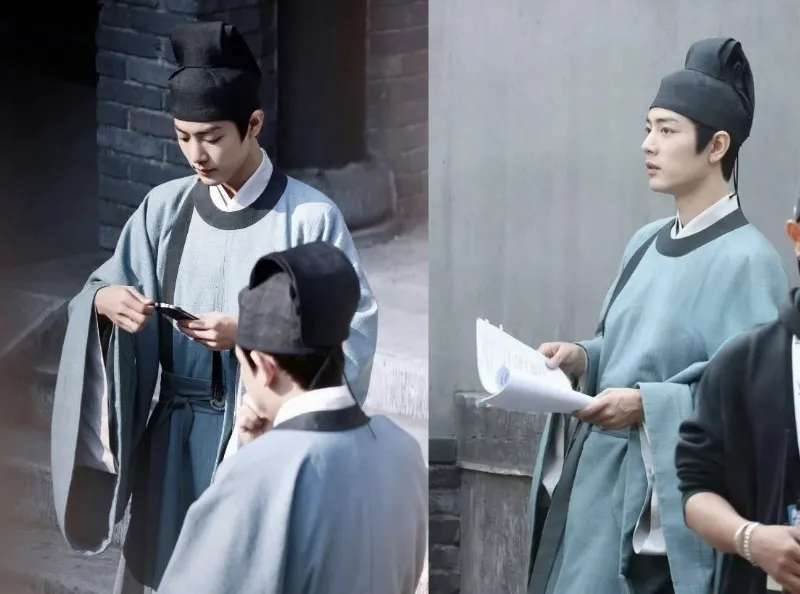
The lanshan in the Song and Ming dynasties had differences, but both had a horizontal hem. According to "History of the Song Dynasty: Records of Ritual Paraphernalia", "The lanshan is made of fine white cloth, with a round collar and large sleeves. A horizontal hem is added at the bottom as a skirt, and there are pleats around the waist. It is worn by Jinshi (successful candidates in the highest imperial examinations), students of the Imperial College, and students in prefectural and county schools." In the Song Dynasty, lanshan was commonly made of white cloth, showing students' neatness. Jinshi and students at all levels could wear it. Its design features a round collar, wide sleeves, a horizontal hem below the waist as a lower skirt, and pleats around the waist. Dark - colored edges surrounded the collar, cuffs, and hem, creating an orderly beauty.
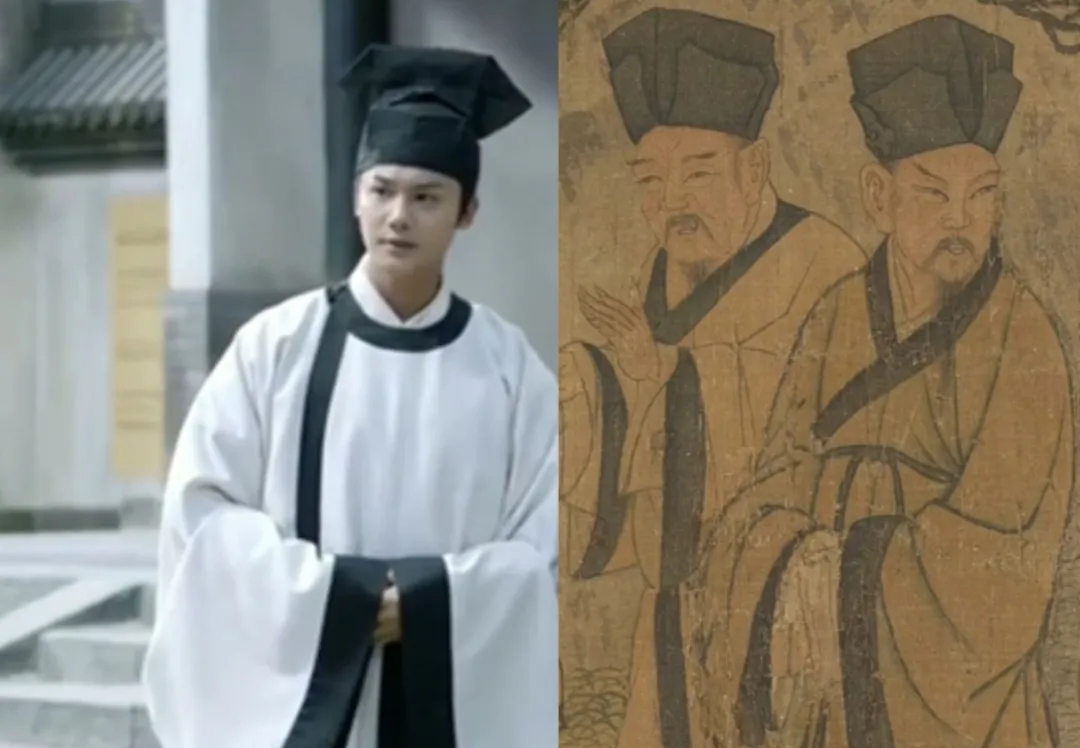
From ancient paintings, in non - formal occasions, the Song - style lanshan in daily life had other color schemes like off - white and brown, but no blue. The edges must be black. The Song - style lanshan didn't have slits on both sides, and the horizontal hem was pleated on both sides of the body. One could wear a Confucian cap or a Dongpo cap, with no fixed style for the cap, which could be chosen according to the wearer's situation and preference.
Previously, in ancient - costumed dramas, the Song - style student clothing was more common, while the Ming - style was less. The Ming - style lanshan was mostly in dark colors, commonly blue. In the 24th year of the Hongwu era, Emperor Taizu of the Ming Dynasty determined the style of scholars' clothing: made of light - colored silk or cloth, with wide sleeves, black edges, and a black belt. Wearing a soft cap with hanging ribbons, it was called lanshan. Later, it was changed to wearing a Confucian cap, and the clothing became dark blue, while the sleeve edges remained black, so it was also called "blue shirt".
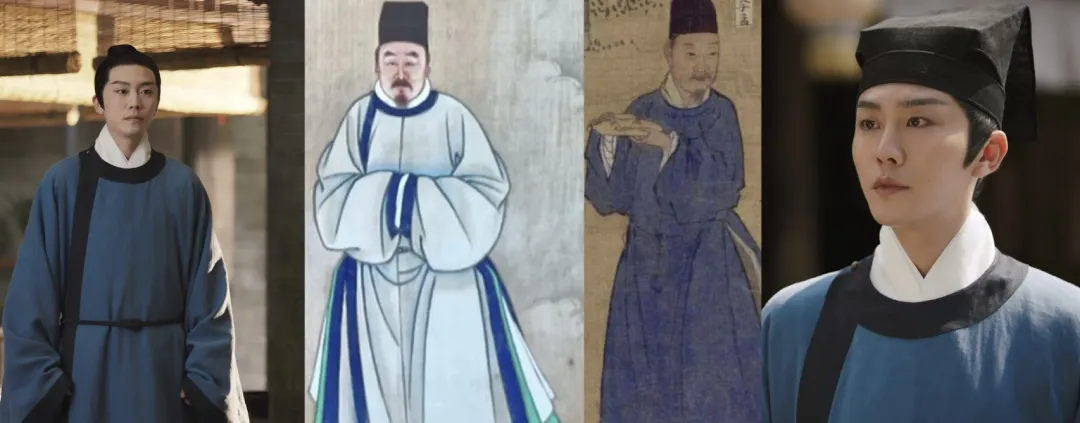
In terms of appearance, many misjudge the Song - style lanshan as the Ming - style because they look similar. In the Ming Dynasty, there was a hierarchical division for lanshan, and common people couldn't wear it casually. In the early Ming Dynasty, the lanshan had slits on both sides with outer flaps. So the biggest difference between the Song - style and Ming - style is whether there are slits and outer flaps at the bottom (the Song - style doesn't have them). Wearing a Confucian cap, its front was lower than the back, with a sloping top and a pair of soft ribbons hanging in the middle and back. By the middle and late Ming Dynasty, the color combinations were more diverse, but most were still mainly in the blue color system, looking more rigorous and solemn.
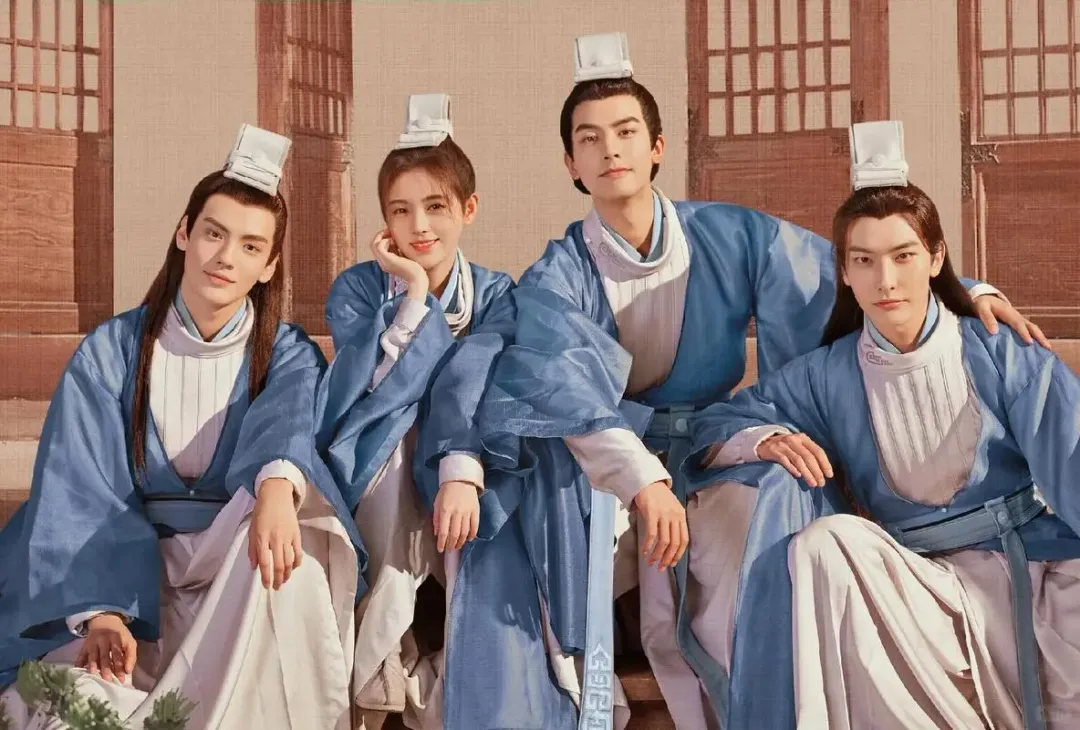
In previous ancient - costumed dramas, the school - style student clothing was mostly a combination of elements for the screen. It seemed unified but was rather nondescript. For example, wearing a long - crowned hat in the Han - style with a round - collar robe and a front - buttoned jacket was just a pile of elements without the charm of students. Real students and Confucian scholars should have the spirit of adhering to their lofty aspirations in blue shirts. The elegant blue combined with students can better reflect the gentleman's courtesy and grace.
Now, with the improvement of research levels, the student clothing in ancient - costumed TV dramas is gradually returning to its historical prototype and getting better. Let's look forward to more and better visual works of costumes and props!