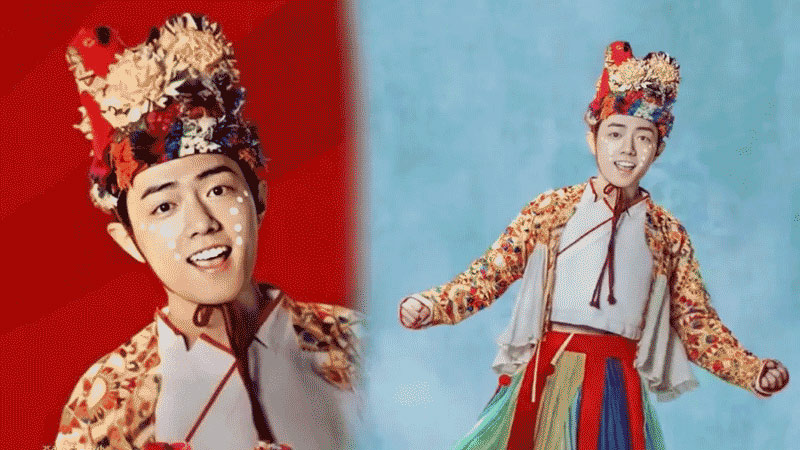
When actor Xiao Zhan (肖战) appeared in the 2018 fantasy film Monster Hunt 2 (捉妖记2) wearing a bizarre hat adorned with a colorful array of flowers, it sparked curiosity and amusement among viewers. Many wondered about the inspiration behind such an unusual accessory, which looks like a miniature garden perched on his head. Little did they know that this design has historical roots dating back to China's Northern Song Dynasty (960-1127), where a similar aesthetic known as Yi Nian Jing (一年景) was popular. This concept involved combining floral elements from all four seasons to symbolize completeness and eternal beauty, often used in clothing, jewelry, and art.
The hat in the film, set in the fictional Yongning Village, echoes this tradition, showing how ancient Chinese culture continues to influence modern storytelling. This article explores the fascinating connection between Xiao Zhan's cinematic headpiece and the historical Yi Nian Jing, delving into its origins, significance, and contemporary relevance.
Historical Roots
The Yi Nian Jing aesthetic first gained prominence during the late Northern Song Dynasty, particularly around the Jingkang period (1126-1127), as recorded in historical texts such as Lu You's (陆游) Lao Xue An Notes (老学庵笔记). According to these records, it was a style that integrated symbols from the four seasons into a single design, commonly seen in textiles, women's accessories, and household items. For example, spring might be represented by peach blossoms, summer by lotus flowers, autumn by chrysanthemums, and winter by plum blossoms, all combined to depict the passage of a full year. This was not just a decorative choice but held deeper meaning, reflecting the Chinese philosophical appreciation for natural cycles and the ideal of harmony.
The term "Yi Nian Jing" itself suggests a panoramic view of the year, and it was part of a broader cultural trend that valued artistic expression tied to seasonal changes. Artisans of the time often used artificial flowers made from silk, paper, or other materials to create lasting decorations, as real flowers would wither quickly. This practice allowed the beauty of nature to be preserved and enjoyed indefinitely, much like the eternal spring depicted in art.
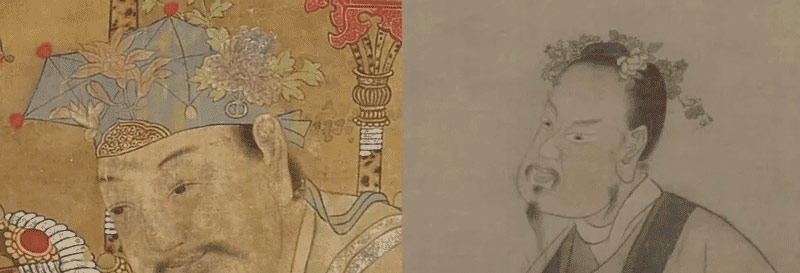
In addition to material culture, Yi Nian Jing influenced literature and painting. The Tang and Song dynasties saw artists like Wang Wei, who famously painted flowers from different seasons together in a single scene, disregarding temporal constraints for aesthetic effect. This romantic approach to art allowed for creative freedom and symbolized the timelessness of beauty. Historical artifacts, such as the Portrait of Song Renzong's Empress (宋仁宗皇后像), provide visual evidence of this style.
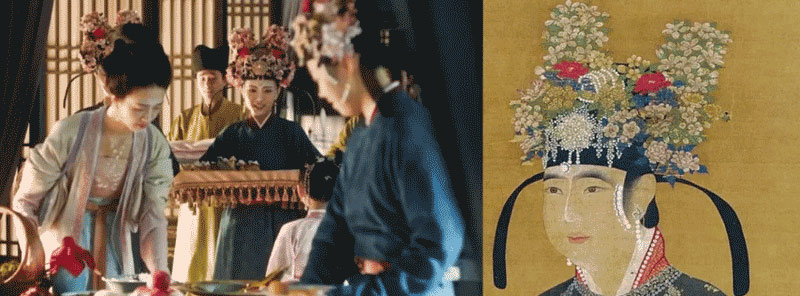
In the portrait, court attendants wear elaborate headdresses decorated with a multitude of flowers, including camellias, apricot blossoms, and roses, which scholars identify as examples of Yi Nian Jing or similar concepts. These headpieces, sometimes called huaguan (花冠), were intricate and lavish, often made with precious materials. They were worn by women in the imperial court, as described in Song poetry, where phrases like "myriad flower branches" evoke the richness of such adornments. The style was also associated with specific types of headwear, such as the Futou (幞头) or Chuijian Guan (垂肩冠), which were embellished with floral arrangements to signify status and beauty.
The popularity of Yi Nian Jing is closely linked to the social customs of the Song Dynasty, particularly the practice of wearing flowers in hair, which was common among all classes. Since fresh flowers are perishable, people often used imitations crafted from silk, gold, or even jade to achieve a similar effect. This custom highlights the importance of aesthetics in daily life and the desire to embody natural beauty. Interestingly, the timing of Yi Nian Jing's emergence—coinciding with the end of the Northern Song—led some historians to interpret it as a symbol of the dynasty's impending collapse, as "having all seasons" might imply a finale.
However, the style continued into the Southern Song period, indicating its resilience and cultural significance. Beyond its symbolic meanings, Yi Nian Jing represented a technical achievement in craftsmanship, requiring skill to balance diverse elements harmoniously. It served as a means of expressing wishes for prosperity and happiness, as flowers are often associated with positive attributes in Chinese culture. This multifaceted approach to design made it a enduring element of Chinese art history.
Modern Expressions
The 2018 film Monster Hunt 2, directed by Raman Hui, features Xiao Zhan as a young monster hunter from Yongning Village, and his distinctive flower hat has become a talking point. This headpiece, with its chaotic yet charming arrangement of blooms, directly references the Yi Nian Jing tradition, demonstrating how historical fashion can be adapted for contemporary audiences. In an interview, the costume designers mentioned studying Song Dynasty art to ensure accuracy, even while adding fantastical elements. This attention to detail helps bridge the gap between past and present, making ancient culture accessible and engaging. Moreover, the hat's design aligns with the film's themes of harmony between humans and monsters, mirroring the seasonal balance in Yi Nian Jing. As such, it serves as both a visual delight and a subtle educational tool, inviting viewers to appreciate the depth of Chinese heritage through entertainment.
Television series like Serenade of Peaceful Joy (清平乐) have played a key role in reintroducing Song Dynasty aesthetics to the public. The show's costume design, overseen by experts, includes elaborate headpieces that feature flowers from multiple seasons, much like the historical Yi Nian Jing. These designs are based on extensive research into artifacts and texts, ensuring authenticity.
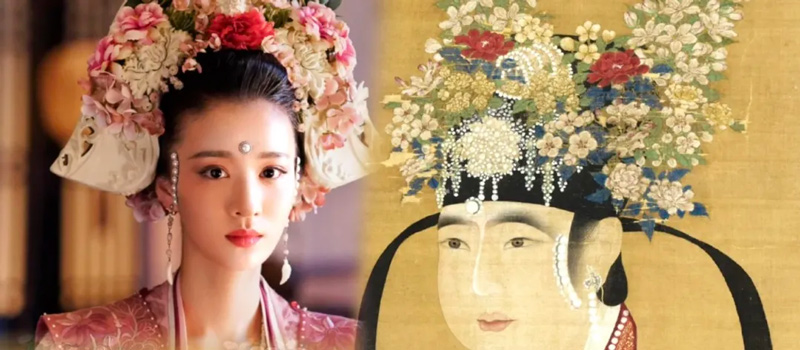
Similarly, in the fashion industry, designers have launched collections that use floral combinations symbolizing the four seasons, often in embroidery or prints on garments such as Qipao or modern dresses. This trend is part of a broader cultural movement where traditional Chinese elements are celebrated and reinvented. Events like fashion weeks in Beijing and Shanghai frequently showcase such designs, highlighting the enduring influence of historical art on contemporary style and how it resonates with global audiences.
The enduring presence of Yi Nian Jing in contemporary culture demonstrates its adaptability and lasting significance. This aesthetic principle, born in the Song Dynasty, continues to inspire artists and designers today, proving that good design transcends time. From the silver screen to the runway, the combination of flowers from all seasons serves as a metaphor for unity and perpetual beauty.
As we encounter these elements in modern media, we are reminded of the rich tapestry of Chinese history and its ongoing dialogue with the present. The floral hat in Monster Hunt 2 is a playful yet profound example of this continuity, inviting us to explore the depths of cultural heritage and its potential to foster creativity in unexpected ways.