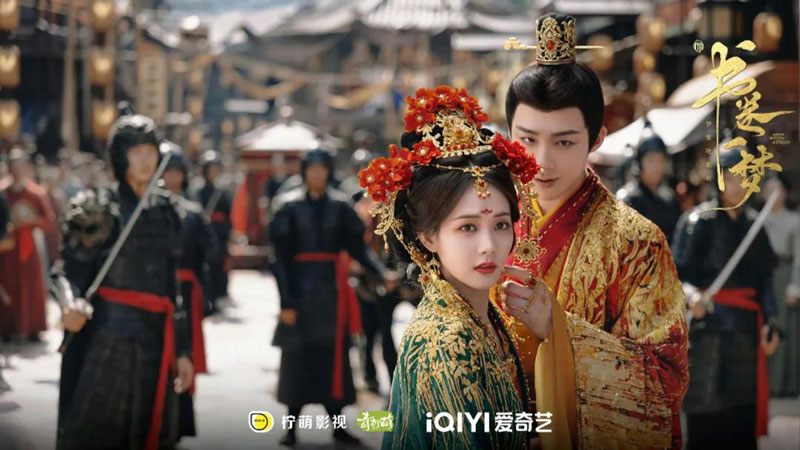
That breath of fresh air in period dramas? A Dream Within A Dream just wrapped up—and it did something rare: it broke the tired rules while making us laugh and cry.
Right out the gate this summer, it grabbed attention as the frontrunner among historical shows. Its trick? A clever "story-within-a-story" setup that pulled viewers behind the curtain of its own creation.
Then came the accelerated finale. Every "cardboard character" woke up, shattered their scripted chains, and steered both story layers toward a proper happy ending. That move? Pure genius—sharp, funny, and weirdly touching.
Trying to pin this show to one genre is hopeless. If I had to force it:
A modern woman crashes into a script, hijacks her fate, and inspires her 2D co-stars to grab free will.
An "ambition-only" actress melts her own rules and falls hard.
By roasting tired tropes, it stitches together a new vision for costume dramas—breaking the mold to rebuild it.
No wonder fans rallied behind it. We've all suffered through enough paint-by-numbers historical romances.
Scrolls became our "proxy voice"—even swinging the knife at lazy writing for us. That cathartic chaos? Like hiring a top-tier real paid online arguers when you're outmatched in a fight.
But what really matters? How it tackles the industry's "involution" (内卷)—that race where every new drama tries to out-spend, out-prestige, out-heavy the last.
Bigger budgets? Grounded characters? Real-world politics? UNESCO-level costumes? Fine. But must all "prestige" costume dramas stiffen into historical textbooks? Scrolls proves there's another way: Smash the old playbook. Then rebuild it—with wit and heart.
 Why "Waking the Cardboard" Matters
 Why "Waking the Cardboard" Matters
When Scrolls premiered, hype was high—but I kept my guard up. Why?
We've drowned in gimmicky premises lately: rebirth, book-leaps, time-skips, alt-history, infinite loops... you name it. Single jumps, group jumps, forward flips, reverse flips—all botching the landing.
Most use "transmigration" just to hand the hero a cheat code (金手指). Zero interest in exploring time, history, or free will. That traps writers in dead ends: the "just-a-dream" cop-out or an ending that bulldozes logic.
Scrolls dodged both. Every character—major or minor—lands where they belong. Two airtight worlds (script vs. reality) knot together seamlessly. And its gentle final fable? It leaves questions that stick.
That climax—where scripted characters realize they're fictional—solves three problems in one swing:
Flattens power gaps: No "chosen one" when the whole cast gains consciousness.
Mocks the fiction/reality wall: Giving both worlds a real happy ending avoids cheap nihilism.
Questions creative formulas: If characters can revolt against their storyboard, maybe we can fight algorithm-driven sameness.
That's its anti-involution magic. Instead of dumping cash into heavier costumes, it bets on bold storytelling—freeing energy for real character growth.
Will this become a template? Maybe. But A Dream Within A Dream just proved fantasy can feel new without a blockbuster budget. I walked in wary of another shiny trick. I walked out grinning, moved, and—honestly—shocked by how neatly it tied its double-layered bow.
From a storytelling perspective, A Dream Within A Dream goes all in on narrative tension and plot rigour—it doesn't let itself off easy.
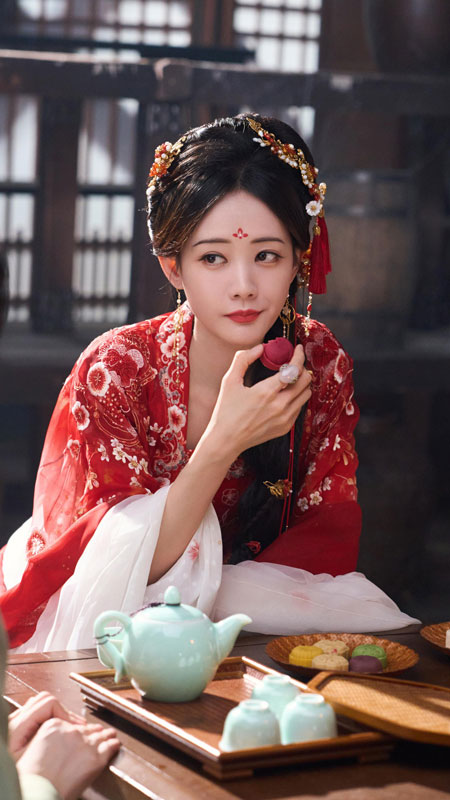
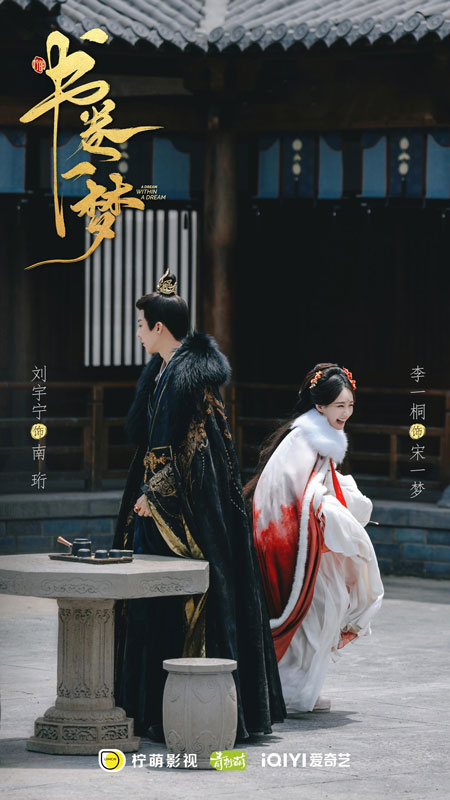
A present-day actress, Song Xiaoyu (played by Li Yitong), gets pulled into the script of A Dream of Qingning and finds herself playing the lead role, Song Yimeng. Early on, she tries to game the internal rules of the script world to rewrite her character's tragic arc. Along the way, she uncovers the true natures of those around her and even reverses her feelings toward the male lead, Nan Heng (played by Liu Yuning). But despite her best efforts, she's still trapped inside the progression of preordained highlight scenes—a mechanical structure that forces her to act out key scripted moments.
And then things escalate. Later in the story, the screenwriter Bi Xiong also crosses over into the world of the script. He constantly tempts the heroine to just finish the plot as written, to hurry up and get back to the so-called "real" world. His presence tightens the narrative noose even more.
At that point, between the rigged mechanics of the fictional world and the meddling of its original writer, everything points to a doomed outcome for the leads—a classic BE (bad ending). If the creative team had gotten lazy, they could've easily defaulted to the standard "reset" ending: the heroine wakes up from the script world, accepts her emotional growth, and moves on with her life. The end. A familiar, hollow wrap-up.
But A Dream Within A Dream refuses to go out like that.
Instead, it delivers a twist: the "paper people" awaken.
In the final arc, the two leads re-enter a kind of "infinite loop" storyline. As they try again and again to change their fates, they stumble upon a method to awaken everyone in the script. Together, the entire cast overthrows the mechanics of the plot world itself. What follows is a happy ending that isn't handed down from above, but built by collective will: the leads get justice and love, and the fictional characters take back authorship of their world.
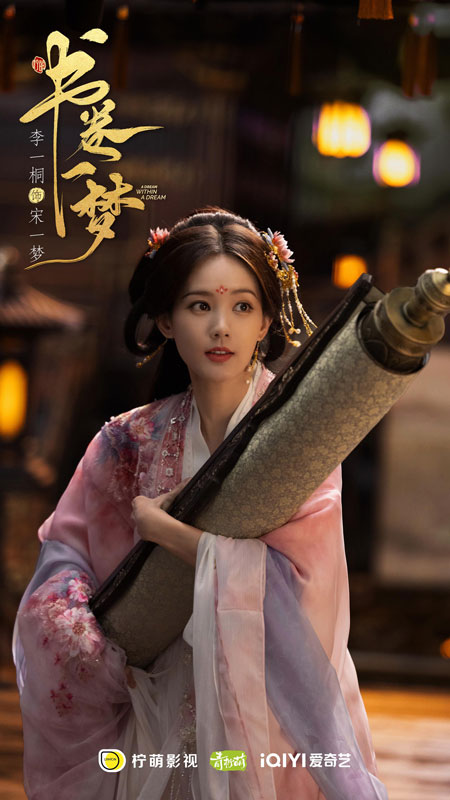
On one level, it allows for the characters to grow into their fates, rather than be saved or sacrificed for plot convenience. If the heroine had simply "woken up" and left the dream behind, that would've been an admission of defeat—an escape into nihilism. If she had stayed and magically conquered the world using a cheat code, that would've been mere wish fulfillment.
But here, the ending walks a different line.
If the script world is a one-dimensional plane, the creators enter from a two-dimensional perspective, asking: what if fate could be rewritten not through escape, but through resistance? What if the system itself could be rebuilt?
And it doesn't stop there. In the finale, there's a sly reveal: the original script A Dream of Qingning has been renamed A Dream Within A Dream. The credited director and screenwriter? Guo Hu and Ren Zhuangliu—the actual creators of this very series. So if the book world is 1D, and the fictional authorial layer is 2D, then this meta moment suggests that rewriting the story within those planes can ripple outward and reshape the script itself—the third dimension.
And we, the viewers, occupy a fourth dimension.
We don't know if fate exists in the fourth dimension—but what the show suggests is this: even within the nested worlds of fiction, the struggle to defy fate in one layer can shake the next. For those of us who followed the leads on this journey—emotionally, intellectually—that's the real reward: the idea that resistance, not surrender, leaves a mark.
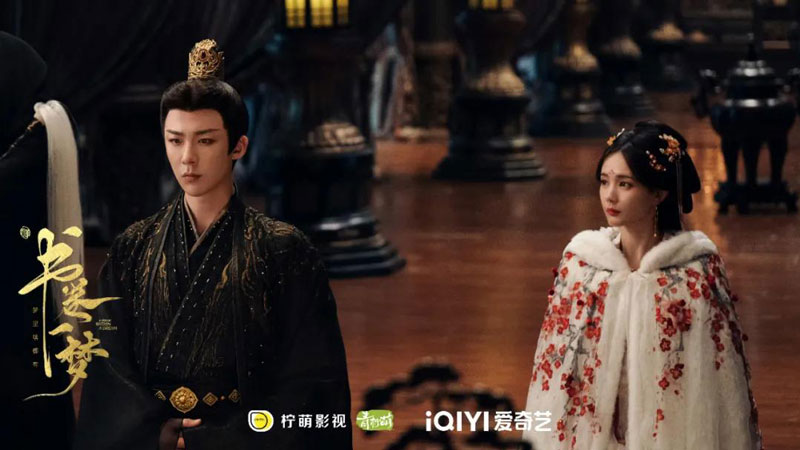
Had this awakening only applied to Song Yimeng and Nan Heng, it would've been the usual protagonist-centric satisfaction. But in A Dream Within A Dream, everyone in the script world gets to wake up—and must wake up.
By the final act, each character—supporting cast, side characters, even nameless extras—has their own destiny plan in motion. Self‑agency replaces nihilism. And suddenly, the heroine's "power fantasy" of rewriting her fate becomes a collective uprising, a rallying cry for everyone to seize control.
You could say A Dream Within A Dream doesn't just avoid a bad ending—it sets off a firework at the end. A loud, bright, multi‑coloured bang of narrative rebellion, giving voice to every "flat" character who ever wondered if their story could change.
 Can an Infinite-Loop World Be Taken Seriously?
 Can an Infinite-Loop World Be Taken Seriously?
Beyond its life philosophy, A Dream Within A Dream also builds out a worldview that goes deeper than your average time-travel plot. And by "worldview," I don't mean the internal rules of the fictional setting. I mean how the characters perceive reality itself.
One key question the show asks is: Should we treat the world like a game? That idea is mainly explored through the heroine's journey.
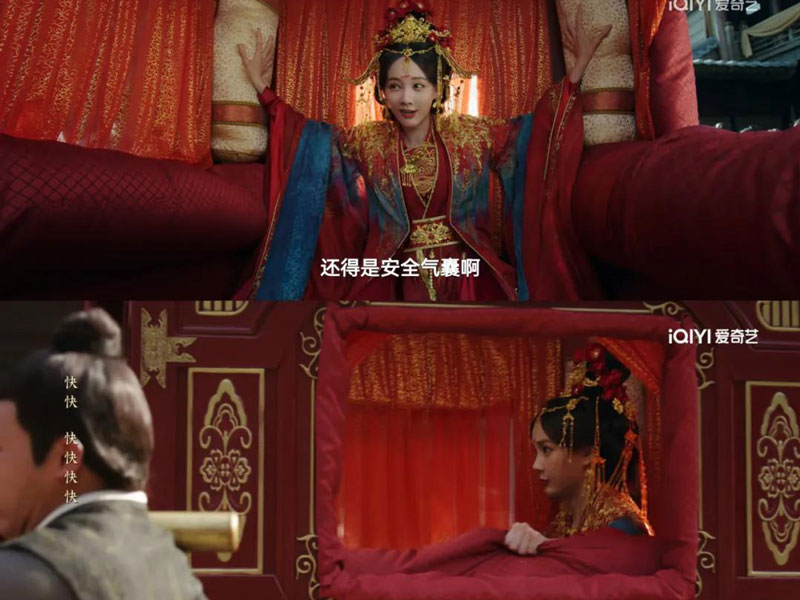
When Song Yimeng first lands inside the script, her attitude is anything but serious. The early episodes lean heavily into "game mode," especially the comically exaggerated "infinite loop" wedding arc. She approaches her mission—to marry the second male lead—like a player retrying a level, restarting again and again to overcome a cascade of obstacles: a carriage crash, a trip-and-fall, a fire pit, falling debris. All she cares about is clearing the "marry-the-second-male-lead" quest.

But once she figures out how the world's "fate reset mechanism" works, something changes. She stops gaming the system and starts really living inside it. And as she begins to inhabit the world, she uncovers certain truths—not just about people, but about perspective itself.
If you carry prejudice, you'll only ever see what confirms it. But the real world—and the real people around you—only reveal themselves when you stop observing from a distance and start engaging. That's when the flatness fades and people become whole: complex, vulnerable, lovable.
If you're always strategizing, always watching the clock and calculating the odds, you'll miss the present. The only way to truly live is to stop treating your life like it's happening elsewhere.
In this way, the idea of the "paper people" waking up is really about giving everyone in the script world the dignity of being the protagonist of their own story. But Song Yimeng's fierce determination to protect that world is what grants the setting its seriousness.
The "infinite loop" that reappears at the end, when the characters decide to fight back and reset everything, stands in stark contrast to the absurd, game-like loop at the beginning. That contrast itself marks a shift in worldview.
How do you live when you know your life is scripted?
This question gets explored through two male characters: Nan Heng and Chu Guihong (played by Wang Youshuo). Both men, at some point, realize they're living in a fictional "storybook world"—but their reactions diverge sharply.
Chu Guihong, upon discovering the truth, chooses to exploit the rules. He sees the narrative as a ladder and is determined to climb to the top, no matter the cost. He's willing to sacrifice friends, allies, even entire battalions of soldiers, just for a sliver of advantage. His ultimate ambition? Kill the screenwriter and become the sole author of this world's fate.
Nan Heng, by contrast, is shaken by the same revelation. His first response is existential: despair, confusion, a deep sense of meaninglessness. But he doesn't stay lost for long. He finds guidance from a humble character named Fugui (played by Wang Chengsi), whose simple worldview offers a stabilizing idea: everyone needs their own "reef"—a solid point to cling to in rough waters.
Nan Heng begins to understand that even if you can't rewrite the system, you can still choose how to live within it. You can retain your dignity, build real relationships, and shape your own inner life. And when the chance to challenge the system does arrive—you take it.
All time travel is metaphor.
No matter how wild the premise, all stories about moving through time are, at their core, echoes of the present bouncing off imagined pasts and futures.
The worldview and philosophy that A Dream Within A Dream puts forward may look like a fairy tale built on fantasy logic. But at heart, it's reaching for something much more grounded: a contemplation of fate, causality, and human agency in the face of time.
What the fantastical premise offers is not escapism, but a kind of narrative safe zone—a stylized distance that lets the creators pose serious, even painful questions about life without being heavy-handed. It's "playing light while lifting heavy"—gracefully balancing philosophical weight with aesthetic wit.
 Create the Subtle Sense of Estrangement
 Create the Subtle Sense of Estrangement
At its core, time-travel—or book-jumping, in this case—is always about contrast and collision between two or more worlds.
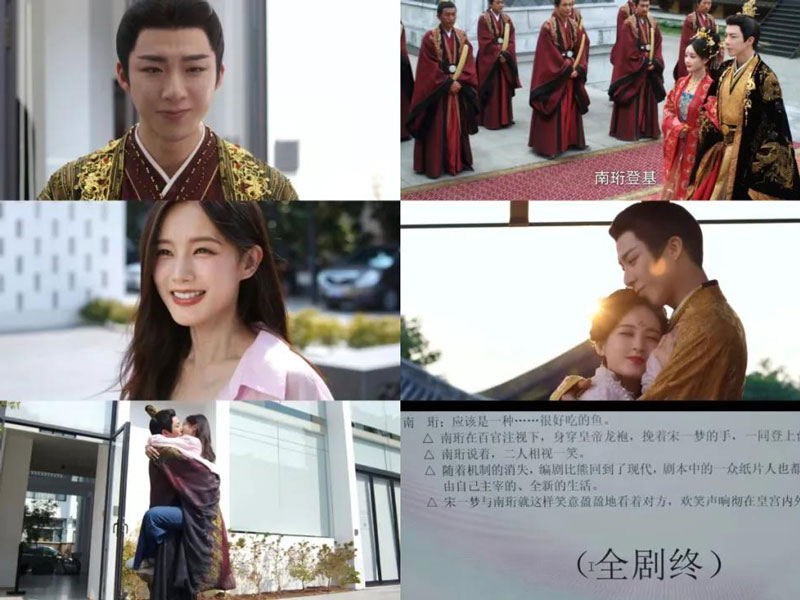
If a story wants to offer more than just a pleasant "daydream" for viewers to get lost in, it needs something to pull the audience out of the fantasy now and then—a little friction, a reminder that we're still looking in from the outside. This is where A Dream Within A Dream excels: in building a subtle, intentional sense of estrangement ("间离感", a Brechtian concept of distancing).
And this distancing is exactly what gives the show its spark of originality.
The show opens by clearly establishing two primary worlds:
–The "real" world where actress Song Xiaoyu lives,
–The fictional world of the period script, where she takes on the identity of Song Yimeng, the daughter of a high-ranking official.
The narrative tension—the magic—is born from her "transit" between them. But what keeps the story grounded is how the show handles the fusion of these two realities. It builds its sense of estrangement in two ways:
–By constantly foregrounding the fictionality of the script world.
–By reinforcing Song Yimeng's modernity as someone out of place.
In terms of fictionality, the period world may look like ancient China on the surface, but under the hood, it runs entirely on screenwriting logic.
Characters are rigidly sorted into protagonists, supporting cast, and "plot tools." The lead has the aura of invincibility; supporting characters exist to serve specific functions; tool characters don't even get full backstories. The world's rules don't follow economics or politics—they follow script mechanics and the unwritten laws of costume drama tropes.
Perspective is another game. Sometimes we get "God's eye view" with full access to the truth. Other times, the characters are locked into limited, biased POVs. This kind of narrative sleight-of-hand only works in fiction, and the show winks at us to make sure we don't forget it.
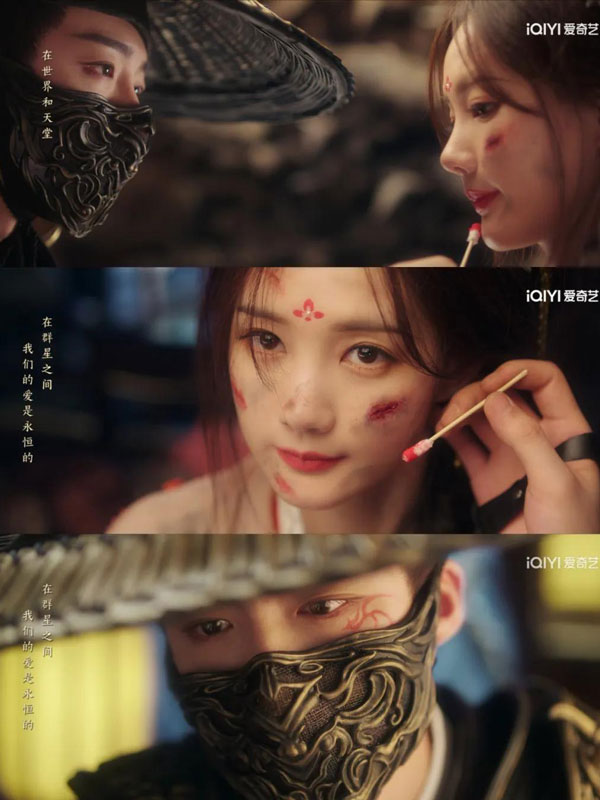
Then there's Song Yimeng herself—a character who never really loses her modern self.
The show goes out of its way to preserve her way of speaking, her contemporary values, and her meta awareness as someone who works in film and TV. She's a critic, a participant, and a walking audience surrogate all in one.
She snarks constantly. She mocks stale romantic clichés and lazy plot devices in costume dramas with endless creativity.
She predicts the outcomes of scripted moments—"If I jump off this cliff, I definitely won't die"; "In a drama like this, a kiss will probably wake him up"—and uses those insights to guide her decisions.
She drops lines like, "A good writer should cherish every single character," and she genuinely grieves for unnamed extras labeled only as "Passerby A, B, or C." That's not just empathy—it's a modern sensibility that cuts against the grain of the world she's in.
And when she finally catches feelings? The soundtrack shifts. We hear English BGM playing from her perspective. It's a hilarious, delightful touch that reminds us, again, that she's not from here. She's not really "inside" the world, even though she's living in it.
All of these touches—the visible tropes, the snark, the self-aware logic hacks—serve to reinforce that subtle distance. They don't break immersion; they sharpen it. Because what A Dream Within A Dream does isn't escapism—it's reflection, with just enough narrative distance to make the audience laugh, think, and feel all at once.
The visual and auditory design of A Dream Within A Dream plays a major role in amplifying the show's sense of "estrangement" from its fictional world.
For example, the series frequently uses fast-forward and reverse-play effects to underline the nonlinear nature of time in the script world. It features "bullet-in-bullet" effects—onscreen scenes that include simulated bullet comments—mimicking the experience of watching as an online viewer. The soundtrack also breaks expectations: children's songs turned into rap, bursts of heavy metal… all of it reinforces that this world is scripted, stylized, and far removed from any authentic historical past.
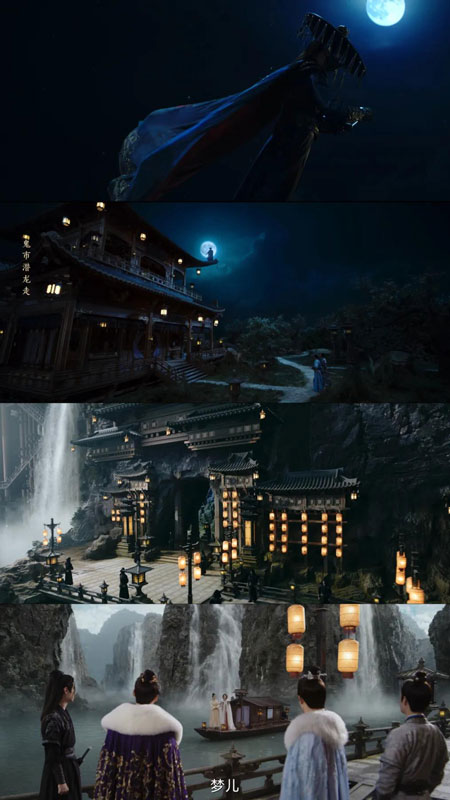
There's also a distinct in-world location that receives a particularly modern treatment: the Remnant River Moon, a base of operations for the show's mysterious organization, the Night Wanderers.
To design this space, the creators borrow heavily from Chinese-style martial arts manhua—bold aesthetics, exaggerated costumes, and stylized visuals—paired with game-like transition effects and camera movements. It's spectacular, and deliberately so. The intent is clear: this isn't some preserved ancient reality, but a constructed past born from the imagination of a modern screenwriter. And that's why it feels modern. It's meant to.
The strong word-of-mouth and positive reception for A Dream Within A Dream prove one thing loud and clear: Costume dramas don't have to pose as historical dramas to be considered "high-quality."
Imaginative play with time and space—using the past to echo modern concerns—has always been part of the genre's artistic DNA. That's not a flaw; it's a feature.
Of course, even with a fantastical premise, you can't just make a mess of things and walk away like nothing happened. If the show hooks you in with its wild, deconstructive energy, it keeps you with something else: a bold act of reconstruction.
This series pulls the viewer into the "paper people" narrative using the audience's own eyes—our frustration with lifeless tropes, our curiosity about characters pushed to the background. It metaphorically maps the gap between a character's setup and their actual personality onto the gap between prejudice and truth, between how we see the world and how it really is. And in the end, it lets the "paper people" break free, smashing the wall between fiction and reality in a celebration of collective awakening.
Its unique book-jumping premise and unwavering commitment to estrangement don't just give it a fresh creative flavor—they also light up a new path forward for the costume drama genre.