-

Did Song Zuer Really Wear Underwear as Outerwear?
In a recent preview for the period drama Biao Mei Wan Fu (表妹万福), set against a Ming Dynasty backdrop, actress Song Zuer's (宋祖儿) character is seen outdoors wearing what appears to be a structured, clasp-fastened undergarment. This has sparked a fiery online debate: Was it historically accurate for a woman to reveal her inner wear during this era, or is this merely a creative costume design choice? The scene challenges modern perceptions of Ming fashion, often imagined as uniformly modest and restrictive. To understand this sartorial choice, we must delve into the specific garment in question and its place in the private versus public life of a Ming gentlewoman. Zhuyao Unveiled The garment causing the stir is not a modern invention but a historical piece known as a Zhuyao (主腰). Popular during the Yuan and Ming periods, it was sometimes poetically called a "pleasure-binding jacket." Its defining feature was a front opening secured by ties or clasps, a distinct departure from the more common wraparound styles. While the overarching term for inner wear in this period is often debated, the Zhuyao stands out for its tailored construction. Surviving artifacts show it could be worn with or without shoulder straps, which could…- 105
- 1
-
Why Did Ancient Chinese Women Wear Combs in The Prisoner of Beauty?
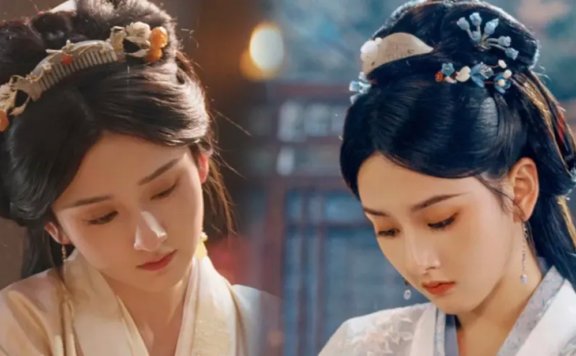
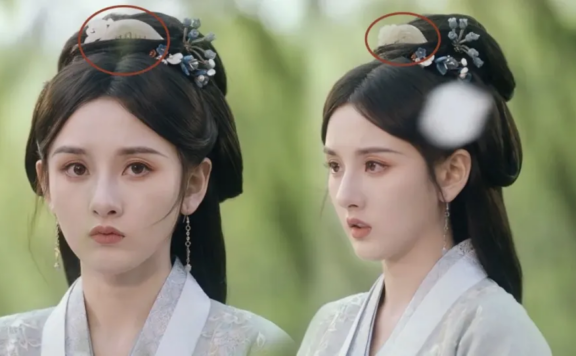
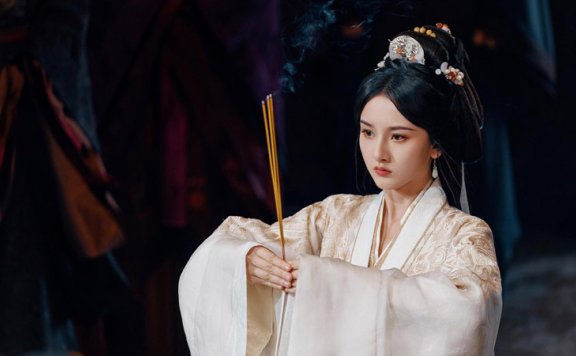
In the historical drama The Prisoner of Beauty (折腰), actress Song Zuer (宋祖儿) portrays a character whose hairstyle features an elegant hair comb, sparking curiosity about ancient customs. This accessory is not merely decorative; it represents a practice with roots stretching back over five millennia. Throughout Chinese history, combs transitioned from simple tools to sophisticated ornaments, reflecting changes in society, fashion, and personal expression. The sight of a comb nestled in a hair bun invites questions about how daily objects became symbols of beauty and status, weaving functionality with artistry in ways that still captivate today. Early Origins The journey of hair combs began in the Neolithic period, as early societies sought ways to manage hair for practical reasons. Initially, people may have used their fingers or rudimentary implements, but over time, dedicated combs emerged. Archaeologists have uncovered combs made from bone, wood, and stone at ancient sites, indicating their widespread use. These early versions were likely designed to prevent hair from obstructing tasks like hunting or farming, but they soon took on greater significance as personal grooming evolved. By the Warring States period, combs started serving decorative purposes alongside their practical functions. Excavations from this era reveal combs with…- 120
- 0
-
Song Zuer's Bone Art Figure Sparks Concern Amidst Career Resurgence
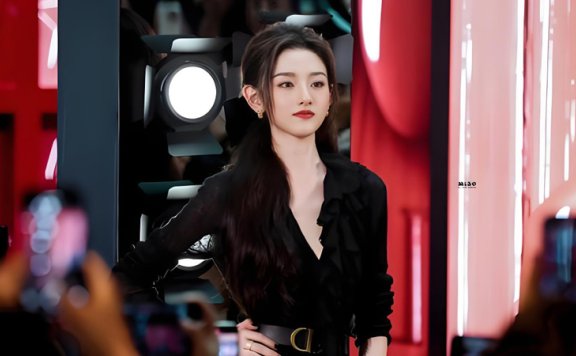
On a bustling September afternoon in 2025, Song Zuer (宋祖儿) stepped into Nanjing’s Deji Plaza, instantly turning the shopping mall into a frenzy of flashing cameras and excited whispers. Clad in a sleek black dress and stiletto heels, her frame—defined by razor-thin legs and a collarbone that cut through the light—ignited a storm of conversation: Was this the peak of elegance, or a worrying extreme? As fans jostled for photos and social media exploded with posts, one question loomed larger than the crowd itself: In the era of "flow aesthetics," where does beauty end and health begin? The Nanjing Spectacle Up close, Song’s figure defied typical standards. Her legs, straight as pencils, seemed to stretch endlessly beneath the hem of her dress. Every contour of her collarbone and ribcage was visible under the spotlights, sparking gasps from onlookers. "This isn’t just slim—it’s a work of bone art," murmured a fan nearby. The scene split opinions: Some praised her discipline, calling it "what stardom demands," while others frowned, muttering, "Is this even healthy?" Compared to her earlier "cheerful girl" image with a round, lively face, her current look felt like a drastic shift, leaving many to wonder, "How long can she…- 93
- 0
-
Who's the New Leading Lady of Cdramas?
The last two years in the drama market have felt like a desert: too many misses, too few real hits. When it comes to the industry's definition of who can "carry a drama" (扛剧, means recognition from producers and platforms, not just fan hype), producers and platforms are becoming much more cautious. Compared to the so-called "traffic stars" whose pulling power is always in a Schrödinger's cat state—sometimes effective, sometimes an illusion—the top actresses who have built their status step by step through solid works are generally seen as the real deal when it comes to carrying a show. But in just one year, even this assumption has been shaken hard by the turbulence of the market. This rundown isn't about crowning or dismissing anyone—it's about looking closely at how these actresses are holding up in the storm: what they still have in hand, and what is slipping through their fingers. Yang Zi and Zhao Liying: Invincible Status? If we're talking about who still has an "unbroken golden body" (metaphor for a stable, almost invincible status), from the '85 generation to the post-2000s, it really feels like only Yang Zi (杨紫) and Zhao Liying (赵丽颖) remain. Zhao Liying's The Legend…- 249
- 0
-
Song Zuer's Blue Robe Sparked Attention in Biao Mei Wan Fu
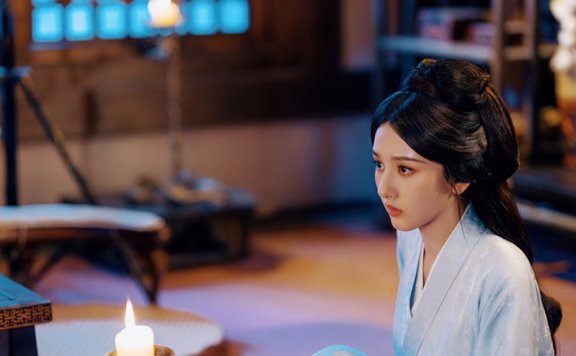
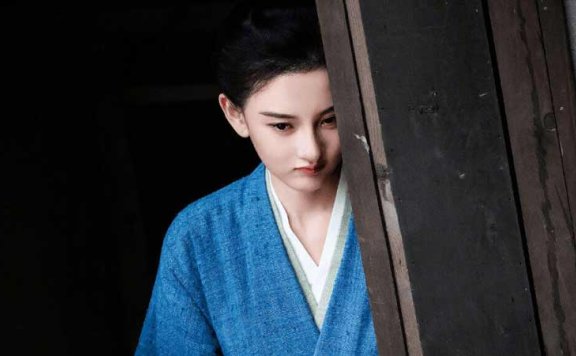
A single photograph can redefine an actor's image. Recently, a set of behind-the-scenes images from the filming of the upcoming period drama Biao Mei Wan Fu (表妹万福) ignited social media. At the center of this storm is actress Song Zuer (宋祖儿), whose unexpected transformation into a scholarly young man captivated viewers far more than any promotional campaign could. Her portrayal in crisp blue traditional male attire, hair pulled high, offered a startling departure from her usual vibrant persona, presenting a figure of refined elegance and subtle mischief. This striking visual wasn't merely a costume change; it became a powerful statement about versatility and the magnetic pull of a compelling character introduction. The image of her leaning against an ancient wooden door, a knowing, almost roguish smile playing on her lips, instantly crystallized into the most talked-about moment of the week, proving the enduring fascination with masterful disguise and character depth. The Viral Moment The photograph that dominated feeds featured Song Zuer draped in a simple yet elegant azure long gown, her hair secured in a traditional topknot. Gone was the familiar sparkle of the youthful star; in its place was an air of detached coolness and intellectual grace. The starkness of…- 184
- 0
-
How China's Actresses Are Rewriting History Through Fabric
The camera pans across a tea garden, lingering on Gulnazar as her fingers dance over the Guqin (古琴). It’s not just the melody of Glory (玉茗茶骨) that captivates; it’s the silent narrative woven into her Ming Dynasty attire – a robe embroidered with gold thread against deep, resonant hues. This moment, captured in a single leaked still, ignited more than fan chatter; it sparked a nationwide fascination with Ming aesthetics. Actresses like Yang Zi, and Gulnazar aren't merely wearing costumes; they're embodying an era, proving that historical accuracy can be breathtakingly modern. Beyond the Brocade Gone are the days of generic "ancient" costumes dominated by flimsy silks and anachronistic designs. Song Zuer’s portrayal in Biao Mei Wan Fu (表妹万福) offered a revelation: Ming fashion could be refreshingly delicate. Her sky-blue short jacket, paired with a crisp white horse-face skirt (Mamianqun) edged in indigo, presented an aristocratic elegance far removed from stifling opulence. Audiences noted the quiet confidence it projected, a stark contrast to the exaggerated finery often seen. Then came Yang Zi in Jia Ye (家业). Dressed not as nobility but as an artisan, her practical work clothes – sturdy fabrics, precise cuts – spoke volumes about Ming societal structure and…- 139
- 0
-
A Zhi A Zhi: Song Zuer's Rumored Return to Republican-Era Drama
Following her successful comeback, Song Zuer's (宋祖儿) career trajectory continues its upward climb. Fresh off acclaimed performances and generating buzz with stunning costume visuals in Biao Mei Wan Fu (表妹万福), the actress is now linked to a highly anticipated adaptation of the popular novel A Zhi A Zhi (阿吱阿吱). This project promises a captivating blend of genres, weaving together the supernatural with the poignant tragedy inherent in Republican-era romances. Rumors swirl around potential co-star Wang Hedi (王鹤棣), adding another layer of excitement and speculation within the industry and among fans. The combination of a beloved source material, Song Zuer's proven affinity for period aesthetics, and the intriguing casting possibilities positions A Zhi A Zhi as a potential future highlight. Period Charm and Casting Buzz Song Zuer's undeniable screen presence finds a perfect match in historical and Republican-era settings. Her recent work in Biao Mei Wan Fu has already showcased her ability to embody classic beauty, with meticulously crafted costumes and sets enhancing her portrayal. While some note a physical transformation leading to a leaner frame, her innate suitability for period dramas remains unquestionable. Her past appearances in cheongsam are frequently cited as standout moments, demonstrating a natural elegance and photogenic quality perfectly…- 228
- 0
-
Did Song Zuer Wear a Transparent Gauze Dress in Cdrama?
In the ancient cdrama "The Prisoner Of Beauty", the female characters wear Han - style clothing and sometimes drape a transparent gauze dress over it. Through the hazy layer, one can faintly see the lines of the inner clothing. Is this an ancient people's dressing preference? Let's start with the conclusion. This style inevitably makes people think of the "Plain Gauze Zen Robe" unearthed from the No. 1 Han Tomb at Mawangdui in Changsha. The Zen robe, also called a "single - layer robe", is a single - layer garment. The two plain gauze Zen robes unearthed from Mawangdui weigh 48g and 49g respectively, and can be folded and stored in a matchbox. The unearthed plain gauze Zen robe belonged to Xin Zhui, the wife of Li Cang, the prime minister of the Changsha Kingdom. Except for the collar and cuffs decorated with brocade, the whole robe is made of plain gauze, without lining and color. So it's called the plain gauze Zen robe in the unearthed inventory. This gauze dress is very light, reflecting the Han Dynasty clothing dressing style of layering a light gauze dress over a brocade robe. Through the 49 - gram plain gauze, the patterns…- 130
- 0
-
The Sleeves of Xiao Qiao in Cdrama The Prisoner Of Beauty
In the ancient - costumed TV drama The Prisoner Of Beauty (折腰), the sleeves of the clothes worn by Song Zuer's character, Xiao Qiao, are mostly round. Do such sleeves really exist? Let me start with the conclusion. The reference background for the costumes and props in The Prisoner Of Beauty is the Han Dynasty. At present, although the costumes and styling have undergone cinematic adaptations, we can still vaguely see some classic ancient sleeve styles. For example, during the Qin and Han dynasties, the 'Chuihu Sleeve' (垂胡袖) was popular. The cuff of this sleeve was narrow, and the sleeve shape was similar to the wrinkled flesh hanging under a yellow - ox's throat (in an extended sense, 'Hu' refers to all such things), with a gentle arc. According to Shuowen Jiezi (说文解字), 'Hu means the hanging part under a cow's jaw.' However, the cinematic 'Chuihu Sleeve' has obviously undergone some combined and 'radical' modifications, incorporating the large - arc characteristics of the Ming - style Pipa Sleeve. Many 'Han - style' Chuihu Sleeves on the market now also have this effect. Visual Differences The biggest visual difference between the Chuihu Sleeve and the Pipa Sleeve lies in the sleeve…- 217
- 1
-
Song Zuer's Hair Accessories Are So Special
In the cdrama "Zheyao" (折腰), Song Zuer's Han - style hairstyle looks elegant and dignified. The comb - shaped hair accessory on her head is as gentle as jade and just right to modify her face shape. Did the ancients really insert combs directly into their hair buns? First, let's talk about the conclusion. In ancient times, combs were originally hair - dressing tools and later could also be used as hair accessories. We often saw comb decorations in dramas with a Tang - style background, but in Han - style makeup and hairstyles, combs were actually also common on hair buns. Combs were collectively called "zhi" (栉) in ancient times, which were divided into combs with sparse teeth and hairpins with fine teeth. In the Han Dynasty's "Shuowen Jiezi", it was said that "zhi" was the general name for combs and hairpins. The two characters "comb and hairpin" should be used separately. The one with sparse teeth is called "comb", and the one with dense teeth is called "hairpin". You use a comb to comb your hair and a hairpin to remove dirt from your hair. When I was a child, there should still be such hairpins at home,…- 150
- 0
-
Song Zuer's Iconic Curved Eyebrows
Song Zuer's eyebrows are truly iconic! In ancient - costume TV dramas, her Han - style makeup and styling as Xiao Qiao have once again won praise from netizens. Chinese classical eyebrow shapes are incredibly appealing! Let me first state that this kind of eyebrow shape is called a "curved eyebrow" in ancient times. It's one of the traditional eyebrow shapes that enjoyed the longest popularity in ancient China. The main features of the curved eyebrow are thick at the brow head and thin at the brow tail. The brow head gently rises to the brow peak and then smoothly falls. The boundary of the eyebrow shape is indistinct, and the color is like a stroke of ink, lighter at the brow head and darker at the brow tail, exuding a sense of fragility. Some netizens dug out Song Zuer's childhood look as Nezha, which also had thick curved eyebrows. They joked that even her eyebrows have grown proportionally! Now, about curved eyebrows, it's a general term. Any eyebrows with a curve can be called "curved eyebrows". Logically, the classic willow eyebrows in history are also a type of curved eyebrows. The willow eyebrows are thinner and longer than the… -
Song Zuer's Han-style Look in The Prisoner of Beauty
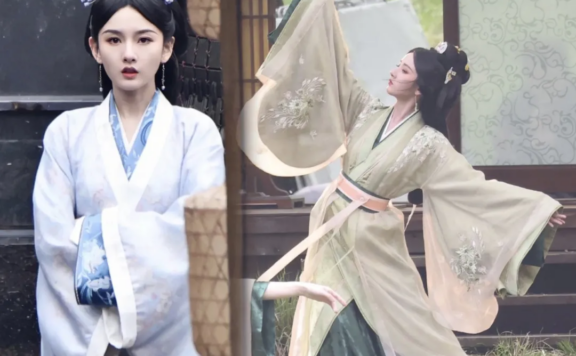
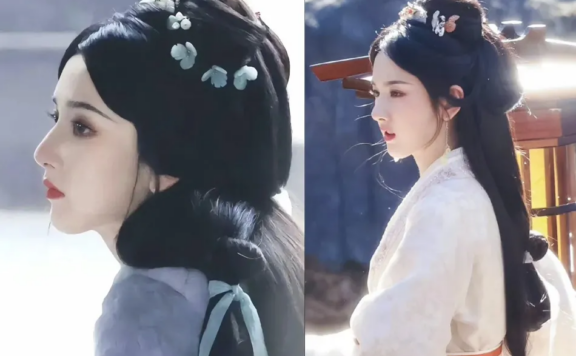
Is Song Zuer's Han-style look in The Prisoner Of Beauty praised? Some netizens think the makeup and styling of this drama are delicate, while others believe they are overly in the style of internet celebrities. Evidently, the costumes and props in The Prisoner Of Beauty draw inspiration from the Han Dynasty. During this era, the aesthetic of Han-style hair buns was 'hanging without falling apart', rather than the prevalent loose - hair style. Let's start with the conclusion. From various Han Dynasty female figurines, we can observe the gentle and grand style of Han - style hairstyles. Generally, they were hanging buns without loose hair. Although it seems like a simple center - parting from the front, the hair ends were coiled into a bun or wrapped and tied up at the back, revealing elegance and fashion. There were no high buns or high - padded hair like in later times, nor the common loose - hair styles seen in today's TV dramas. Despite being understated, it had a more genuine, classical, and daily - life beauty. This hairstyle with coiled hair ends was a classic in the Western Han Dynasty, sometimes called the 'Falling Horse Bun' or 'Hanging Bun'. Its…- 314
- 0
-
Top 5 Must-Watch Song Zuer's Historical & Fantasy Series
Song Zuer's journey—beginning as a fiery child deity in 2009 and maturing into nuanced historical heroines—offers a unique lens through which to explore C-drama's shifting landscapes. I've curated her most iconic roles that showcase her evolution from child star to versatile leading lady. Here are 5 masterpieces blending visual poetry and storytelling brilliance—perfect for historical/fantasy lovers! The Demon Hunter's Romance 无忧渡 Aired: April 12, 2025 Period: Fictional Tang-dynasty-inspired world with human-yao (supernatural beings) coexistence Genres: Xianxia, romantic fantasy, mystery Main Roles: Song Zuer (Banxia), Allen Ren (Xuanye) Adapted From: Novel Banxia by Banming Ban'ai In a Tang Dynasty-inspired realm fractured by mutual distrust between humans and yao (妖, nature spirits), Banxia is an outcast village girl whose ability to perceive spirits brands her a "cursed seer." Her path collides with Xuanye, a disillusioned demon hunter enforcing the Celestial Ministry's brutal purge of rogue yao. When a series of spirit-related disasters threatens both realms—a plague of nightmare-consuming Mengmo (梦魔) in farming villages, and spectral assassins targeting human officials—they form a reluctant pact to investigate. Their quest uncovers a darker truth: a primordial void entity is manipulating historical human-yao resentments to trigger a war. Banxia's evolving power to communicate with spirits (not…- 430
- 0
-
The Origin and Styles of the Chinese Rabbit Hairstyle
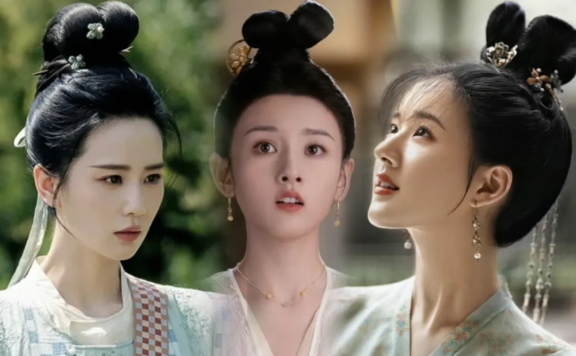
What's the name of the rabbit - like hairstyle on Song Zuer's head? In ancient - costumed dramas, we often spot this kind of rabbit - like hair bun, which netizens lovingly call the 'rabbit hairstyle'. What's its origin? Why do female stars adore it? Let me share the conclusion first. This hair bun resembling rabbit ears can generally be called 'double buns'. Double buns are a general term for two buns. Looking into specific styling details, they can also be named 'Lily Buns', 'Intertwined - heart Buns', etc., all styles of double buns. There's a gap in the middle or they're crossed, and it was a popular hairstyle in the early and prosperous Tang Dynasty. We can see it in many TV dramas, usually paired with Tang - style Hanfu, like the chest - high shirt and skirt, showing simplicity and vitality, as well as a girlish charm. According to 'Zhonghua Gujin Zhu' by Ma Gao of the Five Dynasties, the Lily Bun was very trendy during the Zhenguan period: 'During the Zhenguan period, people combed the Submissive Bun. Also, Yang Yuhuan combed side buns and did the crying - makeup. There were also the Sorrow - coming Bun,…- 508
- 0
-
The Fashionable Neckkerchief in Ancient Costume Dramas
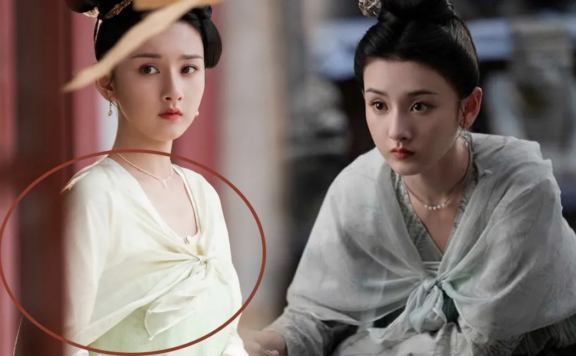
Have you ever seen a neckerchief in a costume drama for the first time? In the costume drama Unburdened Ferry, Duan Banxia, played by Song Zuer, often appears wearing a short shawl. It looks like a pibo (披帛), but the way of tying a knot in front of the chest is so similar to our modern neckerchief. Could this also be a kind of "time - traveling" fashion? Let's answer first. It's called a "neckerchief". Similar ways of wearing it were seen in the Northern and Southern Dynasties, and it became even more popular during the late Tang, Five Dynasties, and the Northern Song. It should be an extended style of the pibo or peizi (帔子), but actually shorter and wider than the pibo. It's mainly used to wrap the neck, keep out the cold, and match clothes. In the painting The Picture of Proofreading Books in the Northern Qi Dynasty, we can see the tying style of the neckerchief of ladies in the Northern and Southern Dynasties. At this time, peizi already existed and was once commonly in a "short and wide" style, which is very similar to the neckerchief we see later. After the Wu Zhou period, something…- 106
- 0
-
What Are the Hair Accessories of Zuer Song?
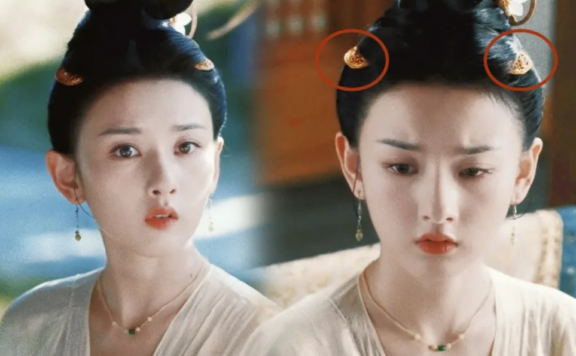
In the ancient costume drama No Worries Ferry, Zuer Song's Tang Dynasty-style bun appears simple yet elegant. The hair accessories on her temples, not overly exaggerated, perfectly complement her facial features. So, what exactly are these hair accessories called? Well, they are decorative hair ornaments. Initially, combs, Bi (篦), and Huadian (花钿) were worn on the temples, and later, specialized accessories like Lianshu (帘梳) and Yanbin (掩鬓) emerged. This way of wearing them helps fill the decorative gaps in the bun, adding layers and visually elevating the crown of the head while enhancing facial contours. Let's start with combs. This comb - wearing method has a long history, dating back to the Han and Jin Dynasties as decorative items, categorized into wide - toothed combs and fine - toothed Bi. It reached its peak of popularity during the Tang and Song Dynasties. In the mid - to - late Tang Dynasty, with the improvement of living conditions, women became more inclined to adorn themselves. They would style elaborate, tall buns and wear various hair accessories. Combs, like jade pendants, were symbols of social status. The higher one's status, the more exquisite and luxurious the combs were. Ancient combs, as hair…- 198
- 1
Song Zuer


Scan to open current page
-
$CouponsLimitation of use:Expired and UnavailableLimitation of use:
before
Limitation of use:Permanently validCoupon ID:×Available for the following products: Available for the following products categories: Unrestricted use:Available for all products and product types