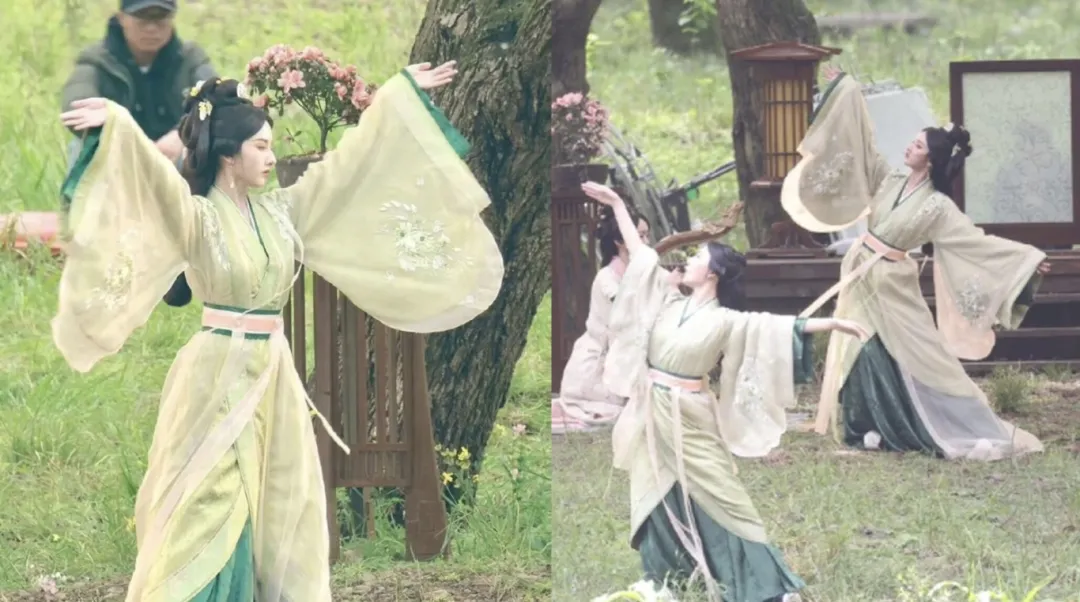

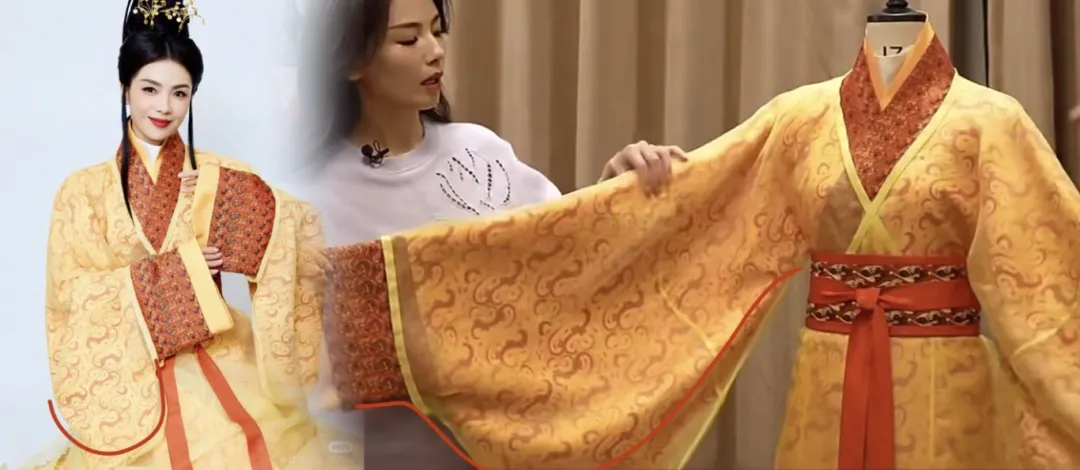
In the ancient - costumed TV drama The Prisoner Of Beauty (折腰), the sleeves of the clothes worn by Song Zuer's character, Xiao Qiao, are mostly round. Do such sleeves really exist? Let me start with the conclusion. The reference background for the costumes and props in The Prisoner Of Beauty is the Han Dynasty. At present, although the costumes and styling have undergone cinematic adaptations, we can still vaguely see some classic ancient sleeve styles.
For example, during the Qin and Han dynasties, the 'Chuihu Sleeve' (垂胡袖) was popular. The cuff of this sleeve was narrow, and the sleeve shape was similar to the wrinkled flesh hanging under a yellow - ox's throat (in an extended sense, 'Hu' refers to all such things), with a gentle arc. According to Shuowen Jiezi (说文解字), 'Hu means the hanging part under a cow's jaw.' However, the cinematic 'Chuihu Sleeve' has obviously undergone some combined and 'radical' modifications, incorporating the large - arc characteristics of the Ming - style Pipa Sleeve. Many 'Han - style' Chuihu Sleeves on the market now also have this effect.
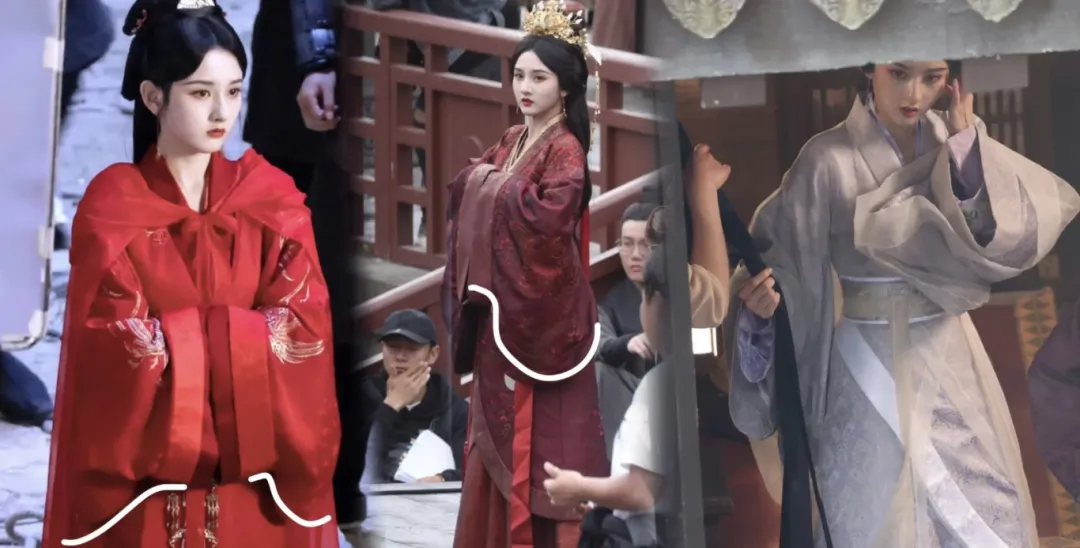
Visual Differences
The biggest visual difference between the Chuihu Sleeve and the Pipa Sleeve lies in the sleeve arc. As you can see, the arc of the Chuihu Sleeve is relatively gentle, and the width at the sleeve root is close to that at the sleeve opening. Only by having a sufficiently long and voluminous sleeve can it achieve the effect of a formal dress. It was a popular sleeve style during the Qin and Han dynasties. The Pipa Sleeve has a sleeve root significantly narrower than the sleeve opening, with an obvious circular arc in the middle. The sleeve edge is relatively narrower compared to the common Warring States and Han styles, and it was a popular sleeve style in the Ming Dynasty.
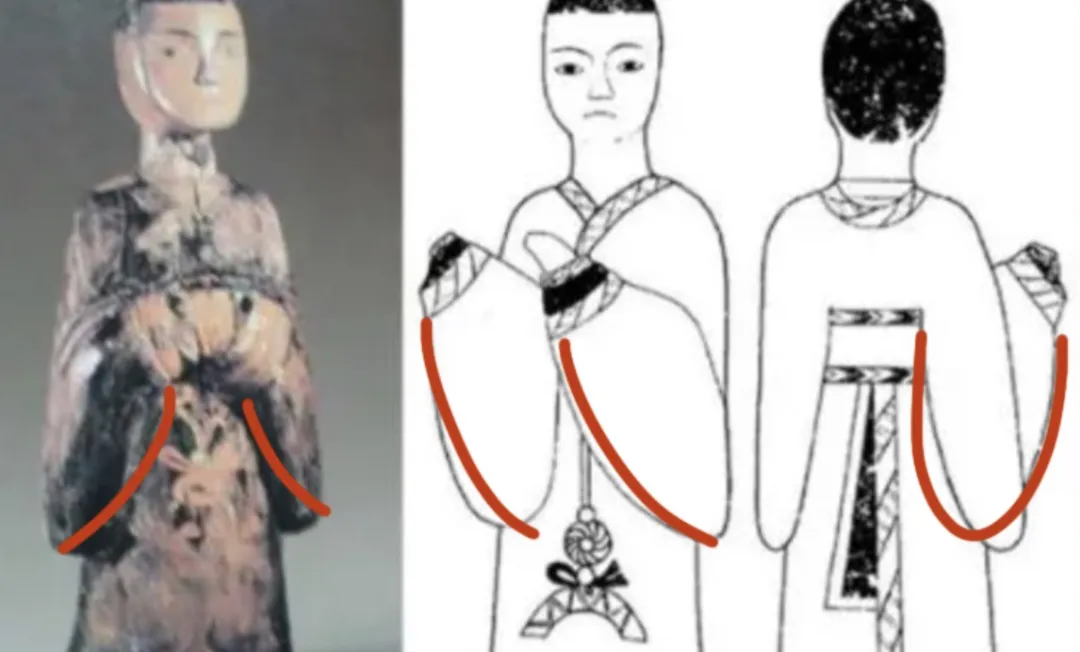
Archaeological Evidence
The earliest archaeological evidence for the Chuihu Sleeve comes from the straight - fronted robe unearthed from the Mashan Chu Tomb. According to currently disclosed information, the sleeve styles unearthed from the Mashan Chu Tomb mainly include: narrow sleeves represented by N22; Chuihu Sleeves represented by N15; and wide and straight sleeves represented by N10 (the numbers are the codes of the unearthed clothing artifacts). Among the lacquered wooden figurines unearthed from the Warring States and Han periods, after decomposing and comparing the line - drawings of the sleeve styles, the sleeves are of the Chuihu Sleeve type with a wide and gentle arc, not the Pipa Sleeve type. Moreover, after the clothes were tied with a waistband, the sleeve root was not visible. However, at least wooden figurines are three - dimensional. Some murals are completely two - dimensional and have an added perspective effect, making it difficult to distinguish. For example, some people may think that the sleeve style in the Eastern Han mural is similar to the Pipa Sleeve. Interestingly, only by laying the clothes flat can we know their real pattern. So, from the perspective of archaeological references, the credibility ranking is: physical clothing artifacts > three - dimensional figurines > two - dimensional paintings and murals.
Market Situation
Many current market patterns tend to confuse the arcs of the Chuihu Sleeve and the Pipa Sleeve. With an extremely wide sleeve edge and the arc of the Pipa Sleeve, and less sleeve length volume, a new 'neither - fish - nor - fowl' sleeve style is created, lacking harmonious beauty. Most of these are the 'tears of the times' from the incomplete understanding of the 'Warring States and Han' clothing system. Many merchants' patterns are still of this kind and have not been updated with new information, so they are still likely to mislead the public. However, from the current archaeological research, the characteristics and verification of the Chuihu Sleeve are relatively comprehensive, which can reduce people's misunderstandings about traditional sleeve styles.
In conclusion, while watching the drama, we can view the TV costumes with a 'half - right - half - wrong' attitude. At least to some extent, they incorporate some clothing culture and play a role in spreading it. But if you want to understand the culture, especially those who have a deeper love for clothing culture, you can do more in - depth research.